Showing posts with label Golden Era. Show all posts

Sunday, March 1, 2015

No More Minosos

Another deserving HOFer died before he saw his day in Cooperstown (WTTW Chicago)
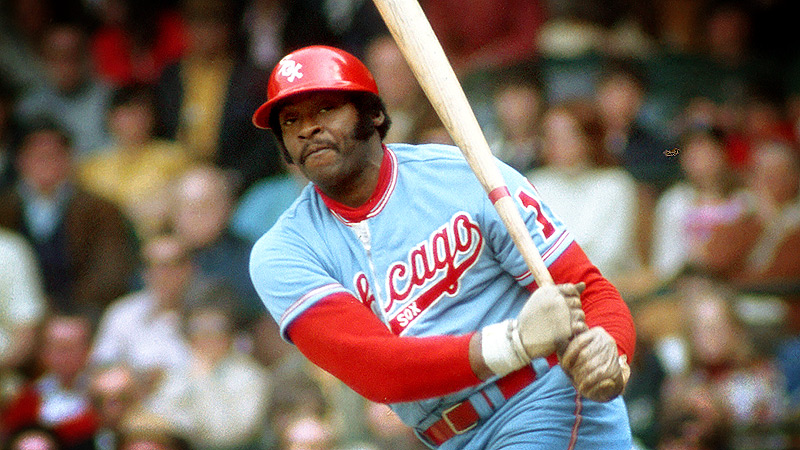
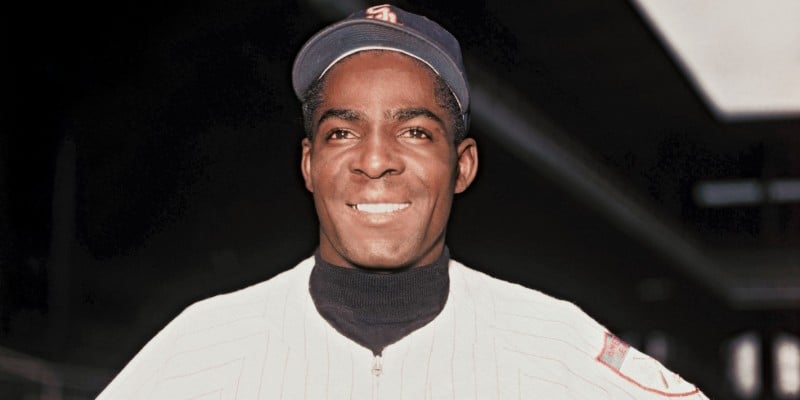
Minnie Minoso, also known as the Cuban Comet, died today in Chicago, Illinois. He was 89.

Few players had more historical impact than Minoso, who became the first black Cuban to appear in the major leagues when he debuted with the Cleveland Indians on April 19th, 1949, at the age of 23. It was Opening Day for most teams, and the Tribe were in St. Louis to play the lowly Browns. Minoso pinch-hit for Mike Garcia, who had relieved future Hall of Famers Bob Feller and Early Wynn and would be replaced by another Cooperstown-bound player by the name of Satchel Paige. The rookie walked, loading the bases for Larry Doby--the American League's first African-American player. With Cleveland trailing 5-1, Doby represented the tying run, but flew out to end the inning.

It was a star-studded debut for Minoso, who has yet to take his rightful place alongside those hallowed names in Cooperstown. Minoso was just up for election on the Golden Era ballot, but fell short of induction along with the rest of the candidates (including Dick Allen, Luis Tiant, Gil Hodges, and Ken Boyer). Given his age (89), the voters must have known that this could be their last chance to elect Minoso while he was still alive. They failed.

That Minoso is still outside the Hall of Fame 66 YEARS after his debut is inexcusable, and to me ranks right up there with Ron Santo's belated election as one of the Hall's most egregious travesties. Somebody please explain to me why Bill Mazeroski, Jim Rice, and Andre Dawson were elected before Minoso. Tell me how Tony Oliva, Maury Wills, and Jim Kaat all pulled more votes on that screwy Golden Era ballot than Minoso.

When are people going to realize that Minoso was one of the most dominant players of his time? From 1951-1961, in which he played nearly 90 percent of his career games, he was the sixth-most valuable position player in baseball per fWAR, a rounding error behind Henry Aaron at number five. Among American Leaguers, he was second only to Mickey Mantle during this time. The Commerce Comet trailed by the Cuban Comet; how fitting is that?

In the AL during this time, Minoso ranked first in doubles and hit-by-pitches while placing second in hits, runs scored, triples, and stolen bases. He was third in RBI and offensive value, and fourth in walks. He was even 10th in home runs, despite never having a season where he slugged 25. A perennial .300 hitter, Minoso did so eight times and batted .298 for his career. He also walked a lot--way more than he struck out--and mastered the art of getting plunked, ending up with an impressive .389 OBP. For his career, he was 33 percent better than the average hitter after adjusting for league and park.

Minoso sustained his brilliance for more than a decade. He made seven All-Star teams, won three Gold Gloves, and drew MVP consideration eight times, finishing fourth in four of those years. That run probably would have stretched even longer had he not been forced to play in the Negro Leagues for several years early in his career, preventing him from playing his first full season until he was already 25. What if he had come up in 1946--his first year in the Negro Leagues? He matured quickly, after all, becoming an All-Star in 1947 and 1948. Give him a handful of seasons at the beginning of his career and he probably winds up with close to 2,500 hits, 1,500 runs/RBI, 200+ homers, and 300+ steals. Those sound like Hall-worthy numbers to me.

For whatever reason, Minoso has never received the credit he deserves for being a pioneer. Paige, Doby, Jackie Robinson, Roy Campanella, Monte Irvin, and many others all sailed into the Hall of Fame with far lesser career statistics. Why not Minoso, who paved the way for generations of Cuban ballplayers? He was the first black player in Chicago White Sox history, and one of the first Latin American players to make the All-Star team. I'm sure he faced his share of prejudice and discrimination. Who knows how that affected his performance on the field?

Hopefully Minoso's death will force voters to realize their mistake and induct Minoso the next time he is eligible. But it will be too late, just as it was too late for Ron Santo, and Joe Gordon, and all the other posthumous inductions. Their numbers didn't change in the decades it took to deem them worthy of baseball's highest honor. Neither will Minoso's.

Those tasked with putting people in the Hall of Fame must do a better job of identifying and electing deserving candidates as soon as possible, to admit them while they're still alive and capable of giving a speech at their ceremony. It's nice to honor and remember the dead, but I think we can all agree it's even better to celebrate the living.

Thursday, December 11, 2014

Golden Era Committee Comes Up Short

Allen was denied his rightful place in Cooperstown (ESPN)
The BBWAA has drawn much ire over the past few election cycles for its inability to elect Cooperstown-caliber players to the Hall of Fame, but Monday's Golden Era ballot results showed the Veteran's Committees are just as incompetent. Keep in mind that they have not elected a living person to the Hall of Fame since Bill Mazeroski in 2001. That is simply inexcusable.

Now, I don't blame the voters for not putting anyone in. As Joe Posnanski showed, it was pretty much impossible for anybody to be elected given the election format and strength of this year's ballot. Every candidate had a reasonable case for a plaque in Cooperstown, but with each committee member allowed only four it was going to take very strong consensus to elect even one of the candidates. There simply weren't enough votes to go around.

Which leads me to my next point; why put 10 guys with strong Hall of Fame cases on the ballot if you can only vote for four? Either expand the number of choices or limit the number of candidates; it's really that simple. Same goes for the BBWAA ballot, which allows for only 10 votes on ballots stuffed with over 30 names. These arbitrary restrictions are only backing things up and forcing voters to make impossibly close calls. They need to go away.

That said, I'm not about to let the committee off the hook. Yes, their task was borderline impossible, but the results revealed serious flaws in who they deem to be Cooperstown-worthy. Dick Allen and Tony Oliva came the closest with 11 votes apiece, falling one vote shy of induction. On a pure statistical case, Allen was the strongest candidate, so that was encouraging, but Oliva was definitely not (compare his case to Ken Boyer's, then get back to me). Jim Kaat came close with 10 votes as well, and Minnie Minoso had eight. Both were better candidates than Oliva, in my opinion.

The most alarming result was nine votes going to Maury Wills, easily the least qualified person on the ballot (except for maybe executive Bob Howsam, who shouldn't even be compared to players). Steals are overrated, and so was he, never more so than when he won the NL MVP over Willie Mays in 1962 despite a 99 OPS+. He had that one transcendent season and helped bring the stolen base back into vogue, but wasn't good enough defensively to make up for his 20 career home runs, .330 OBP, and .331 SLG. Wills was a much weaker candidate than Minoso, Boyer, Luis Tiant, Billy Pierce, and Gil Hodges.

Perhaps the saddest result was that Hodges was one of those to received three votes or fewer, another bad turn in the long, painful history of his HOF candidacy. Hodges shouldn't have even been on this ballot in the first place because he was technically elected in 1993, when he secured 12 of 16 votes, only to have one of those votes (Roy Campanella's) disallowed by committee president Ted Williams because Campanella failed to attend the meeting in person. Campanella, who might recall, was in a wheelchair and died only three months after the vote. Surely his absence was excusable under those circumstances. If Hodges never makes it to the Hall of Fame, it will be a true travesty.

It will also be a travesty if Minnie Minoso, 87, passes away before he is inducted. The committee should have made a concerted effort to induct him while he's still breathing, so as to avoid making the same mistake they made with Ron Santo three years ago. Minoso was one of the game's pioneers during the early integration years and stacks up well against the likes of Jackie Robinson, Larry Doby, Monte Irvin, and Campanella. Cooperstown can't tell baseball's story without Minoso, one of its first minority players and first Latin American All-Star, not to mention one of the American League's best players during the 1950s.

At the end of the day, these committees are supposed to be putting people into the Hall of Fame, not remind everyone how "exclusive" Cooperstown is supposed to be (don't kid yourselves), and they're doing a terrible job of it.

Monday, November 3, 2014

Breaking Down Golden Era Ballot

Dick Allen's paid his dues--it's time to let him in (CSNChicago)
Dick Allen: YES
I've written several times before on this blog that I feel very strongly about Allen's status as a worthy Hall of Famer. He was the best hitter in baseball for more than a decade, for crying out loud.

Ken Boyer: YES
Said yes to him when I looked at his candidacy over the summer. He was basically Ron Santo before Ron Santo, and the Hall could really use more third basemen.

Gil Hodges: YES
Falls a bit short as a player, but his status as a Brooklyn Dodger legend and famed manager of the Miracle Mets should be enough to put him over the edge. This is a sentimental pick; he was a great ballplayer and a better man.

Jim Kaat: YES
Kaat's a tricky one, as he compiled some impressive counting numbers in his 25 big league seasons but rarely dominated. A lot like Tommy John in this regard. A three-time All-Star, only once did he receive Cy Young votes or finish higher than 20th in the MVP balloting. Kaat was a true compiler, pitching until he was 44, winning 283 games, and completing over 4,500 innings. His 16 Gold Gloves are the second-most at any position to Greg Maddux's 18. According to FanGraphs he's a deserving candidate with 69.4 fWAR, but Baseball-Reference values his career at a clearly un-Hall-worthy 45.3 bWAR. Split the dfference and you wind up with 57.4 WAR; good but not very impressive for somebody with a quarter-century long career.This disparity is explained by the two sites' different methods in calculating pitching WAR, with FanGraphs relying on FIP and B-R preferring runs allowed. While Kaat was better than average when it came to keeping opponents from scoring, his 108 ERA+ and 93 ERA- are nothing special. His 3.41 FIP is solid, right in line with his 3.45 ERA, and reflects how he was a good control pitcher who was difficult to take deep.

So why am I saying yes to Kaat? A few reasons. One is that eight of his 10 most comparable pitchers are in the Hall, and the other two (John and Frank Tanana) have compelling cases. Another is that he did have a Hall of Fame peak, even if it wasn't very long and sort of spread out (2.95 ERA from 1964''68, plus Cy Young caliber years in 1974 and 1975). But the third and most important one is that if he had won just one more decision for every year that he pitched, he'd have 308 career wins and of course he would be in the Hall of Fame. I'm not going to keep him out of Cooperstown because he didn't pitch for very good teams early and later on in his career.

Minnie Minoso: YES
A classic borderline case, Minoso's career has been re-examined lately by statheads who appreciate his career .298/.389/.459 batting line. During his heyday in the 1950s he was one of the best all-around players in baseball, ranking as the sixth-most valuable position player in baseball from 1951 through 1961. During that time Minoso was worth over 50 fWAR, earned seven All-Star nods, won three Gold Gloves, and stole almost 200 bases. He was also a great run producer, averaging nearly 100 runs and 90 RBI per year despite never hitting 25 home runs in any season. Had Minoso not been held back by the racial attitudes of the times (he didn't play his first full season until he was 25) or not completely fallen apart after turning 36 (-1.4 fWAR in his final five seasons) he would have a much stronger case, but as it is he merits induction for his decade-long dominance of the American League.

Tony Oliva: NO
Oliva's a lot like Don Mattingly in that he was absolutely a Hall of Fame hitter at his peak, but knee injuries ruined the second half of his career and ultimately prevented him from compiling Hall-worthy numbers. His career was just too short, as he only had 11 seasons with more than 70 games played and thus fell short of 2,000 hits and 1,000 runs/RBI. It's too bad because he was a beast in his prime from 1964--the year he won AL Rookie of the Year award--to 1971, when he won his third and final batting title. In between he piled up 42.2 bWAR, made eight straight All-Star teams, led the league in hits five times, and drew MVP votes every year. His batting record is awfully similar to Kirby Puckett's, another popular Minnesota Twin whose career was tragically cut short by physical circumstances.

Billy Pierce: NO
Pierce has been largely forgotten by baseball fans, which shouldn't have happened considering he was the third-most valuable pitcher in baseball from 1950 through 1962. During those 13 years only Robin Roberts and Warren Spahn, two clear-cut Hall of Famers, were better. He made seven All-Star squads, won 211 games, and was worth around 55 wins above replacement depending on which site you prefer. It's tough to say no to someone who was the third-best pitcher in baseball for 13 years, but that's what I'm doing with Pierce. He's right on the cusp for me, but I say nay because his peak wasn't quite dominant enough for someone who pitched 14 full seasons, six of which produced five or more fWAR but with only two others topping three. He falls short in all the Hall of Fame statistics except for Gray Ink, which he barely passes. It's too bad his career wrapped up just as the second Deadball era was getting underway, as he likely would have had several more effective seasons and retired Hall-worthy.

Luis Tiant:YES
Wrote at length about Loo-eee's worthy candidacy here. As somebody who exceeds the BBWAA standard and Hall of Fame standard, he's somebody who should have gone in a long time ago.

Maury Wills: NO
If Wills is worthy, then so is Roger Maris, though neither of them are because they did not sustain their greatness long enough. Wills was very overrated because of his blinding speed, which wasn't particularly valuable because he actually led the league in caught stealing more times (7) than he did in stolen bases (6). With no power to speak of (20 career big flies) and an unimpressive .330 OBP, he would only be Hall-worthy if he played Ozzie Smith-quality defense. While Wills did win two Gold Gloves, he was nothing special in the field. Add it all up and you have a solid, but hardly Hall-worthy shortstop who didn't even crack 40 career WAR.

Bob Howsam: SURE
GM and club president of the Big Red Machine, one of the great baseball dynasties of all time. He also tried to bring big league baseball to Colorado three decades before the Rockies became a thing. So why not?