Showing posts with label Steroids. Show all posts

Tuesday, February 4, 2014

6 Reasons You Don't Want Nelson Cruz

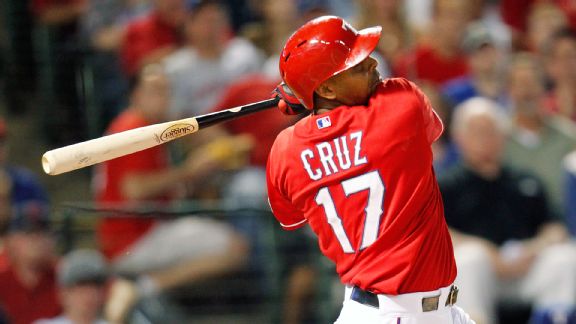
Cruz is not as good as his power numbers suggest (ESPN)
Nine days until pitchers and catchers report to spring training, and Nelson Cruz is still a free agent (but probably not for long). That probably wouldn't be the case if he hadn't served a 50-game PED suspension last year, but then again so did Jhonny Peralta and he signed a fat deal with the St. Louis Cardinals over two months ago. Cruz is one of the few remaining impact free agents, but while his power may be alluring you should hope your team doesn't commit multiple years and millions of dollars to him. Here's why:

1. He's old
Cruz is going to turn 34 on July 1st, well past a player's prime age. His best years are likely behind him, so whoever signs Cruz is likely paying for the decline phase of his career.

2. He's injury-prone
Cruz has played more than 130 games in a season once in his nine-year career.

3. He doesn't hit well outside of Texas
The Ballpark in Arlington (now Ameriquest Field?) is a hitter's haven. Everyone knows that. It's so advantageous that it makes Cruz hit like Frank Robinson, as he's batted .294/.356/.555 with 58.6 percent of his career home runs there. But away from home he's hit a much less formidable .242/.299/.435. Teams like the Mariners who play in pitching friendly environments need to take that into account and adjust their expectations accordingly.

4. His offense is one-dimensional
Cruz is going to get paid because of his power. He's gone yard 135 times during the past five seasons, a total that exceeds those of Ryan Howard, Josh Hamilton and Joey Votto and works out to be an average of 27 dingers per year. Only 16 players have hit more home runs during that span and just four players have posted a better ISo while playing in more games. Still, power is pretty much the extent of Cruz's offensive contributions these days. He's never topped 90 RBI despite batting in some loaded Rangers lineups. He strikes out a lot, doesn't hit for high averages and is a subpar baserunner. Lastly, his patience leaves something to be desired, for Cruz has never walked 50 times in any season and holds a .319 OBP over the last three years. He's basically an older Mark Trumbo.

5. He's a defensive liability
Never a Gold Glover to begin with, Cruz can no longer hold his own in right field and gives back a good chunk of the value his bat provides, which at about two wins per seasons really isn't that valuable to begin with. At this stage of his career he'd be better-suited as a DH, which limits roster flexibility and should make National League teams wary of signing him.

6. He just got busted for PEDs
Cruz was involved in the Biogenesis scandal that brought down Peralta, Alex Rodriguez and Ryan Braun, among others. Who knows how that's going to affect his performance? Melky Cabrera suffered a notable drop-off in performance in his first season following a PED suspension, and he's four years younger than Cruz.

Cruz is a two-win player at best these days, and probably not even that once you factor in age, ballpark, and PED-related decline. The two-time All-Star is probably going to be a bust wherever he signs, especially if he goes to Seattle and has to play half his games in notorious power-killer Safeco Field.

Steer clear, Mariners!

Saturday, January 11, 2014

Rodriguez in Ruins

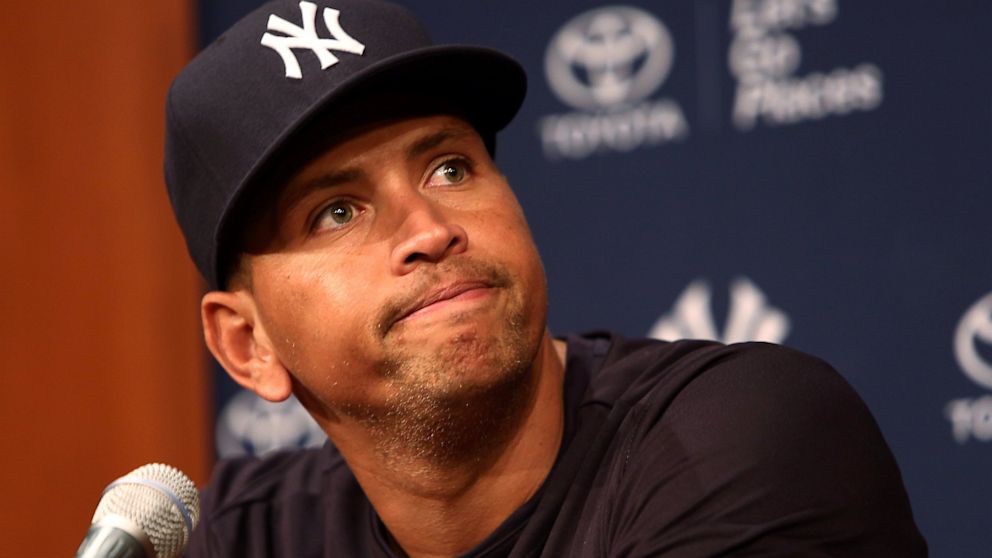
Alex Rodriguez is finally answering for his PED infractions (ABCNews)
In recent years, it's been a total crapshoot trying to predict how many games Alex Rodriguez could be expected to play in the coming season. Once a model of health who could regularly be counted upon to suit up almost everyday, Rodriguez has averaged just 111 games played per season since signing his monster ten-year, $275 million contract following his monster 2007.

Well as of today, Rodriguez--now 38 and with 20 big league seasons under his belt--will not play a single game in 2014. His original 211 game suspension, handed out last August, was reduced to 162 games, which will cover the entire 2014 regular season (and postseason, if the Yankees should make it there). It will be the largest PED-related suspension in baseball history.

A-Rod, a man who was supposed to smash the game's most prestigious records, now has the most dubious one in the sport.

The suspension, now official, puts on exclamation mark on the collapse of Alex Rodriguez, indisputably one of the greatest baseball players who ever lived. The reputation he once worked so hard to maintain has been reduced to ashes, and he is nothing more than a glaring black mark on the sport he has dominated like few others have.

It's sad. One gets the sense that over the past few years, baseball became an escape for Rodriguez more than anything else, a place where he could go to get away from the incessant noise he created off the field. He cherished the game he was paid so handsomely to play. Baseball might not have always seemed like his top priority, but it's impossible to question his work ethic and the amount of preparation he put into each and every game. Now his sanctuary is being taken away from him.

And he is being taken away from us, the fans, which saddens me. Not because I like(d) Rodriguez (at this point I think it's fair to assume nobody does) but because he's a constant source of entertainment. Who else match his knack for daily drama, unintentional comedy, constant feuding, lack of self-awareness and misguided attempts at love? The answer, of course, is no one. Even as his skills diminished, A-Rod found himself in the news (and in trouble) more than ever before. He became daily cannon fodder for the press, causing his already bright star to soar just when it should have begun to crash. We can mock Rodriguez for a great number of things, but the man sure knows how to stay relevant. He absorbs media attention like a sponge.

That doesn't figure to change anytime soon. Rodriguez isn't going to disappear and quietly enjoy his millions. Instead, he plans to continue the fight in federal court. He also wants to attend spring training, and says there's nothing the Yankees can do to stop him. He loves the game, and the spotlight that comes with it, too much to stay away. Baseball is his drug, but unfortunately it wasn't his only one.

Sunday, August 18, 2013

Suspensions Stall Career Years

The MLB suspended 14 players for their involvement with the now-infamous Biogenesis clinic. Alex Rodriguez got hit with a 211-game ban, far and away the harshest punishment handed down, but he's allowed to play as he appeals his ridculously (and unfairly) long suspension. Ryan Braun was slapped with a 65 game ban and didn't fight it. Neither did the other 12, who were given standard 50 game suspensions as first time offenders under baseball's drug policy (A-Rod and Braun were also technically first-time offenders even though they had failed drug tests before. Therefore, they should've been suspended 50 games like everyone else).

Of those dozen, three were All-Stars this year on their way to big seasons. For fun, I projected out some of their numbers to see what they would've looked like at the end of the year:

Everth Cabrera (no relation to Miguel Cabrera)
The 2012 NL stolen base leader was in the midst of a breakout campaign. Not only was Cabrera leading the league in steals again, but he was also hitting .283 and posting a 113 OPS+. Furthermore, the first-time All-Star had been worth three wins for the Padres despite spending three weeks on the Disabled List with a hamstring injury. Seeing as how he didn't miss any games outside of his DL stint, I'll give him the benefit of the doubt and assumed he wouldn't have taken anymore days off.

145 games, 82 runs, 165 hits, 56 stolen bases--all career highs

Nelson Cruz
With Josh Hamilton, Mike Napoli, and Michael Young gone, Cruz stepped up and provided big-time power numbers for the Texas Rangers. Adrian Beltre is the team's best hitter and undisputed MVP, but it's Cruz who leads the Rangers in home runs and runs batted in. Health permitting, the slugging rightfielder was on pace to play 156 games and crush his previous career highs in big flies, RBI, and total bases. His first 40 homer/100 RBI season was well within reach, and it couldn't have come at a better time for the free-agent-to-be. Needless to say, Cruz's suspension deals a big blow to Texas, currently clinging to a 1.5 game lead over the A's for first place in the AL West.

159 hits, 39 homers, 110 RBI, 302 total bases--all career highs

Jhonny Peralta
Coming off a disappointing season in which he batted just .239/.305/.384, Peralta (playing for a contract) righted the ship with a strong bounce back performance (.305/.361/.461 and his second All-Star selection). In fact, he was the American League's top shortstop. He'd already accumulated 3.5 bWAR of value for the Tigers and was poised to continue his success in the second half, batting .316/.361/.544 post-All-Star Break. Normally, losing a key player like that for the rest of the season would spell trouble for a team trying to win its division, but Detroit mitigated his loss by acquiring shortstop-of-the-future Jose Iglesias from Boston in the Jake Peavy trade. Iglesias can't come close to matching his predecessor's impact on offense, but he's a much better defender than Peralta, who's an average fielder at best. Bottom line: the Tigers will be fine.

155 games, 180 hits (career high), 43 doubles (career high), 16 homers, 80 RBI, 273 total bases

Monday, May 13, 2013

Questioning Ortiz

Longtime Boston Globe columnist Dan Shaughnessy made waves last week when he questioned the validity of David Ortiz's hot start. Shaughnessy has since caught his fair share of flak for insinuating that Ortiz is using performance enhancing drugs, especially since he did so without any hard evidence to back up his accusations.

But was what Shaughnessy did wrong? I don't think so.

Everyone seems to forget that Ortiz's name is on the list of players who tested positive for performance enhancing drugs. Whereas unlikable players such as Barry Bonds, Roger Clemens, and Alex Rodriguez have constantly been forced to answer to their past mistakes, Ortiz's murky history has been more or less swept under the rug.

That history is particularly relevant given his recent career trajectory. Ortiz struggled mightily in the first two months of 2009 and finished the season with a .238 batting average, nearly 100 points lower than the .332 mark he posted two years before. In 2010 he endured an equally painful start and struck out a career-high 145 times. Though still a great hitter, Ortiz was in his mid-thirties and clearly appeared to be a player in decline.

Then, in 2011 at the age of 35, Ortiz re-established himself as one of the game's dominant offensive forces. By slimming down, cutting his strikeouts in half and improving his performance against lefties, Ortiz rebounded to bat .309/.398/.554 with 29 home runs and 96 RBI (I'm still mystefied as to how he failed to receive any MVP consideration). The following year he was on his way to even bigger numbers when a torn Achilles derailed his season, limiting him to just one game after July 16th..

The same injury cropped up again this year and sidelined him until April 20th, but the combination of injury and missed time didn't stop him from pounding the ball upon his return. In his first 13 games back, Big Papi batted .440/.473/.840 with 17 RBI and a dozen extra base hits. He looked like the David Ortiz of old, hitting the ball with authority to all fields, driving in runs, and anchoring the heart of Boston's order.

Though Ortiz's torrid start to the season was unexpected, that does not mean it was without precedent. As Gordon Edes pointed out, Joe DiMaggio and Ted Williams both raked under similar circumstances. Ortiz is hardly the first player to perform so well at such an advanced age, either. Hank Aaron, Babe Ruth, and Frank Robinson were still studs in their age 37 seasons. Furthermore, it makes sense that Ortiz is aging gracefully as he's spent most of his career in the DH role, thus avoiding the wear and tear that results from playing the field on a daily basis.

Still, Shaughnessy was fair to wonder whether Ortiz is getting outside help. The steroid era has conditioned baseball fans to suspect everything and trust nothing. Everyone's burned too many times to simply accept a great story at face value. Baseball is much cleaner than it was ten years ago, but PEDs are still a problem. It would be naive not to acknowledge the possibility that Ortiz, who's used them before, could be juicing again.

PEDs are part of his story. They're part of the game. It's a touchy subject but, whether we like it or not, someone had to bring it up.

Tuesday, February 5, 2013

More Money, More PED Problems


In the wake of another PED bust that fingered several high profile baseball players, Nelson Cruz, Gio Gonzalez, and Alex Rodriguez among them, I am at a loss for words. Honestly, what can be said at this point that hasn't been already said?  When I stumbled across the first reports last week, I must admit that I didn't have any feelings resembling surprise, outrage, or disappointment.  The only word to describe my emotions, or lack thereof, is apathy.

I guess I just don't care anymore. For nearly a decade now, doping revelations have torn down some of baseball's biggest names, many of whom were the heroes of my childhood. Mark McGwire and Sammy Sosa, the sparring sluggers who captivated the nation and saved its pastime when they shattered Roger Maris's single season home run record in the summer of 1998. Rafael Palmeiro, one of only four players to accumulate at least 500 home runs and 3,000 hits. Manny Ramirez--possibly the best pure righthanded hitter the game has ever known as well as a repeat offender--plus his partner-in-crime David Ortiz. Barry Bonds and Roger Clemens, arguably the best position player and starting pitcher, respectively, in baseball history. The list goes on (and I'm not even including "suspected" dopers like Mike Piazza, Ivan Rodriguez, Juan Gonzalez, and Miguel Tejada, among others)

Now a new generation of stars is being outed as frauds. 2011 National League MVP Ryan Braun, 2011 ALCS MVP Nelson Cruz, and 2012 All-Star Game MVP Melky Cabrera, all of whom debuted after baseball installed penalties to punish steroid users, are just some of the names that recently failed drug tests (though Braun got off on a technicality). Unlike the McGwires and Sosas before them who juiced during baseball's "Wild West" era when there was no policy in place to identify, much less penalize, steroid use, these players have no excuse. They can't fall back on the "everyone was doing it" excuse or play the "baseball turned the other cheek" card. They knew what they were doing was wrong, that they could face punitive consequences if they were caught, but ultimately decided that was a risk worth taking.

Unfortunately there is no easy solution. Stricter testing and harsher punishments help, but these measures only do so much to combat and prevent PED use. They can't possibly discourage every potential cheater, not when there's fame, endorsement deals and millions of dollars on the line.  There's too much at stake. The rewards outweigh the risk.

Baseball has changed the steroid culture considerably in recent years, but no amount of testing can change human nature. Cheating, in some form or another, has been a part of the game since its earliest days. The methods and tactics have evolved, but the psychology hasn't. There are always going to be rogue individuals looking to gain an unfair advantage, willing to game the system and get a leg up on the competition. Cheating can't be eradicated. The sooner society accepts that, the sooner we can forgive the muscly men who wowed us with their titanic home run blasts and move on.