Saturday, December 21, 2013

Choo Deserved Ellsbury Money

Boras and Choo weren't wrong to ask for Ellsbury money
Shin-Soo Choo could have been a Yankee, had they been willing to shell out $13 million more to secure his services. New York made him a seven-year, $140 million offer, which Choo rejected because he wanted a contract to match Jacoby Ellsbury's. Rather than up the ante, the Yankees didn't budge, just like they didn't budge for Robinson Cano.  As a consolation prize they went out and got Carlos Beltran for about $100 million less. Choo over played his hand, settling for $130 million from the Texas Rangers instead.

But should Choo have settled for anything less than what Ellsbury got? I don't think so, but can see why he did. Ellsbury is more than a year younger than Choo, who turns 32 next summer. Ellsbury also plays center field and plays it well. Choo has never had a year like the one Ellsbury had in 2011, and while he too was a center fielder in 2013 he was absolutely abysmal there. It goes without saying that he will hold down a corner in 2014, wherever he lands, and the only corner outfielder to outearn Ellsbury was Manny Ramirez. Choo is a great ballplayer, but he is not Manny Ramirez.

You could certainly make the argument that he's better than Ellsbury, though. Look how their numbers compare since 2007, the year Ellsbury debuted:

Choo (2,947 AB): .290/.392/.468 (137 OPS+), 101 HR, 100 SB, 24.5 bWAR
Ellsbury (2,912 AB): .297/.350/.439 (108 OPS+), 65 HR, 241 SB, 21 bWAR

Even taking into account Ellsbury's superiority on the basepaths and in the fields, Choo does more than enough with the stick to compensate. Choo's an on-base machine and has much more power than Ellsbury, who has never topped double digit home runs in any season outside of his monster 2011. Choo strikes out more, a lot more, but his batting average is still comparable to Ellsbury's, which is more than a little inflated by Fenway Park (he's a .288 hitter everywhere else).

Another way in which Choo comes out on top is durability. Choo's played at least 144 games in four of the past five years. Ellsbury has done so just twice, and played 92 games in 2010 and 2012 combined. As Joe Posnanski likes to say. one of the most underrated talents in life is simply showing up.

So rather than bat at the top of New York's lineup, Choo will be setting the table for Prince Fielder and Adrian Beltre. Given how old and decrepit the Yankees are looking these days, he'll probably have a much better chance to win his first World Series ring with Texas, even if he did have to settle for $10 million less.

Thursday, December 19, 2013

Baseball Brothers: The Alous

Jesus, Matty and Felipe played in the same outfield in 1963
Two decades after Joe DiMaggio, Dom DiMaggio, and Vince DiMaggio became baseball's first trio of great sibling ballplayers, the Alou brothers came over from the Dominican Republic and left their own footprint on the game. All debuted with San Francisco (where the DiMaggios played minor league ball) and were teammates of Willie Mays, Willie McCovey, Orlando Cepeda and Juan Marichal, spending six seasons with the Giants before switching teams; Felipe and Matty via trade and Jesus in the 1968 expansion draft.

They were teammates in 1963, and batted in the same inning on September 10th--Jesus's first game (they were retired in order). Five days later, they were the first set of three siblings to play in the same outfield with Matty in left, Felipe in center, and Jesus in right. Matty and Jesus remained teammates the next two years, and Felipe and Matty were reunited on the 1973 Yankees.

All were primarily outfielders who put together long, distinguished careers. Here's a look at their accomplishments:

Felipe Alou (1958-1974)
The oldest Alou brother was also the most accomplished. He played the longest (17 years), made the most All-Star teams (3) and compiled the most impressive statistics. He was also the only one who could hit for any power. Jesus and Matty never reached double digit home runs in a season, totaling just 63 between them. Felipe smashed more than 200, including a career high of 31 in 1966. He finished fifth in the NL MVP voting that year, leading the major leagues with 122 runs, 218 hits, and batting .327/.361/.533 while batting leadoff for the Braves, setting the table for Hank Aaron, Joe Torre and Rico Carty. Felipe was the only brother not to win a World Series ring as a player (Matty earned one and Jesus got two, all with the Oakland A's 70's dynasty).

After retiring in 1974 he worked for the Expos organization. In 1992 he was promoted from bench coach to field manager, becoming the first Dominican-born manager in MLB history. He managed the club into 2001, overseeing the development of several stars such as Larry Walker, Delino DeShields, Marquis Grissom, Pedro Martinez, and Vladimir Guerrero (and his son, Moises Alou, who went on to become an even better player than his father and two uncles). Alou was named Manager of the Year in 1994 but was unable to do much in later years when Montreal's front office traded away most of his top talent. He was the Detroit Tigers' bench coach in 2002, then managed Barry Bonds and the San Francisco Giants for four years before retiring from the dugout.

Matty Alou (1960-1974)
Matt was the smallest and thus never hit for power, though he did pace the majors with 41 doubles in 1969. His 231 hits that year were tops in the majors as well, and he made his second straight All-Star team. Unlike Jesus, he compensated for his lack of pop with solid speed, swiping 156 bases in his career and reaching double digits every year from 1965 through 1972. More of a fourth outfielder with San Francisco, he didn't become a star until he was traded to Pittsburgh following the 1965 season, where he was flanked by Roberto Clemente and Willie Stargell in the Pirates outfield.

Under the tutelage of Harry Walker, Alou became one of the league's better hitters. His .342 batting average led the majors in 1966 and he finished ninth in the MVP voting. He batted .338 the following year, .332 in the Year of the Pitcher and .331 in 1969, placing third, second, and fourth in the batting race. He fell off to .297 in 1970 and was promptly traded to St. Louis, where he rebounded to bat .315 in '71. After hitting .307 and .295 in 1972 and '73, Alou dropped off to .198 in 1974 and played just 48 games.  He retired after that, preserving his .307 career batting average. Alou was inducted into the Hispanic Heritage Baseball Hall of Fame in 2007 alongside Omar Vizquel. He passed away in 2011 at the age of 72.

Jesus Alou (1963-1979)
Jesus was the youngest and and the worst of the trio, even though he was considered to be the better prospect. His career bWAR total is 0.9, and yet somehow this replacement level player managed more than 4,500 big league plate appearances. He didn't provide nearly enough power (32 career home runs) or speed (31 stolen bases) for a corner outfielder, and just once played more than 130 games in a season. He was so walk-averse at the plate that he made his two brothers--a couple of free swingers themselves--look like Ted Williams. Jesus worked 106 unintentional walks in his career, or one every 43 plate appearances.

He did have a few seasons where he hit for some nice (empty) averages, but on the whole his career can be considered a disappointment. He never made an All-Star team and was a part-timers once he reached 30. After his playing days were over he went on to become a scout for the Expos, his former team, and has served as the director of Dominican Operations for both the Marlins and Red Sox. He received the Pioneer Award from the Hispanic Heritage Baseball Hall of Fame in 2008 and still works for Boston.

Wednesday, December 18, 2013

What's in a Name?

On paper, the New York Yankees have assembled a ridiculous amount of (former) talent. If the Yankees had this team five years ago, they probably would have been the greatest team of all-time.

C Brian McCann
1B Mark Teixeira
2B Brian Roberts
3B Alex Rodriguez
SS Derek Jeter
LF Alfonso Soriano
CF Jacoby Ellsbury
RF Ichiro Suzuki
DH Carlos Beltran
BE Brett Gardner
BE Kelly Johnson
BE Vernon Wells
BE Brendan Ryan

Age and injuries have reduced this roster to what figures to be a .500 ish team. Everyone listed above is on the wrong side of 30, with several coming off major injuries. Minus McCann, the projected starting infield got into 153 games last year combined. Except for Ellsbury and McCann, none of these guys are the players they once were, though Soriano and Beltran were productive last year and Gardner somehow manages to be wildly underrated despite playing for the most famous baseball team in the world.  

SP CC Sabathia
SP Hiroki Kuroda
SP Ivan Nova
SP Michael Pineda

Pineda hasn't thrown a major league pitch since 2011, Sabathia is coming off the worst season of his career, and Kuroda is going to be 39. Nova made just 20 starts last year, and the year before that his ERA was over 5. David Phelps, the projected fifth starter (unless New York signs Matt Garza or Ubaldo Jimenez) has only 23 big league starts under his belt and had an ERA close to five last year. The bullpen should be better, but Dave Robertson is never going to be Mariano Rivera.

It's no wonder everyone's predicting gloom and doom for the Yankees in 2014.

Tuesday, December 17, 2013

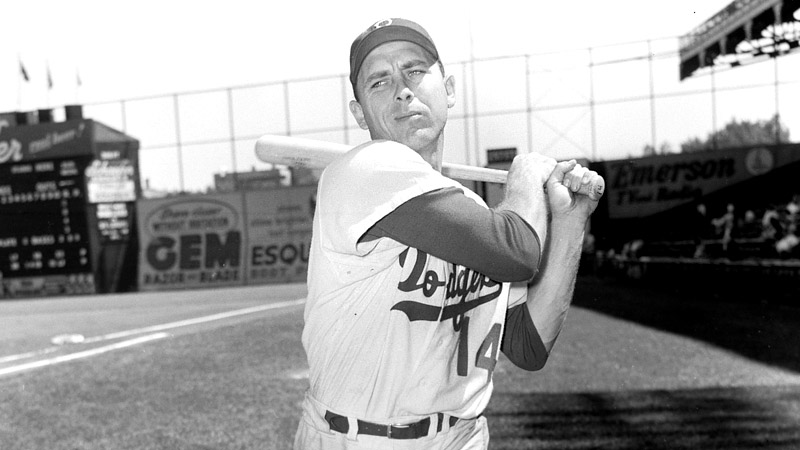
Hodges Hall-Worthy

Taking all of his accomplishments into consideration, Hodges is a Hall of Famer
I've been thinking about the Hall of Fame a lot lately, mainly about how it's such a mess (watch Greg Maddux make it in, but nobody else) and how the entire voting procedure needs to be overhauled. First and foremost, the arbitrary ten-player limit on ballots must be removed. It serves absolutely no purpose. Second, the standard for induction must be lowered from 75 percent, a barrier that doesn't make the Hall any more exclusive than a simple majority and serves only to prolong the wait players must endure before they finally get the call.

Scaling down the 50 percent sounds like a big drop-off, but it isn't when you consider that every player, except for one, who crossed that threshold was ultimately inducted into Cooperstown. That one player is Gil Hodges, of course, and he should be in, too. He spent 15 years on the ballot and exceeded 60 percent three times, topping out at 63.4 percent in his last try.

Now, a lot of people don't think Hodges is Hall-worthy because he wasn't dominant when he played. It is true that he never led the league in any significant offensive statistic of the day. That is reflected in his poor MVP showings--he never finished higher than seventh, and he was often overshadowed by his Hall of Fame teammates Roy Campanella (a three-time winner), Duke Snider and Jackie Robinson. His 120 career OPS+ is good but nothing special, tying him for 356th all-time with the likes of Willie Horton, Shawn Green, Paul O'Neill, and Richie Sexson, none of whom are getting into the Hall without a ticket.

But if Hodges wasn't dominant, he didn't miss by much. He had a terrific nine-year run starting in 1949. He batted .284/.372/.515, good for  130 OPS+, while averaging 32 home runs, 108 RBI and 95 runs per year. He drove in more than 100 runs in the first seven of those seasons, made the All-Star team every year but one, and twice topped 40 homers. He ranked as the league's seventh most valuable player, compiling 40.9 of his 45 bWAR during this span.  In the 1950s he was exceeded only by Duke Snider in home runs (310) and RBI (1,001). Hodges also had a great defensive reputation, known for his exceptional hands which helped him win the first three Gold Gloves awarded to National League first basemen.

But great defense at first base isn't nearly as valuable as great defense at premium positions,and  looking strictly at Hodges' numbers, he doesn't quite measure up with his fellow first basemen. JAWS rates him 33rd all-time at the position, in the same neighborhood as Don Mattingly, Carlos Delgado, and Mark Grace. The only two Hall of Famers below him are Jim Bottomley and High Pockets Kelly, both of whom are considered to be among the weakest players in the Hall. There's not a single Hall of Famer among his ten most similar batters, a list that includes good-not-great players such as Norm Cash, George Foster, Jack Clark, Rocky Colavito, and Lee May. As a player, Hodges was very good but falls just short of the Hall.

But Hodges should get extra credit for his other accomplishments. He was one of the fabled "Boys of Summer" who brought Brooklyn its first and only World Series title in 1955. It was Hodges who plated both Dodger runs in Brooklyn's 2-0 victory in Game 7, giving Johnny Podres the run support he needed to beat the Yankees. One of the most popular players in Brooklyn history, Hodges returned to New York as one of the original members of the horrid '62 Mets, later managing them to their first World Series championship in 1969. He famously finished his career with more grand slams than anyone except for Lou Gehrig. When he retired his 370 home runs ranked tenth all-time and second only to another great first baseman--Jimmie Foxx--among righthanded hitters.

More importantly, Hodges was an outstanding teammate and human being, a class act who, like Stan Musial, played the game the right way and never caused trouble with anyone. When he died suddenly in 1972 at the age of 47, more than 10,000 people came to his wake. If the character clause can be used to keep Barry Bonds and Roger Clemens out, why can't it work the other way?

So yeah, I'll readily admit that on numbers alone, Hodges isn't a Hall of Famer. But throw his managerial skills and status as a Brooklyn legend, and I think that's just enough to put him over the top. Lord knows the Hall of Fame would be a better place with Hodges than without him.

Thankful for Tucker

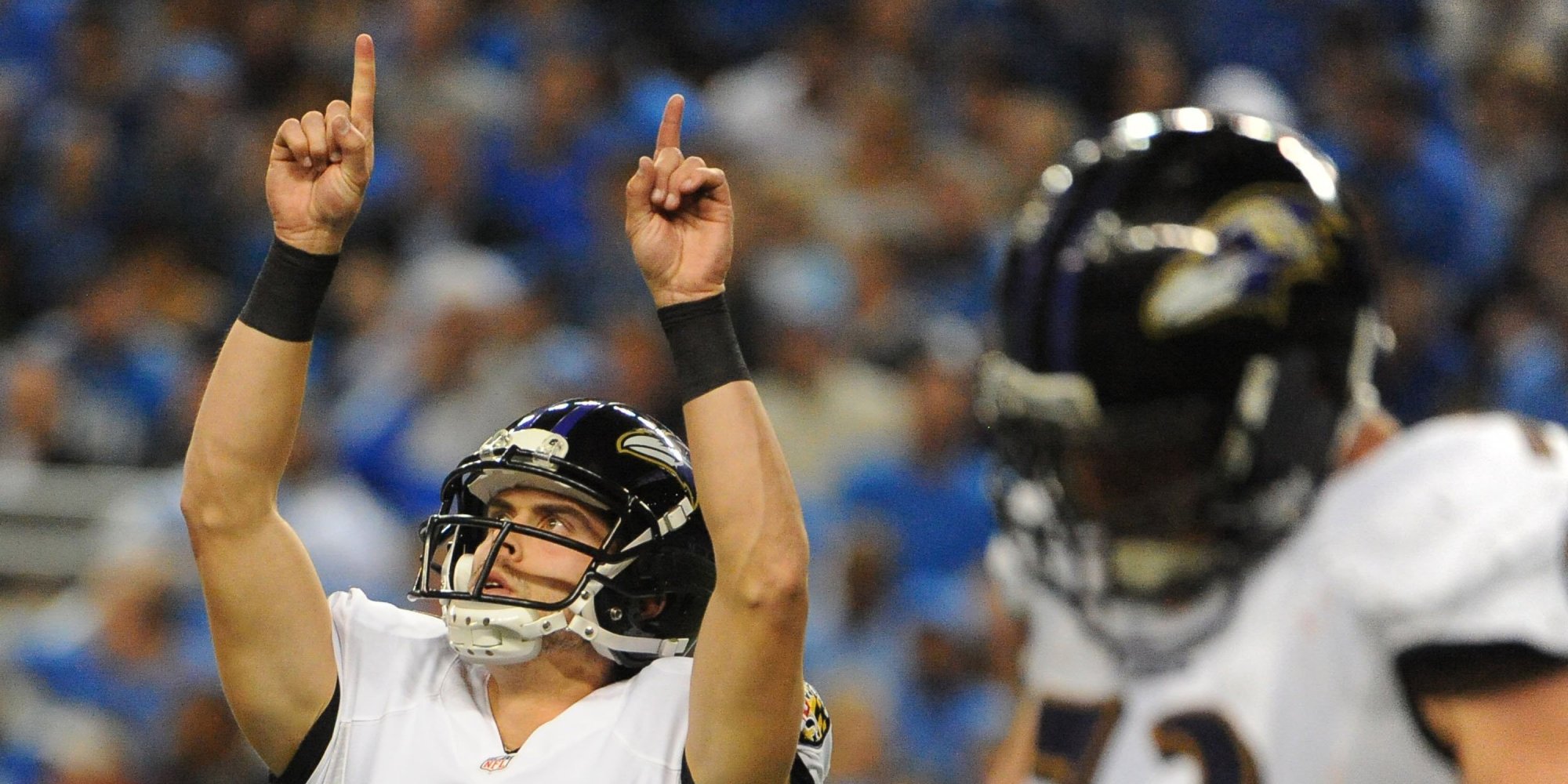
Tucker has made 33 consecutive field goals
Like millions of Americans, I play fantasy football. "Play" is the wrong word, I think, because it implies that there's actually some degree of fun involved. Personally, I find fantasy to be much more frustrating and agonizing than it should be. Drafting is fun, trades are fun, and winning is fun, but that accounts for 10, maybe 15 percent of the fantasy season  I've wasted way too much time scouring the waiver wire, pouring over projections and tinkering with my roster.

Then Sunday rolls around and it becomes a full-blown obsession. I compulsively check my phone from one o'clock onward, watching the points pile up (or not), rooting for my players to score and hoping the other guys' don't. Fantasy consumes my entire day. When I win, it's more of a relief than anything, especially when ESPN pegs me as a 25 point favorite. When I lose, I go back to the drawing board and try to determine where I went wrong.

For much of the season, my most glaring weakness was my kicker, which is strange considering there are plenty of good kickers to be had on the waiver wire since nobody carries more than one. Well, after whiffing on multiple kickers, I've finally found my guy, and just in time for the playoffs.

I've heard fantasy football teams compared to dreams in that they're only interesting to the person talking about them. You snagged Philip Rivers off waivers? Great. Took Aaron Rodgers with your first pick? That blows.

So if that's the case, then you probably don't want to hear my ramble about my kicker issues and how I solved them at the season's 11th hour. That's fine. Feel free to stop reading and check out some of my other content (hint hint: it's mostly baseball), or click off my blog altogether.

But maybe you've had your own kicker-induced headaches/nightmares/frustrations this season. Perhaps you're still looking for a solution. I probably would be, too, except that I've found the answer to my kicker woes. His name is Justin Tucker.

Quick backstory: last year I was undone by Mason Crosby, who converted just 21 of his 33 field goal attempts (63.6 percent). By the time I realized the error of my ways and swapped him out for Dan Bailey, it was already too late. I finished 8-7, narrowly missing the playoffs because I lost or tied several games that would have been victories with a merely capable kicker.

This year I was determined to avoid making the same mistake. Let Crosby be someone else's problem, I told myself. I would avoid outdoor kickers (who must contend with rain, snow, and gale-force winds) like the plague. Not surprisingly, Matt Bryant was my draft day selection. At the time, I was pretty happy about that. Bryant led the league in field goal percentage a few years back and has been one of the NFL's most consistent kickers over the past decade. I figured Atlanta's Matt Ryan-helmed passing attack would give him plenty of scoring opportunities.

Before long, my master plan had been reduced to ashes. Ryan's top two receivers--Roddy White and Julio Jones--both got hurt, and Tony Gonzalez, as great as he still is, can only do so much at this stage in his career. Atlanta's offense sputtered and Bryant's role was greatly diminished. As a result, in ESPN leagues he ranks 20th among kickers in points scored, meaning he's not worthy of a starting spot in my ten-team league. Before long I was looking to the waiver wire for help.

I settled on Garrett Hartley of the New Orleans Saints. Unlike Atlanta, the Saints have one of the league's most explosive offenses. On top of that I already had Drew Brees, so I figured it made sense to get Hartley's extra point every time he threw a touchdown and would settle for field goals when Brees's drives fell just short. While my logic was sound, Hartley's been far from automatic, missing eight of his 30 attempts thus far and ranking 19th at the position, exactly one spot higher than Bryant. That wasn't going to cut it, and when New Orleans' Week 7 bye came around I found myself in need of a new kicker.

I scooped up Nick Novak, San Diego's kicker, and he's been pretty good (eighth). Unfortunately, he was on my team for all of two minutes before I cut him in favor of Detroit's David Akers, who paced the NFL in field goal attempts four out of the past five years.  The opportunities just haven't been there for him this year (only 20 attempts), and as a result he ranks 30th among kickers. I rode him out for three weeks, then cut bait just before Thanksgiving.

By this point I was extremely fed up with myself. Nothing was working. I was in the playoff hunt and couldn't afford to let a kicker sink my season. Desperate for a stable solution, I decided to go out and grab the best kicker on the waiver wire, regardless of team, reputation, or schedule, and settled on Baltimore's Justin Tucker, who was coming off a 15 point game against the Jets. Nicknamed "Mr. Automatic," Tucker hasn't missed a field goal attempt since Week 2. That he had several favorable matchups in front of him (Pittsburgh, Minnesota) made him even more attractive. I was instantly rewarded with a 19 point performance against the Steelers. Tucker won me over. He had me at hello. I committed to him for the rest of the season, even as he was held without a field goal versus Minnesota in Week 14.

Now, thanks to his incredible performance against Detroit last night (six-for-six, connecting from 49, 53, and 61 yards out), Tucker has leapfrogged Stephen Gostkowski and Matt Prater to become fantasy's top-scoring kicker. I have to say, after putting up with subpar kickers all season long, it feels good to have the best. One less thing to worry about as I prepare for my postseason. Now if I could only find a halfway decent wide receiver...