Showing posts with label San Francisco Giants. Show all posts

Thursday, December 15, 2016

Sandoval Shaping Up

Can a slimmed-down Sandoval save his career? (Boston CBS Local)
Pablo Sandoval was probably pretty disappointed when he found out he was going to need season-ending shoulder surgery last May. Nobody wants to be told they’re done for the year when it’s only just begun, especially when your only memorable highlight was busting your belt. If there’s a silver lining from Sandoval's lost season, however, it’s that surgery might yet save his career.

Because let’s face it; even if he'd stayed healthy, Sandoval wasn't going to offer much last year. Coming off the worst season of his career, he arrived at spring training overweight (again), failed to bat said weight and wound up losing his starting job to a player making $17 million less than him. Sandoval rode the pine in April, appearing in just three games as Travis Shaw and the Red Sox got off to torrid starts.

Sandoval was stuck. His team had little use for him while his contract and recent performance made him untradeable. So he wasted away on the bench, watching Shaw’s success systematically destroy whatever shot he had at redemption in 2016.

Now, with Shaw out of the picture, Sandoval has another opportunity to get back in Boston’s good graces. He wisely used his time off to get in "the best shape of his life" and prove he’s serious about his conditioning. Hopefully he also used that time to fix his swing and work on his defense, but both should improve if he maintains his svelte physique.

A year off could do Sandoval wonders. It certainly did for John Lackey, another West Coast star who initially struggled upon signing a big contract with the Red Sox. After pitching at a historically awful level in 2011, Lackey missed all of ’12 recovering from Tommy John surgery. It was a turning point in his career, as a slimmed-down Lackey returned to form in 2013 and is still going strong into his late 30s.

After last year, Sandoval has nowhere to go but up. It’s not hard to imagine him having a similar renaissance in 2017, given that he’ll only be 30. He’ll also be extra motivated to prove himself after everything that's happened since he landed in Boston.

On the other hand, going under the knife may only hasten Sandoval’s decline. Adrian Gonzalez fell off significantly as a hitter following the same procedure, which doesn’t bode well for Sandoval -- a much lesser hitter to start with. He may also find that taking a whole year off severely disrupts his timing, which could prevent him from having the kind of start he needs to secure regular playing time again (Shaw may be gone, but Brock Holt and Rafael Devers are looming).

How the rest of Sandoval’s career plays out will likely be decided by what he does over the next calendar year. If he keeps the weight off and recovers the skills he showed in San Francisco, he'll return from the abyss. But if his body balloons and his struggles persist, he may lose his job for good.

Tuesday, December 15, 2015

Cueto Quite the Bargain

Cueto could fetch an even bigger payday two years from now (NBC Sports)
After missing the playoffs for the fourth odd-year in a row, the San Francisco Giants are gearing up for what hopes to be their fourth straight even-year championship.

Since losing out on Zack Greinke, the Giants have already spent more than what it would have taken to acquire him, but for two pitchers rather than one. Normally I'd say that's a smart move--you're not putting all your eggs in one basket--but not when one of those guys is Jeff Samardzija. I still can't wrap my head around why anyone would want to give $90 million to a 31 year-old who just posted an ERA dangerously close to five, but that's another topic for another post.

Because while I think the Samardzija deal was a mistake as soon as the ink dried, I actually like the Johnny Cueto contract a lot. Forget about his up-and-down second half with Kansas City last year and look at the larger sample size--all in the National League, where he'll be returning next year. Over the past five years only Clayton Kershaw has started at least 100 games and compiled a lower ERA than Cueto, which speaks to just how sneaky-dominant he's been. He hasn't been the most durable pitcher ever, exceeding 200 innings in just three of his eight years, but he's not Clay Buchholz, either. There's only been two years where he's failed to start 30 games, meaning you can pretty much count on him to take the ball every fifth day.

So given his age (30), health, and recent dominance, I'm shocked Cueto settled for six years and $130 million. Granted, he's a virtual lock to opt out after two years and seek another similarly-sized contract, but with the crazy money pitchers have gotten this winter I'm surprised he didn't fetch at least $150 million. I mean, Jon Lester got six years/$155 million last year, and he was a year older with another full season of innings on his arm. David Price is six months older, yet Cueto received one fewer year and only 60 percent the money. Greinke is two years older, but got the same number of years and $76 million more.

What gives? Cueto's never won a Cy Young, like Greinke and Price have, and he's not a lefty, like Lester and Price are. They're also all better strikeout guys than Cueto--whose whiff rate has been roughly league average throughout his career--and strikeouts have proven to be the pitching equivalent of home runs when it's time to get paid (which is why Chris Davis just turned down Baltimore's $150 million offer).

But while punchouts are sexy, they aren't the only way to get outs, and Cueto has done a better job at doing that than everyone besides Kershaw. Five years is a big enough sample size--almost 900 innings--to prove that Cueto's success is not a fluke. He's an elite pitcher, even if his peripherals don't exactly back that up.

Cueto probably could have gotten more had he pushed harder or waited longer to sign, but like Jason Heyward chose to leave a good chunk of guaranteed money on the table for the chance to hit the market again in a few years. He'll be the same age Greinke is now, and that didn't stop Greinke from getting the richest contract in baseball history on an annual basis. With a couple big seasons in San Francisco and perhaps another championship under his belt, Cueto will be an even more attractive free agent at 32 than he was at 30.

 And if he's not, well, four more years at $84 million is nothing to cry about.

Monday, December 7, 2015

Samardzija Slipping

Samardzija isn't the pitcher the Giants are paying him to be (ESPN)
One would think that a smart, competitive baseball team wouldn't want to spend almost $100 million on a 31 year-old pitcher who just led the major leagues in earned runs and hits allowed. And yet, that is what the San Francisco Giants just did by inking Jeff Samardzija to a five-year, $90 million deal.

The question isn't how much stock you put in Samardzija's fluky 2015, a bad year exacerbated by terrible luck. The question is how much faith do you put in a guy on the wrong side of 30 who had one All-Star season sandwiched between two horrendous ones?

Because $90 million is a huge investment in a pitcher who's yet to demonstrate any sort of consistency beyond his ability to top 200 innings repeatedly -- something he's done three straight years now. Despite his advanced age, Samardzija's been a full-time starter only four years, during which time his results have varied wildly. He was good in 2012, bad in 2013, great in 2014, and terrible last year. His career has been a rollercoaster ride in the same vein as Clay Buchholz's, minus the injuries.

Who is the real Jeff Samardzija, then? Probably somewhere in between, but definitely in decline. His strikeout rate has dropped every year since 2012, from a stellar 9.27 K/9 to last year's mediocre 6.9 K/9. He's lost nearly a mile off his average fastball during this time, which explains why batter pull rates have increased against him the last two years along with those sinking whiff rates. Hitters aren't just making more contact against him--they're having an easier time turning on his stuff.

Samardzija seemed to be compensating for this drop in velocity by becoming more of a sinkerballer, as his ground ball rates improved steadily from 2010 through 2014. Last year was a reversal of this trend, however, as he posted his lowest grounder rate since 2010--a direct result of leaving too many pitches up in the zone (hence all the homers). A return to form requires that he gets back to keeping the ball down, lest he continue surrendering big flies at a prodigious rate.

Moving back to the National League and trading Chicago's launching pad for San Francisco's pitcher's heaven will help, as will regression to the mean. But Samardzija's never going to be the pitcher he was two years ago unless his strikeout rate returns -- a longshot given his plummeting velocity. At best, he projects to be a mid-rotation arm, while at worst he's a back-of-the-rotation filler making boatloads of money.

The Giants know better than anyone what it's like to be stuck with a bad, expensive, healthy starting pitcher--i.e. Barry Zito, Tim Lincecum, and now Matt Cain--which makes this deal all the more confusing. Obviously they expect him to bounce back, which I think he will to some degree, but they were probably just as motivated by their disappointing 2015 campaign and subsequent failure to land Zack Greinke.

I just don't see this deal working out for San Francisco. I think it's going to end up like the Lincecum extension, which everyone knew was a mistake at the time and, sure enough, proved to be a huge waste of money. Except this deal is even worse, because the Giants are on the hook for more years and dollars with an older, less established pitcher who's on his fourth team in three years (never mind the fact that Samardzija was never as good for as long as Lincecum--a two-time Cy Young winner).

As with Lincecum, Brian Sabean is overestimating Samardzija's ability to rebound from a bad season and not seeing the forest for the trees. He's paying Shark to be the pitcher he used to be, not the pitcher he is or will be.

Monday, October 26, 2015

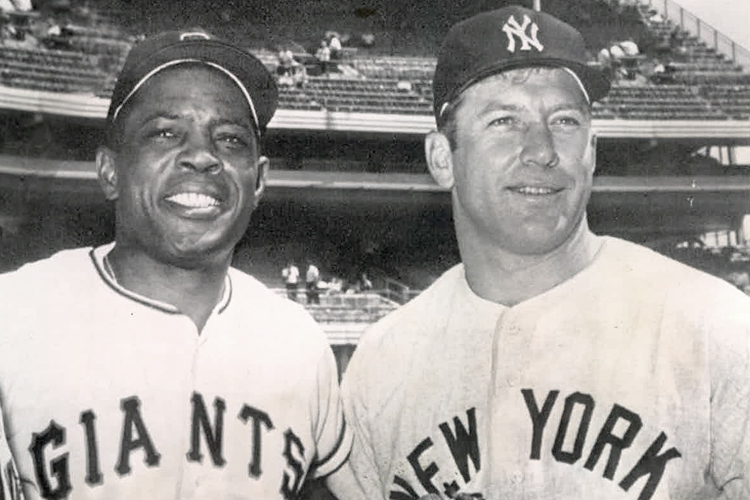
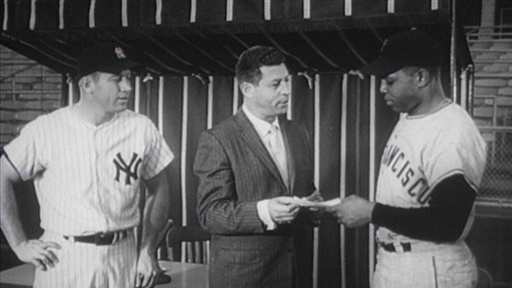
Mantle vs. Mays

Mays was better, but for a while it was too close to call (Salon.com)
For many years during the 1950s and well into the 1960s, Willie Mays and Mickey Mantle were the best center fielders in their respective leagues, if not the two best players in baseball. Throughout the first halves of their careers, before Mays' Giants moved to San Francisco, they were frequently compared with Duke Snider, the talented center fielder of the Brooklyn Dodgers. Snider and Mays both departed New York after the 1957 season, and while Snider was never again the superstar he'd been in Brooklyn, Mays flourished on the West Coast. He and Mantle were widely regarded as the best all-around players in baseball, and upon retiring found themselves on the short list of not just the best center fielders of all time (along with Tris Speaker and Mantle's one-time teammate Joe DiMaggio), but the best players period.

There's no question as to which one was better. That would clearly be Mays, who many consider the best ballplayer not named Babe Ruth. He was just as good as if not better than Mantle in his prime and lasted longer, which explains his advantage of nearly 50 bWAR.

But for a long time, Mantle hung in there. Despite the injuries, his offensive numbers were on par with Mays's and because Mantle walked more, he was a significantly better hitter. Mays was a much better baserunner and fielder, but as a total package Mantle was very nearly his equal.

Here are their stats from 1951 through 1964:
Mays:    8,002 PA 1,379 R 453 HR 1,290 RBI .313/.388/.589 161 OPS+ 109 bWAR 78.8 WAA
Mantle: 7,979 PA 1,472 R 454 HR 1,298 RBI .309/.429/.582 177 OPS+ 97.8 bWAR 73.5 WAA

After 1964, however, Mantle could no longer keep up. The Mick faded fast, becoming a .250 hitter with 20-homer power over his final four seasons. Mays remained a superstar for several more years, copping his second MVP with 52 dingers in 1965 and putting together a nine-win season in '66. He continued to be a solidly above average player into the early '70s, several years after Mantle retired, before hanging up his spikes after the 1973 campaign.

Many, myself included, maintain that Mantle was actually a hair better than Mays before he broke down. Are they right? Let's take a closer look, going year-by-year to determine which one was better.

1951 Mays
Both had massive expectations place on them from the start and, as 19 year-olds usually do, hit rough patches early on in their rookie campaigns. Mays famously went 1-for-his-first-26 (albeit with a home run off Warren Spahn) and became so discouraged that Leo Durocher promised Mays would remain the starting center fielder for the rest of the season to revive his confidence. Mantle was demoted in mid-July to New York's minor league affiliate in Kansas City, where he remained for six weeks and nearly quit before his father talked some sense into him.

Both rebounded from their early slumps. Mays caught fire in June (1.041 OPS) and July (10 home runs) en route to winning the NL Rookie of the Year award and helping the Giants overtake the Dodgers in a wild pennant race. Mantle rejoined the Yankees in late August in time for the stretch run and hit well enough to reclaim his spot at the top of the order. As fate would have it, the dynamic duo met up in the World Series. The Bombers, in the midst of claiming five straight titles, prevailed despite a gruesome knee injury suffered by Mantle when he caught his spikes in an outfield drainage ditch trying to make a play on a fly ball, a fly ball hit by none other than Willie Mays.

Statistically, Mays outproduced Mantle in almost every offensive category. Granted, part of that was because Mays played 25 more games, but even so he outslashed Mantle in average, OBP, and slugging, producing an OPS 36 points higher than Mickey's .792 mark. Combined with his plus defense in center field (Mantle played the less challenging position of right field with DiMaggio still patrolling center), Willie was worth almost four wins above replacement, more than double Mantle's 1.5.
Mantle and Mays faced each other in two World Series. Mantle's Yankees won both (Bama Media)
1954 Mays
Following a two-year hiatus in the Army, Mays returned to baseball a full-blown superstar. He more than doubled his home run output from his rookie year, improved his OPS by 250 points and scored more than twice as many runs. Mays made his first All-Star team and was voted league MVP after leading the majors in batting (.345), slugging (.667), and bWAR (10.6) while also pacing the NL in triples, OPS, and OPS+. To top it all off, he led the Giants to a World Series victory over the heavily-favored Cleveland Indians, winners of 111 games during the regular season.

Mantle, who'd developed into a great player while Mays was gone, continued to improve in his fourth season. In addition to batting .300 for the second time and exceeding a .400 OBP and 100 RBI for the first, he set career highs in nearly every category and scored an ML-best 129 runs.  The Mick was tremendous, worth almost seven wins, but Mays was playing in a different stratosphere that year.

1955 Mays
Very, very close this time around. Both B-R and FanGraphs give Mantle the slight edge in WAR, rating him closer to 10 while pegging Mays at nine exactly, but frankly I can't see how. Mays was arguably better in his MVP encore, leading the majors with 13 triples, 51 homers, 382 total bases, a .659 slugging, and a 1.059 OPS. Mantle was outstanding in his own right, emerging as a true superstar by leading the AL in triples, big flies, OBP, slugging, and OPS, as well as both leagues in OPS+ and bWAR.

Mays definitely had the bigger offensive season, however, compensating for Mantle's 31 point advantage in OBP with 14 additional home runs, 28 more RBI and a slugging percentage some 48 points higher. Mays also stole three times as many bases as Mantle and was already regarded as the best center fielder in the game after making "The Catch" the previous October. Advantage: Mays.

1956 Mantle
'56 was Mantle's signature season, a gem of a campaign that saw him win the major league triple crown and pile up 11.3 bWAR in addition to leading baseball in runs, runs created, total bases, slugging percentage, OPS, OPS+, WAR, extra base hits, and times on base. When the dust settled, he'd led the Yankees to another World Series championship, won his first MVP award (unanimously), and endeared himself to a new generation of Yankee fans with a season comparable to the best of Babe Ruth, Lou Gehrig, and Joe DiMaggio. Mays, with 36 home runs, a major league leading 40 steals, and 7.6 bWAR, was also terrific, but Mantle was legendary.

1957 Mantle
In his final season in New York (before returning as a Met 15 years later), Mays won his first of 12 straight Gold Gloves. He also treated the fans to some impressive offensive statistics, slugging 35 home runs and a ML-leading 20 triples to go along with his 38 steals (also tops in the bigs) and a 1.033 OPS, good for the best OPS+ (173) in the National League. 

But Mantle, in some respects, had an even better year than his Triple Crown campaign. Not only did he bat a career-best .365 with a .512 OBP (fueled by 146 walks--most in the majors), but he also posted the highest OPS (1.177) and OPS+ (221) of his career. WAR says Mantle's '57 was every bit as valuable as the season that preceded it, and the voters agreed, giving him his second straight MVP trophy despite an otherworldly season by Ted Williams (.388/.526/.731 with 38 homers).
So with a three-bWAR edge over Mays, Mantle wins easily.

1958 Mantle
The Say Hey Kid's first season out west was a good one, as he batted .347/.419/.583 for a league-best 1.002 OPS and 165 OPS+. While his 29 homers were his fewest since his rookie season, he made up for it with personal bests in batting average and hits (208) as well as leading the majors in stolen bases again (with 31). His second season worth at least 10 bWAR was only good enough for second in the NL MVP race, however, as voters elected Ernie Banks (9.4 bWAR) and his prodigious power totals at shortstop.

Mantle fell back to earth a bit after his insane 1956 and 1957 seasons, but still clobbered a league-high 42 home runs, batted over .300, and worked more walks/scored more runs than anybody else in baseball. Despite batting 43 points lower than Mays, he still held significant advantages in OBP (24 points) and slugging (nine points), not to mention the best OPS+ in baseball at 188. That's why I'm giving the edge to him even though bWAR estimates Mays was worth about 1.5 more wins to his team. With Mantle clearly the better hitter and almost Mays' equal on the bases (he was a very efficient 18 for 21 in stolen base attempts), I'm not going to be swayed by unreliable defensive metrics.

1959 Mays
1959 was a major disappointment for Mantle and the Yankees, who finished only four games above .500 and failed to win the pennant for only the second time since Casey Stengel took over. The Mick suffered his worst season since 1953, hitting "only" 31 home runs with "only" 75 RBI. Those numbers would have been more palatable to Yankee fans had he not led the major leagues in whiffs with 126 (a career-high) and batted .285--his worst mark since his rookie season.
While '59 was a down year for Mickey, it was business as usual for Mays, who won another Gold Glove, slugged 34 home runs, drove in 104, and stole a league-high 27 bases in 31 attempts. Add it all up and Mays was worth over a full win more than Mantle, even though their offensive output was almost dead-even (Mays had a 156 OPS+ to Mantle's AL-best 151).
Mantle and Mays squared off in the first ever home run derby. Mantle won
1960 Mays
Offensively, Mays and Mantle were about dead-even in the first year of the '60s, with perhaps the slight edge going to Mantle. By this point, however, Mays was the much better fielder and baserunner, which means on the whole he was more valuable. This is bored out by bWAR, which puts Mays at 9.5--a full three wins better than Mantle's 6.3. Both players endured "down" years by their lofty standards, with Mays failing to reach 30 home runs for the second time in three years and Mantle batting .275 with a league-high 125 strikeouts. I'm nitpicking, of course, but I'm sure both players would tell you that 1960 wasn't their best.

1961 Mantle
Mays boosted his power numbers considerably in his second year at the 'Stick, generating his most home runs (40) and RBI (123) since his monster 1955 campaign and raising his slugging percentage nearly 30 points.

Even with the power spike, he still fell well short of Mantle, who along with teammate Roger Maris challenged Babe Ruth's hallowed single-season home run record. Mantle fell short at 54, but still led the majors in walks (126), slugging (.687) and bWAR (10.5). So feared was the Mick that Maris, despite launching 61 homers himself, did not receive a single intentional walk in 1961, for he spent most of the season batting in front of Mantle.

1962 Mays
Mantle may have won his third MVP but Mays eclipsed him in almost every category. Mantle had the superior rate stats, batting an obscene .321/.486/.605 (195 OPS+), but he also missed roughly a quarter of the season, which limited his value to about six wins. Mays, on the other hand, played 162 of a possible 165 regular season games, racking up personal bests in runs (130), RBI (141), and total bases (382) as well as 49 home runs--most in the majors. Mays was worth an incredible 10.5 bWAR that year, and yet somehow did not win MVP (voters gave it to Maury Wills, who shattered Ty Cobb's single season stolen base record that year).

Mantle got the best of Mays in that year's Fall Classic, which featured the Yankees and Giants in a rematch of the 1951 Series. New York won in seven despite Mantle's mediocre .120/.241/.160 performance. Perhaps the Giants would have won--they lost Game 7 by one run, had Mays done more than bat .250/.276/.321 with zero home runs and one RBI.

1963 Mays
Mantle seriously injured himself, missing almost 100 games after breaking his foot in a nasty collision with a chain-link fence. He was terrific when he did play, replicating his 1962 production, but Mays stayed healthy so there was no discussion.

1964 Mays
'64 was Mantle's last great season, yielding 35 homer runs and 111 RBI as well as the best OBP (.423), OPS (1.015) and adjusted OPS (177) in baseball. But Mays was right there with him, knocking in the same number of runs, socking 12 more home runs, leading the major leagues in slugging percentage at .607 and posting the NL's best raw (.990) and adjusted (172) OPS. Mays was much better in the field and on the bases at this point as well, with 19 steals to Mantle's six and Gold Glove defense in center compared to Mantle's abysmal defense. All said, Mays was worth more than twice as many bWAR (11.1) as Mantle (4.8), making him the obvious choice here.

After 1964, Mays vs. Mantle was no longer a debate. Age, injuries, and alcohol pushed Mantle over the cliff, as he batted just .254 over his final four seasons while averaging just 20 home runs and 53 RBI per season. Mays took much better care of himself, and thus aged more gracefully, winning his second MVP in 1965 and compiling almost 31 bWAR from 1964-1968. Their teams endured similar fates, as the Yankees plummeted to the second division while the Giants remained one of the best teams in baseball.

One can only wonder how Mantle's closing act would have played out had he stayed healthy and avoided the bottle. Based on how close the above comparisons are, I can't imagine it would have been much different from Mays.

Friday, December 19, 2014

Peavy Stays with San Francisco

Peavy will return to the Giants (NESN)
Shortly after re-signing reliever Sergio Romo to a two-year deal, the San Francisco Giants did the same thing with starting pitcher Jake Peavy.

Peavy, who went 7-13 with a 3.73 ERA between the Red Sox and Giants last year, will make $24 million from the deal, which breaks down into a $4 million signing bonus, $7 million salary for 2015, and $13 million salary for 2016. The contract includes a full no-trade clause for the 33 year-old righthander, who was traded in each of the past two summers.

Peavy pitched well in his return to the National League, bouncing back from a miserable start with Boston to post a 2.17 ERA, 1.04 WHIP, and 3.41 K/BB ratio in his dozen regular season starts with San Francisco. After helping pitch the Giants into the postseason, though, he bombed in the playoffs. He was particularly awful in the World Series, surrendering nine earned runs to a mediocre Royals offense in six and a third innings over two starts. The Giants won their third title in five years in spite of him, not because of him. Ditto last year's Red Sox.

And while there's no way Peavy could sustain his second half of 2014 for a full season, the Giants aren't betting on a dozen great starts from someone who's going to be 34 next year. They're betting on a three-time All-Star with a proven track record of success, a guy who's topped 200 innings in two of the past three years and five times overall. For Peavy to be worth the money, he'll need to provide three or four wins above replacement over the next two years combined. That shouldn't be too difficult for someone who's been worth no less than 1.7 fWAR in each of the past 11 seasons, several of which were shortened by injury.

Then again, maybe the Giants should be worried. Peavy's FIP, xFIP, and SIERA have gone up every year since 2011, and so has his walk rate. Meanwhile, his average velocity has steadily declined, with his average fastball falling below 90 miles per hour for the first time last year. Not surprisingly, he posted the worst strikeout rate of his career in 2014, barely cracking the 7 whiffs per 9 innings mark. Steamer says he'll be worth just one fWAR next year, and that's working under the assumption he makes 29 starts, something he's done only twice in the past seven seasons. At his absolute best he'll be a league average starter going forward, which means San Francisco, in all likelihood, just forked over $24 million to a below average one in his mid-30s.

But the Giants have the most recent data on Peavy, so one has to think they know him best. He did pitch really well for them last year, even if it was in a small sample size. In that ballpark and against weaker National League competition, who's to say he won't remain effective for at least another year or two? He rounds out the rotation beyond Madison Bumgarner, Matt Cain, Tim Lincecum, and Tim Hudson. He also provides plenty of veteran leadership, experience, grit, and a great clubhouse presence, whatever that's worth.

So is Peavy money well-spent? Probably not, but few free agents are these days.

Thursday, October 30, 2014

San Francisco's Sneaky Dynasty

Watching the Giants win the last game of the season has become commonplace
It took the Giants 53 seasons to win a World Series after leaving New York following the 1957 season. The drought, snapped in 2010, has been followed by a deluge, as San Francisco has won two more championships since, all under the guidance of future Hall of Fame manager Bruce Bochy.

The Giants have done it with solid all-around teams. None of those title teams had a 30 home run hitter or a 20 game winner, but they were all deep and balanced. Kudos to GM Brian Sabean for building winning rosters year after year.

The first of those teams--the 2010 edition--was a good one. The '10 Giants won 92 games and the NL West, scoring nearly 700 runs while allowing below 600 for a strong run differential of +114. They were middle of the pack offensively but fielded an elite pitching staff that led the National League in ERA and strikeouts. Matt Cain and Tim Lincecum fronted a rotation that included a 20 year-old rookie named Madison Bumgarner. The bullpen featured Brian Wilson at the peak of his powers (48 saves, 1.81 ERA) along with a pair of dominant relievers in Sergio Romo and Santiago Casilla.

Minus Bumgarner, the pitching staff was largely comprised of players in their prime. The starting nine was an odd mix of young (20 year-old Buster Posey in his rookie season, 23 year-old Pablo Sandoval in his third) and mostly old veterans and cast-offs (Aubrey Huff, Aaron Rowand, Pat Burrell, Edgar Renteria). But pretty much everyone could hit for some power and get on base, and so the Giants cobbled together a surprisingly effective lineup. They beat the Braves in four in the NLCS, toppled Philadelphia in six for the pennant, then glided past the Texas Rangers in five games for the championship.

After missing the playoffs with an 86-win season in 2011, the Giants won their division again in 2012. Though they won two more games than and outscored their 2010 predecessors by 21 runs (thanks almost entirely to Posey's MVP-season, Melky Cabrera's PED-fueled outburst, a career year from Angel Pagan, and Hunter Pence's late-season contributions), their pitching wasn't as good and their run differential slipped to +69.

Looking back, it's hard to believe how that lineup scored more than 700 runs when only one guy (Posey) hit more than a dozen home runs and only three reached double digits. Similarly, only those three exceeded 60 RBI, with Posey the only one over 65. But while the Giants did not have much power, ranking dead last in home runs with 100, they did excel at getting on base and getting hits. With many of the veterans from the 2010 squad gone or phased out, San Francisco was a younger and more athletic team (as evidenced by their 118 steals).

The key to that team's success was a rotation that remained remarkably healthy. The starting five of Bumgarner, Cain, Lincecum, Barry Zito, and Ryan Vogelsong started all but two games that year. Lincecum went off the rails (10-15, 5.18 ERA), but the rest of the rotation was formidable enough to compensate. The bullpen was still led by Casilla, Romo, and Javier Lopez though Wilson had become irrelevant. Jeremy Affeldt, a member of the 2010 outfit, emerged as one of the team's best relievers to give San Fran a strong relief corps.

Those 2012 Giants were lucky to even reach the World Series. They went the distance against the Reds in the NLDS and prevailed over St. Louis in Game 7 of the NLCS. After that it was smooth-sailing, as they swept the heavily-favored Tigers in the World Series.

2013 was a nightmare season for San Francisco, which lost 86 games and was never really in contention. The Giants were better in 2014, good enough to make the playoffs but still not a great team. They earned a wild card berth with 88 wins and a +51 run differential mostly because of torrid second halves from Buster Posey and Jake Peavy.

The lineup, as always, had few standouts but was solidly constructed, overcoming significant injuries to four of the nine main contributors. Of the 10 players with the most plate appearances on the club, all but one (Brandon Hicks) had an OPS+ above 100. Like the 2010 version, they could all get on base and hit for a bit of pop, which goes a long way. The speed from the 2012 team was absent, however, as the plodding Giants swiped just 56 bases and finished last in the NL.

With Cain hurt and Lincecum ineffective, Bumgarner was the clear-cut ace. He had help in the form of Tim Hudson and, in the second half, Peavy, but San Fran's rotation was pretty thin (as exposed by the weak-hitting Royals in the Fall Classic). The bullpen was still headed by Affeldt, Romo, Lopez, and Casilla in addition to Jean Machi. Like the rotation, it was neither great nor terrible, which explains how San Francisco was so average.

But while this year's championship edition was the worst of the three, it had the easiest run up to the World Series. The Giants cruised past the Pirates in the play-in game, washed away the Nationals in four games in the NLDS, then upset the Cards in five games. They stumbled in the Fall Classic, nearly going down three games to one before rallying to win Games 4, 5, and 7. They may have needed plenty of help from Mr. Bumgarner, but at the end of the day they still got the job done.



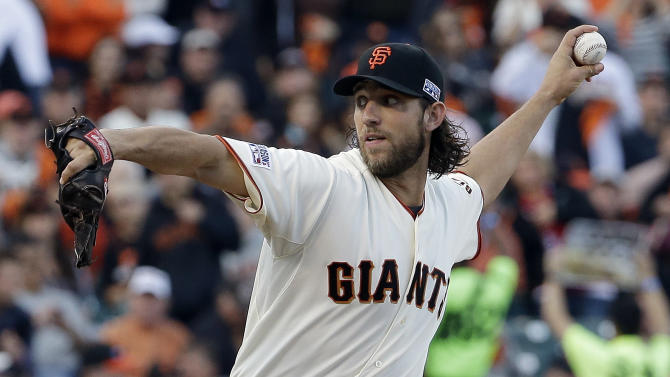
The Magnificent Madison Bumgarner

Bumgarner capped a stellar postseason with a marvelous World Series (Yahoo)
Even before last night, we knew Madison Bumgarner's 2014 postseason run was spectacular, one of the best ever, in fact. We knew it represented a pitcher at his absolute best. We knew we were witnessing a level greatness rarely sustained for long during playoff time.

What we did not know, however, was how that run would end. We knew Bumgarner was going to make a relief appearance in Game 7 three days after spinning the first Series shutout in over a decade. Nobody could have known how long he'd stay in or how effective he would be.The general consensus was that he'd pitch one to three innings.

He went five, closing out the game and the series with the most memorable postseason relief appearance this side of Pedro Martinez.

Bumgarner, as he was all month, was absolutely nasty. Once again he proved to be the Royals' kryptonite, muting their bats over five scoreless innings. Kansas City managed just two hits against him, both singles. For the third time in the series, they were completely and utterly helpless against him.

They were hardly the only ones looking overmatched against him this fall (his ERA this postseason: 1.03). First he blanked the Pirates on the road in the wild card play-in game, and that was just the appetizer. He turned in seven strong innings in his lone NLCS start versus the Nationals, then seven and 2/3 scoreless frames in St. Louis in Game 1 of the NLCS. Back at home for Game 5, he went eight innings and allowed three runs in the pennant clinching game.

By the time the World Series rolled around, the 25 year-old southpaw was all warmed up. He pitched the Giants to an easy victory in Game 1 with seven innings of one-run ball. He hurled a four-hit shutout in Game 5 to bring San Francisco within one game of the title. And, after Jake Peavy and Tim Hudson faltered in Kansas City, Bumgarner took his team all the way with five scoreless frames.

MadBum was as deserving as a World Series MVP possibly can be. He put the team on his back, carried them on his shoulders, and delivered them to their third World Series title in five years. While he was credited with the save in Game 7 (Jeremy Affeldt got the win), for all intents and purposes he won three games in this series.

Bumgarner's stat lines from this series are just ridiculous. There's the one earned run in 21 innings, of course, which works out to a 0.43 ERA. He walked only one batter over that span (Lorenzo Cain in Game 1) and allowed just nine hits (only three of which went for extra bases), resulting in a 0.48 WHIP. Of the 74 batters he faced, he retired 63 of them (85 percent), 17 by way of the K. Opponents batted just .127/.151/.197 against him, and he threw 70 percent of his 291 pitches for strikes.

What we saw was a great pitcher at the peak of his powers, and the result was probably the best postseason any pitcher has ever had. Even more incredible is that Bumgarner was able to do what he did after tossing a career high 217 and 1/3 innings during the regular season. Including his five inning relief appearance, he basically made 40 starts this year and remained sharp to the last out.

Bumgarner's been a great pitcher for several years now (did you know he was a two-time All-Star?), but this World Series felt like his coming out party the way 2003 was for Josh Beckett. Madison Bumgarner is now a household name the way Clayton Kershaw and Justin Verlander are. The best part is; he's barely 25.

Wednesday, October 29, 2014

Stats that Don't Mean Anything Tonight

Here are 7 stats that won't mean a thing in tonight's winner-take-all Game 7:

1. The Royals have never lost a Game 7.
Why it's meaningless: They've only played two.

2. Tim Hudson is the oldest pitcher to ever start a Game 7.
Why it's meaningless: Hudson was an All-Star this year and has a dozen postseason starts under his belt. I'd trust him more than I'd trust Jeremy Guthrie.

3. Buster Posey does not have an extra base hit in these playoffs.
Why it's meaningless: Posey's one of the best pure hitters in baseball, coming off a regular season in which he batted .311/.364/.490 with 22 home runs. Posey has plenty of pop, even if his power has been absent in October.

4. Alex Gordon is batting .125 with no walks in the World Series.
Why it's meaningless: Gordon was Kansas City's clear MVP this year. All good players go through slumps, and there's no doubt that Gordon's in one, but he's such a good all-around player that he's still an asset even when his bat is quiet.

5. Only one of the games in this World Series was decided by fewer than five runs.
Why it's meaningless: Despite the lopsided scores of every game except the third, these teams are very evenly matched. KC has won 100 games this year, San Francisco has won 99. The Royals have scored 25 runs in this series, the Giants have plated 27. Any way you look at it, this game's a toss-up.

6. Madison Bumgarner has never made a relief appearance in the World Series before.
Why this is meaningless: MadBum's enjoying one of the most dominant postseason runs of all time and has baffled the Royals. He can't lose.

7. Nobody has lost a World Series Game 7 at home since 1979.
Why it's meaningless: That streak will end eventually.

Royals Rout Giants, Force Game 7

The Royals staved off elimination with a blowout victory (TheStar)
It was a game the Kansas City Royals absolutely had to win, and it was over by the third inning.

Faced with a win-or-go-home scenario in Game 6 of the 2014 World Series, just two days removed from managing a mere four hits against Madison Bumgarner, Kansas City broke out the bats. The Royals hung seven on the board in the second, equaling in one inning what they scored across 27 in San Francisco, and plated 10 in all. Kansas City's Game 6 run total exceeded its output in Games 1, 3, 4, and 5 combined.

The offensive outburst couldn't have come at a better time. There will be a Game 7 after all.

For that the Royals can thank Jake Peavy, who followed up his poor Game 2 start with an abysmal outing. He recorded only four outs before departing, leaving San Francisco's bullpen to mop up the remaining six and 2/3 innings. Peavy was about as bad as a pitcher can be, allowing five runs on six hits and giving the home team a commanding early lead. The poor Giants never even had a chance.

Then again, Peavy could have pitched brilliantly and still would have lost, as San Francisco scored nary a run. The Giants certainly had their chances, as 11 of them reached base, but the visitors came up empty in their six opportunities with runners in scoring position. They were thus shutout by Yordano Ventura, then Jason Frasor, and finally Tim Collins.

Speaking of Ventura, what a performance! 23 years old and fresh off his first full big league campaign, he rose to the occasion in the biggest game of his life. With five walks in seven innings he wasn't quite Bumgarner-esque, but nevertheless shut down San Francisco to eliminate whatever slim hopes there were of a comeback. Move over, James Shields; there's a new big game pitcher in town.

Of course, Ventura's effort will be in vain if Kansas City loses tonight. With a championship on the line, in the biggest baseball game the city has seen in three decades, the Royals will be counting on...Jeremy Guthrie, a thoroughly mediocre pitcher in 2014 with a 4.13 ERA and 1.30 WHIP across 202 and 2/3 innings. Guthrie earned the win in Game 3 but has failed to complete more than five innings in either of his postseason starts. It's a good thing Kansas City's bullpen is well-rested after Ventura's outing, because Ned Yost is going need all hands on deck for this one.

The Giants will counter with Tim Hudson, a grizzled veteran of 39 years, 16 of them spent in the big leagues. Still searching for a ring in his seventh postseason, Huddy has the chance to decide his team's destiny tonight. He was the tough-luck loser in Game 3 and will be looking to erase an entire career's worth of October frustration. Does his right arm, which has logged more than 3,000 innings in the big leagues, have enough bullets to keep Kansas City's spotty lineup at bay? The Giants' third title in five years depends on it. He has so much at stake in terms of pride and reputation, combined with such a distinguished track record, that I can't envision him pitching poorly. If he loses, it's going to be close, and it's going to hurt.

Adding to the intrigue is that both Yost and Bruce Bochy can call upon their aces if necessary. With two days rest, Shields and Bumgarner would typically use today as a throw day, but given the circumstances will be available to come out of the bullpen. That has to be a terrifying thought for the Royals, who've been utterly helpless against MadBum in this series. They better jump out to an early lead against Hudson, because if they have to deal with Bumgarner late in the game they're screwed.

I've said all along that the Giants were going to win this thing, and I'm not going back on my prediction now. I say they take Game 7 by a score of 4-2.

Monday, October 27, 2014

Bumgarner Delivers

Bumgarner was lights-out in the crucial fifth game of the World Series (NYDailyNews)
Madison Bumgarner was spectacular once again last night, pitching the San Francisco Giants to within one game of their third World Series title this decade.

MadBum was electric in front of a capacity crowd at AT&T Ballpark, gifting the fans with one of his best performances in the final game of the season there. He was truly masterful, yielding only four hits and no walks while striking out eight as he shut out the Royals. Only twice did he allow runners to reach scoring position. For the second time this series, in which he now has a 0.56 ERA, the 25 year-old southpaw got the better of "Big Game" James Shields.

Shields, to his credit, pitched well, scattering eight hits over six innings and permitting just two runs. He redeemed his poor Game 1 performance by keeping his team in the game before turning said game over to the bullpen, which for the second night in a row gave the game away. Kelvin Herrera surrendered two runs in his lone inning of work (the seventh), and Wade Davis allowed one in his (the eighth). The way Bumgarner was pitching, spotting him a five run lead may as well have been 15.

Offensively the Giants were led by Hunter Pence and Pablo Sandoval, who continued their monster series with two hits and two runs apiece. Pence is now batting a ridiculous .474/.545/.737 in this Fall Classic, while Sandoval is raking at a .364/.364/.455 clip. Yordano Ventura and the Kansas City bullpen must find a way to neutralize them in Game 6, as well as the always-dangerous Buster Posey, if they're going to have any chance of playing Game 7. Ventura pitched well enough in Game 2, making it into the sixth inning after allowing two runs on eight hits, but given the Royals' recent bullpen woes he may need to be even stingier.

With the series shifting back to Kansas City, San Francisco has two chances to close out the title. In Game 6 the Giants will try to do so behind Jake Peavy, who pitched poorly in Game 2 (four runs in five innings). He'll need to be better than that against Kansas City's live-armed rookie, otherwise his team will be in the unenviable position of playing a Game 7 on the road.

I like the Royals' chances tomorrow night, back at home and with the superior pitcher on the mound. I'd also love to see a Game 7. Hopefully the home team can pull it out.

Sunday, October 26, 2014

Royal Collapse

The Royals appeared to have the series well in hand, until the Giants came back (ESPN)
When the San Francisco Giants inevitably win this World Series, we will point to the second half of Game 4 as the moment when it all fell apart for the Kansas City Royals, just as one looking to explain Detroit's collapse in last year's ALCS need only mention David Ortiz's series-shifting grand slam off Joaquin Benoit.

Because the Giants, for all intents and purposes, were toast. Done. Finished. They entered the bottom of the fifth inning of Game 4 down 4-2 in the game and 2-1 in the series. It goes without saying that if San Francisco loses that game their season's essentially over, because they have to beat James Shields in Game 5, then travel to Kansas City and win back-to-back games on the road. No way they were winning three straight against a team that began this postseason 8-0.

So San Francisco, with its back basically to the wall, rallied. More than that, the Giants exploded for nine runs, all against a Kansas City bullpen that had previously been untouchable. San Fran scored two in the fifth to tie it, three in the sixth to pull ahead, and four in the seventh to put the game out of reach. When the smoke cleared at game's end, the home team had pounded the Royals for 11 runs and 16 hits, equaling their run total from the series' first three games.

Now, with the series even at two games apiece and their ace, Madison Bumgarner, on the mound tonight, the Giants have new life. They have the best pitcher in the series going for them, one who has been nothing but filth these playoffs (1.40 ERA in five starts). The 25 year-old southpaw is on such a roll right now that he can't lose, nor will he in the most important game of the season. Bumgarner, like Josh Beckett and Curt Schilling before him, is going to come through for his team when they need him the most.

The same can't be said about Shields, who's tarnished his "Big Game" nickname with his recent lackluster performance.  He was battered in Game 1 to the tune of five runs and seven hits in three innings, spiking his 2014 playoff ERA to 7.11 and his career postseason mark to 5.74. Shields is better than that and still the best starting pitcher Kansas City has, but if I'm Ned Yost or a Royals fan I definitely don't feel too great about my chances tonight.

The irony is that Shields was brought to Kansas City for precisely this moment; a must-win playoff game. Dayton Moore was willing to give up Wil Myers to have Shields available for a game like this. But with the Royals in their first postseason since 1985, Shields has been more of a detriment than asset. The free agent-to-be has the chance to redeem himself tonight, in what will most certainly be the final game he ever pitches for the Royals. But if he gets shelled again, then the Royals' losing the World Series is going to be on him, and Moore's going to have to live with the fact that he traded Myers for the wrong guy.


Thursday, October 23, 2014

Royals Return Favor

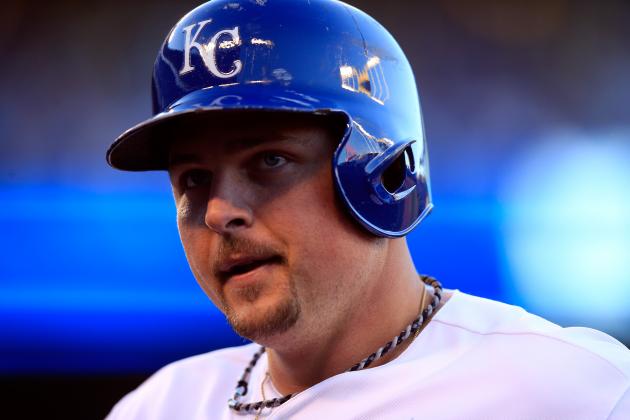
Billy Butler came up big for the Royals with a pair of RBI singles (BleacherReport)
After getting pounded 7-1 by the San Francisco Giants in Game 1, the Kansas City Royals responded with a 7-2 victory in Game 2 to even the World Series at one win apiece.

Though the scores of the games were nearly identical, they played out very differently. Game 1 was all Giants from the outset, as they jumped all over James Shields for three runs in the first and led the entire game. San Francisco was in control from start to finish. Game 2, at least through the first five innings, was closely contested.

Once again the Giants drew first blood, this time on a Gregor Blanco leadoff homer. Unfazed, Yordano Ventura regained his composure and set down the next three Giants in order. Kansas City responded with a run of its own in the bottom half to knot the score at one on a Billy Butler RBI single. The Royals took their first lead of the series the following inning when Alcides Escobar doubled home Omar Infante. After a scoreless third, the Giants evened the score at two-all in the top of the fourth on Brandon Belt's RBI double.

The score remained 2-2 until the bottom of the sixth, when Kansas City blew the door down with a five run frame. Giants' starter Jake Peavy was still dealing (Ventura had departed in the top half), but Bruce Bochy quickly lifted him from the game after Lorenzo Cain singled and Eric Hosmer walked to begin the inning. Four pitching changes later, and the Royals had themselves an improbable 7-2 lead. Butler singled Cain home for the go-ahead run, putting Kansas City ahead for good. Following an Alex Gordon fly out, Salvador Perez provided some insurance with a two-run double, preceding Infante's back-breaking two-run shot that finished the Giants.

San Francisco was unable to scrape anything together in the final innings as the Royals went on to win 7-2. The series shifts to San Francisco for Game 3 on Friday night, which will feature Jeremy Guthrie against Tim Hudson. As well as Guthrie pitched in his ALCS start against Baltimore (five innings, one earned run, three hits and two walks allowed) I have to give the edge to Hudson. Huddy's had the better year, the better career, and has the advantage of pitching at home, where he was slightly more effective this year with a 3.76 K/BB ratio, 1.21 WHIP and .704 opponents OPS compared to 3.29, 1.25 and .720 on the road. Expect the Giants to bounce back on their home turf in Game 3.

Wednesday, October 22, 2014

Giants Grab Series Lead

San Francisco won Game 1 behind a brilliant start from Madison Bumgarner (WSOCTV)
The Royals' postseason winning streak of 11 (dating back to the 1985 World Series) was snapped last night as Kansas City lost Game 1 of the World Series, 7-1. The San Francisco Giants, making their third World Series appearance in five years, earned a decisive Game 1 victory on the road to open the Series.

The Royals' meek offense was no match for Giants' ace Madison Bumgarner, who held them to three hits and one run over seven stellar innings. The southpaw continued his month-long run of dominance, lowering his ERA in these playoffs to a microscopic 1.40 while improving his career postseason record to 6-3.

Meanwhile, "Big Game" James Shields failed to live up to his reputation once again, as he was bombed for five runs and seven hits in three innings. Shields struggled from the get-go, allowing hits to five of the first six batters he faced as San Francisco jumped out to an early 3-0 lead. He seemed to settle down with 1-2-3 innings in the second and third, only to unravel again in the fourth. Hunter Pence stroked a leadoff double, Brandon Belt followed with a walk, and Michael Morse singled to drive Pence home.

That was all for Shields, who saw his postseason ERA swell to 5.74 with the poor outing. Danny Duffy came on in relief and walked in a run before getting himself out of a bases loaded, one out jam.

But the damage was done. The Giants would have all the runs they would need on a night when Bumgarner was practically unhittable. San Francisco padded its lead to 7-0 in the seventh, and when Salvador Perez touched MadBum for a solo shot in the bottom half of the frame the game was already out of reach. Bumgarner departed after 106 pitches, having struck out five against only one walk, and the Giants bullpen took it from there.

Tonight's Game 2 becomes a must-win for the Royals, who need to even the series before traveling to San Francisco for Games 3, 4, and 5. They'll send young Yordano Ventura, their 23 year-old flamethrowing rookie, to the mound against Jake Peavy, a major league veteran of 13 years. Peavy, pitching in the Fall Classic for the second year in a row, has been a revelation since being traded from Boston in late July. Ventura was excellent in his ALDS start but struggled against Baltimore in the ALCS, so it's tough to say how he'll perform in his first World Series start. Peavy's on a roll, with a 2.14 ERA since joining San Francisco, and will look to maintain that momentum against a meager Royals lineup that managed just four hits against his teammates last night.

In a matchup of young versus old, Kansas City needs its youth to step up, otherwise there may not be another game at Kaufmann Stadium this year after tonight.

Monday, October 20, 2014

2014 World Series Preview

San Francisco should win its third title this decade (InForum)
Six teams won at least 90 games in 2014. None of them are in the World Series. The Kansas City Royals, with 89 wins, are, and so are the San Francisco Giants--an 88-win club. And so the World Series will be without a 90-win team for the first time in a season not shortened by strike or war. Given that 10 teams make the playoffs now, it was only a matter of time, I suppose.

Both contestants are good teams, obviously, but neither can be considered the best in their division, let alone their league. The Giants didn't have a particularly good run differential at +51, but that was still better than the Royals at +27. There's a reason both teams were Wild Card entries.

But here they are, the last teams standing in their respective leagues. San Francisco is shooting for its third World Series title in five years. The Royals hope to cap their first playoff appearance since 1985 with a championship.

Who's the favorite, you ask? I say San Francisco, and not just because they're more seasoned when it comes to October baseball.

Offensively, the Giants are considerably better after adjusting for league and park. They outscored the Royals by 14 runs and posted a superior OPS (.699 to .690) despite playing in a tougher park and hitting pitchers much more frequently. Their on-base abilities are about even with the slight edge going to Kansas City (.314 OBP to San Fran's .311), but the Giants displayed much more power. They outhomered the Royals 132 to 95 and had six players exceed 10 home runs (the Royals had three). Kansas City is a much faster team with nearly three times as many stolen bases, but San Francisco is clearly more dangerous given their long ball ability via Buster Posey, Hunter Pence and Pablo Sandoval.

San Francisco touts the best starting pitcher in this series, 25 year-old Madison Bumgarner. MadBum's been lights-out in these playoffs, posting a 1.42 ERA and 28/5 K/BB ratio in four starts, of which the Giants have won three. He'll get the ball in Game 1 against James Shields in a matchup that favors San Fran, although perhaps not as much as one might think given that Kansas City fared better against southpaws during the regular season with a .710 OPS against lefties compared to .682 versus righties. The rest of the rotations shake out pretty evenly, but since San Fran's has better strikeout stuff I'll give the slight edge to them.

The Royals hold clear advantages on defense (especially with that outfield of Alex Gordon, Lorenzo Cain, and Nori Aoki) and in the bullpen, where Greg Holland, Wade Davis, and Kevin Herrera have been unstoppable. San Francisco has a much smarter manager in Bruce Bochy, a Hall of Fame-bound skipper. Everyone knows Ned Yost is not a good manager, and that the Royals made the postseason in spite of him rather than because of him. I wouldn't be surprised if his blunders finally catch up to him in the biggest, most pressure-packed games of the season.

Prediction: Giants in 6