Showing posts with label 1960s. Show all posts

Monday, October 26, 2015

Mantle vs. Mays

Mays was better, but for a while it was too close to call (Salon.com)
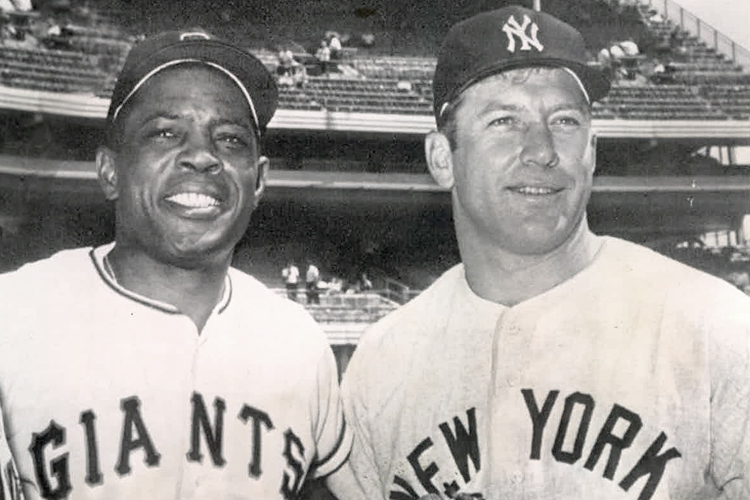
For many years during the 1950s and well into the 1960s, Willie Mays and Mickey Mantle were the best center fielders in their respective leagues, if not the two best players in baseball. Throughout the first halves of their careers, before Mays' Giants moved to San Francisco, they were frequently compared with Duke Snider, the talented center fielder of the Brooklyn Dodgers. Snider and Mays both departed New York after the 1957 season, and while Snider was never again the superstar he'd been in Brooklyn, Mays flourished on the West Coast. He and Mantle were widely regarded as the best all-around players in baseball, and upon retiring found themselves on the short list of not just the best center fielders of all time (along with Tris Speaker and Mantle's one-time teammate Joe DiMaggio), but the best players period.

There's no question as to which one was better. That would clearly be Mays, who many consider the best ballplayer not named Babe Ruth. He was just as good as if not better than Mantle in his prime and lasted longer, which explains his advantage of nearly 50 bWAR.

But for a long time, Mantle hung in there. Despite the injuries, his offensive numbers were on par with Mays's and because Mantle walked more, he was a significantly better hitter. Mays was a much better baserunner and fielder, but as a total package Mantle was very nearly his equal.

Here are their stats from 1951 through 1964:
Mays:    8,002 PA 1,379 R 453 HR 1,290 RBI .313/.388/.589 161 OPS+ 109 bWAR 78.8 WAA
Mantle: 7,979 PA 1,472 R 454 HR 1,298 RBI .309/.429/.582 177 OPS+ 97.8 bWAR 73.5 WAA

After 1964, however, Mantle could no longer keep up. The Mick faded fast, becoming a .250 hitter with 20-homer power over his final four seasons. Mays remained a superstar for several more years, copping his second MVP with 52 dingers in 1965 and putting together a nine-win season in '66. He continued to be a solidly above average player into the early '70s, several years after Mantle retired, before hanging up his spikes after the 1973 campaign.

Many, myself included, maintain that Mantle was actually a hair better than Mays before he broke down. Are they right? Let's take a closer look, going year-by-year to determine which one was better.

1951 Mays
Both had massive expectations place on them from the start and, as 19 year-olds usually do, hit rough patches early on in their rookie campaigns. Mays famously went 1-for-his-first-26 (albeit with a home run off Warren Spahn) and became so discouraged that Leo Durocher promised Mays would remain the starting center fielder for the rest of the season to revive his confidence. Mantle was demoted in mid-July to New York's minor league affiliate in Kansas City, where he remained for six weeks and nearly quit before his father talked some sense into him.

Both rebounded from their early slumps. Mays caught fire in June (1.041 OPS) and July (10 home runs) en route to winning the NL Rookie of the Year award and helping the Giants overtake the Dodgers in a wild pennant race. Mantle rejoined the Yankees in late August in time for the stretch run and hit well enough to reclaim his spot at the top of the order. As fate would have it, the dynamic duo met up in the World Series. The Bombers, in the midst of claiming five straight titles, prevailed despite a gruesome knee injury suffered by Mantle when he caught his spikes in an outfield drainage ditch trying to make a play on a fly ball, a fly ball hit by none other than Willie Mays.

Statistically, Mays outproduced Mantle in almost every offensive category. Granted, part of that was because Mays played 25 more games, but even so he outslashed Mantle in average, OBP, and slugging, producing an OPS 36 points higher than Mickey's .792 mark. Combined with his plus defense in center field (Mantle played the less challenging position of right field with DiMaggio still patrolling center), Willie was worth almost four wins above replacement, more than double Mantle's 1.5.
Mantle and Mays faced each other in two World Series. Mantle's Yankees won both (Bama Media)
1954 Mays
Following a two-year hiatus in the Army, Mays returned to baseball a full-blown superstar. He more than doubled his home run output from his rookie year, improved his OPS by 250 points and scored more than twice as many runs. Mays made his first All-Star team and was voted league MVP after leading the majors in batting (.345), slugging (.667), and bWAR (10.6) while also pacing the NL in triples, OPS, and OPS+. To top it all off, he led the Giants to a World Series victory over the heavily-favored Cleveland Indians, winners of 111 games during the regular season.

Mantle, who'd developed into a great player while Mays was gone, continued to improve in his fourth season. In addition to batting .300 for the second time and exceeding a .400 OBP and 100 RBI for the first, he set career highs in nearly every category and scored an ML-best 129 runs.  The Mick was tremendous, worth almost seven wins, but Mays was playing in a different stratosphere that year.

1955 Mays
Very, very close this time around. Both B-R and FanGraphs give Mantle the slight edge in WAR, rating him closer to 10 while pegging Mays at nine exactly, but frankly I can't see how. Mays was arguably better in his MVP encore, leading the majors with 13 triples, 51 homers, 382 total bases, a .659 slugging, and a 1.059 OPS. Mantle was outstanding in his own right, emerging as a true superstar by leading the AL in triples, big flies, OBP, slugging, and OPS, as well as both leagues in OPS+ and bWAR.

Mays definitely had the bigger offensive season, however, compensating for Mantle's 31 point advantage in OBP with 14 additional home runs, 28 more RBI and a slugging percentage some 48 points higher. Mays also stole three times as many bases as Mantle and was already regarded as the best center fielder in the game after making "The Catch" the previous October. Advantage: Mays.

1956 Mantle
'56 was Mantle's signature season, a gem of a campaign that saw him win the major league triple crown and pile up 11.3 bWAR in addition to leading baseball in runs, runs created, total bases, slugging percentage, OPS, OPS+, WAR, extra base hits, and times on base. When the dust settled, he'd led the Yankees to another World Series championship, won his first MVP award (unanimously), and endeared himself to a new generation of Yankee fans with a season comparable to the best of Babe Ruth, Lou Gehrig, and Joe DiMaggio. Mays, with 36 home runs, a major league leading 40 steals, and 7.6 bWAR, was also terrific, but Mantle was legendary.

1957 Mantle
In his final season in New York (before returning as a Met 15 years later), Mays won his first of 12 straight Gold Gloves. He also treated the fans to some impressive offensive statistics, slugging 35 home runs and a ML-leading 20 triples to go along with his 38 steals (also tops in the bigs) and a 1.033 OPS, good for the best OPS+ (173) in the National League. 

But Mantle, in some respects, had an even better year than his Triple Crown campaign. Not only did he bat a career-best .365 with a .512 OBP (fueled by 146 walks--most in the majors), but he also posted the highest OPS (1.177) and OPS+ (221) of his career. WAR says Mantle's '57 was every bit as valuable as the season that preceded it, and the voters agreed, giving him his second straight MVP trophy despite an otherworldly season by Ted Williams (.388/.526/.731 with 38 homers).
So with a three-bWAR edge over Mays, Mantle wins easily.

1958 Mantle
The Say Hey Kid's first season out west was a good one, as he batted .347/.419/.583 for a league-best 1.002 OPS and 165 OPS+. While his 29 homers were his fewest since his rookie season, he made up for it with personal bests in batting average and hits (208) as well as leading the majors in stolen bases again (with 31). His second season worth at least 10 bWAR was only good enough for second in the NL MVP race, however, as voters elected Ernie Banks (9.4 bWAR) and his prodigious power totals at shortstop.

Mantle fell back to earth a bit after his insane 1956 and 1957 seasons, but still clobbered a league-high 42 home runs, batted over .300, and worked more walks/scored more runs than anybody else in baseball. Despite batting 43 points lower than Mays, he still held significant advantages in OBP (24 points) and slugging (nine points), not to mention the best OPS+ in baseball at 188. That's why I'm giving the edge to him even though bWAR estimates Mays was worth about 1.5 more wins to his team. With Mantle clearly the better hitter and almost Mays' equal on the bases (he was a very efficient 18 for 21 in stolen base attempts), I'm not going to be swayed by unreliable defensive metrics.

1959 Mays
1959 was a major disappointment for Mantle and the Yankees, who finished only four games above .500 and failed to win the pennant for only the second time since Casey Stengel took over. The Mick suffered his worst season since 1953, hitting "only" 31 home runs with "only" 75 RBI. Those numbers would have been more palatable to Yankee fans had he not led the major leagues in whiffs with 126 (a career-high) and batted .285--his worst mark since his rookie season.
While '59 was a down year for Mickey, it was business as usual for Mays, who won another Gold Glove, slugged 34 home runs, drove in 104, and stole a league-high 27 bases in 31 attempts. Add it all up and Mays was worth over a full win more than Mantle, even though their offensive output was almost dead-even (Mays had a 156 OPS+ to Mantle's AL-best 151).
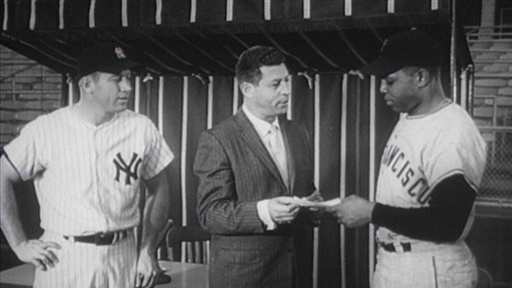
Mantle and Mays squared off in the first ever home run derby. Mantle won
1960 Mays
Offensively, Mays and Mantle were about dead-even in the first year of the '60s, with perhaps the slight edge going to Mantle. By this point, however, Mays was the much better fielder and baserunner, which means on the whole he was more valuable. This is bored out by bWAR, which puts Mays at 9.5--a full three wins better than Mantle's 6.3. Both players endured "down" years by their lofty standards, with Mays failing to reach 30 home runs for the second time in three years and Mantle batting .275 with a league-high 125 strikeouts. I'm nitpicking, of course, but I'm sure both players would tell you that 1960 wasn't their best.

1961 Mantle
Mays boosted his power numbers considerably in his second year at the 'Stick, generating his most home runs (40) and RBI (123) since his monster 1955 campaign and raising his slugging percentage nearly 30 points.

Even with the power spike, he still fell well short of Mantle, who along with teammate Roger Maris challenged Babe Ruth's hallowed single-season home run record. Mantle fell short at 54, but still led the majors in walks (126), slugging (.687) and bWAR (10.5). So feared was the Mick that Maris, despite launching 61 homers himself, did not receive a single intentional walk in 1961, for he spent most of the season batting in front of Mantle.

1962 Mays
Mantle may have won his third MVP but Mays eclipsed him in almost every category. Mantle had the superior rate stats, batting an obscene .321/.486/.605 (195 OPS+), but he also missed roughly a quarter of the season, which limited his value to about six wins. Mays, on the other hand, played 162 of a possible 165 regular season games, racking up personal bests in runs (130), RBI (141), and total bases (382) as well as 49 home runs--most in the majors. Mays was worth an incredible 10.5 bWAR that year, and yet somehow did not win MVP (voters gave it to Maury Wills, who shattered Ty Cobb's single season stolen base record that year).

Mantle got the best of Mays in that year's Fall Classic, which featured the Yankees and Giants in a rematch of the 1951 Series. New York won in seven despite Mantle's mediocre .120/.241/.160 performance. Perhaps the Giants would have won--they lost Game 7 by one run, had Mays done more than bat .250/.276/.321 with zero home runs and one RBI.

1963 Mays
Mantle seriously injured himself, missing almost 100 games after breaking his foot in a nasty collision with a chain-link fence. He was terrific when he did play, replicating his 1962 production, but Mays stayed healthy so there was no discussion.

1964 Mays
'64 was Mantle's last great season, yielding 35 homer runs and 111 RBI as well as the best OBP (.423), OPS (1.015) and adjusted OPS (177) in baseball. But Mays was right there with him, knocking in the same number of runs, socking 12 more home runs, leading the major leagues in slugging percentage at .607 and posting the NL's best raw (.990) and adjusted (172) OPS. Mays was much better in the field and on the bases at this point as well, with 19 steals to Mantle's six and Gold Glove defense in center compared to Mantle's abysmal defense. All said, Mays was worth more than twice as many bWAR (11.1) as Mantle (4.8), making him the obvious choice here.

After 1964, Mays vs. Mantle was no longer a debate. Age, injuries, and alcohol pushed Mantle over the cliff, as he batted just .254 over his final four seasons while averaging just 20 home runs and 53 RBI per season. Mays took much better care of himself, and thus aged more gracefully, winning his second MVP in 1965 and compiling almost 31 bWAR from 1964-1968. Their teams endured similar fates, as the Yankees plummeted to the second division while the Giants remained one of the best teams in baseball.

One can only wonder how Mantle's closing act would have played out had he stayed healthy and avoided the bottle. Based on how close the above comparisons are, I can't imagine it would have been much different from Mays.

Friday, January 2, 2015

Questionable Rookies of the Year: 1960s

Joe Morgan should have taken the NL honors in 1965 (The Score)
1962 NL Ken Hubbs over everyone else
Hubbs had strong counting numbers because he played a full season--160 games--such as 90 runs and 172 hits. His rate stats, however, were horrible; .260/.299/.346 (70 OPS+). He also led the league in strikeouts and was thrown out in seven of his 10 steal attempts. Even for a Gold Glove-winning second baseman, those numbers are brutal, and he was worth exactly 0.0 bWAR that year. Don Clendenon, the runner-up and only other player to receive votes, was more valuable despite playing half as many games as Hubbs. The Pirates first baseman batted a robust .302/.376/.477 (127 OPS+) with 16 steals in 20 attempts, good for 1.6 bWAR. The best choice--Giants catcher Tom Haller--didn't receive a single vote despite hitting .261/.384/.515 with 18 home runs, 3.5 bWAR, and nearly as many walks (51) as strikeouts (55). Haller had the misfortune of playing in an era that underappreciated high OBPs, and like Clendenon was probably hurt by the fact that he appeared in fewer than 100 games.

1965 NL Jim Lefebvre over Joe Morgan
Lefebvre and Morgan make for an easy comparison, as they were both second basemen and played the same number of games (157). Morgan outproduced his Dodger counterpart in virtually every meaningful offensive statistic except RBI, but he toiled for the lowly Colt .45s while Lefebvre starred for the World Series champs (even though their success had more to do with Sandy Koufax and Don Drysdale). Morgan was robbed, plain and simple

1966 NL Tommy Helms over Sonny Jackson
For the second straight year, a deserving Houston player finished second. Helms had more home runs and RBI as well as a superior slugging percentage, but Jackson hit for a higher average and had a higher OBP. Jackson was also an elite table-setter, hitting second and swiping 49 bases in 63 tries. He also paced the major leagues in sacrifice hits. What makes the final results even more inexplicable is that Jackson manned a tougher position, as he was a shortstop while Helms handle second base.

1967 NL Tom Seaver over Gary Nolan
Seaver started two more games and won two more starts, but the numbers say Nolan was better. He had a lower ERA, WHIP, and 36 more strikeouts in 24 and 1/3 fewer innings. Seaver face about 100 more batters than Nolan, but Nolan's innings were clearly better quality and that's why I would have voted for him.

1968 NL Johnny Bench over Jerry Koosman
Bench had a good season (116 OPS+ and Gold Glove), but Koosman had a great one (145 ERA+). In addition to nearly winning 20 games (he went 19-12), Koosman compiled a sparkling 2.08 ERA and 1.10 WHIP over 263 and 2/3 innings. The BBWAA correctly recognized Koosman as more valuable, for he finished higher in the MVP vote than Bench, but for some reason flip-flopped in the Rookie of the Year race.

1969 AL Lou Piniella over everyone else
Piniella, who had debuted five years previously, hit a mediocre (for an outfielder) .282/.325/.416 (107 OPS+) with 11 home runs in 135 games. Runner-up Mike Nagy, who posted a 3.11 ERA (124 ERA+) in nearly 200 innings despite calling Fenway Park home, was more worthy. So was third-place Carlos May, an outfielder like Piniella but with much better offensive numbers. May mashed 18 home runs and hit .281/.385/.488 (137 OPS+), giving him a 132 point advantage in OPS over Piniella. Lastly, Ken Tatum shined as a reliever with a 4.8 bWAR thanks to his ridiculous 1.36 ERA and 1.04 WHIP in 86 and 1/3 innings.

1969 NL Ted Sizemore over everyone else
Sizemore hit a weak .271/.328/.342 with little power (four home runs) and speed (five steals). That's tolerable for an everyday second baseman (he had a 94 OPS+ and walked more than he struck out), but hardly award-worthy. Runner-ups Coco Laboy (18 homers, 83 RBI, everyday third baseman) and Al Oliver (118 OPS+ at three different positions) were more deserving, as was fourth-place Larry Hisle (20 homers and 124 OPS+). The most deserving was Oliver's teammate Richie Hebner, who was overlooked completely despite batting .301/.380/.420 (127 OPS+) while manning the hot corner.

Wednesday, October 22, 2014

Mantle's Miserable Closing Act

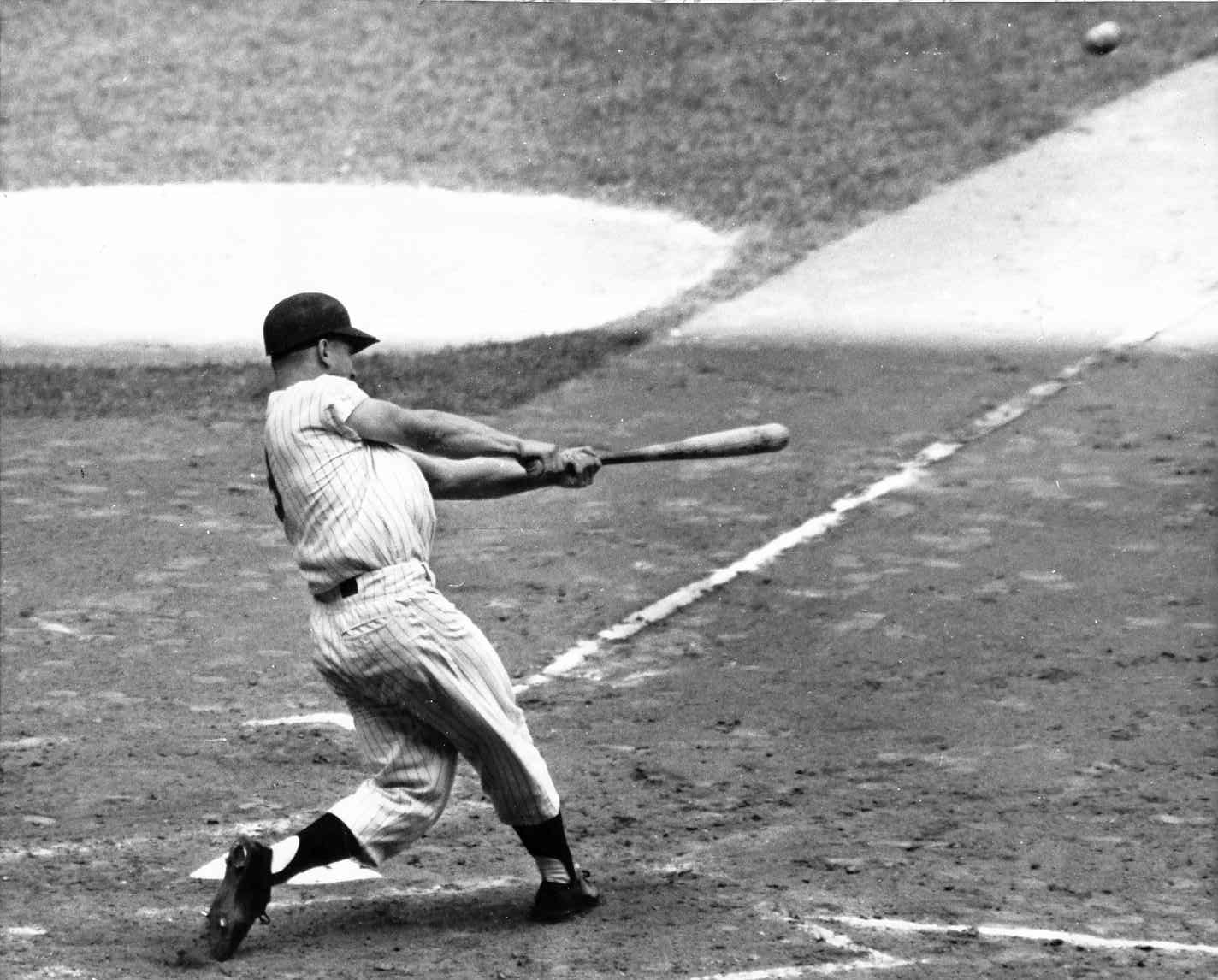
All great things, especially great athletic careers, must end (LIFE)
With the 50th anniversary of the 1964 World Series just having passed, I've been thinking a lot about the players on those teams, but I keep circling back to one in particular: Mickey Mantle.

Everybody remembers the 1964 Fall Classic as Mantle's last hurrah. It was the last World Series he ever played in, and statistically it was also one of his greatest. He slugged three home runs, including a walk-off blast in Game 3 that broke Babe Ruth's record for Series homers. He also knocked in and scored eight runs apiece while batting .333/.467/.792. Mantle was a beast and, had the Yankees prevailed over Bob Gibson in Game 7, likely would have copped World Series MVP honors.

After that great series, at the end of Mantle's last great season, it was all downhill for the Mick and his Yankees. His final four years, 1965-1968, are generally regarded as an exercise in futility. An old 33, worn down by his many injuries and years of hard living, Mantle declined sharply after the 1964 season. His last four seasons produced a meager .254 batting average, dragging his lifetime mark down from .309 to .298. To make matters worse, the Yankees were horrible during this time, losing 41 more games than they won and never sniffing a pennant. Mantle's misery was compounded by the failures of his team, and vice versa.

Theoretically, one could pinpoint the beginning of Mantle's decline midway through the 1964 campaign, Mantle's last truly great season. Through July 15th he was hitting .335/.453/.631, right in line with what he'd done the previous two seasons. Had he stayed on that pace, he probably would have secured his fourth MVP. As it were, he tailed off a bit and batted .271/.393/.550 the rest of the way. Still great numbers, but bringing his seasonal stats down enough for Brooks Robinson to steal the award out from under him.

What's often forgotten is that Mantle came roaring out of the gates in 1965, with four home runs in his first 11 games and seven through his first 24. Halfway through May he was hitting .275/.451/.623--in line with his second half performance from 1964. Then Mantle went into an extended slump, scuffling through the next three months, with just five home runs in June and July combined. After gracing magazine covers for 15 years, he found himself on the front page of Life in late July beside a gloomy caption: Mantle's Misery.

He rebounded in August to hit .325/.404/.519, but went out with a whimper in September. After homering in his first two September games, Mantle went into a major funk, collecting just four hits in his final 34 at-bats, with no homers and no RBI. In those final three weeks he lost more than 40 points off his OPS, as his batting line fell from a respectable .269/.392/.480 to a more pedestrian .255/.379/.452 (still good for a 137 OPS+). Believing Mantle's retirement to be imminent, the Yankees hosted Mickey Mantle Day for their beloved legend at Yankee Stadium on September 18th.

Mantle had missed 40 games and struggled when he did play, posting the lowest batting average of his career to that point. It hadn't helped that the Yankees slipped to sixth in the standings, their worst finish since 1925. Embarrassed by his poor performance, Mantle very nearly retired following the 1965 season. Ailed by his battered legs and a shoulder injury that hampered his swing and throwing ability, Mantle made up his mind to quit. But when he went to New York to inform the Yankees, Ralph Houk talked him out of it. He said Mantle shouldn't retire on a bad note, and that he'd still be valuable even if he was only able to play half a season.
By the late '60s Mantle was no longer the physical specimen he had once been
1966 was better for Mantle, but not at first. It took him 21 games to launch his first home run. For most of the first half his numbers were in line with the previous season's until he enjoyed the last great power binge of his career. From June 23rd through July 19th, a span of 28 games, Mantle mashed 15 home runs. For one glorious month, he was the Mantle of old. His revival sparked the moribund Yankees to a brief spurt, helping them climb from ninth place at the All-Star Break to sixth place after play ended on July 29th. New York's hot streak ignited talk of a possible second half surge, but such speculation quickly dissipated as the Bombers bombed in August and stumbled towards a last place finish.

Mantle reverted to his old self, too, parking only two more dingers the rest of the way. With 21 in late July, he should have been able to bank one last 30 homer season, but managed only two in August and none in September. He had a real shot at batting .300 one last time and topping a .400 OBP as well, but did neither, falling short at .288 and .389. Mantle was not an All-Star for the first time since his rookie season even though he compiled a .927 OPS (170 OPS+).

1967 marked the true beginning of the end. Mantle was moved from the outfield to first base to preserve his body (which worked, as Mantle played 144 games that year and the next) as well as limit the harm he could incur on defense, which had been terrible for five years by that point. Once again it took awhile for Mantle to get going, as he went without an extra base hit in his first 10 games of the season and managed but one RBI. He caught fire after that though, homering in consecutive games and launching 11 in all over the next month, including the 500th of his career on May 14th, Mother's Day. Mantle celebrated by hobbling around the bases on a dreary day at the Stadium.

Mantle's numbers remained strong through late July, with his OPS just a shade under .900. But like most old players, Mantle crashed and burned during the dog days of summer. From July 26th through the end of August, Mantle managed just one home run and six RBI while slugging .308.  By September Mantle was clearly out of gas, and once again his numbers were dragged down by a terrible finish. Hitting .259/.403/.462 midway through September, he recorded just three hits in his final 12 games and lost nearly 40 points off his OPS, which fell from .864 to .825 over the season's final two weeks. He failed to go yard in his last 22 games of the season as well, ending up with 22 taters on the year when he easily could have had 25+.

Looking back, it's puzzling as to why Mantle did not hang it up after that miserable '67 campaign, which had been even worse than his 1965 season. The Yankees were still terrible, having lost 90 games and finishing 9th in 1967. Whitey Ford, his good friend, drinking buddy and last remaining link to the team's heyday of the 1950s, had retired, giving Mantle the perfect opportunity to go out side-by-side with one of the few pals still left from his glory days, With 518 home runs and a .302 batting average, Mantle should have been satisfied. He should have called it a career. He should have walked away.

But Mantle did not quit. He still hoped to play several more years and ascend towards 600 homers, but that dream quickly died as 1968 proved to be even worse than '67. "This is my last year," Mantle told a teammate after striking out for the fourth time one game. "I missed about five pitches I should have hit."
Late-career Mantle made home run trots look painful (Yanks Go Yard)
Mantle just stopped hitting. He had one multi-hit game in June and went six weeks without a homer during the summer. He entered September stuck on 534 career home runs, having gone homerless since tying Jimmie Foxx on August 22nd. It would take him awhile to eclipse Foxx, and only because Denny McLain gifted him several pitches in a meaningless late season game against the World Series-bound Tigers. The following day Mantle ripped his 536th and final home run, taking reigning AL Cy Young winner Jim Lonborg deep at the Stadium. It was Mantle's last highlight as a big leaguer, for he managed just one hit--a measly single--and three walks over his final 21 plate appearances as his batting line tumbled to .237/.385/.398.

Mantle played his last game on September 28 at Fenway Park, popping up against Lonborg in his lone plate appearance. Andy Kosco replaced him at first base in the bottom half of the inning, sending Mantle off the field for the final time. The 25,534 Red Sox fans on hand acknowledged him with a standing ovation, realizing that they were potentially saying good-bye to one of baseball's biggest heroes.

"I knew I had reached the end of the line," Mantle would later write in his biography. He didn't even stay for the rest of the inning. After watching Kosco warm up he slunk down the runway, peeled off his uniform in the clubhouse, and went home.

*****

Mantle dragged himself to Spring Training in 1969, but quickly realized he couldn't go on. The Yankees tried in vain to convince him to stay, but Mantle refused. "I can't do it anymore," he told them. "My body doesn't respond." Houk promised he would take care of Mantle and not let him embarrass himself, but still Mantle said no.

On March 1st, 1969, he announced his retirement. “I was going to try to play but I didn’t think I could,” he said. “I’ve had three or four bad years in a row and, as a result, found myself dreading another season.

“I had a wonderful time playing ball,” he continued. “But I should have quit sooner. If I kept playing, I would only keep lowering my average. That’s what happened the last few years. I have known for two years that I couldn’t hit anymore but I kept trying."

By 1969, the pain was simply too great. It was time to stop trying.

Looking back, Mantle should have sailed off into the sunset after 1965. Joe DiMaggio retired after his lone bad season. So did Hank Greenberg and, for all intents and purposes, Derek Jeter. Ted Williams almost did the same before going out on his terms with one last monster season. It would have been better for everyone. Mantle could have spared himself and his fans three more years of watching him flail away for terrible Yankee teams. All that pain and misery could have been avoided. Plus, had he done that, Mantle would have retired with a .306/.426/.576 line and a career 1.002 OPS. He would have been one of only eight players to finish their careers with a four-point OPS (the others being Ruth, Williams, Foxx, Greenberg, Barry Bonds, Lou Gehrig, and Rogers Hornsby).

So yeah, Mantle hung on too long, but most great athletes do. Even Willie Mays did. Mantle knew he was washed up, too, but just kept hoping against hope that

Wednesday, July 23, 2014

Let Loo-Eee In

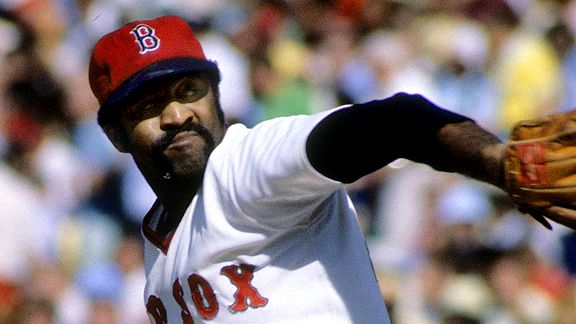
Tiant was one of the best pitchers of his time and all-time (ESPN)
With the Hall of Fame induction ceremony coming up this weekend and the Red Sox playing well (for now), I wanted to take a look at a pitcher who many feel was overlooked by the Hall, a pitcher who would undoubtedly go in wearing a Red Sox cap if he's ever enshrined.

I'm talking, of course, about Luis Tiant, a fan favorite and talented pitcher with Boston for much of the 1970s. El Tiante was a beloved figure in Beantown, where he revived his career in his 30s and emerged as that decade's equivalent of Roger Clemens or Pedro Martinez with the Sox. 

But before I talk about Tiant's brilliant tenure with Boston, I think it's important to remember that he was a great pitcher long before he ever put on a Red Sox uniform. Purchased by the Cleveland Indians for $35,000 in the summer of 1961 (about $279,000 in today's dollars), Tiant earned a midsummer call-up to the Indians three years later. His first start was one of the most impressive debuts any pitcher has ever had, a four-hit shutout of the defending and eventual AL champion Yankees at the Stadium. He outdueled Whitey Ford in the second game of a doubleheader, fanning 11 Bombers (including Roger Maris twice) to earn the first of his 229 major league wins. 

A star was born. The 23 year-old Tiant pitched well down the stretch, finishing his rookie year with a 10-4 record, 2.83 ERA and 1.11 WHIP, good for nearly four wins above replacement. He gradually got better in each of the next four seasons, lowering his FIP and walk rate every year while improving his K/BB ratio. The last of those seasons, 1968, was by far the best of his career.  In addition to going 21-9, he led the American League in ERA (1.60), ERA+ (186), shutouts (9), FIP (2.04), and pitching WAR (8.4). He also had the lowest hit rate in baseball at 5.3/9, limiting opponents to a .168/.233/.262 batting line and posting a 0.87 WHIP. On top of all that, he racked up 264 punchouts in 258-and-a-third stellar innings, part of his 3.62 K/BB ratio. Fun trivia fact: Tiant was the Junior Circuit's starting pitcher in that year's All-Star game. Not so fun fact: Tiant failed to receive a single Cy Young vote that year (but yet finished fifth in the MVP voting).

Tiant's masterful 1968 season is one of the great seasons forgotten to history. Because it coincided with the Year of the Pitcher, a season that saw Denny McLain win 31 games, Bob Gibson compile a 1.12 ERA and Don Drysdale hurl 58 consecutive scoreless innings, Tiant had a hard time standing out above the crowd/making noise for an also-ran Indians team.

Not yet 28 at the end of his big breakout campaign, Tiant had established himself as one of the premier pitchers in baseball. With 23 WAR already under his belt, he'd been one of the American League's five most valuable pitchers since breaking in. Furthermore, he'd done nothing but improve over his first 1,000 big league innings. No one could have foreseen that in three short years, he would very nearly be out of baseball.

1969 was a terrible year for Tiant and the Indians, who went from third place and 86 wins in '68 to 62 wins in 1969. Cleveland finished last in the newly minted AL East, 18 games behind the next-worst team (New York). Tiant tumbled to 9-20, leading the majors in losses, walks, and home runs allowed. Overnight, Tiant had gone from the American League's best pitcher to one of the worst in baseball. 

He was gone before Christmas. The Indians whisked him away to Minnesota along with Stan Williams in return for Dean Chance, Graig Nettles, Bob Miller, and Ted Uhlaender, a trade that would have worked out wonderfully for Cleveland had a) Chance not fallen apart the second he got there and b) they'd held on to Nettles for more than three years. 

Tiant must have been excited to escape the moribound Indians and land with a first place club in Minnesota. He flourished in his new digs, going 6-0 with a 3.12 ERA in his first 10 starts with the Twins before a fractured right scapula derailed his bounce back season. Tiant missed more than two months, and while he returned in time for the stretch run he wasn't quite the same. His first taste of the postseason was a bad one; mop-up duty in Game 2, in which he recorded two outs only after surrendering a two-run homer to Davey Johnson. He did not pitch again in the series, as Minnesota was swept the next day.

The injury that had ruined Tiant's first year with the Twins now jeopardized his once-promising career. After an ineffective and injury-plagued spring training, the 30 year-old was unconditionally released. His playing days appeared to be numbered. A couple weeks later the Braves picked him up for a 30 day trial with their Triple-A affiliate in Richmond, and at the end of the 30 days decided he was not worth a major league roster spot. That two teams had given up on him in the span of six weeks didn't discourage the perpetually pitching-strapped Red Sox from scooping him up two days after Atlanta cur him loose. It turned out to be one of the best decisions they've ever made.


A finally healthy Tiant returned to form in Boston (Bostinno)

Tiant's stint with the Sox lasted eight seasons, during which time he won 122 games with a 3.36 ERA, made two All-Star teams, piled up 36.4 bWAR and finished in the top-six of Cy Young voting three times. It was during this time that El Tiante earned a reputation as one of baseball's best big game pitchers. He was phenomenal throughout the pennant races of 1972, 1974 and 1978, pitching valiantly for Red Sox teams that were always coming up just short. Though Tiant struggled during the one pennant race Boston did win, he was at his absolute best in that year's wild postseason. After firing a complete game shutout against the three-time defending World Series champs in Game 1 of the ALCS, Tiant came back one week later and spun another shutout in the first game of the World Series against the vaunted Big Red Machine. He again went the distance in Game 4 to even the Series. He finally ran out of gas in Game 6, but luckily for him Bernie Carbo, Dwight Evans and Carlton Fisk had some late-game heroics up their sleeves.

After the heartache of '78 Tiant, by then 38 and desperate for a ring, defected to the Yankees via free agency. Nobody could blame him for latching on with the winners of the last three American League pennants and two World Series. The irony, though, is that  the streak ended as soon as Tiant donned pinstripes. New York finished fourth in 1979, Tiant's last good season, and would not win another title until 1996, by which point Tiant was closing in on 56. He was a great old pitcher, but nobody, not even Tiant, could hang around that long. He hung up his spikes for good after 1982 after 19 seasons and nearly 3,500 regular season innings. He has since been inducted into the Red Sox Hall of Fame and Hispanic Heritage Hall of Fame, but still waits for the call from the only Hall of Fame anyone actually cares about, as in the one located in upstate New York.

Now, did what El Tiante accomplish during that time merit a plaque in Cooperstown? The writers voted unequivocally no. Tiant stayed on the ballot for all 15 years of eligibility, but only in his first year did he receive more than 20 percent of the vote. After that, he was never really a serious candidate. Should he have been?

It's easy to make the case that the answer to that question is no, that he was a Hall of Very Good pitcher who was more style than substance. Tiant never won a Cy Young award, finishing no higher than fourth and drawing votes in only three seasons. He made only three All-Star teams. His rate stats are all good but not great. Though Tiant paced AL pitchers in WAR in '68, many would say McLain had the better year, meaning Tiant was never the best pitcher in his league, let alone the game. With only three seasons among the league's five most valuable pitchers, he didn't dominate. And sure, he was great in the postseason, but how many World Series did he win? Mickey Lolich was more or less Tiant's equal, and one doesn't hear many clamoring for him to make the Hall of Fame. In fact, seven of Tiant's 10 best statistical comps are currently outside the Hall and none are currently up for election.Many of his seasons were mediocre, with nine of his 19 years rating between below average to barely above average based on ERA-. 

But Tiant, even if he does fall short on Black Ink, Gray Ink, the Hall of Fame monitor and Hall of Fame standards, does have a strong statistical case. He was the American League's third-most valuable pitcher when he played, behind only Bert Blyleven (Class of 2011) and Lolich, the latter a respected member of the Hall of Very Good. Expand the timeframe from 1951 through 1990, a stretch of 40 seasons, and Tiant still ranks as the league's fifth-best pitcher. Better than Jim Palmer, Gaylord Perry, Catfish Hunter, and the man he beat in his first big league start. What's more, three of his six closest comps are already in the Hall. With over 66 career bWAR, Tiant is very much a viable candidate for Cooperstown. By the standards of the Hall of Stats, he makes it in comfortably.

 JAWS rates him 51st all-time among starting pitchers. Remove the guys who started their careers before 1900, and Tiant's one of the 50 best starting pitchers of all-time. Seeing as how he ranks 21st in shutouts, 39th in strikeouts, and 40th in pitching WAR, I buy that. Though he's a bit below the established standards for peak and longevity, he still comes in ahead of luminaries such as Jim Bunning, John Smoltz, Don Sutton, and Early Wynn. It does concern me that of the 59 starters already in the Hall, including Greg Maddux and Tom Glavine, Tiant outranks just 13 of them. He rates lower than Wes Ferrell, Kevin Brown, and Rick Reuschel, among others. 

The two things I look for in a Hall of Fame case are a peak and longevity. Tiant obviously had good longevity, as he pitched until he was almost 42 and made close to 500 big league starts. He had eight seasons with more than 200 innings, three more than just missed and four others with over 100. 11 times he made 29 or more starts in a season. 

As for peak, well, Tiant technically had two peaks. He had his five-year run with Cleveland, which wasn't so much a peak as it was one amazing season preceded by several good ones. Then there was his second prime, covering his last seven seasons with Boston and his first in New York. In both cases he was one of the league's five-best pitchers for an extended period of time (40 years, in fact, as I noted a few paragraphs before). And as one of baseball's 50 best since 1900, which gets narrowed to 25 if you exclude those who debuted before Jackie Robinson, then it becomes pretty clear that Tiant is indeed Cooperstown-worthy. I'd say there are more-deserving pitchers still waiting to be inducted (Clemens, Curt Schilling, Mike Mussina, and the aforementioned Brown come to mind), but Tiant at least deserves another look from the Veteran's Committee. The BBWAA has not done a great job of electing starting pitchers who aren't slam-dunks, leaving recent generations of pitchers poorly represented in the Hall. It's up to the VC to rectify those mistakes.

I'll admit I wasn't totally sold on the idea of Tiant as a Hall of Famer when I started writing this, but after taking a closer look I think I'd give him a pass. He had five truly great seasons--1968, 1972-1974, and 1976--and enough success in other years (his first few with Cleveland a few more in the late '70s). Throw in his celebrity status in Boston and his track record of success in big games (which, unlike Jack Morris, extended beyond one game) and I think he did just enough to get over the top. 

It's a really tough call though, and if you check back with me tomorrow I might not feel the same way.

Sunday, June 29, 2014

M&M Boys: Mantle and Mathews

Mathews, Mantle and Aaron pose for a picture in spring training
Throughout the 1950s and into the 60s, Eddie Mathews was essentially a poor man's Mickey Mantle. By this I mean no disrespect to Mathews, easily one of the five greatest third baseman of all-time and a most-deserving Hall of Famer. If you're going to be a poor man's version of somebody, after all, you couldn't do much better than The Mick.

It's fascinating how much their personal lives and baseball careers overlapped. They were born one week apart in October, 1931 in the rural Midwest, with Mathews hailing from Texas and Mantle a progeny of Oklahoma. Both signed as amateur free agents in 1949 and played their first full season in 1952 with similar results; Mantle had 23 home runs in 142 games, Mathews slugged 25 in 145, and both drew MVP votes despite leading their respective leagues in strikeouts.

Thus marked the beginning of two outstanding careers that lasted until 1968, when both posted the worst batting averages of their careers and promptly retired, clearly done. But not before they hit milestone homers in that Year of the Pitcher, with Mantle taking Denny McLain deep to pass Jimmie Foxx and Mathews, by then a teammate of McLain's eclipsing Mel Ott with the last home run he'd ever it.

In between they didn't see a whole lot of each other, as they played in different leagues during a time when AL and NL players met twice a year; in the Midsummer Classic and the Fall Classic. They were All-Stars in the same year nine times and crossed paths in two World Series--in 1957 and again the following year. Milwaukee won their first meeting but New York took the rematch, with both series going the full seven. Mathews played better in the first one, Mantle fared better in the second.

In the end, Mantle was clearly the better player and enjoyed the superior career, but some of their numbers look remarkably similar:

Mantle: 2,401 G 2,415 H 344 2B 72 3B 536 HR 1,509 RBI 4,511 TB 109.7 bWAR
Mathews: 2,391 G 2,315 H 354 2B 72 3B 512 HR 1,453 RBI 4,349 TB 96.4 bWAR

They were both patient power hitters who drew their fare share of walks and weren't afraid to strike out. They both established themselves as great young players and peaked early on, but by the same token crashed and burned rather prematurely in their mid-thirties. They ended up as one of the five best to play their respective positions, even if their walk-drawing and run-scoring skills wouldn't get the credit they deserved for many years. Mantle wasn't fully appreciated until Roger Maris arrived midway through his career and took most of the heat off him, and Mathews remains criminally underrated to this day.

Off the field, they both led difficult lives and drank too much, which may have led to their somewhat early demise as players and as men (neither one played past 36 or lived to 70).They were ultimately tragic figures then, exceptional players but flawed human beings with a whiff of unfulfilled potential. The Commerce Comet was frequently criticized for not living up to his great Yankee predecessors of Babe Ruth, Lou Gehrig, and Joe DiMaggio, while it was Mathews' fate to be overshadowed by teammate Henry Aaron.

Not surprisingly, Mathews is rated as Mantle's closest comp on Baseball-Reference. Mantle is the fourth-best match for Mathews, following Mike Schmidt, Ernie Banks, and Willie McCovey. Pretty good company.

With so many similarities, it's easy to see why:
  • Both had four seasons with at least 40 home runs (Mantle topped 50 twice) and 14 with at least 20. Mathews had 10 seasons with more than 30 bombs, one more than Mantle's nine. 
  • Because they walked so much, neither one knocked in as many runs as one would expect given their huge power totals. Mantle exceeded 100 RBI four times, while Mathews did so five times. Each managed five additional seasons in which they plated more than 90 (but less than 100). Additionally, Mathews' career high of 135 barely exceed's Mantle's personal best of 130.
  • Because they walked so much, both scored tons of runs. Mantle had 11 straight seasons with at least 90 runs, including nine with over 100. Mathews had 10 consecutive seasons with 90 or more runs, including eight with at least 100. 
  • Both struck out a lot. Mantle led the league in the dubious K statistic five times, something Mathews did in 1952, when both led their respective leagues, with Mathews' 115 edging Mantle's 111 for the ML-lead. 
  • Both finished their careers with near 1:1 strikeout to walk ratios. Mantle walked 23 more times than he whiffed for a 1.01 BB/K ratio, while Mathews fanned 43 more times than he walked and thus had a 0.97 BB/K ratio.
  • Neither one hit a lot of doubles. Each had only one season with more than 30.
  • Mantle was caught stealing 38 times, one fewer than Mathews.
  • Mathews bounced into 123 doubles plays, Mantle 113. Both had more than 10 in a season only three times, and never bounced into more than 11.
  • Mathews had six seasons with at least 300 total bases, one more than Mantle's five.
  • Mantle was intentionally walked 126 times, but Mathews wasn't far behind at 107. Both were clearly feared by opposing pitchers and managers.
  • They were both All-Stars in 1953, then every year from 1955 through 1962

Monday, June 9, 2014

Vada Damon or Johnny Pinson?

Pinson (left) pictured with Reds teammates Gus Bell and Frank Robinson
While researching an upcoming post about Vada Pinson's Hall of Fame case, I was astonished to discover how much his career resembled Johnny Damon's. They compiled remarkably similar numbers in their major league careers, both of which lasted 18 seasons:

Pinson:  2,469 G, 9,645 AB, 2,757 H, 485 2B, 127 3B, 256 HR, 1,169 RBI, 4,264 TB, 54.1 bWAR
Damon: 2,490 G, 9,736 AB, 2,769 H, 522 2B, 109 3B, 235 HR, 1,139 RBI, 4,214 TB, 56 bWAR

Then there are their batting lines, which mirror each other almost perfectly. Pinson batted .286/.327/.442, good for a .769 OPS and 111 OPS+. Damon batted .284/.352/.433, compiling a .785 OPS and 104 OPS+. Pinson was worth 54.7 oWAR, less than one win behind Damon's 55.4 oWAR. FanGraphs also has their career offensive values nearly even, with scores of 144.4 for Pinson and 131.7 for Damon.

Here are some more similarities:
  • Both were talented all-around centerfielders who threw lefthanded and batted from the left side.
  • Both wore uniforms that were red and white. They also donned Pinstripes. 
  • Both spent time with the Cleveland Indians and the Kansas City Royals. They also played for an American League team based in California; Pinson with the Angels and Damon with the A's.
  • Both played partial seasons in their rookie years, then became regulars in their second seasons.
  • Both were exceptionally durable. Damon played at least 140 games in 16 straight seasons, while Pinson eclipsed 130 in 14 consecutive seasons.
  • Both had a dozen seasons with double digit home run totals, topping out at 24. Though they had good power, they were destined to be overshadowed by slugging teammates such as Frank Robinson, Manny Ramirez, David Ortiz, and Alex Rodriguez.
  • Both had one season with more than 40 doubles.
  • Both were fast runners and great basestealers, with Damon swiping over 400 and Pinson exceeding 300. Damon had 10 seasons with at least 20 steals, Pinson had nine. Pinson was caught 122 times to Damon's 103.
  • Neither walked all that much, and so neither one attained an OBP higher than .390 in any season.
  • Pinson was punked 54 times, Damon was hit by 50 pitches. 
  • Damon dropped 57 sacrifice hits, Pinson laid down 52. Pinson had 78 sacrifice flies, Damon had 71.
  • Both players led the major leagues in runs one time each; Pinson with 131 in 1959 and Damon with 136 in 2000 (narrowly beating out Alex Rodriguez's 134). Since both spent the bulk of their careers batting at or near the top of the order, they scored lots of runs (1,365 for Pinson, 1,668 for Damon).
  • Pinson drew MVP votes five times, Damon four. 
  • Damon batted better than .300 five times, Pinson four.
  • Pinson had an OPS+ over 100 12 times, Damon did so 11 times.
  • Both were fine defenders in their early years but ultimately had negative defensive value over the course of their careers.
  • Neither one ever struck out 100 times in any season, but both had several close calls (three seasons with 90+ K's apiece). Pinson fanned 1,196 times, whereas Damon whiffed 1,257 times.
Not surprisingly, Damon rates as Pinson's second-most similar player (after Steve Finley), and Pinson is Damon's closest comp. In my mind Pinson's power edge made him a better player at their respective peaks, and even though Damon did it longer I'd still take Pinson by a nose. Pinson at his best was comparable to Andrew McCutchen or Roberto Clemente: a legit MVP candidate and hit third in Cincinatti's loaded lineup. In his prime he was better than Damon, who was more of a complementary player and table setter. 

But to Damon's credit, few players have been as steady or consistently good as he was, and that counts for something too.
Damon won a World Series and established his career high in home runs with NY

Saturday, January 4, 2014

Maris and the Hall of Fame

With one swing of the bat, Maris made history . But is that achievement Hall-worthy?
Does Roger Maris deserve a plaque in Cooperstown, alongside pinstriped teammates Mickey Mantle, Whitey Ford, and Yogi Berra? The short answer--one I bet most people would agree with--is no. He hung around on the ballot for the maximum 15 years, typically polling in the 20 percent range. It was only after his death in 1985 that his support swelled, climbing from a low of 16.6 percent in 1982 to his high of 43.1 percent in '88--his final year on the ballot. In the quarter-century since then, veteran's committees have not deemed him worthy, either.

It's not hard to see why, for his case is pretty weak. The average right fielder in the Hall of Fame compiled 73.3 bWAR in his career, and Maris's total of 38.3 is about half that. As such, JAWS rates him as the 52nd best right fielder of all-time, better than only Ross Youngs among Hall of Famers at the position and worse than Jesse Barfield, Johnny Callison and Ken Singleton.What's more, Maris never hit .300, or even .290. He never had an on-base percentage above .375. He played in seven World Series, but his lackluster performance in the Fall Classic doesn't help his candidacy. Maris won two MVP awards, but so did Juan Gonzalez and Dale Murphy, both of whom have more compelling cases for Cooperstown.

That said, I will readily admit that at Maris's zenith in the early 1960s, when he won back-to-back MVPs and broke Babe Ruth's single-season home run record, he was a Hall of Fame caliber player. Worth seven wins in both 1960 and '61, Maris was an elite power hitter with good on-base skills and a tremendous arm. He even won a (much-deserved) Gold Glove in 1960 for defensive contributions on par with those of Al Kaline and Roberto Clemente. From 1960 to '62, nobody hit more home runs than Maris, who was the league's second most valuable player over that stretch per fWAR.

The problem is that he didn't do it long enough. His career, which lasted just 12 seasons, was abbreviated further by various injuries that kept him below 500 plate appearances in seven of those campaigns. As a result, his counting numbers fall far short of Cooperstown standards. His 127 OPS+ is very good, better than numerous Hall of Famers like Ron Santo, Kirby Puckett, Ernie Banks, and Johnny Bench, but not good enough to separate himself from the Bob Horner's, Dwight Evans's and Don Mattingly's of the world, much less compensate for a career that barely lasted 5,000 official at-bats.

The only viable case Maris has for Cooperstown is if you believe the Hall of Fame should honor the game's most famous and well-known players, regardless of track record. By that standard, Maris ranks very high. He held the single-season home run record for 37 years, and still holds the American League home run record (the three men who passed him--Mark McGwire, Sammy Sosa, and Barry Bonds--were all National Leaguers) to this day. His epic home run chase with Mickey Mantle during the summer of 1961 was one of the most memorable sports stories of all-time, shoving him into the national spotlight and making him a household name.

But many players have achieved a great deal of notoriety with one magical season. Mark Fidrych in 1976. Fernando Valenzuela five years later. Hideo Nomo in 1995. Eric Gagne in 2003. The list goes on. None of them are Hall-worthy because they couldn't sustain their excellence. Neither could Maris.

Maris followed up his record-breaking campaign with another strong performance in 1962, surpassing 30 home runs and 100 RBI for the third straight year and earning a fourth consecutive All-Star nod. Just 28 years old at season's end and with nearly 200 career home runs under his belt, Maris seemed to have a good shot at the Hall of Fame. His closest comp up to that point was Reggie Jackson, another legendary Yankee slugger who would reach similarly lofty heights 15 years later.

Unfortunately, injuries sabotaged the remainder of Maris's prime and accelerated his decline. He was limited to 90 games in '63 and just 46 in 1965, when he suffered a wrist injury that diminished his power. By 1966 the Yanks were in decline and so was Maris. In December he was traded to the St. Louis Cardinals for Charley Smith, who would go on to bat .224 with ten home runs in 181 games with New York over the next two years.

Meanwhile in St. Louis, Maris enjoyed a minor renaissance for the contending Cards. The veteran rebounded at the plate, and even with his power gone he still hit well enough to be a three-win player. St. Louis, led by Bob Gibson and league MVP Orlando Cepeda, won the 1967 World Series over Boston in large part because of Maris, who batted .385 with seven RBI in the seven-game Fall Classic. The '67 Series turned out to be Maris's last hurrah, as he fell off the following year and retired after a poor World Series, which the Cardinals lost to the Detroit Tigers.

Maris had a Hall of Fame peak, but not a Hall of Fame career. The same can be said about several players in Cooperstown, namely Sandy Koufax, Jim Rice, and Roy Campanella, but their peaks were longer and higher. Three great seasons just isn't enough.