A look back at some of the greatest rookie seasons of all time:
Shoeless Joe Jackson 1911 (9.0 bWAR)
More than a century later, Shoeless Joe still has a claim for what might be the most impressive rookie season ever. All Jackson did was bat .408, setting a rookie record that will never be broken. Incredibly, he did not win the batting title that season because some guy named
Ty Cobb hit .420. Nevertheless, Jackson's obscene batting average is just the tip of the iceberg. The sweet swinging outfielder also posted a .468 OBP--tops in the majors--as well as a .590 slugging percentage, which adds to a 1.058 OPS (193 OPS+). For good measure, he scored 126 runs, amassed 233 hits (including 45 doubles and 19 triples) and stole 41 bases, but because of Cobb's career year none of those statistics were good enough to lead the league.
Dale Alexander 1929 (4.7 bWAR)
Alexander didn't reach the Show until he was 25 but raked from the start. Besides playing everyday and leading the American League in hits with 215, the slugging first baseman ranked second among AL position players in extra base hits (83) and total bases (367). He also produced a robust .343/.397/.580 batting line, scored 110 runs and drove home 137 runs for the Detroit Tigers.
Wally Berger 1930 (4.0 bWAR)
Berger set a rookie record for home runs--38--that lasted 57 years until
Mark McGwire obliterated it. But Berger much more than hit the long ball--he batted .310/.375/.614 with 341 total bases as the biggest star on a sixth place Boston Braves squad. In spite of a lackluster supporting cast, Berger batted in 119 runs.
Hal Trosky 1934 (5.2 bWAR)
Only two players in baseball history have a season with over 160 RBI on their resumes but do not have a plaque hanging in the Hall of Fame. Interestingly enough, both did so with the Cleveland Indians. One is a household name--
Manny Ramirez--while the other (Trosky) is merely a historical footnote. But two years before he led the major leagues with 162 RBI and 405 total bases, Trosky enjoyed one of the best rookie seasons a player ever had. The 21 year-old played every game, a feat that allowed him to rack up some impressive counting numbers such as 206 hits, 374 total bases and 142 RBI. He also scored 117 runs, batted .330/.388/.598, smacked 45 doubles and crushed 35 homers. Like most good hitters of the day, he finished the season with more walks than whiffs.
Joe DiMaggio 1936 (4.6 bWAR)
In 1936 the New York Yankees were desperate for new blood. Still reeling from
Babe Ruth's retirement, New York was in a bit of a rut, having captured just one American League pennant in the previous seven seasons (despite averaging 93 wins per year). While their pitching had steadily improved under
Joe McCarthy, an offense that plated 1,067 runs in 1931 had declined to 818 runs scored in 1935. A 21 year-old DiMaggio helped reverse that trend by batting .323 and stroking 206 hits, including an ML-best 15 triples. He also clubbed 44 doubles and 29 home runs on his way to compiling 367 total bases, which translated to a .576 slugging percentage. Batting third ahead of Gehrig and
Bill Dickey, he scored 132 runs and knocked in 125. When it was all said and done, the Yankee Clipper led his squad to 102 wins and their first of four consecutive World Series titles.
Ted Williams 1939 (6.6 bWAR)
Teddy Ballgame burst onto the scene as a brash, cocky, loudmouthed youngster unlike anything baseball had ever seen before. Veterans dismissed his annoying attitude, only to soon find out that his bat talked louder than his words. Williams became the first rookie to lead the league in runs batted in by accumulating 145 RBI, a total that topped both leagues and set a rookie record that still stands to this day. His 86 extra base hits tied
Johnny Mize for most in baseball that year, fueling his AL-leading 344 total bases. Williams also batted .327/.436/.609, scored 131 runs, and worked 107 walks in a stellar debut that placed him fourth in the MVP voting behind Joltin' Joe, teammate
Jimmie Foxx, and
Bob Feller. There was no official Rookie of the Year award yet, but Babe Ruth declared Williams to be the Rookie of the Year, to which Williams later said was good enough for him. In response to his immediate success, the Red Sox doubled his salary and constructed new bullpens in right field to bring the fences 20 feet closer to home plate.
Jackie Robinson 1947 (3.0 bWAR)
Numbers do not do Robinson justice, for statistics can't even begin to tell the whole story of what it was like for the man who broke baseball's color barrier. That said, he still put up some pretty impressive statistics. The ideal number two hitter, Robinson scored 125 runs, posted a .383 OBP, laid down an ML-best 28 sacrifice hits, and walked twice as often as he struck out. He was also aggressive on the basepaths, leading the Senior Circuit in steals with 29. In addition to leading the Brooklyn Dodgerst to the NL pennant, he was honored with baseball's first ever Rookie of the Year award and also finished fifth in the MVP voting.
Walt Dropo 1950 (2.4 bWAR)
Dropo was
27 years old during his rookie season, so it should come as no surprise that 1950 turned out as the best season of his career by far. Moose scored 101 runs, slugged 34 homers and batted .322/.378/.583. His 144 RBI tied with teammate
Vern Stephens for most in the bigs. He also topped the Junior Circuit with 326 total bases while ranking second in extra base hits (70) and slugging percentage to Joe DiMaggio. Dropo started the All-Star Game at first base, finished sixth in the MVP voting and beat out
Whitey Ford for Rookie of the Year honors.
Al Rosen 1950 (5.6 bWAR)
Like Averill and Trosky before him, Rosen is another Cleveland star who's gotten lost in baseball's rich history. Blocked in his early years by
Ken Keltner, Rosen inherited the hot corner job after Keltner was released. Rosen seized the opportunity by ripping 37 home runs, most in the American League, while also posting the league's best AB/HR ratio. On top of that, the slugging third-sacker scored 100 runs, drew 100 walks, and knocked in 116 runs. Not too shabby.
Frank Robinson 1956 (6.2 bWAR)
Robinson was the unanimous choice for Rookie of the Year after matching Berger's freshman home run record with 38 big flies. The 20 year-old also batted .290/.379/.558 with 319 total bases and a NL-best 122 runs scored.
Vada Pinson 1959 (6.3 bWAR)
At the tender age of 20, Pinson produced one of the best-but-least-talked-about rookie seasons ever. For starters, Cincinnati's All-Star center fielder led the majors with 131 runs and 47 doubles. He batted .316/.371/.509 while racking up 205 hits and 330 total bases. Lastly, Pinson blended power with speed by going 20/20 with 20 bombs and 21 steals.
Tony Oliva 1964 (6.6 bWAR)
Oliva secured all but one possible first place rookie of the year vote after leading the bigs with 217 hits, 374 total bases (tying Trosky's rookie record), and 84 extra base hits. His 109 runs, 43 doubles, and .323 batting average topped the American League as well. He was the Junior Circuit's starting right fielder in the All-Star Game and finished fourth behind
Brooks Robinson,
Mickey Mantle, and
Elston Howard in the MVP race.
Dick Allen 1964 (8.5 bWAR)
Allen nearly pushed his Philadelphia Phillies into the World Series with his phenomenal rookie season. The 22 year-old third baseman led the majors with 125 runs scored and 13 triples while topping the NL with 80 extra base hits and 352 total bases. He also notched 201 hits and batted .318/.382/.557. While he committed a whopping 41 errors at the hot corner, the Wampum Walloper did more than enough with the lumber to compensate for his defensive ineptitude. When the dust settled after Philadelphia's devastating collapse, Allen was named Rookie of the Year (receiving all but two first place votes) and earned himself a seventh place finish in the MVP voting.
Fred Lynn 1975 (7.1 bWAR)
Lynn became the first player to take home his league's Rookie of the Year and Most Valuable Player awards in the same season, and he did so in a landslide. The Red Sox center fielder was voted first on every ROTY ballot (split one in a tie with teammate
Jim Rice) and secured 22 of 24 possible first place MVP votes after sparking Boston to the World Series with his tremendous all-around play. Lynn whacked the most doubles--47--and posted the highest slugging percentage--.566--of anyone in baseball that year. He also paced the Junior Circuit in runs (103) and OPS (.967) while ranking second in batting average (.331), extra base hits (75), runs created (120) and OPS+ (162). A graceful defender with great range, Lynn earned his first Gold Glove award. The 23 year-old also made his first of nine consecutive All-Star appearances.
Alvin Davis 1984 (5.7 bWAR)
Few players got off to better starts than Mr. Mariner, who homered in his first two games and cracked three doubles in his third. He also reached base safely in the 44 games that followed to set a record. Though he did eventually cool off, Davis still finished his freshman season with 27 home runs, 116 RBI, and 97 walks (16 of which were intentional). He made his only All-Star team, picked up some MVP consideration and breezed to the Rookie of the Year award by collecting all but three available first place votes.
Mark McGwire 1987 (4.8 bWAR)
Offense spiked in '87, helping Big Mac go yard 49 times to shatter the rookie record set by Berger and tied by Robinson. His .618 slugging percentage was tops in the majors, too, but he skipped the last game of the season to be with his wife for the birth of their first son, Matt, who later served as the Cardinals' batboy when his dad tracked down
Roger Maris 11 years later.
Mike Piazza 1993 (6.8 bWAR)
The greatest offensive catcher in baseball history erupted in his first full season, batting .318/.370/.561 with 35 long balls and 112 RBI. For his efforts, Piazza placed ninth in the MVP race and won the Rookie of the Year award unanimously. He also received his first of ten straight All-Star selections and Silver Slugger awards
Nomar Garciaparra 1997 (6.5 bWAR)
Garciaparra's monster rookie season cemented his status as a member of the American League's "holy trinity" of shortstops along with
Derek Jeter and
Alex Rodriguez. The Red Sox lost more games than they won in '97, but that didn't stop the Fenway Faithful from falling head over heels in love with their new star shortstop. Batting leadoff, Garciaparra scored 122 runs, stole 22 bases and led the American League with 209 hits and 11 triples. He also compiled 44 doubles, 30 home runs, and 365 total bases. Nomah won the Rookie of the Year award unanimously and placed eighth in the MVP vote. He also made the All-Star team and won his first Silver Slugger. He even strung together a 30 game hitting streak, an AL rookie record.
Albert Pujols 2001 (6.3 bWAR)
The 21 year-old Pujols kicked off his Cooperstown-bound career by batting .329/.403/.610 with 37 home runs and 130 RBI, helping St. Louis return to the postseason via the NL Wild Card. Prince Albert rounded out his stat line with 47 doubles, 360 total bases and 112 runs scored. In addition to winning the NL Rookie of the Year award unanimously, he also was voted to the All-Star team, received his first Silver Slugger and placed fourth behind the slugging trio of
Barry Bonds,
Sammy Sosa, and
Luis Gonzalez (194 home runs between them) in the MVP voting.
Ichiro Suzuki 2001 (7.5 bWAR)
Suzuki became an instant sensation as well as the second player to be named Most Valuable Player and Rookie of the Year in the same season. Batting leadoff for a Seattle Mariners team that won 116 games despite losing
Randy Johnson,
Ken Griffey Jr. and Alex Rodriguez in previous years, Ichiro scored 127 runs while igniting the most prolific offense in baseball that year. Suzuki piled up 242 hits--a rookie record--along with 56 stolen bases, both best in the bigs. With his .350 batting average, Suzuki won the batting crown and became the first player to lead the league in hitting and steals simultaneously since Jackie Robinson turned the trick in 1949. Immensely popular in his home country as well as the United States, Suzuki became the first rookie to lead the sport in All-Star votes. Suzuki received the first of ten straight Gold Gloves in right field after it became evident that he was a defensive wizard on par with
Roberto Clemente and
Al Kaline. He also won a Silver Slugger even though no one in his right mind would ever refer to the slap-hitting Suzuki as a quote-unquote slugger.
Ryan Braun 2007 (1.8 bWAR)
Though Braun was not called up until May 24th and missed nearly 50 games, he still bashed 34 home runs, knocked in 97 runs and stole 15 bases. Even more impressive was his .324/.370/.634 batting line which included the National League's top slugging percentage. He narrowly beat out
Troy Tulowitzki (6.5 bWAR) for Rookie of the Year in what was the closest vote since 1980.
Mike Trout 2012 (10.7 bWAR)
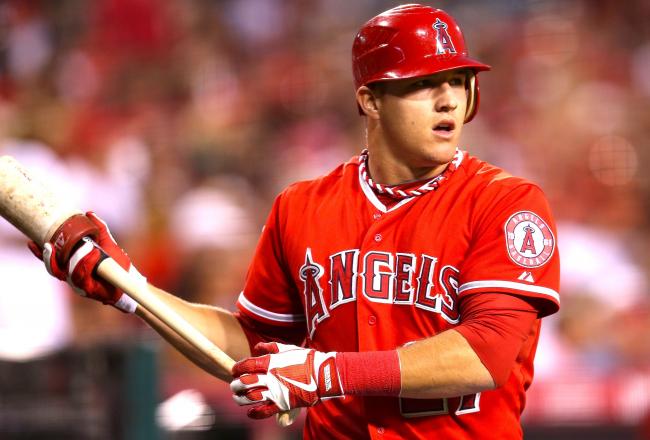
Where to begin? For starters, Trout's rookie season has to be considered the greatest of all-time, or at least the best season any 20 year-old has ever had He paced the major leagues in runs (129), stolen bases (49) and bWAR (10.7) something no rookie had ever done before. He became the first rookie to go 30/30. He became the first player to score at least 125 runs, bash 30 homers, and swipe more than 45 bases in the same season. He took home the AL Rookie of the Year in a unanimous vote, as expected, and would have captured the MVP had
Miguel Cabrera not won the Triple Crown.
Honorable Mention:
Earle Combs 1925 (3.5 bWAR)
Midway through the 1925 season, Yankee manager
Miller Huggins installed Combs as New York's leadoff hitter. An ideal table-setter with phenomenal on-base skills, Combs built a Hall of Fame career batting atop the Yankees' thunderous lineup for more than a decade. The Kentucky Colonel finished his first full season with 203 hits, 117 runs, and a Derek Jeter-esque .342/.411/.462 batting line. Even though the Yanks sunk to 16 games below .500, Combs still picked up some down ballot MVP votes.
Lloyd Waner 1927 (2.5 bWAR)
Paul Waner's younger brother, nicknamed "Little Poison," batted leadoff for Pittsburgh's pennant winners and paced the Senior Circuit with 133 runs scored, a rookie record. He also totaled 223 hits and a .355 batting average, but neither figure is particularly impressive considering that 198 of his 223 base knocks (88.8 percent) were singles. Though the Pirates were swept by the mighty New York Yankees in the '27 Fall Classic, Waner scored five runs and batted .400/.471/.600 in a losing cause.
Earl Averill 1929 (3.8 bWAR)
Averill broke into the bigs at 26 but still managed to put together a Hall of Fame career. Though his name has been largely forgotten, his impressive batting record still sparkles eight decades after he played his last game. In his first big league season he amassed 321 total bases and 198 hits, 74 of which went for extra bases, while batting .332/.398/.538. He also walked more than he struck out, scored 110 runs and batted in 96.
Rudy York 1937 (3.3 bWAR)
York played just 104 games during his rookie season but made the most of them, batting .307/.375/.651 with 35 dingers and 103 RBI. The hard-hitting catcher inflicted most of that damage during the dog days of August, when he slugged went deep 18 times and drove home 49 runs. His defense, however, was another story. He was so poor with the leather that manager
Mickey Cochrane had no choice but to move York off third and bench him before sticking him behind the plate.
Johnny Pesky 1942 (5.2 bWAR)
Pesky hit the ground running by putting together one of the more under-appreciated rookie campaigns of all time. Sox skipper
Joe Cronin penciled his fiery rookie in at the two-hole from day one, letting the 22 year-old shortstop use his remarkable bat control to spray line drives all over the field. "The Needle" scored 105 runs and paced the majors with 205 base knocks. He batted .331/.375/.416, helping spark
Joe Cronin's second place Red Sox to 93 wins and earning a third place finish in the AL MVP balloting behind
Joe Gordon and Ted Williams. He finished second to Williams, winner of the major league Triple Crown that season. in the batting race and laid down a major-league best 22 sacrifice hits. What a teammate!
Tim Raines 1981 (3.4 bWAR)
Raines was well on his way to baseball immortality before a player's strike wiped away two months of ballgames. Even so, he still stole 71 bases in just 88 games and would have blown past 100 had the season continued uninterrupted.
Vince Coleman 1985 (2.3 bWAR)
Despite pedestrian offensive numbers, Coleman ran away with the Rookie of the Year award (and into the record books) by obliterating the rookie steals record with 110 thefts. Only
Rickey Henderson and
Lou Brock have over stolen more bags in a single season.
Carlos Beltran 1999 (4.5 bWAR)
Beltran was just 21 when he became the regular center fielder for the Kansas City Royals, but he could do it all. He hit for power (22 home runs), had speed (27 stolen bases) and played tremendous defense at a premium position. He also scored 112 runs, knocked in 108, and rung up 301 total bases on his way to capturing 26 of 28 first place votes for Rookie of the Year.
Hanley Ramirez 2006 (4.6 bWAR)
Originally the most coveted prospect in the Red Sox farm system, Ramirez was traded to the Florida Marlins along with
Anibal Sanchez for established big league talent in the form of
Josh Beckett and
Mike Lowell. Just 22, HanRam won the starting shortstop job and immediately became a star. The Marlins' leadoff man scored 119 runs, roped 46 doubles, stole 51 bases and batted .292, flashy numbers just good enough to edge
Ryan Zimmerman in the Rookie of the Year voting.
Also considered:
Charlie Keller,
Orlando Cepeda,
Willie McCovey,
Pete Rose,
Rico Carty,
Carlton Fisk, Jim Rice, Derek Jeter,
Tim Salmon, and
Scott Rolen, among others