Showing posts with label MVP. Show all posts

Tuesday, January 8, 2019

Harper and Machado Waiting it Out

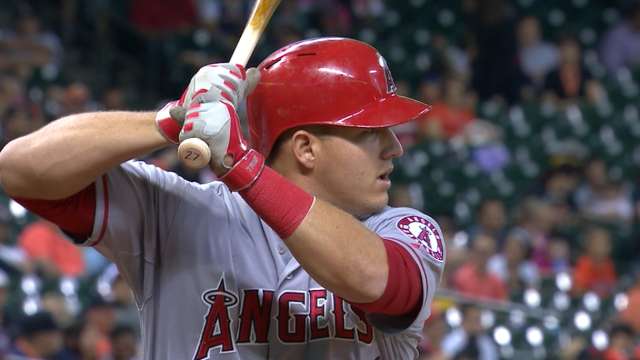
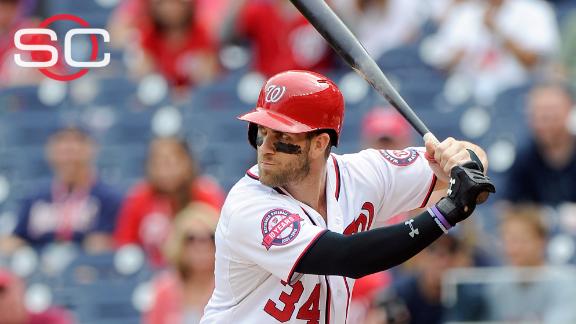
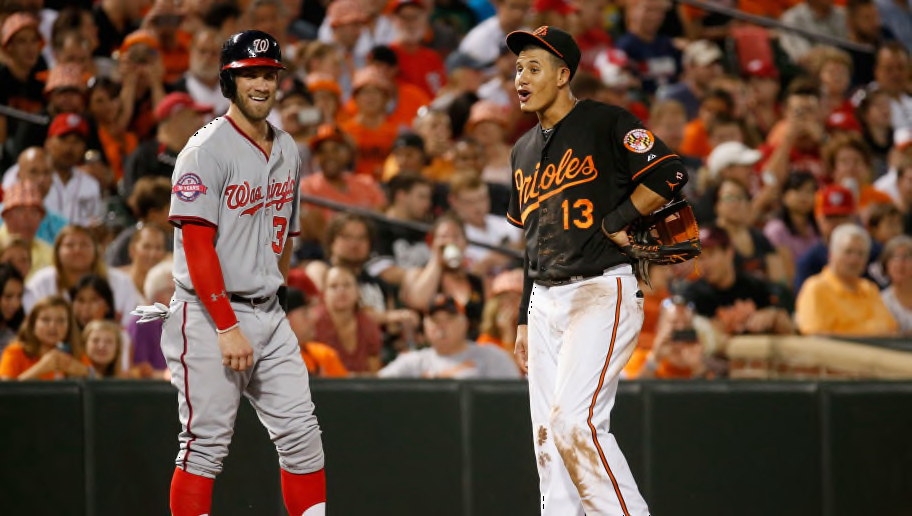
Harper (left) and Machado are holding out for record paydays (12Up)
For nearly two decades, Alex Rodriguez has held the record for the largest free-agent contract in American professional sports. On December 11, 2000, Rodriguez signed a 10-year, $252 million deal with the Texas Rangers, doubling the contract of the highest paid professional athlete at the time --Kevin Garnett of the NBA's Minnesota Timberwolves. Seven years later, Rodriguez opted out of that deal to sign an even bigger one with the New York Yankees worth $275 million over 10 years, with the potential to earn an additional $30 million in incentives for reaching certain home run milestones (which later became controversial following his PED admissions).

Records are made to be broken, but so far neither deal has been surpassed by a free agent* in any sport. The closest anyone's gotten were Albert Pujols and Robinson Cano, who both signed 10-year, $240 million deals in 2011 and 2013, respectively. That's going to change this winter, however; it's only a matter of when.

[*Giancarlo Stanton (13 years/$325 million) and Miguel Cabrera (10 years/$292 million) both later eclipsed Rodriguez via contract extensions, not as free agents. The highest paid athlete is boxer Canelo Alvarez, who's currently on an 11-fight, $365 million deal.] 

Bryce Harper and his agent, Scott Boras (the same agent who negotiated Rodriguez's first megadeal), have had their sights set on the record since Harper was smashing 500-foot homers and making magazine covers as a teenager. He debuted with the Washington Nationals at 19 in 2012, making his first All-Star team en route to winning NL Rookie of the Year honors. He was an All-Star again in 2013 before putting together one of the greatest offensive seasons ever in 2015, when he won the NL MVP unanimously. The Chosen One had arrived.

While Harper hasn't been able to replicate that historic campaign, he showed what his ceiling can be. He showcased it again last summer by winning the Home Run Derby at Nationals Park, wowing the hometown crowd with a display for the ages that included 14 homers in the final 47 seconds and 45 overall. While injuries have often prevented Harper from reaching his full potential, he's still been one of baseball's 12 most valuable position players throughout his career. He's slugged at least 20 homers and been an All-Star in all but one of his seven seasons, and he was headed for a second MVP award in 2017 before hyperextending his knee after slipping on a wet base. Harper's 26 years old, he just led the Major Leagues in walks, and he has MVP potential. He is, in other words, a superstar.

He's not the only one whose services are available this winter, however. Manny Machado, last seen during the World Series with the Los Angeles Dodgers, is arguably just as good as Harper. Machado, who's just four months older than Harper, also debuted in 2012 and immediately emerged as one of the best players in baseball. In 2013 he was an All-Star en route to leading the AL in doubles, and starting in 2015 he's topped 30 homers every year.

While not quite the force that Harper is at the plate, Machado's a comparable baserunner and an elite defender at a more challenging position, earning a pair of Gold Gloves for his outstanding work at the hot corner (he can also play shortstop, but not as well as third). He's one of 15 position players to compile at least 30 fWAR since 2012, tallying virtually the same amount as Harper in one fewer game. That hasn't translated to an MVP yet, but it has helped the four-time All-Star to three top-10 finishes despite playing for mostly mediocre teams in Baltimore. And whereas Harper has struggled with injuries, Machado has been extremely durable, appearing in at least 156 games in five of his last six seasons.
Nearly 20 years later, A-Rod's superdeal is still the standard (SI)
Baseball hasn't had a free agent so good and so young since 2000, when Rodriguez was a 25-year-old shortstop coming off three straight 40-homer seasons with the Seattle Mariners. Now it has two, in the same winter, no less.

In the old days, that would have sparked a feeding frenzy between baseball's richest teams. The Red Sox Yankees, Cubs, and Dodgers would've opened up their vaults for them, spawning a bidding war the likes of which baseball has never seen. But, as last winter's slow-moving market proved, times have changed. Teams are not willing to pursue free agents as aggressively as they used to, not when it means committing large sums of money to ageing players who will cost them compensatory draft picks, luxury tax penalties, and payroll flexibility. Better to drag out negotiations and drive down the price once Spring Training is underway and players start getting desperate.

But if there was ever a player to break the bank for, it's Machado and Harper. Sure, they have red flags and rub a lot of people the wrong way, but they're young and athletic and certifiable stars. There's not too many of those left in baseball these days, so they're sure to attract eyeballs and sell jerseys. Neither has won a championship, which should continue to drive them after the ink dries on their new contracts. They'll instantly transform whichever lineup they join and add multiple wins to a team by themselves. Not everyone can afford them, but everyone could use them.

It's hard to reconcile, then, why both remain unsigned despite playing different positions and negotiating with different teams. The Dodgers have the money and the roster space for Harper after trading away Matt Kemp and Yasiel Puig, while the Phillies, White Sox, and Yankees all need Machado on the left side of their infields. So what's taking so long?

It's not as though teams haven't tried to sign either player. Harper rejected a 10-year, $300 million offer from the Nationals, which would have made him the richest free agent ever (Washington has reportedly since upped its offer). Machado received an offer from the White Sox, albeit a smaller one closer to $200 million. Both are worth more than that, and they know it. But is there a team willing to give it to them?

We'll just have to wait and see.

Friday, May 26, 2017

Remembering Ryan Howard

With Howard's career likely over, it's time to do some reflecting (MLB.com)
It's been a couple weeks since the Braves released Ryan Howard from his Minor League contract, effectively bringing an end to the 37-year-old's career. The news didn't come as a shock to anyone who's watched him flail away over the past five seasons, but it's always sad whenever one of baseball's greats is told he can no longer play the game.

It's sadder still when one of those players starred during your childhood. When they retire, it feels like they're taking a small part of it with them. The player becomes great only in your memory, YouTube tributes, and grainy highlight reels. It also makes you realize how much time has passed since you first started cheering for them.

I wasn't a Phillies fan and never owned him in one of my fantasy leagues, so I can't say I truly rooted for Ryan Howard. But I remember the summer he exploded onto the national consciousness, establishing himself as a household name and one of the most feared hitters in baseball.

Bill Simmons once wrote somewhere that sports never matter more than when you're 14 years old. Now 10 (soon to be 11) years removed from that semi-magical age, I have to agree with him. The more I think back on it, the more sports memories I'm able to unearth from that time. It's like I'm drilling for oil, and the summer of 2006 is my Alaskan pipeline.

I think that's because I watched more Baseball Tonight (RIP) in that two-month stretch than I have before or since (this was in the dark ages before MLB Network, mind you). Every night, I'd go down into the basement and flip on BT or Sportscenter (whichever was on, though BT was infinitely better) while working out in preparation for eighth grade football.

So, yeah, I saw a lot of baseball highlights that summer, many of which involved Ryan Howard sending another meatball deep into the night.

By then, it was clear that Howard was having a special season. Expectations were high for him that spring, as they always are for players who've just won Rookie of the Year. Howard's were astronomical, though, given that his rookie numbers projected to 40 homers, 115 RBIs, and 325 total bases over a 162-game season.

Most people thought those numbers were Howard's ceiling. Few could have imagined that he'd blow them away.

Many rookies take a step back in their second season, especially strikeout-prone sluggers like Howard. The league adjusts to them, their weaknesses become exploited, and before long they look lost at the plate. There are strikeouts and pop-ups and growing pains, but it's all part of the process. The MLB learning curve is steep, sometimes taking years to master (just ask Jose Bautista).

Very rarely does a guy come up and rake from the start. A few of the all-time greats did -- Ted Williams, Joe DiMaggio, Albert Pujols -- but many didn't, including Mickey Mantle, Willie Mays, and Mike Trout. Some don't hit their stride until their 30s, like Raul Ibanez or Daniel Murphy.

Not Howard. He took off like a rocket ship, homering off reigning NL Cy Young winner Chris Carpenter on Opening Day and batting over .300 through the end of April. In May he barrelled through the stratosphere, slugging 13 homers and driving in 35 runs, but somehow did not win NL Player of the Month honors. Let me repeat that: A guy hit 13 homers and had 35 RBIs in one month and did not win Player of the Month. Some guy named Jason Bay (remember him?) did, with 12 homers, 35 RBIs, and a 1.090 OPS (72 points higher than Howard). 2006 was a different time.

When Howard didn't slow down in June (nine homers, 21 RBIs, .987 OPS), that's when I really began to take notice. Towards the end of the month, he ripped two homers and drove in all seven of his team's runs in a 9-7 loss to the Yankees while becoming the first player to hit a ball into the third deck in right field at Citizens Bank Park. When I saw his stat line in the box score the following day, I remember wishing the season would end already so I'd know what Howard's final numbers would like. My summer vacation had just started, and I was already pining for October.
Howard became an MVP frontrunner with his stretch run surge (Philly Phever)
A little more than a month later, after he'd been named to his first All-Star team and competed in the Home Run Derby, Howard produced the ultra-rare 0-for-0 stat line while playing a complete game. The Marlins walked him five times -- only once intentionally -- although I'm sure several were of the unintentionally-intentional kind. That was in the first game of a doubleheader. Florida pitched to him in the second game, but Howard made them pay with three hits, including a homer.

The five-walk game (which tied a Major League record) reflected a shift in how Howard was being approached. Prior to the All-Star break, he walked 31 times (five intentionally) in 352 plate appearances. In 352 PA's after the break, he walked 77 times, a whopping 32 of which were intentional. Only three men in baseball history received more intentional walks in a season; Barry Bonds, Willie McCovey, and Albert Pujols.

Seeing fewer strikes did nothing to slow Howard's roll in August, as he slammed 14 homers and drove in 41 runs (the highest monthly total since 1962) to win NL Player of the Month. He did not go more than three games without a tater, and he ended the month with six homers and 17 RBIs -- a great month for most players -- in his final nine games. When the dog days of August drew to a close, he had 49 homers (a new Phillies record) and 128 RBIs.

The Phillies, who had a losing record for much of the summer, had been out of the playoff picture for months by the time September rolled around, but their slugging first baseman continued to mash. After playing both ends of a doubleheader on the 2nd, he smashed three big flies in the first game of a second twin ball the following day and added two hits in the night cap for good measure. Following another multi-homer game on September 8th, he'd amassed 13 homers and 26 RBIs in his previous 16 games. With the season entering its final phase, Howard had found another gear.

And even though he had 56 homers with over three weeks to go, there was little talk of him reaching 60. The once-magic number had been cheapened by Bonds, Mark McGwire, Sammy Sosa surpassing it six times in the previous eight seasons, and fans had become de-sensitized to gaudy home run totals. Thanks to the tireless efforts of Congress and Jose Canseco, they'd recently become aware that America's pastime was teeming with bulked up roiders, causing the home run's once-mythic power to wane considerably in the public's eye. Howard's numbers were undoubtedly impressive, but were met with a collective shrug from the baseball world. Pretty cool, Ryan, but you're still a long way from 73.

Making matters worse for Howard was that, at precisely that moment, opposing pitchers and managers decided to stop pitching to him altogether. With teams battling for postseason berths and September call-ups trying to make names for themselves, no one could afford to get cute with Howard. So they hardly bothered, walking him 28 times (14 intentional) over his final 100 plate appearances. It was the closest thing we'd seen to the Barry Bonds treatment since, well, how pitchers were treating Barry Bonds that year, who was intentionally walked 38 times (one more than Howard) at age 41. The strategy worked, limiting Howard to just two long balls and 11 RBIs over his final 21 games. Despite reaching base 53 times via hit, walk, hit-by-pitch, or error during that span (excluding his two homers), he was driven in a mere eight times, indicating just how little protection there was for Philadelphia's cleanup man.

Howard was named Player of the Month again for September after slashing .385/.562/.750, and when the dust settled on October 1st his final numbers were extraordinary; .313/.425/.659 with 58 homers (the most ever by a player in his second season), 149 RBIs, 104 runs and 108 walks (37 intentional). His home runs and RBIs paced the Major Leagues, as did his 383 total bases. Still, one can only wonder what his stats might have looked like had opponents not waved the white flag in September, or if Charlie Manuel hadn't batted him fifth throughout the first half, thereby costing him several plate appearances. 60 homers, 160 RBIs, and 400 total bases were all within reach. As great as it was, Howard's season could have been legendary.

Even so, it was still pretty monstrous. So blinding were Howard's Triple Crown numbers that he momentarily convinced baseball writers he was better than the reigning NL MVP -- the best hitter in baseball, who also happened to be an elite defensive first baseman. After all it was Albert Pujols, not Howard, who led the Majors in slugging (.671) and OPS (1.102) that year while mashing a career-high 49 homers, winning a Gold Glove and leading St. Louis to a World Series title. Had he not landed on the DL for the first time in his career, he would have surpassed 50 homers as well and possibly 150 RBIs, in which case there would have been no debate as to which first sacker had the superior season.

While Howard followed up his MVP with several more remarkable seasons, he never again reached the heights of 2006. He never came close to batting .313 again, finishing at .258 for his career, and had only one other season with an OBP above .360. He never had another 50-homer season or slugged .600 again, as pitchers soon learned that he could be neutralized with breaking stuff low and away. He quickly became unplayable against left-handed pitchers and his body began to break down. After averaging 44 homers and 133 RBIs from 2006-2011, he was below replacement level in every season except one from that point forward. It was unfortunate that he fell off a cliff as soon as his five-year, $125 million contract extension kicked in, turning him into a punchline during his final seasons.

But even at the end, when his batting average fell below .200 and he could no longer hit lefties to save his life, the power remained. He went deep 25 times in his final season in just 331 at-bats, besting his rookie rate of 22 homers in 312 at-bats. The only difference was that his OPS was 214 points lower, and that he was a 36-year-old at the end of the line than a 25-year-old kid with his whole career ahead of him.

It's a shame Howard never got to DH (his natural position) full-time, as he had the size and strength to keep hitting home runs forever. The Yankees just should have put him in that Stadium and milked a few more seasons out of him for minimal cost. They still can, I guess, especially since he'd make a nice platoon partner for Matt Holliday, but the last thing Brian Cashman wants right now is another aging bat on his roster.

Man, 2006 really was a long time ago...

Wednesday, December 14, 2016

Pudge Deserves First Ballot

Rodriguez might be the best catcher ever (Century21 Riverpointe)
Nineteen former players are eligible to be inducted into baseball's Hall of Fame for the first time this year. While a couple should be slam-dunks based on their numbers alone (Manny Ramirez says hello), it's possible none of them will be elected, especially with holdovers Jeff Bagwell, Tim Raines, and Trevor Hoffman all coming off near-misses last year (each received at least 67 percent of the vote). As such, the BBWAA may continue clearing the backlog of deserving candidates rather than welcome anyone new this year, although it's possible one lucky newcomer will break through.

Ivan Rodriguez is easily the strongest addition to this year's ballot, and an inner-circle Hall of Famer by any measure. He won an MVP and a World Series, along with seven Silver Sluggers (six consecutively from 1994-1999) and 13 Gold Gloves -- the most ever by a pitch-caller. He leads the position in numerous statistics, including games caught, runs, hits, doubles, and weighted runs created.  Fourteen times he was an All-Star.

Rodriguez was the perfect catcher. He hit for power (311 career homers) and average (.296 lifetime). He had speed (127 steals). He was also, as you may have inferred from his Gold Glove total, the best defensive backstop the game has ever seen. Baseball-Reference and FanGraphs both have him ranked number one, and by a considerable margin. Although his bat declined in his later years, he remained a top-notch receiver until the very end, placing fifth among NL catchers in Total Zone Runs in his final season despite playing just 44 games. Even as a 39-year-old backup catcher who couldn't hit, he was still above replacement level.

Based on defense alone, Pudge is worthy of a place in Cooperstown, but it's his contributions with the stick that make him worthy of first-ballot induction. In addition to slashing .296/.334/.464 (104 wrC+) for his career, he also approached 3,000 hits and 600 doubles, settling at 2,844 and 572, respectively. He drove in and scored more than 1,300 runs. He was an offensive force in 1999 -- the year he edged Pedro Martinez for MVP honors -- and again the following year, when he had a 1.042 OPS before a fractured thumb ended his season in late July.

Put it all together, and Rodriguez has a legitimate case as the greatest catcher in baseball history. Jay Jaffe's JAWS metric, which combines career value with peak value, ranks him third behind Johnny Bench and Gary Carter. Pudge combined Bench's defense with the longevity and offense of the previous Pudge -- Carlton Fisk. He was remarkably durable and consistent for a catcher; according to FanGraphs, he was worth at least three wins every year from 1995 through 2005 (and worth 2.9 WAR in 2006, when he batted .300 for the final time and helped lead Detroit to a pennant).

And yet, despite all that, Rodriguez will likely be barred from the Hall this year due to rumors of steroid use during his career. He never tested positive, but Jose Canseco claimed Rodriguez juiced during their time together in Texas, and Canseco's been right about these things more often than not. Some may also see Rodriguez's slimmer physique and declining home run totals during the testing era as proof, but by that point he was in his early 30s and should have been declining naturally (his last season as an above average hitter came at 32). It is suspicious, however, that he was able to catch more games than anyone in history despite spending 13 seasons in the Texas heat. He seemed especially superhuman during the late '90s, when he was putting up monster offensive numbers while catching more than 140 games per year.

Based on what happened with similar cases (Bagwell and Mike Piazza), steroid suspicion will likely prevent Rodriguez from gaining entry on the first ballot. Now that Piazza's in, however, there's no legitimate reason for keeping Rodriguez out. He was a better defender and compiled superior counting stats, plus won an MVP and was a key leader on a World Series winner. The electorate has become more forgiving of PED-associated players in recent years, but my guess is that Rodriguez may fall just short of election this year. Hopefully they prove me wrong.

Thursday, September 1, 2016

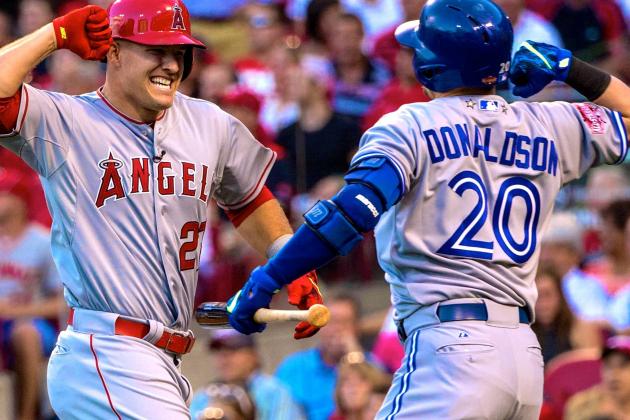
Trout's Team Costing Him Another MVP Award

Trout's team is the only thing stopping him from winning MVP (MLB.com)
The regular season ends one month from tomorrow, and we still have no idea who the American League's Most Valuable Player is going to be. Will it be Josh Donaldson again? Maybe! Could Jose Altuve become the shortest MVP in baseball history? Possibly! Does Mookie Betts have a chance? Absolutely!

Mike Trout, unfortunately, has no chance. He'll get plenty of votes, of course, perhaps even enough to finish second again (something he's accomplished three times already). But because the Angels have been so bad, and the rest of the competition is so good, voters are going to give the award to someone else. Again.

Trout's annual MVP snubs are getting ridiculous. Everyone knows he's the best player in baseball, the way you know the sky is blue and the earth is round, and the stats back it up. But when the recipient is named in November, it won't be Trout. It will be Donaldson, who edged him last year, or Altuve, or maybe even Betts. Heck, David Ortiz probably has a better chance than Trout at his point. Ironically, the player with the best statistical case appears least likely to win.

Trout still has a month to build his case, but it won't matter how well he plays down the stretch. Last year he had a 1.078 OPS in September--his highest of any month--while nearly leading Los Angeles into the playoffs, and it still wasn't enough. He can hit .400 with 12 home runs over the next five weeks, and it's not going to make an ounce of difference because the Angels have been out of contention for months.

And so Trout will finish his fifth full season with one MVP award, even though he should have five. He deserved to win over Miguel Cabrera in 2012 and 2013, and he deserved to win over Donaldson last year. Ironically, the year he did win--2014--was probably his worst year, but LA ran away with the division so Trout won in a landslide (unanimously, actually).

His career is starting to look an awful lot like that of Willie Mays, who won his first MVP at 22--the same age Trout won his--but then didn't win another one until he was 33. Like Trout, Mays led the league in WAR pretty much every year and was widely believed to be the best player in baseball, but the Giants were generally mediocre and he suffered at the polls as a result. Sixty years later, the same thing is happening to Trout.

But people really need to stop penalizing Trout for the lack of talent around him, especially since playing for a winning team is not part of the award criteria. It's not his fault the Angels have failed to surround him with adequate talent, or that they've been hamstrung by overpaying the likes of Albert Pujols, Josh Hamilton, and C.J. Wilson. As bad as they've been with him, just imagine how much worse they'd be without him. It's possible they'd have the worst record in baseball were it not for Trout, which, in a world where the Braves exist, is a scary thought.

So while Trout isn't leading his team to the playoffs this year, at least he's keeping them out of last place (not even peak Alex Rodriguez-on-steroids was able to do that in Texas). Trout has the talent to transform a .500 team into a contender all by himself, but the problem is that he's not on a .500 team. He's still making a huge difference in the standings, just not one that many people care about.

Monday, August 1, 2016

Why Didn't Griffey Get More MVPs?

Griffey won a lot of his awards in his career. But only one MVP? (CBS Sports)
I don't envy the person who had to write Ken Griffey, Jr.'s Hall of Fame plaque. There's a lot to say and not nearly enough space to say it. How do you sum up a 22 year career into a single paragraph? You have to mention the 10 straight Gold Gloves--the most by a center fielder not named Willie Mays. You can't overlook the 13 All-Star appearances, including 11 in a row at one point. And there absolutely needs to be a line about his home run total--he hit 630 of them, after all, sixth-most in baseball history.

The inscription also had to say that Griffey was AL MVP in 1997 (but failed to mention he won unanimously). What it doesn't say is how many others Griffey could, or should, have won.

It's simply mind-boggling to me that a player as beloved and talented as Griffey won but a single MVP award. He was the face of baseball for an entire decade, the same way Mantle was the face of baseball for the '50s and Babe Ruth was during the '20s. Griffey wasn't just a star or even a superstar; he was a super-duper-star. He was everywhere, on everything from cereal boxes and videogames to commercials and movies. The only athlete more popular than Griffey during the '90s was Michael Jordan.

He was so good and so popular that you would have thought he was winning the MVP every year, or at least coming close. As it turns out, Griffey had two seasons in his 22 year career where he finished in the top three of his league's MVP voting. Two.

It's incomprehensible that among players who won MVPs during the '90s, Griffey has the same number as Terry Pendleton, Ken Caminiti, Dennis Eckersley, and Mo Vaughn. None of those players were anywhere close to the player Griffey was during his prime.

I can't get over it. How how did Griffey, the face of baseball and the best player in his league for a decade, a .300 hitter who slugged more home runs and drove in more runs than all but one player during the '90s, a dazzling defender who won the Gold Glove every year, who made the Mariners relevant for the first time, win just one MVP award when Juan Gonzalez--Juan Gonzalez--won two. It doesn't make any sense.

By my count, there were a half-dozen seasons during the '90s when Griffey had a legitimate MVP case. Only once--in 1997 when he led the league in WAR (for a position player), runs, homers, RBI, slugging, and total bases--did he actually win the darn thing. Even though everyone knew he had been the best player in the American League for several years by that point, it all had to come together (Seattle making the playoffs, him leading the league in almost everything) for the MVP to go his way.

In this regard, Griffey is like another tremendous all-around center fielder who preceded him by a few generations: Willie Mays. Starting when he won his first MVP at age 23, Mays was clearly the best player in the National League for more than a decade. And yet, voters kept finding reasons to give the MVP to someone else (it didn't help that Mays's teams only made the playoffs once from his age 24-39 seasons). As such, Mays didn't win again until 34, by which point he only had one more MVP-caliber season left in him. He retired with two MVPs when he easily could have had seven or eight.

Griffey, who ceased to be healthy after turning 30, wouldn't have won that many. But he should have more than one, right? I mean, there was a four-year stretch in the late '90s where he averaged 52 homers, 142 RBI, and a .996 OPS (152 OPS+) while winning the Gold Glove every year. Surely he deserved at least one, maybe two more?

Let's go back and find out...
Griffey was more than just a great hitter, he was a freak athlete (ESPN)
1993: Griffey finishes fifth, should have won
Griffey was a great player for the first few years of his career--an instant star--but it wasn't until his fifth year/age 23 season that he became a superstar. That was the year he cranked 45 homers--blowing away his previous career high of 27, and set a bunch of other personal bests. He batted .309/.408/.617 (171 OPS+), led the league in total bases and, for the only time in his career, walked more than he struck out. His 8.7 bWAR were the most by an American League position player, plus he helped the Mariners to a winning season--which was a big deal considering they'd lost 98 games the year before.

Still, being a star on an also-ran isn't going to get you much love from the BBWAA. Seattle finished fourth in the AL West, 12 games behind Chicago, who produced the league's unanimous MVP in Frank Thomas. In retrospect, it's puzzling to see how Thomas was a unanimous selection. His offensive stats (.317/.426/.607, 41 HR, 128 RBI) were almost identical to Griffey's, but he was a first baseman. Griffey was a Gold Glove-winning center fielder, not to mention a better baserunner (Thomas had four steals to Griffey's 17). All told, Griffey was much more valuable, holding a 2.5-win edge in WAR.

The same goes for the other three players who finished ahead of him; Paul Molitor, John Olerud, and Juan Gonzalez. Molitor was a DH with half as many homers and an OPS that was over 100 points lower than Griffey's. Olerud had better hitting stats but, like Thomas, played first and was a non-factor on the bases (0 steals). Gonzalez, a left fielder, basically had the same stats as Griffey except in OBP, where he trailed by 40 points. Griffey should have won his first MVP at 23, just like Mays, or at least deserved to be a close second.

1994: Griffey finishes second, right call
Few players got shortchanged more by the player's strike than Griffey, who already had 40 homers--most in the AL--when his year was cut short with 50 games remaining. He was wielding a red-hot bat at the time, with four home runs and 13 RBI in just 10 August games. Who knows what Griffey might have done with the rest of August and September--he might have been the first man to break Roger Maris's home run record.

As good as Griffey's numbers were, they weren't as good at the time as those of Frank Thomas (MVP again) and Albert Belle, who finished third. Thomas had 30 points of batting average, 85 in OBP and 55 in slugging on Griffey, with just two fewer homers but 11 more RBI. Belle also probably had a better case, as his slash stats were all about 35-40 points better than Griffey's. Of course, it's hard to hit .350 for a full season so maybe those numbers would have come down, but we'll never know.

1996: Griffey finishes fourth, deserves second
After an injury-plagued down year, Griffey came back with a vengeance in 1996, slamming 49 home runs and knocking in 140 in just 140 games. He also batted .303/.392/.628, stole 16 bases in 17 tries, and played the best center field of his career. Not surprisingly, Griffey led the league in bWAR with 9.7--which easily would have been a 10-win year had he not missed three weeks leading up to the All-Star Break.

This was the best year of Griffey's career to that point, but voters bypassed him and teammate Alex Rodriguez (who was actually more deserving) in favor of Juan Gonzalez, who helped Texas to a division title with slightly more impressive power numbers (47 homers, 144 RBI and a .643 slugging). Griffey and A-Rod were both much better all-around players and posted superior offensive numbers at more demanding positions, which is why B-R credits both with over nine wins while Gonzalez gets less than four.

Part of the problem was that Griffey and Rodriguez stole votes from each other, as A-Rod received 10 first-place votes and Griffey got four. Had all those first place votes gone to one Mariner, he would have exceeded Gonzalez's 11 and won the award. If only the baseball writers had co-ordinated which Seattle superstar they were voting for.
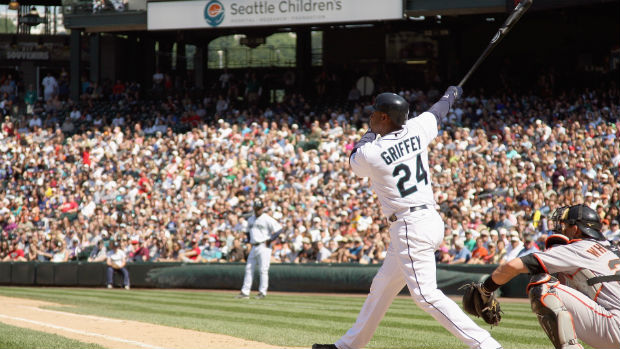
It took a home run barrage to win Griffey his first (and only) MVP (NY Daily News)
1997: Griffey wins! (finally)
Griffey had his best season and Seattle won the division, making him an easy choice for MVP (he won unanimously). Upon closer inspection, however, one finds that there was a player considerably more valuable than the Kid that year, and his name was Roger Clemens. The Rocket totaled an otherworldly 12.1 bWAR in his Blue Jays debut yet finished a distant tenth in the MVP race, failing to receive even a first place vote despite leading the majors in wins, innings, FIP, ERA+, and WAR. Clemens was undoubtedly hurt by the fact that Toronto finished last in the AL East, while Griffey clearly received much of the credit for leading the Mariners to a division title. When tasked with choosing between the game's best pitcher and the best position player for MVP honors the BBWAA, as they usually do, opted for the position player. I usually prefer the position player as well, so I won't argue here.

1998: Griffey finishes fourth, deserves top-three
Griffey was at it again in '98, blasting 56 homers for the second consecutive year as he give Roger Maris another run for his money. While the rest of his numbers dipped slightly, they were still almost identical to the ones he posted the previous season. And yet, he went from winning the MVP unanimously to finishing fourth, with nary a first place vote. Ahead of him finished Juan Gonzalez (again) and two superlative shortstops, Derek Jeter and Nomar Garciaparra. While both were phenomenal in helping their teams reach the playoffs, their power numbers were dwarfed by Griffey's. He ripped 21 more home runs than Garciaparra, for instance, and nearly three times as many as Jeter. He also knocked in more runs than either of them and, despite hitting 40 points lower, more than made up for this discrepancy with his power, which allowed him to out-OPS both of them.

While the most valuable player in the American League suited up for Seattle that year, his name wasn't Griffey. It was Alex Rodriguez, the league-leader in hits and bWAR who became the third player in baseball history (and still the only infielder) to go 40/40. However, his power numbers paled in comparison to Junior's and so he finished ninth. Both were also hurt by their team's lackluster record, which saw them go from division champs the year before to nine games below .500.

1999: Griffey finishes tenth, deserves higher
Griffey's final dominant season saw him finish 10th in the MVP voting despite winning his third straight home run title (and fourth overall) with 48, complemented by his typical gaudy runs/RBI totals as well as 24 steals--a career high. While his defense was slipping by this point, he still won another Gold Glove--his tenth in a row.

I'm not going to argue that Griffey deserved to win the last MVP of the '90s, because he didn't. Pedro Martinez, Ivan Rodriguez, Derek Jeter, Manny Ramirez, Roberto Alomar, and Nomar Garciaparra were all more deserving. Still, he definitely should have finished higher than Jason Giambi, Rafael Palmeiro, and Shawn Green.

So after all that, it appears Griffey deserved at least two MVP awards, maybe three if you give him '96 over A-Rod (had Griffey stayed healthy that year, it might have happened). Two is a good number of MVPs to win--that's as many as Frank Robinson, Ernie Banks, and Lou Gehrig, among others. When you win multiple MVPs, you're in pretty good company.

Like Mike Trout, Griffey had the misfortune of peaking when one of the greatest righthanded hitters in history was at his zenith (Miguel Cabrera's batting record is remarkably similar to Thomas's). Later on, his ridiculous run in the late '90s overlapped with the emergence of baseball's Holy Trinity at shortstop, not to mention some very short-sighted MVP votes. I mean, how crazy is it that a center fielder who averaged 52 homers, 142 RBI, and a .996 OPS (152 OPS+) for four years had one top-3 MVP finish? Probably about as crazy as a different center fielder leading his league in WAR every year for four years and winning just one MVP award.
Friday, November 20, 2015

Harper Wins Handily, Donaldson Defeats Trout

For the third time in four years, Trout was denied an MVP he deserved to win (LA Times)
This year's MVP race featured a pretty easy call in the National League and a brutally tough call in the American League. As usual, the BBWAA knocked the meatball out of the park but froze on the outside curve at the knees.

To be fair, that tough call was borderline impossible. Mike Trout's stats and Josh Donaldson's stats were virtually identical, and when that happens you tend to see voters falling back on wonky criteria to make their decisions, i.e. whose team made the playoffs, who had the better second half, who was part of a better story, etc. I'm sure some also felt less compelled to vote for Trout since he won last year, whereas Donaldson had never won.

Still, the fact remains that in tight races, the BBWAA seems to get the calls wrong more often than not. I'm thinking back to all those years Ted Williams lost out to his Yankee rivals (usually Joe DiMaggio), when Roger Maris edged out Mickey Mantle twice, how Sammy Sosa sneaked off with Mark McGwire's trophy, and the recent Trout and Miguel Cabrera debates. I could go on and on--Albert Pujols vs. Ryan Howard, Matt Kemp vs. Ryan Braun, any shortstop vs. Juan Gonzalez. Maybe I'm just not remembering the times voters have gotten the close ones right, but I can think of many more examples where the opposite was true.

I'm really starting to feel bad for Trout. The dude should have four MVPs by now, and instead he just has one and three second-place finishes. While that's still an impressive accomplishment, there's no trophy for second place. He could/should have been the first player in baseball history to be a four-time MVP before his 25th birthday, not to mention the only player not named Barry Bonds with more than three. Instead, he's still searching for his second.

Trout's starting to suffer from the Willie Mays effect, which is that even though everyone acknowledges him as the best all-around player in baseball, they still find ways to give the MVP to someone else. His seasons are all so great that none of them feel special anymore; it's just business as usual, another ho-hum nine-win season from Trout. People don't appreciate just how ridiculously good he has been--the best ever in baseball history at his age up to this point.

It's probably no coincidence, either, that despite leading American League position players in bWAR four years in a row, the only year he won MVP was the year his team made the playoffs--and that was his worst season individually! The other three times, he lost out to an inferior player on a postseason team. Voters are still failing to isolate the player from the team.

People didn't have that problem with Harper, who was far and away the best player in baseball this year even though he played for one of the most disappointing clubs in recent memory. The failures of his teammates not named Max Scherzer didn't stop him from winning unanimously, becoming the youngest player to do so (Trout had been the previous record-holder after winning unanimously last year).

It also helped that Harper had the trophy locked up by Memorial Day, surviving historic second halves from Joey Votto and Jake Arrieta. Of course, the MVP at the end of May isn't always the MVP come October, as we saw with Josh Hamilton in 2012 and Troy Tulowitzki in 2014, but Harper hit plenty over the season's final four months to protect his lead. When the dust settled, he had the highest WAR, OBP, slugging, OPS, and OPS+ in the majors, not to mention the most runs and long balls in the National League. Not even a surprise strangling by Jonathan Papelbon could knock him off. 

Harper is very much a modern MVP winner in that he won because he had the best numbers.  Even though he came from a crappy team, failed to drive in 100 runs, didn't play a premium position, and was not well-liked throughout the game--reasons voters might opt for someone else--he still won unanimously. His numbers were simply too overwhelming.*

*Which is funny, because he had the kind of season Ted Williams used to have every year, only Williams was usually dismissed for all the reasons I just mentioned
Unlike the AL award, the NL MVP was never in doubt (ABC6)
So while the NL race was effectively over by June, the American League remained an epic back-and-forth struggle between Trout and Donaldson throughout the summer. Whenever one seemed to take the lead, the other would get hot and pull even again.

The stretch that sealed it for Donaldson was the six weeks between the end of July and middle of September. Toronto took off during that time, rising from a game under .500 to first place in the AL East, leapfrogging three teams to get there. Donaldson went out of his mind during his team's ascension to the top of the standings, batting a sizzling .364/.433/.755 with 14 homers and 49 RBI over 39 games from July 29th through September 11th. With the Blue Jays firmly in control of first, no one seemed to notice how much he tailed off over the season's final three weeks, losing 31 points from his OPS.

While Toronto and Donaldson were kicking it into high gear for the stretch drive, Trout and the Angels were falling apart. Fourteen games over .500 and leading the AL West on July 23rd, Los Angeles plummeted to a game below .500 and 7.5 out of first by the end of August. Not surprisingly, LA's slide coincided with Trout's worst month as a professional. From August 1st through August 29th he batted .194/.336/.290 with just six extra base hits and six RBI.

Both rebounded in September, but were unable to make up the ground they lost in their late summer swoon. The Angels missed out on the second wild card by one game, and Trout was unable to overtake Donaldson in the MVP vote.

He should have. Trout was the best hitter in the American League--his raw OPS was 52 points better than Donaldson's in a much tougher hitting environment--while playing center field, a more demanding position than third base (Donaldson's position). Donaldson had better counting numbers, but that was largely because he had better hitters around him and walked less, so he ended up with 45 more at-bats even though Trout played one more game. Besides, we know stats like runs and RBI are team-dependent and thus should not hold much weight in these discussions.

So how did Donaldson win? Trout won last year, which probably hurt him, but I think the real reason was that that Donaldson had narrative on his side. He comes over in a blockbuster trade and then immediately leads his team to the postseason--their first playoff berth in 22 years, mind you--his very first year there. He had plenty of help from Jose Bautista, Edwin Encarnacion, Russell Martin, and David Price, but people seem to think Donaldson, like Maris coming to the Yankees in 1960 or Bonds going to San Fran in '93, made the difference.

I don't think so. I think Toronto still makes the playoffs with Brett Lawrie at third, all else being equal but they probably don't win the division. Los Angeles, on the other hand, wouldn't have even sniffed the second wild card were it not for Trout. They had a negative run differential with their superstar center fielder, so they surely would have had a losing season without him. Trout single-handedly turned a mediocre team into a contender, whereas Donaldson made a contender the best team in the American League.

I'm more impressed by what Trout did for LA than what Donaldson did for Toronto. Then again, I'd still vote for Trout even if the Angels had lost 100 games. Because the best player is the most valuable, and once again Trout was the best.

Tuesday, October 6, 2015

AL Award Race Preview

The All-Star teammates are now going head-to-head for AL MVP (Bleacher Report)
On this tense day leading up to tonight's American League wild card game, we might as well lighten the mood by handing out some hardware to this year's top performers. Today I'll tackle the AL races before previewing the NL field tomorrow.

Let me just say that I don't envy the voters this year. This season's award races were some of the closest I can recall, with the AL awards all virtual toss-ups and there being no easy answer to the NL Cy Young conundrum. While I've spilled many words in this space criticizing poor BBWAA choices throughout the years, there will be no such backlash from me this year. I could stare at the numbers until I go blind and I still don't think I could give a definitive answer, so I certainly won't blast a writer for going with his gut on this one.

Anyways, on to the awards:

AL MVP
Last year Trout won in a landslide (unanimously, actually), but if he wins again this year it will be by the skin of his teeth--even though this season was superior to last's by almost every conceivable metric. Although he led all American Leaguers in WAR (both B-R and FanGraphs versions) and posted the league's highest OPS (and OPS+, and slugging percentage), he's once again at a disadvantage because his team failed to make the playoffs. Trout nearly dragged them there, though, keeping the Angels in contention until the season's final day. After a dreadful August slump by him and teammates, he recovered in September to post a 1.078 OPS over the season's final five weeks. It's not Trout's fault LA's bullpen imploded during Game 162, or that nobody besides him and Albert Pujols made a peep against Cole Hamels. One guy can only do so much in baseball (see Joey Votto), and in the end it just wasn't enough.

I won't hold that against Trout, but others might. One of the reasons Trout finished behind Miguel Cabrera in the hotly contested MVP races of 2012 and 2013 was that Cabrera's team made the playoffs while Trout's didn't. When he finally won last year, the Angels winning 98 games and the AL West was definitely a factor. This year they really had no business being in contention after their awful August, but like I said Trout nearly willed them to October.

For those seeking to reward the best player on a playoff team, they'll find few legitimate MVP candidates on the Yankees, Astros, Rangers, and Royals. That leaves the Blue Jays, who are loaded with them. Votes will undoubtedly be cast for big boppers Jose Bautista and Edwin Encarnacion as well as staff ace David Price, but the team's top player this year was clearly Josh Donaldson, a slick-fielding third baseman who also paced the Junior Circuit in runs, RBI, total bases, and extra base hits.

Already an MVP-caliber player his last few years in Oakland, Donaldson exploded his first year in Toronto. Many credit him for helping an underachieving Blue Jays squad snap its 22 year playoff drought--the longest in professional American sports. Not only was he the best hitter in a stacked lineup, but he also played a demanding defensive position and played it well.

So did Trout, which makes this such a close call. Their offensive numbers are eerily similar and they both play tough positions. Up until about three weeks ago I would have said Donaldson, but his late-season slump and Trout's strong finish was enough to sway me back to Team Trout. I think Toronto still makes the playoffs without Donaldson (though probably doesn't win the division), while Los Angeles is a losing team without its star center fielder.

Furthermore, Trout was simply the better player this year. He was a better hitter, especially after accounting for their ballparks (Trout's OPS and OPS+ led the AL). Donaldson played half his games in the Rogers Centre, a launching pad that significantly inflated his statistics. He hit three-fifths of his doubles and home runs there, batted 67 points higher there, and slugged 160 points higher there. It was a given that the move from the Coliseum's suffocating offensive environment to a more generous one in Toronto would boost his numbers, but no one could have foreseen him taking such extreme advantage of his home park.

Trout, however, did not enjoy the same home field boost. Anaheim is a better park for pitchers than hitters, which is evident in Trout's splits. He batted 35 points higher and increased his slugging percentage by almost 70 points on the road. He also had more home runs, more RBI, and nearly twice as many doubles on the road as he did in Anaheim. Had he played in even a neutral park, his numbers would look considerably better. That he still equaled Donaldson's dinger total and led the league in slugging percentage, then, is very impressive.

Bottom line: Donaldson had a great season, but Trout was just a little bit better.
Price positioned himself to win another Cy with his huge second half (Fox Sports)
AL Cy Young award
This one's another tough call. Sonny Gray was the frontrunner for much of the season with a 2.13 ERA and sub-1 WHIP through the end of August, only to falter in September by allowing 20 earned runs over his final five starts. His ERA ballooned more than half a run, costing him the ERA title that may have netted him his first Cy.

Meanwhile, David Price continued mowing down batters in Toronto, putting the finishing touches on what could be his second Cy in four years. His numbers were stellar across the board; first in ERA and fWAR, second in FIP, bWAR, and ERA+; third in innings pitched, fourth in strikeouts,, and fifth in WHIP--all while spending time in two of the tougher parks for pitchers.

He wasn't the American League's best pitcher this year, though; that would be Houston's Dallas Keuchel. The AL's lone 20-game winner finished a close second to Price in raw ERA but led the loop in ERA+. He was also tops in pitcher bWAR, WHIP, and innings pitched. Considering their run-prevention skills were dead-even, the tiebreaker goes to Keuchel for tossing an additional dozen innings--or roughly two extra starts' worth. That was huge for the Astros, who won the second wild card by one game over the Angels.
 
Both were part of compelling narratives after helping pitch their respective teams into the postseason, though obviously Houston misses the playoffs without Keuchel while Toronto probably still makes it in. Price is the bigger name but Keuchel's numbers are a touch better. He deserves to win by the slimmest of margins, so expect a repeat of last year's photo finish between Corey Kluber and Felix Hernandez (neither of whom are serious contenders again this year, by the way).

AL Rookie of the Year Award
What's interesting about the American League race is none of the best candidates played full seasons. Promoted throughout the summer, their campaigns were abbreviated, which makes these comparisons both easier and more difficult. They are easier in the sense that their playing time was roughly even, but more difficult due to their numbers being awfully close.

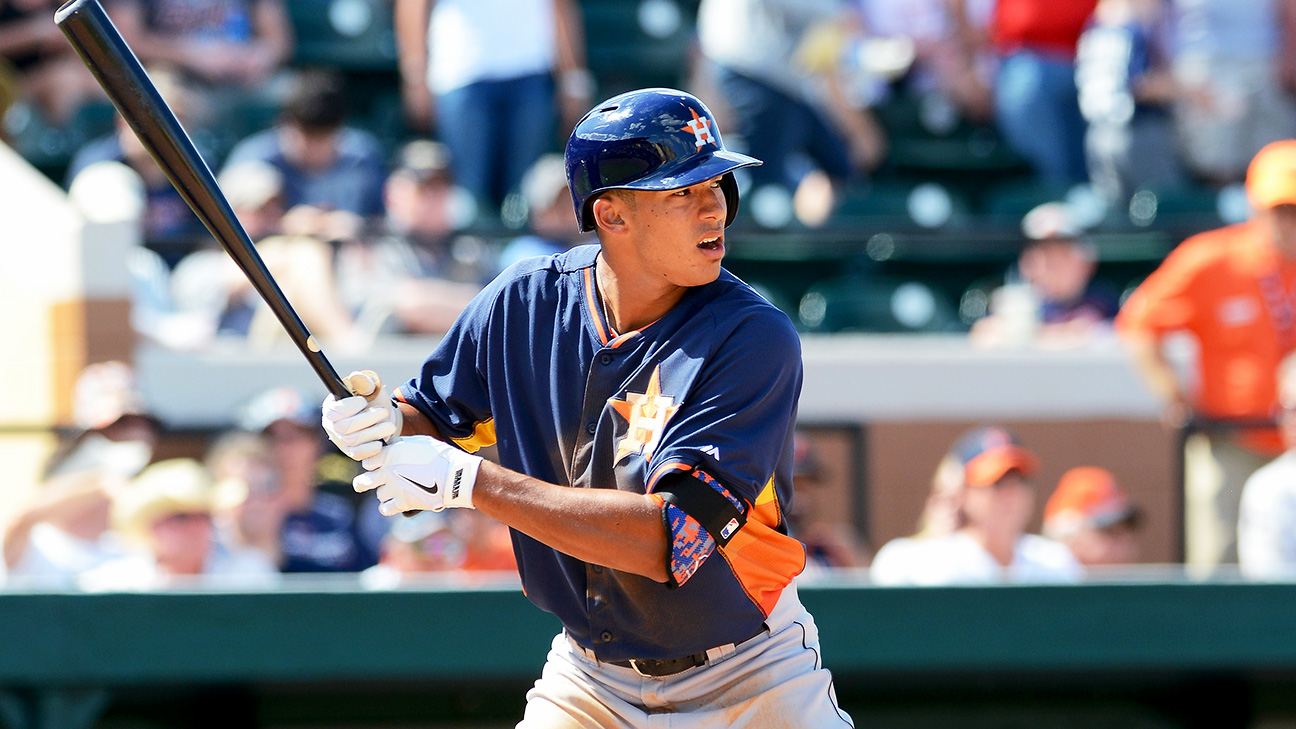
Carlos Correa's counting numbers--22 home runs, 68 RBI, 14 stolen bases, 4.1 bWAR--would have been phenomenal for a full season, but they're borderline insane considering he played barely three-fifths of one. We can only wonder what he could have accomplished had he debuted before June 8th. His full season numbers project to 36 home runs, 112 RBI, and 23 steals, which for a rookie shortstop is simply ridiculous. Even more ridiculous is that he just became old enough to legally buy a drink two weeks ago.
Correa's already earning comparisons to Alex Rodriguez (News Locker)
But wait, not so fast. What about the other wunderkind shortstop who played 99 games this year? Just 10 months older than Correa, Francisco Lindor was equally spectacular for the Indians, batting .313/.353/.482 (128 wRC+) with a dozen homers and steals. While his bat wasn't quite as potent, it was nearly so, and he was a considerably better defender. They were about even as baserunners, with the slight edge going to Correa. Baseball-Reference has them within half a win of each other in WAR, but FanGraphs gives Lindor a significant edge of more than one win.

I'd be remiss if I didn't mention Minnesota's Miguel Sano, who quietly enjoyed a monster season with the Twins. He was unquestionably the American League's best-hitting rookie, what with his .269/.385/.530 batting line, 151 wRC+, and .392 wOBA--not to mention his 18 home runs and 52 RBI in 80 games. Extrapolate his numbers over a full season and they're nearly identical to Correa's, But whereas Correa plays the most important non-catching position on the diamond, Sano hardly plays the field at all as a DH, making his production far less valuable. Had he played all year and amassed upwards of 30 homers and 100 RBI this would be a different conversation, but there's no reasonable explanation for choosing him over Correa or Lindor.

On the pitching side, Correa's teammate Lance McCullers made a good impression with a 3.22 ERA (80 ERA-), 3.26 FIP (79 FIP-), and over a strikeout per inning. Had he logged a full season, that performance might have merited the trophy, but it covered 22 starts and 125 innings. Two-thirds of a season is only slightly more than the three-fifths that Correa and Lindor played. Both were more dominant relative to their peers, as good-hitting shortstops are once again a rare commodity. In today's offensive environment, I bet most GMs would rather have the shortstop capable of hitting .300 with 20/20 potential rather than a midrotation starter.

So it comes down to Correa and Lindor. Lindor's the better all-around player at this point, but Correa is already showing Troy Tulowitzki-like prowess at the plate. With the margin between them so minute, I'm leaning towards the guy with the better offensive numbers. I think Correa made a little more of an impact in the games he played, and it also helps that he sparked his team to the postseason. Without him, the Astros are watching from home this year, so I think his outstanding performance in the heat of a pennant race deserves to be recognized.

When you get down to it, all of these awards are essentially two-horse races. Trout and Donaldson, Price and Keuchel, and Correa vs. Lindor. They're all so evenly matched you really can't go wrong with any of them. If it was me, I might just skip the analysis-induced headaches and flip three coins.