Showing posts with label Gold Gloves. Show all posts

Wednesday, December 14, 2016

Pudge Deserves First Ballot

Rodriguez might be the best catcher ever (Century21 Riverpointe)
Nineteen former players are eligible to be inducted into baseball's Hall of Fame for the first time this year. While a couple should be slam-dunks based on their numbers alone (Manny Ramirez says hello), it's possible none of them will be elected, especially with holdovers Jeff Bagwell, Tim Raines, and Trevor Hoffman all coming off near-misses last year (each received at least 67 percent of the vote). As such, the BBWAA may continue clearing the backlog of deserving candidates rather than welcome anyone new this year, although it's possible one lucky newcomer will break through.

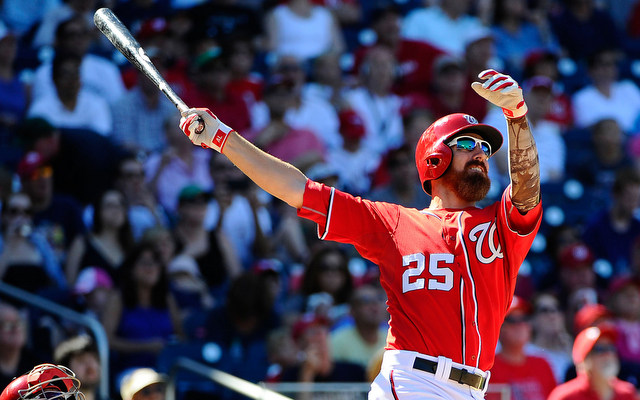
Ivan Rodriguez is easily the strongest addition to this year's ballot, and an inner-circle Hall of Famer by any measure. He won an MVP and a World Series, along with seven Silver Sluggers (six consecutively from 1994-1999) and 13 Gold Gloves -- the most ever by a pitch-caller. He leads the position in numerous statistics, including games caught, runs, hits, doubles, and weighted runs created.  Fourteen times he was an All-Star.

Rodriguez was the perfect catcher. He hit for power (311 career homers) and average (.296 lifetime). He had speed (127 steals). He was also, as you may have inferred from his Gold Glove total, the best defensive backstop the game has ever seen. Baseball-Reference and FanGraphs both have him ranked number one, and by a considerable margin. Although his bat declined in his later years, he remained a top-notch receiver until the very end, placing fifth among NL catchers in Total Zone Runs in his final season despite playing just 44 games. Even as a 39-year-old backup catcher who couldn't hit, he was still above replacement level.

Based on defense alone, Pudge is worthy of a place in Cooperstown, but it's his contributions with the stick that make him worthy of first-ballot induction. In addition to slashing .296/.334/.464 (104 wrC+) for his career, he also approached 3,000 hits and 600 doubles, settling at 2,844 and 572, respectively. He drove in and scored more than 1,300 runs. He was an offensive force in 1999 -- the year he edged Pedro Martinez for MVP honors -- and again the following year, when he had a 1.042 OPS before a fractured thumb ended his season in late July.

Put it all together, and Rodriguez has a legitimate case as the greatest catcher in baseball history. Jay Jaffe's JAWS metric, which combines career value with peak value, ranks him third behind Johnny Bench and Gary Carter. Pudge combined Bench's defense with the longevity and offense of the previous Pudge -- Carlton Fisk. He was remarkably durable and consistent for a catcher; according to FanGraphs, he was worth at least three wins every year from 1995 through 2005 (and worth 2.9 WAR in 2006, when he batted .300 for the final time and helped lead Detroit to a pennant).

And yet, despite all that, Rodriguez will likely be barred from the Hall this year due to rumors of steroid use during his career. He never tested positive, but Jose Canseco claimed Rodriguez juiced during their time together in Texas, and Canseco's been right about these things more often than not. Some may also see Rodriguez's slimmer physique and declining home run totals during the testing era as proof, but by that point he was in his early 30s and should have been declining naturally (his last season as an above average hitter came at 32). It is suspicious, however, that he was able to catch more games than anyone in history despite spending 13 seasons in the Texas heat. He seemed especially superhuman during the late '90s, when he was putting up monster offensive numbers while catching more than 140 games per year.

Based on what happened with similar cases (Bagwell and Mike Piazza), steroid suspicion will likely prevent Rodriguez from gaining entry on the first ballot. Now that Piazza's in, however, there's no legitimate reason for keeping Rodriguez out. He was a better defender and compiled superior counting stats, plus won an MVP and was a key leader on a World Series winner. The electorate has become more forgiving of PED-associated players in recent years, but my guess is that Rodriguez may fall just short of election this year. Hopefully they prove me wrong.

Wednesday, December 30, 2015

Sox Lose Another Legend

Malzone passed away yesterday. He was 85 (Boston Herald)
It's been a rough week for Red Sox legends. On Sunday, Dave Henderson died. Yesterday, Frank Malzone joined him in the great big diamond in the sky.

Whereas Henderson was remembered mostly for one swing, Malzone never had a career-defining moment. He was just a steady third base man for the better part of the decade, one of the best Red Sox during their dark days of the late '50s and early '60s. A slick-fielding, solid-hitting third baseman, Malzone was a Mike Lowell-type destined to be overshadowed by superstar teammates Ted Williams and Carl Yastrzemski.

Despite not doing much to distinguish himself off the field, Malzone did plenty to earn recognition in between the lines. After spending seven seasons in the minors and two years in the military during the Korean War, Malzone debuted with a flourish in 1957, batting .292 with 15 homers and a career high 103 RBI. The first time All-Star and finished second to Tony Kubek in the Rookie of the Year race--an award Malzone deserved to win--but placed seventh in the MVP vote.

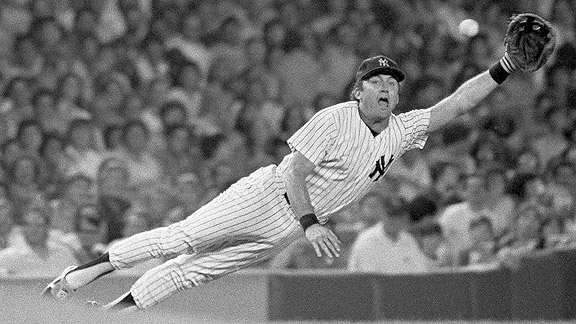
Malzone also won his first Gold Glove--the first ever awarded to an American League third baseman. He won the next two as well before Brooks Robinson came along and won 16 straight from 1960-1975 (Who knows how many Malzone might have won had Robinson played in the National League?). Only six men--Robinson, Buddy Bell, Gary Gaetti, Robin Ventura, Eric Chavez, and Adrian Beltre--won more while manning the hot corner for an AL team.

Malzone was more than just a terrific gloveman, however; he was also a pretty decent hitter (thanks to Fenway Park, where he batted .298/.339/.442 for his career). Most years he was good for a .280-ish average, 15 or so homers, and around 80 RBI. You could also count on him to be in the lineup everyday; from 1957-1964, no American Leaguer played more games. It was that kind of solid production and consistency that made him a six-time All-Star during this span, though it helped that the top third basemen at the time (Eddie Mathews, Ken Boyer, Ron Santo) played in the National League.

After dropping off sharply in 1965, the 35 year-old Malzone was released on the last day of November (he didn't remain a free agent for long, however, as the California Angels signed him the same day). After an even worse season with the Angels in 1966, Malzone hung up his spikes for good.

In 1995, 30 years after his last game with the Red Sox, Malzone was one of 14 players inducted into the franchise's inaugural Hall of Fame class, along with former teammates Williams, Yastrzemski, and Tony Conigliaro. Maybe someday the Sox will retire his 11, which he wore from 1956 to 1965. Clay Buchholz is currently wearing it, but should he leave after next season Boston would do well to add it to their line of numbers along Fenway's right field roof.

Friday, November 13, 2015

Aybar for Andrelton

In Simmons, the Angels acquired one of the best shortstops in the game (Sports On Earth)
Who would you rather have; A 31 year-old shortstop (32 next year) who batted .270/.301/.338 and is an okay defender? Or a 26 year-old shortstop who hit .265/.321/.338 and plays superlative defense? Furthermore, the former is entering his walk year, whereas the younger is under contract for a reasonable $10.6 million per year over the next five years.

Um, I'll take the world-class defender who's half a decade younger. Apparently the Atlanta Braves would rather have the other guy.

In a bizarre trade that makes absolutely no sense to me, the rebuilding Atlanta Braves traded Andrelton Simmons to the Los Angeles Angels for Erick Aybar. In this swap of shortstops, the Angels are clearly getting the better one. They get an in-his-prime, two-time Gold Glove winner who'll be around for the rest of the decade. The Braves get a placeholder for a year and a pair of pitching prospects. The two starters are highly regarded, but when it comes to prospects--pitchers in particular--you just never know.

Especially wild ones like Sean Newcomb and Chris Ellis, who placed eighth and 47th last year in walk rate among the 578 pitchers who threw at least 100 innings (thanks to Jeff Sullivan at FanGraphs for the info). Obviously wildness can be tamed--see Sandy Koufax and Randy Johnson-- and the Braves are known for developing great pitchers, but there's a real chance neither of them ever pan out. They're risks.

In Simmons, they had a sure thing; an elite gloveman who wasn't a total liability with the bat, a guy who's been worth roughly 17 wins through his first 500 games. Since debuting in 2012, Simmons has been baseball's fifth-most valuable shortstop despite playing just 49 games in his abbreviated rookie season.

Number six, interestingly enough, is Aybar. But Aybar, as mentioned, is going to be 32 next year. His defense has slipped noticeably the last couple years, and he just posted his lowest OPS since 2010. He still has a little bit of speed, but not enough to compensate for his eroding skills at the plate and in the field. He'll be an average major league shortstop at best in 2016, with the very real possibility that he drops below replacement level.

That's not going to happen to Simmons for some time, simply because he's such an outstanding defender. He could be a black hole on offense and still save enough runs with his glove to be an everyday shortstop. He'd be much more valuable, of course, if he could combine last year's decent OBP (.321) with the 17 homers he hit in 2013, but there's nothing wrong with being a slicker-fielding Elvis Andrus type who doesn't run.

I'm just baffled as to why Atlanta would give up on Simmons so soon after locking him in to a team-friendly contract. He has not progressed with the stick as hoped, so maybe they feel his value will never be higher than it is right now, before his defense declines and drags down his worth. 2,000 plate appearances into his major league career, Simmons has failed to show he can be even an average major league hitter, so the Braves might be on to something there.

Still, quality shortstops don't just grow on trees, and it's hard to be much better than Simmons has over the past few years. That's why the Red Sox didn't move Xander Bogaerts when he was struggling last year; because young, controllable shortstops are worth their weight in gold. The Halos were wise to swap out Aybar for Simmons, especially with no viable replacement on the horizon. Rather than overpay to keep Aybar or go through a revolving door of shortstops a la Boston circa 2004-2013, they ensured stability at the position for the foreseeable future. (They also get a catching prospect to boot, though it doesn't look like he'll amount to much after posting a sub-.500 OPS last year).

I'm sure finances played a role in this exchange as well. Aybar's only under contract for one more year and will cost Atlanta a modest $6 million, as LA is picking up $2.5 million of the price tag to split the difference between his and Simmons' salaries. Simmons, on the other hand, is owed $53 million over the next five years. Maybe the Braves felt that was a contract they needed to get out from under, even though they had no problem ponying up $44 million for Nick Markakis last winter. In reality, though, Simmons is an absolute steal at that price. He only needs to be worth seven or eight wins over the next five years to earn his keep, which should be a breeze as long as he stays healthy (he was worth seven wins in 2013 alone).

As with all trades, we won't be able to judge this one for a while. The Angels addressed their short-term needs and got the best player in the deal (as of now), whereas the Braves saved some money and stocked their farm system. For now both teams are winners, though my gut's telling me history will favor Los Angeles on this one.

Wednesday, October 28, 2015

Hunter Hangs 'Em Up

Hunter is retiring after a nice final season with the Twins (MLive)
After a stellar and tremendously consistent 19-year career, Torii Hunter is calling it quits.

Hunter had returned to the Minnesota Twins--who drafted him out of high school and watched him develop into one of the best center fielders of his generation--on a one-year deal for 2015. While he didn't explicitly say so, it was assumed he intended to retire as a member of the Twins, whom he played for from 1997-2007. He was going to be 40 in July, and while he'd been productive the last couple years one get the sense that his career was winding down. Why else would he want to come home?

Especially since the Twins have been terrible the last few years. When guys get to be Hunter's age and haven't won a ring yet, they usually want to go where they'll have a chance to do so. A popular, respected player with some juice left in his bat like Hunter could have latched on almost anywhere, had he been willing to take a discount. In need of a bat and veteran leadership for its up-and-coming team, Minnesota paid him above market value to come back.

It seemed like a sentimental move more than anything else. Hunter had been replacement level in 2014 and figured to be worse in 2015. That's nobody's idea of a $10 million player. But if anyone could afford to give a former star one last victory lap, the Twins could. With so much young talent to break in, Minnesota wasn't ready to contend.

As it turned out, the team and Hunter were both much better than expected. The Twins surprised everyone by finishing second in the AL Central, pursuing a wild card berth until the season's final week. Hunter hit 22 home runs--his most in a season since 2011--and played 139 games.

It was a fitting farewell for Hunter, one of the best and most popular Twins of all-time. Drafted by Minnesota in 1993, he made the big club in 1997 alongside David Ortiz, who like Hunter kept hitting throughout his entire 30s.

Also like Ortiz, it took Hunter a few years to get going. He didn't break out until he was 25, by which point he was in his fifth season--but once he did he never looked back. He hit 27 home runs and won his first of nine straight Gold Gloves that year (2001), made his first All-Star team and finished sixth in the MVP vote the following year, and had his first 100 RBI season the year after that. Nicknamed "Spiderman" for his amazing catches, he was quietly one of the best players of the 2000s, racking up eight Gold Gloves and topping 20 homers eight times (11 in all).

By the end of the decade he was an Angel, having moved on after a big walk year in 2007. When Vladimir Guerrero departed he moved over to right, which no doubt extended his career. He'd shown signs of slowing down in his last season as an everyday center fielder, batting .262 with his worst slugging percentage in over a decade.

But before long LA's outfield became too crowded for him, with Mike Trout taking over in center and Josh Hamilton signing on. Hunter found a home in Detroit, where he had two near-identical offensive campaings in 2013 and 2014.

It was towards the end of his first year with the Tigers that he was involved in what may be the most memorable play of his career. It was Game 2 of the ALCS and Boston, and Detroit led 5-1 in the bottom of the eighth. The bases were loaded and David Ortiz, Hunter's old teammate, stood at the plate, facing fresh reliever (Joaquin Benoit) summoned to extinguish the flames.

Ortiz turned on Benoit's first pitch and belted it deep into the night. 37,000 cold, tired fans leapt from their seats as the ball rocketed towards the right field bullpen. Hunter raced back to the wall and leapt, his glove hand stretched as high as it could go. Hunter had robbed many a would-be home run before, and it looked like he might do so again. He timed his leap perfectly, but without time to set his feet  he slammed into the wall, then flipped over it as his momentum carried him out of play. The ball followed him into the bullpen, having just cleared his outstretched mitt.

The game was tied, and within a matter of hours, so was the series. The Red Sox went on to win in six, then proceeded to beat the Cardinals in the World Series. Had Hunter made the catch, Detroit would have won the game and probably the series. It could have been them celebrating after defeating St. Louis. And Hunter, of course, would have been the hero for robbing a would-be game-tying grand slam.

Instead, he retires with the best play of his career occurring in an All-Star Game. It was a superb play, to be sure, but I guarantee Hunter would trade it in a heartbeat for the ALCS grab, especially since he nearly killed himself trying to make it.

But not even that could slow him down. Nothing ever did.

Oh sure, he lost range over time as all mortals do. His defense inevitably slipped, forcing him over to right field and eventually DH. But even as he became a non-factor on the bases and a liability in the field, he remained a threat in the batter's box.

It's rare that centerfielders age as well as Hunter did. I think of Mickey Mantle, Dale Murphy, and Ken Griffey Jr., all of whom broke down in their 30s. Same goes for Andruw Jones, Vada Pinson, Fred Lynn, and Cesar Cedeno. Jim Edmonds couldn't stay healthy. All that running and crashing into walls usually catches up to you.

Not Hunter. He had pretty much the same season every year for 15 years. He'd bat around .280 with 20 homers, 20 steals, and 90 or so RBI. Like clockwork. There were a couple years where he got hurt--in 2005 he was limited to 98 games and in 2009 played only 119--but for the most part he was in the lineup everyday.

You know whose career Hunter's reminds me a lot of? Johnny Damon's. They were never really great, All-Star caliber players, let alone serious MVP candidates, but they were really good for a long time and held up surprisingly well. They played on some terrific teams and were usually in the postseason. They were pretty indestructible, too.

Hunter wasn't quite as good as Damon, but he had a better career than most people realize. His counting numbers are actually very similar to Jim Rice's. He surpassed 350 homers and fell just short of some other big round numbers like 2,500 hits, 500 doubles, 200 stolen bases, 1,400 RBI, and 1,300 runs. Not quite Hall of Fame numbers, but Hall of Very Good for sure.

Most impressively, Hunter went out on his own terms, not because of injury or as some washed up bum on a team he didn't care about. He got to retire as a healthy contributor for his original team after a year in which they almost made the postseason. It's not the perfect final chapter, but it's still a happy ending.

Tuesday, November 25, 2014

Seager Secures Extension

Seager's underrated but still worth the money (FootballsFuture)
The Seattle Mariners just gave Kyle Seager a seven-year, $100 million contract extension that locks up his arbitration years and first four free agent seasons, plus an option for an eighth year.

Hold the phone, Seattle just gave $100 million to whom?

Since debuting in 2011, Seager has quietly established himself as one of the better (and more underappreciated) players in the game. Over the past three years, Seager was the sixth-best third baseman in baseball per fWAR, ahead of established superstars such as Evan Longoria, Hanley Ramirez, and Pablo Sandoval.

While Seager is not well-known, he's worthy of this deal for a number of reasons. One is that he's just 27, smack dab in the middle of his prime. Another is that he's a great two-way third baseman, and thus excels at a tough position.

But really, Seager deserves the dough because he's a terrific baseball player.  He's steadily improved throughout his four big league seasons, peaking with last year's 5.5 fWAR, first All-Star appearance, and first Gold Glove (which should have gone to Josh Donaldson, but Seager's smooth defensively nevertheless). He also popped 25 home runs--his third straight season with at least 20--and knocked in 96 runs, both career highs.

Wait, there's more. Seager's incredibly durable, having played at least 155 games in each of the last three years and leading all third basemen in games played during that span. He doesn't strike out a lot for a guy with good power and walks a fair amount. His offense was 26 percent better than average last year after adjustments for league and park, and like I said his numbers have only trended upwards. Even if 2014 was his peak and he regresses back to the player he was in 2012 and 2013, he's still a 3.5 win guy, which is very valuable, especially to a team on the brink of contention like the Mariners.

This deal makes a ton of sense for Seattle, setting them up at the hot corner for the foreseeable future. It also makes a ton of sense for Seager, because $100 million is a lot of money.

Monday, November 24, 2014

White Sox Add Adam LaRoche

LaRoche landed in the Windy City (CBSSports)
The rebuilding Chicago White Sox injected some much-needed lefthanded power into their lineup by inking first baseman Adam LaRoche to a two-year, $25 million deal.

With reigning AL Rookie of the Year Jose Abreu already entrenched at first base and considerably younger, the 35 year-old LaRoche expects to replace the retired Adam Dunn as Chicago's everyday DH. LaRoche is a great bet to reach or exceed Dunn's 2014 production, which included 20 home runs, 54 RBI, and a .773 OPS (LaRoche has averaged 22, 76, and .811 per season to this point).  Abreu was a disaster defensively, but he's also seven years younger than LaRoche, who has annually rated among the game's more defensively-challenged first basemen, his 2012 Gold Glove notwithstanding. At this stage in LaRoche's career, getting him off the field definitely makes sense.

Besides, the White Sox aren't paying LaRoche for his glove; they made this move because of what he can do in the batter's box. One of the steadiest power bats in the game, LaRoche has exceeded 20 home runs every year but one dating back to 2005, with an injury-riddled 2011 (just 43 games played) the exception. Incredibly durable, LaRoche has played at least 140 games in eight of the past ten seasons.

And while LaRoche's age may be a concern for some, he has showed no signs of slowing down. Last year he batted .259/.362/.455--right in line with his career .264/.340/.462 marks--with 26 home runs and 92 RBI in 140 games. He also posted the best full-season walk rate of his career (14 percent) while posting the second-lowest strikeout rate of his career. His batted ball data didn't change and he didn't have negative run values against any kind of pitch. He also fared well against power pitchers (.800 OPS), finesse pitchers (.821 OPS), and everyone in between (.821 OPS). Like fellow DHs David Ortiz and Victor Martinez, LaRoche has aged gracefully and should continue to do so.

Plus, moving from power-stifling Nationals Park to the homer-friendly U.S. Cellular Field should help alleviate any natural decline. If LaRoche stays healthy, he may have a shot at threatening his high-water mark of 33 home runs and 100 RBI, both reached in 2012. That represents his ceiling, obviously, but his floor is pretty high as well. Only once has he batted below .250 in a full season (2013) or slugged below .450 (also 2013), and his OBP has never been lower than .320. In today's run-parched environment, those are all pretty decent and certainly playable numbers.

So as far as 35 year-olds go, LaRoche is a pretty safe investment.

Wednesday, November 5, 2014

2014 Gold Glove Review

Injuries have not affected Pedroia's stellar play in the field (BostonCBS)
Baseball's Gold Glove award winners were named yesterday, and while there are always some questionable selections I have to say most of these are pretty spot on. The selections have become markedly more accurate in recent years, which is absolutely a good thing. They're doing a much better job of what they were intended for, which is to honor the best defender at each position in both leagues. As always, though, there were a few miscalls that I felt obliged to point out.

Here's my position-by-position breakdown.

American League

C Salvador Perez
Second consecutive Gold Glove for Perez, who seems to be developing into the AL equivalent of Yadier Molina. FanGraphs had him as the best defensive catcher in baseball last year.

1B Eric Hosmer
Second straight for Hos.

2B Dustin Pedroia
Pedroia's bat's been slowed by injuries in recent years but his defense has remained elite, as he was the best defensive second baseman this year according to FanGraphs. Baseball-Reference rated his fielding contributions as worth 2.5 dWAR, the highest total of his career even though he missed 27 games.

3B Kyle Seager
While his offensive figures have held steady over the last three years, Seager made significant strides in the field this year. A mediocre third baseman in the past, he elevated his fielding and was an asset at the hot corner this year. But he was not as good as Josh Donaldson, who was tremendous last year and even better this year--worth 2.7 dWAR according to Baseball-Reference. B-R and FanGraphs both rate Seager inferior.

SS JJ Hardy
Hardy's signature power disappeared, but he was still as slick-fielding as ever and nabbed his third straight Gold Glove as a result.

LF Alex Gordon
Easy call here, as Gordon is universally regarded as one of the finest defensive outfielders in the game today.

CF Adam Jones
The metrics disagree with this one, but many who watch Jones play everyday say he's absolutely deserving. I'm inclined to think his true value falls somewhere in the middle. That said, he was actually pretty good this year, but I'm just not sure he was better than Jackie Bradley Jr. (what can't that kid catch?) and Leonys Martin. What I am sure about is that he should not have four Gold Gloves lined up in his trophy case.

RF Nick Markakis
No way. Markakis has been a bad defender since 2008, and yet somehow has managed to snag a pair of Gold Gloves during that time.

P Dallas Keuchel
Sure.

Lagares patrols the Mets' outfield with authority (Hardball Times)
National League

C Yadier Molina
Yadi took home the hardware for the seventh straight year, which is understandable given that his elite defense behind the plate held steady. That said, he didn't deserve this one because he wasn't as valuable as Jonathan Lucroy, a more worthy candidate because of his elite pitch-framing capabilities. Lucroy wasn't much better, but both B-R and FanGraphs agree he was superior. Molina wasn't a bad choice, it's just that Lucroy was the right choice.

1B Adrian Gonzalez
Gonzo had a good year at the plate and in the field, earning his fourth career Gold Glove and first since 2011.

2B DJ LaMahieu
Like teammate Nolan Arenado last year, didn't do much with the bat but had a heck of a year defensively. Well-deserved.

3B Nolan Arenado
Won his second straight, as he was worthy nearly two dWAR despite missing a third of the season. This wasn't a mistake--he's really that good.

SS Andrelton Simmons
Jhonny Peralta had an excellent year with the glove, but Simmons was even more fantastic. Not quite as great as he was last year, when he won his first Gold Glove with 5.4 dWAR, but his 3.9 dWAR this year were exceptional, making him the best defensive shortstop in either league.

LF Christian Yelich
Yep. Good call.

CF Juan Lagares
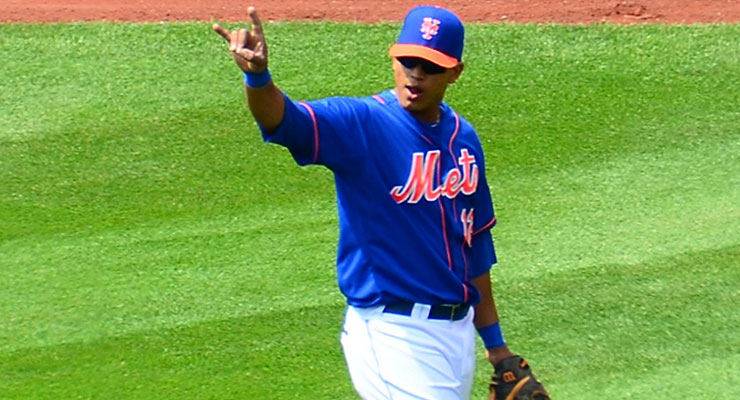
If you watched Lagares play at all this year, then you know how much he deserves this award.

RF Jason Heyward
Another easy call, as Heyward was far and away the best defensive right fielder in baseball this year. His bat hasn't progressed the way we'd hoped, but the 25 year-old probably has a few more Gold Gloves in his future.

P Zack Greinke
Okay.

Friday, October 31, 2014

Youkilis Retires

Youkilis shows off hi bizarre hitting style (NYTimes)
After one season in Japan, former Red Sox corner infielder Kevin Youkilis is calling it a career.

Youkilis, known simply as Youk to Fenway Faithful, enjoyed a 10-year major league career, spending the first eight and a half of those seasons with Boston. Drafted by Dan Duquette in the eighth round of the 2001 draft, the disciplined third baseman received a new nickname--"Greek God of Walks"--from Billy Beane's Oakland A's organization. That patience would serve him well in the big leagues, where he maintained a robust .382 OBP and 12.2 BB%.

Youkilis arrived on the scene in 2004, just in time to help the beleaguered BoSox end their 86-year championship drought. He was a solid reserve on that team and the following year's squad, backing up Kevin Millar at first and Bill Mueller at third. Both left following the 2005 season, allowing Youkilis to inherit the everyday first baseman job with the Red Sox acquiring Mike Lowell, an All-Star third-sacker, in their trade for Josh Beckett.

Already 27 by that point, Youkilis was more than ready. He batted .279/.381/.429 in his first full season along with 42 doubles and a career-high 91 walks and 100 runs scored. He was even better the following year, improving from a three win player to a five win stalwart and earning his first and only Gold Glove.

More importantly, Youkilis sparked Boston to another World Series title that year. A non-factor in the '04 run with just two at-bats, he was one of the team's best hitters in '07 and proved crucial to their victory. Youk was especially lethal during Boston's come-from-behind ALCS victory over the Cleveland Indians, batting .500/.576/.929 with 14 hits, three home runs, seven RBI, and 10 runs scored. Against Colorado in the Fall Classic he capped off a terrific postseason in which he batted .388/.475/.755 with 19 hits in 14 games.

The following year, 2008, would be the best of Youk's career. He enjoyed a power breakthrough with 29 home runs--equaling his output from the previous two seasons combined--43 doubles, 306 total bases, and 115 RBI, all career highs. He also hit .312/.390/.569, made his first All-Star team, won the American League Hank Aaron Award, and finished third in the MVP race behind teammate Dustin Pedroia and Justin Morneau. Youkilis was instrumental in helping the Red Sox reach the postseason again, and enjoyed another monster LCS (1.008 OPS), but it was not enough as the Sox were outdone by the Rays in seven games.

Statistically, 2009 was just as good for Youkilis, who posted a .961 OPS and was worth 6.6 bWAR while making the All-Star team again and finishing sixth in the MVP polling. He was on track for similarly great numbers in 2010 when a torn abductor muscle in his right thumb ended his season at the beginning of August. The injury effectively marked the end of Youk's brief reign as one of the best players in baseball.

The final year of Youk's career were frustrating and tumultuous (CBSSports)
His career started heading south in 2011, his last full season with the Sox. He moved back to third base to accommodate Adrian Gonzalez but the position change likely did more harm than good, as Youkilis was again plagued by injuries during the second half. He missed 42 games in all and appeared in just 22 from August 1st on, batting a reduced .190 over that time. Had he been able to stay healthy or hit more effectively down the stretch, Boston likely would have won at least one more game and thus been spared the humiliation of its great September collapse.

In the wake of said meltdown, Youkilis lost the trust of his teammates due to suspicion that he had leaked the chicken and beer information to the press. 2012 quickly turned out to be a nightmare for him and the team, as he got off to a slow start, had his effort questioned by new manager Bobby Valentine, and spent more time on the Disabled List. In his absence rookie call-up Will Middlebrooks excelled, making Youkilis expendable in the eyes of the organization and giving them a convenient excuse to trade him away. Ben Cherington did just that, dealing Youkilis for two nobodies in return. In a fitting finale, Youkilis had two hits, including a triple, in the last game he ever played for the Red Sox.

He moved on to Chicago, where he hit better with the White Sox but not well enough to convince anybody that his glory days were coming back. That led to his signing a one-year deal with the Yankees, which turned out to be a huge bust when he got hurt yet again and appeared in just 28 games. Nobody wanted him when his contract expired, and he took off for Japan.

The end came hard and fast for Youkilis, as it does for many athletes in their early 30s. Youk was an All-Star at 32, cast-off at 33, and done at 34. It wasn't surprising he tailed off so fast given his physique and unmatched intensity. Nobody played the game harder or with more passion than Youkilis, and like a shooting star he burned out quickly. Injuries took their toll as well, but he was a great player when he did play and had a Hall of Fame peak, even if it was short-lived (three years). Though he didn't play much (barely 1,000 games) or for very long, he accomplished a hell of a lot during his all-too-brief career.

And he did it with one of the most unorthodox batting stances I've ever seen.

Tuesday, October 21, 2014

Commemorating Chavez


Over the summer, at the height of Derek Jeter's much-ballyhooed retirement tour, Eric Chavez quietly retired, bringing an end to his 17-year major league career. While age and injuries reduced Chavez to a part-time player during the second half of his career, it's important to remember just how good he was during the first half. Had he just been able to stay healthy, his resume would probably be Hall of Fame worthy. As it is, it resembles something of a poor man's Scott Rolen; strong defense at third base complemented by good power and on-base ability, but a boatload of injuries later in the career. Rolen also happens to be Chavez's most similar batter through age 30, not surprisingly.

Drafted out of high school by the Oakland A's with the 10th pick of the 1996 draft, Chavez made his major league debut two years later. The year after that, he was Oakland's everyday third baseman. After a solid showing as a rookie, Chavez broke out in 2000 with 26 dingers and an .850 OPS, beginning a run of seven straight 20-homer seasons. He would max out at 34 in 2002, the year he won his only Silver Slugger and netted his highest MVP finish (14th) as part of the famed "Moneyball" A's squad. He produced nearly identical numbers the following year, led the league in walks with 95 in 2004, and enjoyed his fourth 100 RBI season in 2005. 2006 marked a bit of a decline for Chavez, as his average tumbled to .241, but he still posted a .351 OBP, smacked 22 home runs, and won his sixth straight Gold Glove.

Because he was basically replacement level for the last eight years of his career, I don't think people remember or appreciate just how good Chavez was at his peak. He was the American League's answer to Scott Rolen. From 2000 through 2005, when he averaged 30 homers and 98 RBI per year while winning five Gold Gloves, he was practically even in terms of value with Manny Ramirez and ahead of guys like Derek Jeter, Carlos Beltran, Miguel Tejada, Carlos Delgado, and Sammy Sosa. He never had that one monster MVP-caliber season or even made an All-Star team, but consistently stayed in the five-win range for half a decade. Had he been able to do that through the rest of the decade into his early 30s, would be discussing his Hall chances right now.

Because through 2006, his age-28 season, Chavez had already piled up 1,143 hits, 245 doubles, 212 home runs, 716 RBI, and 2,060 total bases. His 32.5 fWAR were within one of Chipper Jones at the same age and within two of Wade Boggs and Brooks Robinson. His 212 long balls ranked eighth of all third sackers through age 28, ahead of Dick Allen, Jim Thome, and Mike Schmidt, among others. His 716 RBI were seventh. And with six Gold Gloves already under his belt, Chavez appeared well on his way to Cooperstown.

Then, injuries. First it was debilitating back pain, followed later on by crippling knee ailments. After averaging 144 games per year from 1999 through 2006, Chavez never again played more than 115 games in a season. He played 90 games in 2007, 23 the year after that, and just eight in 2009. In 2010, his 13th and final year with Oakland, he suited up for only 33 games. His performance declined steadily during that time as various injuries took their toll. Worse, he became an enormous bust for the A's, collecting $45 million in player salaries over those final four years in Oakland, during which time he contributed -0.3 fWAR, damning him for all eternity as one of Billy Beane's worst investments.

Those four lost prime years effectively murdered whatever chance Chavez had the Hall, but incredibly they did not end his career. The Yankees, seeking backup for an aging Alex Rodriguez, scooped him up at a bargain bin price. Chavez was a non-factor in his first season with the Bronx (2011) but enjoyed a resurgent 2012 with 16 homers and an .845 OPS in 113 games. Chavez moved on to Arizona following New York's LCS elimination and continued to hit well there in spite of his old age, putting up an .810 OPS at age 35 and .795 at 36.

It was somewhat surprising, then, that Chavez retired midway through last season on July 30th. But the Diamondbacks were going nowhere and a knee injury had forced him to the disabled list. At 36, he was all done fighting his way back from injuries, so he forfeited the $1 million remaining on his contract and went home.

It's a shame we'll never know what Chavez would have accomplished had he stayed healthy. He was on track to be one of the 15, maybe even 10-best third basemen ever, at least on par with Rolen, Ken Boyer, and Ron Santo. Based on his early career trajectory, Chavez probably would have reached benchmarks such as 300 home runs and 2,000 hits, and may have added a few more Gold Gloves as well. As it is, his six Gold Gloves are tied with Buddy Bell and Robin Ventura for fourth-most all-time among third basemen, behind only Brooks Robinson, Mike Schmidt, and Rolen. His career .970 fielding percentage is the fifth-highest at the position.

Chavez is not a Hall of Famer, but for awhile he played like one. It's just too bad things didn't turn out differently, because by all accounts he was one of the game's classier, most respected players. Nobody deserves to have their career ravaged by injuries, but Chavez especially.

Saturday, October 11, 2014

Hate Hardy's Extension

Hardy's still great in the field, but his bat has slipped (BaltimoreSports)
I was surprised to hear the other day that the Baltimore Orioles inked shortstop J.J. Hardy to a three-year, $40 million extension. Teams usually wait to take care of this stuff until after the postseason, but with Baltimore still basking in the afterglow of its first AL East title since 1997 perhaps Dan Duquette was feeling a little bold.

Not saying this move is bold, per se, but it could easily backfire. This move has been largely well-received, and frankly I'm not sure why. Hardy's a 32 year-old shortstop, after all, and is coming off a poor season with the bat. He managed just nine home runs last year after swatting 77 over the previous three seasons, with a career-low .104 ISO to go with it. He also posted the worst walk rate of his career at 5.1 percent, as well as the highest K rate (18.3 percent). None of that bodes well for a hitter who previously derived most of his offensive value from power due to his subpar on-base skills and non-existent speed.

So even though Hardy had just as much value this year as he did in 2013 (3.4 fWAR), when he was a Gold Glove and Silver Slugger-winning All-Star, I see a player in decline. Most of that value stems from his stellar defense, which by itself was worth at least two wins this year according to both B-R and FanGraphs. Hardy won't win another Silver Slugger, but he deserves a third straight Gold Glove award.

The problem is that sooner or later, Hardy's defense is going to start slipping. He's getting to that age where reflexes begin to slow down and range starts diminishing. Maybe not next year or maybe not the year after, but it will happen eventually because it happens to everyone, including shortstops much more gifted than Hardy.

And given his spotty track record at the dish (his wRC+ has been above 100 just once in the past six seasons), Hardy's hardly a guarantee to bounce back offensively. An average hitter at best, Hardy will be a real liability at the plate if he can't recoup some of the power that made him an annual 20-25 home run threat prior to this year. He doesn't walk enough, run enough, and strikes out way too much for a guy with single-digit home run pop.

If I'm Dan Duquette, I'm not giving three years and $40 million to a 32 year-old who's batted .255/.298/.399 over the past three years, and I'm definitely not banking on him to rebound.

Friday, September 19, 2014

Longoria: Above the Nettles

Longoria is following in Nettles's footsteps (ESPN)
The more I think about it, the more Evan Longoria seems like a modern-day Graig Nettles to me, or at least a superior version of Nettles.

Think about it: they're basically the same player. Neither one hit for great average or had much speed, but both have above average on base skills because they walk a good amount. Both have good power, typically settling for around 20 homers and 90 RBI per season. Both have seen their numbers stifled by the pitching-dominated environments in which they play: Nettles spent most of his 22-year career in a wasteland for hitters (1967-1988) while Longoria has been victimized by the new Deadball Era, not to mention played half his games in the offense-suffocating Trop. For the most part they've been pretty durable, too.

Defensively, both are terrific. Nettles won two Gold Gloves and probably deserved a lot more, seeing as how B-R says his glove was worth nearly 21 wins over the course of his career (FanGraphs more or less agrees and has him at 18), though he was overshadowed by Brooks Robinson early in his career. Longoria also has a pair of Gold Gloves and has accrued the most defensive value of any third baseman since 2008, the year he broke in. His slick fielding combined with his elite bat has made him the best all-around third sacker during that span. He's been better than Adrian Beltre even, something I feel that most people don't appreciate.

Nettles had two top-six finishes in the MVP voting. Longoria also has two top-six finishes, though with admittedly more time to add more. Both came up with big hits in the postseason though their overall playoff numbers aren't great.

Nettles, of course, was a great player for a very long time; a borderline Hall of Famer. Longoria, with almost 40 bWAR through his age 28 season, is well on his way.  Though this year's been a bit of a struggle for him, he's remained healthy enough to play everyday and so his numbers will turn out alright. He was so good so young anyways that he really only needs a couple more big seasons to cement his Hall of Fame case, and seeing how he's signed through 2022 that shouldn't be too hard to do.

Nettles was very nearly a Hall of Famer, and Longoria's better than him. Few players play past 44, as Nettles did. But health and luck permitting, Longoria won't turn out to be the next Scott Rolen.

Tuesday, August 12, 2014

Ken Boyer Belongs in Cooperstown


Okay, so this long-winded post is admittedly a few years overdue, but better late than never.

Now that Ron Santo has taken his rightful place in baseball's Hall of Fame, shouldn't Ken Boyer get to as well? I mean, they were pretty much the same player when you get down to it. Both were slick-fielding, power hitting third basemen that had 15-year careers in which they won five Gold Gloves apiece and were perennial All-Stars during their heyday. Each was voted one of the National League's 10 most valuable players 4 times, and together they won 10 of 11 NL Gold Gloves handed out at the hot corner between 1958 and 1968, with the stray trophy going to Jim Davenport in 1962.

The similarities don't end there, either. They both spent the majority of their careers with a Midwestern National League club (Boyer with St. Louis, Santo in Chicago). Heck, their careers even overlapped for ten years from 1960--Santo's rookie year--to Boyer's last season in 1969. And just look how similar their career numbers are!

Boyer: 1,104 R 2,143 H 282 HR .287/.349/.462 .810 OPS 116 OPS+ 62.8 bWAR
Santo: 1,138 R 2,254 H 342 HR .277/.362/.464 .826 OPS 125 OPS+ 70.4 bWAR

It should come as no surprise that Boyer rates as Santo's fourth-most similar batter, behind a pair of third basemen who deserve to go into the Hall someday--Adrian Beltre and Scott Rolen--and a classic borderline case in Dale Murphy. With almost identical career slugging percentages, their power was certainly comparable. Boyer enjoyed 12 straight seasons with at least a dozen long balls, one fewer than Santo. Both men had eight years with upwards of 90 RBI.

Santo, because of his advantages in power and on-base ability, has the edge as a hitter, but Boyer was a better baserunner and, according to the metrics, a superior defender as well. Though both played for 15 years, Santo was more durable and thus squeezed about an extra 209 games out of those years. Thus, his counting numbers are more impressive and closer to traditional Hall of Fame levels, whereas Boyer's would seem to fall short.

Boyer has other things in his favor besides better glovework, though. He won an MVP award and a World Series championship, two things Santo never achieved. Boyer also had a bit of speed as well, swiping 105 bases in his big league career with a high of 22 in 1955, his rookie season. Boyer is one of only seven third baseman with more than 250 big flies and 100 stolen bases. Santo, with only 35 career steals, was never the threat on the bases that Boyer was.

Boyer beats the throw home to Yankee catcher Elston Howard in the '64 Series
An excellent two-way third baseman for a decade, Boyer was basically Santo before Santo. He made seven All-Star teams, won five Gold Gloves, and should have cemented his Hall of Fame status when he was named MVP in 1964 after playing all 162 games, leading the major leagues in RBI with 119 (becoming the first third baseman to do so since Home Run Baker in 1912), and batting .295/.365/.489 with 24 home runs for the World Series-winning Cardinals. He came up big in that year's Fall Classic against the Yankees, fueling the Cards' Game 4 victory with a grand slam and stroking three hits--including a double and a homer--to back Bob Gibson in Game 7 (Clete Boyer also homered, marking the first and only time in baseball history that brothers have homered in the same World Series contest). Unfortunately for Santo, he never had the opportunity to prove himself on the game's biggest stage.
.
That proved to be Boyer's last hurrah, as his career quickly went downhill after the '64 Series (ditto Mickey Mantle). The primary problem with Boyer, as it is with so many guys who seemed to fall just short of the hall, is that he stopped hitting in his early 30s. He had ten great years, the last coming in his MVP year at 33, and then was essentially done. The same thing happened to Jim Rice, Vada Pinson, Tony Oliva, Dale Murphy, Dick Allen, and many others who find themselves on the outside looking in when it comes to Cooperstown.

Boyer was also cursed with being boring. Never a flashy player, Boyer was consistent, and consistency is underrated. He hit 24 home runs four years in a row, batted over .300 four years in a row, and ended up with between 90 and 100 RBI six times in the seven seasons spanning 1956 to 1962. Had he come up with the handful of additional RBI necessary to push past 100 those years, he could have finished his career with eight 100 RBI seasons instead of two. I have to think that would have made a big difference in his Hall of Fame case. Voters back then loved big RBI totals and it would have been hard to ignore someone with eight seasons over 100. Likewise, if even just a few of his 24 homer seasons had been 30 homer seasons instead, Boyer would have eclipsed 300 career homers. As it were, he only had one season with more than 28 and managed just 40 over his final five seasons, falling 18 shy of 300 for his career.

As it is, Boyer is still a deserving Hall of Famer, albeit barely. His career bWAR score of 62.8 clears the threshold of 60 that typically defines a Cooperstown-caliber career. What's more, the average JAWS score of a Hall of Fame third baseman is 55.0, and Boyer's right there at 54.5. Though he falls a bit short on longevity, he makes up for it in peak value. He had six seasons where he was worth more than six wins, including two where he was over seven and two others with more than five. His peak WAR score ranks ninth at the position, better than Brooks Robinson and Miguel Cabrera and almost even with those of Adrian Beltre and Chipper Jones. A lot of that value stemmed from his defense, though he was still a terrific hitter. For those who prefer more traditional metrics, during his best seven-year stretch--1958-1964--Boyer averaged 155 games, 26 home runs, 101 RBI, a .303/.372/.500 batting line (128 OPS+), and totaled 45 bWAR.

That's a tremendous peak, something that's evident in his numerous All-Star appearances. Boyer's 11 All-Star Games (six starts) are the most of any third baseman not in Cooperstown, and everyone else who played in nine or more is in or will be (looking at you, Miguel Cabrera). It's one-fewer than Wade Boggs, Eddie Mathews, and Mike Schmidt, for God's sake, and two more than Santo. Obviously All-Star Games aren't everything, but they do reflect a player being recognized as one of the best at his position or in his league during a given year. And yes, Boyer's totals are skewed somewhat by the fact they played two Midsummer Classics per year from 1959 through 1962, so technically Boyer was an All-Star seven times. But still, seven All-Star nods is impressive.

The problem with Boyer is that he didn't have enough good years surrounding that peak. In two of the three seasons before it he clocked a 94 OPS+, and in the five years afterwards his aggregate OPS+ was 97. Boyer's case essentially rests on his first 10 seasons, and in two of those years he was actually subpar with the bat. So that leaves eight good seasons, and while they are very good, they don't jump off the page. I can see why many people don't view Boyer as a Hall of Famer, for the longest time I didn't either.

But now I see that in those ten years, Boyer was the second-best third baseman in baseball to Eddie Mathews. He was baseball's eighth-most valuable position player over that span behind seven slam-dunk Hall of Famers; Willie Mays, Mickey Mantle, Hank Aaron, Mathews, Al Kaline, Frank Robinson, and Ernie Banks. Consider that five of them were in the Senior Circuit in the time, and Boyer being named MVP looks even more impressive.

More than anything else, though, this right here is what put me on Boyer's side once and for all (and no, it wasn't the endorsements of former teammates Stan Musial and Tim McCarver). And that is from 1900 through 1968, Boyer's penultimate season, he was, according to WAR, the best third baseman not named Eddie Mathews. That means until the end of of the '60s, he had a legitimate claim as the second-best third baseman of the modern era, which by that point was near the end of its seventh decade. Case closed. That's enough for me.

Third base has traditionally been an underrepresented position in the Hall of Fame. That Santo, one of the 10 best third basemen ever, had to wait almost 40 years after his last game to go in (posthumously) remains one of the Hall's biggest mistakes. There are several more behind him lined up to go in, namely Boyer, Graig Nettles, and Dick Allen. It's too late for Boyer, who passed away more than 30 years ago, but better late than never. That's what the Veteran Committees are for.

Of course it all comes back to my original argument; if Boyer is basically Santo or just a tick below, and Santo's a deserving Hall of Famer, then by transitive property Boyer is too. It's really that simple.