Showing posts with label 1990s. Show all posts

Monday, January 5, 2015

Did the '94 Strike Murder McGriff's HOF Hopes?

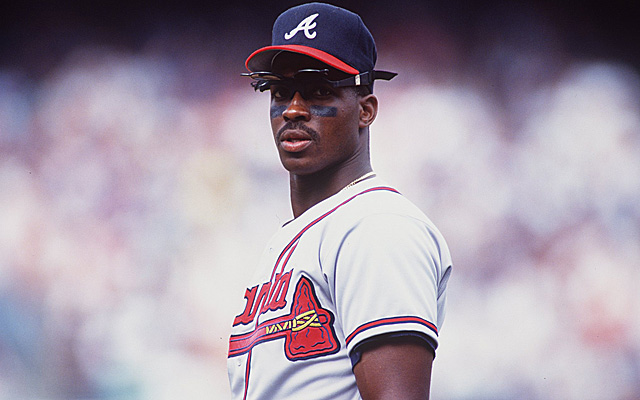
The player's strike may have cost McGriff his chance at the HOF (CBS Sports)
Legacy-wise, perhaps no player was hurt more by the 1994-95 player's strike than Fred McGriff.

Let me explain. Of all the what ifs from that unfinished 1994 season--would Matt Williams have hit 62 home runs? Would Tony Gwynn have batted .400? Would Barry Bonds have gone 50/40? Would the Expos have won the World Series?--perhaps the biggest one revolves around Fred McGriff's Hall of Fame case; namely, how much better would it be? We can project with reasonable accuracy how he would have performed over the remainder of that season and at the beginning of the following one but what we can't know is how differently he'd be viewed today, if at all.

Because right now, at least, it's pretty clear that the BBWAA doesn't consider McGriff a Hall of Famer. He's never received 25 percent of the vote in any of his five years on the ballot, meaning he's never even received a third of the votes needed for Cooperstown. After polling below 12 percent last year, it's possible he falls below 5 percent this year and gets pushed off the ballot altogether--a victim of the recent over-abundance of Cooperstown-caliber candidates.

At this point it's better for McGriff to simply fall off the ballot, because he's clearly not going to get enshrined via the BBWAA. The sooner he's removed from the writer's ballot, the sooner his case can be heard by a Veteran's Committee, which hopefully will be more forgiving.

Because McGriff, at least in my eyes, is a worthy Hall of Famer, and he deserves to be recognized as such. His two most similar players are Willie McCovey and Willie Stargell, both of whom were enshrined a long time ago. His Hall of Fame monitor score is 100, and thus the score of a likely Hall of Famer.

There's no denying McGriff's massive counting numbers, either; the 493 home runs (same as Lou Gehrig!); the 1,550 RBI (more than Mickey Mantle!); the 2,490 hits (more than Frank Thomas). He's in the top-50 all-time in home runs, RBI, walks, extra base hits, total bases, and runs created. He's one of 17 players with at least 10,000 plate appearances and an OPS of .886 or higher. His .383 career wOBA is better than Al Kaline, Carl Yastrzemski, and Reggie Jackson. His 134 wRC+ exceeds that of Ken Griffey Jr., George Brett, and Dave Winfield. Granted, none of those men were primarily first basemen, but the point is that McGriff was on their level as hitters. It takes a special player to hit so well for so long, and McGriff was one such player.

The downside is that, much like contemporaries Craig Biggio and Rafael Palmeiro, McGriff is seen as a compiler--a player with many good seasons but no great seasons. He's something of a modern-day Tony Perez in this regard, which is no knock on him. Perez is a Hall of Famer, albeit on the lower end of the first base spectrum, but a Hall of Famer all the same. McGriff is immediately below Perez in the positional JAWS rankings, for their careers were of near-identical value. If one considers Big Dog Cooperstown-worthy, than he must also consider Crime Dog worthy as well.

Still, I can't help but wonder how the perception of McGriff would have changed had he merely been allowed to play full seasons in 1994 and 1995. The knock on McGriff, after all, is that he never had that one signature season where it all came together for him. In fact, he did have one of those seasons: it just happened to be 1994.
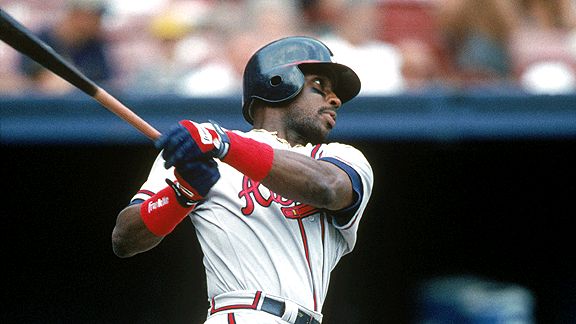
McGriff might have gone yard 50 times in '94 if not for the strike (ESPN)
McGriff had the misfortune of seeing his career year cut short by the work stoppage, which grounded the season on August 12th. McGriff was mashing at the time, having belted seven home runs in 10 August games. It's very unlikely he would have hit that well for the entire month, of course, but he probably wouldn't have just stopped hitting, either.

Alas, we'll never know. August was shaping up to be his best month of the season by far, and who knows how he would have fared in September? Given how well he was hitting at the time and how well he had performed up to that point, something tells me he would have done just fine. With 34 home runs and 94 RBI at the break he was a lock to exceed 40 and 110 for the first time. His OPS was over 1.000 at the time, and he had an outside shot at 50 big flies and 200 hits.  With Jeff Bagwell possibly finished for the year with a broken hand, McGriff may have walked away with MVP honors, especially if his hot stick had been able to propel second-place Atlanta past Montreal in the NL East (the Braves were six games out of first with 48 left to play). As it were, he finished eighth--his sixth straight year in the top-10.

McGriff had only missed one of Atlanta's first 114 games, so using his 162 game projection should give a reasonable approximation of his final numbers. Those are 116 runs, 193 hits, 35 doubles, 48 homers, 134 ribbies, 10 steals, 71 walks, and 378 total bases, which are absolutely monstrous. Thus, we must add 35 runs, 58 hits, 10 doubles, 14 homers, 40 RBI, 21 walks, and 114 total bases to his final ledger.

The strike carried over into 1995, delaying the start of the season by about three weeks. The late start didn't prevent McGriff from having another All-Star season, though. He slugged 27 home runs, knocked in 93 runs, put up an .850 OPS, and didn't miss a game. Give him 18 more games, and he probably reaches 30 home runs and doubles, surpasses 100 RBI, and approaches 100 runs as well as 300 total bases. Projecting his '95 production over 162 games adds 10 runs, 18 hits, three doubles and homers, 11 RBI, 32 total bases, and eight walks to his final line.

Giving McGriff full credit for his 1994-95 performances significantly changes not only his career totals, but also the complexion of his resume. He now has 11 30-homer seasons instead of 10, and one 40-homer season instead of none. The extra 30-homer season makes a difference, as there are only 14 players to top 30 dingers 11 times. Players with 11 such seasons include Willie Mays, Frank Robinson, Mark McGwire, Sammy Sosa, and Carlos Delgado. McGriff also has 10 years with at least 100 RBI instead of eight, including six straight from 1991-'96. That would give him as many 100 RBI seasons as Stan Musial, Willie Mays, Hank Aaron, Joe Carter, and Rafael Palmeiro. Only 16 players in baseball history have ever had that many.

As for his final numbers, McGriff would have wound up with roughly:

-1,394 runs
-2,566 hits
-454 doubles
-510 home runs
-1,601 RBI
-1,334 walks
-4,604 total bases

Those numbers, while marginally better, smell more like those of a Hall of Famer (a lot like Ernie Banks's actually). He's in the 500 home run club, exceeds 1,600 RBI, and is closer to 2,600 hits than 2,500. Just giving him that extra half-season back makes a big difference. When you're on the cusp, marginal improvements make all the difference.

If those were McGriff's final numbers, would he be in the Hall of Fame? I'm not sure. My gut tells me no, given the stiff competition and how poorly players with much better numbers have fared (though they also have PED suspicions, which thankfully have never tainted McGriff). At the very least, he wouldn't be in danger of falling off the ballot. His case would be harder to dismiss, and he wouldn't be just a fringe candidate or an afterthought to most voters. He'd have a real chance.

Hopefully someday, he'll get the plaque he deserves.

Friday, December 26, 2014

Questionable Rookies of the Year: 1990s

Kenny Lofton (pictured) deserved the 1992 award over Pat Listach (CheapSeatsPlease)
1990 AL Sandy Alomar over everyone else
Roberto Alomar's older brother has to be one of the most overrated players in baseball history. He somehow swindled his way onto six All-Star teams despite totaling a mere 13.7 bWAR across 20 big league seasons. Such was the case in 1990, when he earned the first of those All-Star nods and walked away with Rookie of the Year honors by batting an empty .290. Runner-up Kevin Maas, who slugged 21 home runs and posted a .902 OPS (150 OPS+) was a more deserving candidate, as was another Kevin--third-place Kevin Appier. Appier, who led all rookies that year with 5.3 bWAR, should have been a no-brainer after compiling a 2.76 ERA (139 ERA+) in 185 and 2/3 innings with Kansas City. He would go on to become one of the best pitchers of the 1990s but was rarely recognized as such, making just one All-Star team and drawing Cy Young consideration only once.

1992 AL Pat Listach over Kenny Lofton
I don't get this one at all. Listach and Lofton were basically the same player offensively, only Lofton did everything a little better. He scored a few more runs, hit a handful of more home runs, stole a dozen more bases, got on base more frequently, and slugged a little more. Sure, Listach played shortstop, but he was merely adequate, whereas Lofton became a Gold Glove-winning center fielder. Lofton was actually much more valuable defensively in addition to being a better hitter and baserunner, which is reflected in the fact that he was worth close to six wins while Listach came in around four. It was a fitting beginning to what turned out to be a very underappreciated career by Lofton, a poor man's Tim Raines who fell off the Hall of Fame ballot after his first year of eligibility.

1992 NL Eric Karros over everyone else
Voters were so swayed by Karros's 20 home runs and 88 RBI that they overlooked his terrible .304 OBP and pedestrian (especially for a first baseman) .730 OPS. At 0.4 bWAR, Karros was barely above replacement level and had no business being named Rookie of the Year. Runner-up Moises Alou played 34 fewer games but was much better offensively, hitting .282/.328/.455 (120 OPS+) while throwing in 16 steals. Reggie Sanders, who finished fourth, probably had the best case given his .831 OPS (127 OPS+), power/speed combo (12 dingers/16t thefts), and 77 games in center field. Karros went on to become extremely overrated due to his strong home run and RBI totals, which belied his middling on-base and power numbers.

1996 NL Todd Hollandsworth over Edgar Renteria
Hollandsworth had 1.1 bWAR in '96, but somehow finished in front of Edgar Renteria and Jason Kendall even though they hit roughly as well as he did while playing shortstop and catcher, respectively (Hollandsworth was a left field). His .785 OPS, for instance, is not significantly better than Renteria's .757 or Kendall's .773, both of whom contributed much more defensively. Looking back, it's clear Hollandsworth was not worthy.

1999 NL Scott Williamson over Preston Wilson
An everyday center fielder who bats .280/.350/.502 with 26 home runs and 11 steals should beat out a reliever who doesn't even pitch 100 innings, unless said reliever pitches like Clayton Kershaw or Pedro Martinez. Williamson was very good, but I'm siding with the position player on this one.

Tuesday, October 28, 2014

The Dubious History of the Hank Aaron Award

Yesterday's post about Giancarlo Stanton and Mike Trout winning this year's Hank Aaron awards got me thinking about past award winners and whether or not they were deserving. I was surprised to find that in many years the winner was not truly the most outstanding offensive performer, as voters were oftentimes seduced by big home run and RBI totals. See for yourself:

(It's worth noting that the voting procedure for this award has changed constantly since its inception in 1999. See a detailed history here).

1999 NL Sammy Sosa over everyone else
Slammin' Sammy's 397 total bases and 89 extra base hits led all of baseball, but with 5.0 oWAR he was barely one of the NL's ten best offensive performers. Larry Walker, winner of baseball's sabermetric Triple Crown, would have made a better choice, as would have Mark McGwire, the major league leader in home runs (65) and OPS+ (176). NL MVP Chipper Jones would have been a good one as well with his league-leading 7.9 oWAR and 165 runs created. Sabermetricians would have preferred Jeff Bagwell, the NL-leader in walks, runs, and times on base. I'm torn between Bags and Big Mac, but in either case it's clear Sosa should not have won.

2001 AL Alex Rodriguez over Jason Giambi
With his league-leading 52 home runs, 393 total bases, 87 extra base hits, and 9.2 oWAR, Rodriguez was absolutely worthy. But to me, at least, it's pretty clear that Giambi was more deserving. Giambi was right behind him in oWAR with 8.7, had just as many extra base hits, and was third in total bases. But that's just the tip of the iceberg, because Giambi paced the AL in many categories. He was first in OBP (.477) and slugging (.660), resulting in a whopping 199 OPS+ and 1.137 OPS that was almost 100 points higher than the next-closest American Leaguer (Jim Thome). Giambi was also tops in doubles with 47, walks with 129, runs created with 171, and times on base with 320. The counting stats favor Rodriguez slightly, but the rate stats say Giambi was way better, especially after taking into account their home ballparks (A-Rod in Texas and Giambi in Oakland).

2002 AL Alex Rodriguez over Jim Thome
Rodriguez once again posted monster numbers with Texas, leading the major leagues with 57 home runs, 142 RBI, and 389 total bases. But as in 2001, there was a slugger with similar counting stats and far better rate stats who deserved the award. This time, it was Jim Thome, the American League leader in slugging (.677), OPS (1.122--more than 100 points higher than A-Rod's), OPS+ (197), walks (122), and runs created (155). The advanced stats say Thome was better, and I'm inclined to agree with them.

2003 AL Alex Rodriguez over Carlos Delgado
For the third year in a row, Rodriguez enjoyed a tremendous offensive season but was not the best in his league. This time he was outdone by Delgado, who won the award in 2000. Delgado, then with the Toronto Blue Jays, posted the league's second-highest OBP (.426), slugging (.593), oWAR score (6.5), home run total (42), and walk total (109), plus topped the Junior Circuit in OPS (1.019), OPS+ (161), RBI (145), runs created (152), and times on base (300). Very close here, as Rodriguez did lead in runs, homers, slugging, oWAR, and AB/HR, but Delgado had the better year from an offensive standpoint.

2003 NL Albert Pujols over Barry Bonds
With all apologies to Prince Albert, who had a hell of a season, this award should have gone to the man who batted .341/.529/.749 (a 1.278 OPS!) with 45 home runs, 148 walks, and 8.6 oWAR, even if he was taking performance enhancing substances.

2005 AL David Ortiz over Alex Rodriguez
One look at the leaderboards this year tells you all you need to know. Ortiz led the league in RBI (148), extra base hits (88), and a trio of advanced metrics (WPA, RE24, and REW). A-Rod led in just about everthing else. For starters, his league-leading 9.4 oWAR dwarf's Ortiz's, which didn't even crack the top 10. Rodriguez also topped the Circuit in slugging (.610), OPS (1.031), OPS+ (173), runs (124), homers (48), runs created (163), and times on base (301) while finishing second in a bunch of other categories (AB/HR, Power-Speed, total bases, batting average, and OBP). A-Rod beat out Big Papi in the league MVP voting, and he should have done the same here.

2005 NL Andruw Jones over Derrek Lee
Jones had the flashier power numbers with a league-leading 128 RBI and ML-best 51 big flies, but with a .263 batting average and .347 OBP was hardly worthy of the honor. He didn't even finish in the league's top 10 in runs created, OPS, or oWAR. Lee's 46 homers and 107 RBI weren't quite as splashy, but his overall body of work was much stronger that year. He was undoubtedly the best hitter in baseball, topping the bigs in doubles (50), batting average (.335), slugging (.662), OPS (1.080), OPS+ (174), total bases (393), extra base hits (99) and runs created (167). He also led the National League in hits (199) and oWAR (7.2).

2006 AL Derek Jeter over David Ortiz
Jeter led the league in oWAR and times on base, with 7.1 and 295, respectively, but his season was nowhere near as dominant as Big Papi's. Ortiz led the league in a host of categories, winning two-thirds of the Triple Crown with 54 dingers and 137 RBI while batting .287/.413/.636, giving him the league's second-best slugging percentage, seventh-best OBP, and third-best OPS. He also led the league in walks with 119, total bases with 355, runs created with 152, and AB/HR with 10.3. He also placed second to Jeter in times on base and second to Grady Sizemore in extra base hits. Seeing as how this was the year Justin Morneau walked away with MVP honors, it was a tough season awards-wise.

2007 NL Prince Fielder over Matt Holliday
In a redux of the 2005 vote, Fielder won on the strength of his huge power numbers (including a league-best 50 homers) even though Holliday had the superior all-around numbers. Cecil Fielder's son only led the NL in one other category--WPA--while Holliday placed first in several, such as batting average (.340), hits (216), doubles (50), total bases (386), RBI (137), extra base hits (92), and runs created (151). Fielder was better than Jones in '05 and Holliday wasn't quite as good as Lee, but even after dinging Holliday for Coors Field he still comes out ahead.

2008 AL Kevin Youkilis over Alex Rodriguez
Not sure what happened here, as Youkilis did not lead the American League in a single offensive statistic. Rodriguez, meanwhile, was tops in oWAR (6.5) and slugging (.573) while placing second in OPS (.965) and OPS+ (150) as well as power-speed, adjusted batting runs and wins, and offensive win percentage. A-Rod wasn't the clear favorite, as one could make a case for Josh Hamilton, Milton Bradley, and Joe Mauer as well, but he was definitely better than Youk.

2008 NL Aramis Ramirez over Albert Pujols
This has to be one of the most questionable selections in the history of the award. Ramirez had a fine season, batting .289/.380/.519 with 27 home runs and 111 RBI, but failed to lead the league in any significant statistic. Pujols, the National League MVP, had perhaps his best offensive season. All the Machine did was bat .357/.462/.653 and lead the major leagues in slugging, OPS (1.114), OPS+ (192), total bases (342), oWAR (7.4), runs created (160), and times on base (296). Pujols should have been a no-brainer, and the fact that he didn't win that year blows my mind.

2009 AL Derek Jeter over Joe Mauer
Jeter was magnificent in 2009, batting .334/.406/.465 with 212 hits and 30 steals, but he was not the best offensive performer in the American League that year. Not by a long shot. Jeter didn't lead the league in anything besides times on base (289), and wasn't even the best hitter on his own team (Mark Teixeira, the MVP runner-up, was). League MVP Joe Mauer should have been an easy choice after he won the Junior Circuit's sabermetric Triple Crown with his .365/.444/.587 line, making him the only American Leaguer with a four-point OPS. Mauer also paced the league in oWAR (7.6), OPS+ (171), and runs created (138), too name a few. This is just another example of Jeter being overrated. Mauer Power was robbed.

2010 AL Jose Bautista over Miguel Cabrera
Joey Bats was not the American League's top offensive performer in spite of his major league-leading 54 big flies and 351 total bases. Cabrera didn't hit as many bombs but still had the superior offensive season, with his 1.042 OPS (just two points shy of Hamilton for the league lead) clocking in at nearly 50 points higher than Bautista's .995 mark. Furthermore, Miggy led the league with his 126 RBI, 420 OBP, 178 OPS+, 141 runs created, and 272 times on base. He was also second in extra base hits, total bases, runs scored, slugging, and batting average.

2012 NL Buster Posey over Ryan Braun
I was all in on Posey for MVP that year, but I don't think he was the league's top offensive performer despite leading the majors in batting average (.336) and OPS+ (171). I believe Braun, who topped the Circuit in runs (108), homers (41), OPS (.987), total bases (356), extra base hits (80), runs created (142), and power-speed #, was.

That's 14 of the 32 selections to date--not a very good success rate. As you can see the awards have been more accurate over the past five or so years, which hopefully means the iffy years of the award's early history are behind us. One thing's for certain; at least Derek Jeter will never steal another one of these awards from a more deserving player ever again.

Sunday, August 3, 2014

Thome Retires with Tribe


Jim Thome, the most recent member of baseball's 600 home run club and eighth to join, announced his retirement yesterday after signing a one-day contract with the Cleveland Indians, marking the end of his incredible 25 year baseball journey.

Thome, who last played in 2012, came full circle by going out with Cleveland, the team that drafted him in the 13th round of the 1989 amateur draft. Two years later he was in the big leagues for a cup of coffee, a September call-up who on October 4th launched the first of his 612 career home runs, taking Steve Farr of the Yankees deep at the Stadium.

It didn't take long for Thome's trademark power and batting eye to emerge, and by 1994 he was the club's everyday third baseman. Despite the player's strike he still managed to pop 20 homers, something he would do in every season but one through 2010. A key member of the great Indians squads of the 1990s, Thome won his first and only Silver Slugger at the hot corner in 1996 before moving across the diamond the following year to accomodate Matt Williams. Thome responded with his first 40-homer season and All-Star appearance, the first of six and five, respectively.

While more than half of Thome's regular season home runs would come in an Indians uniform (his 337 with Cleveland are a franchise record, nearly 100 more than second place Albert Belle's 242), all of his postseason long balls benefitted Cleveland. A dynasty that never was, the Tribe made the playoffs six times from 1995 through 2001, reaching the World Series twice but losing both times. A driving force behind those great teams, Thome compiled some impressive playoff statistics along the way. The 6'4, 250 pound behemoth cranked 17 home runs (tied with David Ortiz for seventh all-time) and knocked in 36 over the course of 11 different postseason series with Cleveland, showcasing his monster power on the game's biggest stage. Unfortunately for him and through no fault of his own, the Indians were unable to win the big one. Thome would go on to play in four postseasons after leaving Cleveland, but never again would he come to bat in the World Series or go yard in a playoff game.

Thome left Cleveland after the 2002 season--the best of his career--in which he batted .304/.445/.677 with 52 homers, 118 RBI and 122 walks, good for 7.4 bWAR, a league-high 197 OPS+ and a seventh place finish in the AL MVP voting. Thome capitalized, parlaying those monster numbers into a six-year, $85 million deal with the Phillies. He continued to produce huge power numbers in Philly, tying Alex Rodriguez for the major league lead in home runs with 47 in 2003 and belting 42 more the year after that. In 2005 he had his first off year, starting slow out of the gates and then getting hurt before he was shut down for the season in August. His replacement, a young but equally large slugger named Ryan Howard, came up and smashed 22 big flies in roughly half a season, enough to win NL Rookie of the Year honors and convince Phillies management he was the first baseman of the future.


Thome was traded to the White Sox, where he won AL Comeback Player of the Year and made his last All-Star appearance in 2006, reaping the benefits of the homer-friendly U.S. Cellular Field. Late in the 2009 season he was traded to the Dodgers, who were seeking a big bat for the stretch run. He did nothing with LA, bounced back to have one last big season in 2010 with Minnesota (25 home runs, 1.039 OPS), and after that was basically a spare part. He played his last game as a member of the Baltimore Orioles, with whom he crushed his 612th and final career home run on September 26th, 2012 at the age of 42. Though Thome was limited to part-time duty in his final few seasons, he remained an effective hitter to the end because of his power and on-base ability. After his disastrous 2005 season, Thome's OPS+ never dipped below 112.

After spending his first dozen seasons with Cleveland Thome bounced around a lot, changing teams seven times in the second half of his career and even returning to the Rock and Roll Capital of the World briefly in 2011. Nevertheless, he left a tremendous legacy with his original team, where he's tops in home runs and walks and top-five in most offensive categories.

But Thome is more than one of the greatest Indians of all-time: he's one of the best sluggers in baseball history. An offensive force for two decades (think Harmon Killebrew with longevity), Thome is absolutely a first-ballot Hall of Famer. There are the 612 home runs, of course (not including the 17 he hit in the postseason), a record for first basemen and seventh-most all-time. He knocked in nearly 1,700 runs and scored almost 1,600 others. He reached base 4,144 times, more than Jimmie Foxx, Rod Carew, and Reggie Jackson. His .956 career OPS is the 18th-highest mark in baseball history. He ranks 24th all-time in slugging percentage and RBI, 23rd in runs created, and 20th in extra base hits. His 13.8 AB/HR ratio has been bettered by three men; Mark McGwire, Babe Ruth, and Barry Bonds.

Still not convinced? He had eight seasons with at least 30 dingers and 100 runs, walks, and RBI, two more than Albert Pujols and Stan Musial combined. From 1994, Thome's first full season, through 2012, he outhomered everyone not named Alex Rodriguez (an admitted steroid user) and walked more often than anyone besides Barry Bonds (also juiced). Only Rodriguez and Manny Ramirez, both busted PED offenders, piled up more RBI. A-Rod, Derek Jeter, Johnny Damon, and Chipper Jones were the only ones to score more runs. Per JAWs, Thome's one of the ten-best first basemen of all-time, with virtually the same number of bWAR that Frank Thomas accumulated in his career. The Big Hurt, who actually spent more time as a DH, just sailed into the Hall on his first try with over 90 percent of the vote.

Thomas is actually a very good comparison for Thome and comes up as his second-best comp after Sammy Sosa. Their careers overlapped for many years and they both reached the 500 home run milestone in 2007, each without a whisper of PED use despite their huge power numbers in the heart of the steroid era. Thome had better luck with injuries and so he lasted a little longer, but as you can see their numbers are very similar:

Thomas 1990-'08: 10,075 PA 521 HR 1,704 RBI 1,667 BB .301/.419/.555 156 OPS+ 73.7 bWAR
Thome 1991-'12: 10,313 PA 612 HR 1,699 RBI 1,747 BB .276/.402/.554 147 OPS+ 72.9 bWAR

Thomas was better than Thome, but only by the slimmest of margins. In Fact, JAWs has Thomas as the ninth-best first baseman of all-time and Thome barely behind him at tenth. So if Thomas truly is a deserving first ballot Hall of Famer (which he is), then Thome has to be, too. He's just as worthy of that honor as he is of the new eight-foot bronze statue at Progressive Field.

Sunday, December 29, 2013

Questionable Cy Youngs: 1990-1999

1990 AL Bob Welch over Roger Clemens
Welch won 27 games--most in the majors--and had the best record in baseball. He also logged 238 innings of sub-three ERA ball. But his peripherals were rather pedestrian, and he was worth just three wins above replacement. Clemens was valued at more than ten. His ML-best 1.93 ERA was more than a full run lower than Welch's 2.95, which gave Rocket the best adjusted ERA (211) in baseball. Rocket also led the bigs in shutouts, HR/9 and K/BB ratio. Clemens would win again the next year, but he should have taken the trophy in 1990 as well.

1992 AL Dennis Eckersley over everyone else
Eck saved 51 games and was voted American League MVP as well as its Cy Young, but didn't deserve either award. He shouldn't have won MVP because nobody who pitches 80 innings is an MVP, even if he throws 80 perfect innings (which Eckersley did not). As for the Cy, well, there were several more deserving candidates. Runner-up Jack McDowell tossed more than 260 innings and won 20 games, but I would have gone with third-place Roger Clemens, who was worth close to nine wins. Rocket won the AL ERA crown (2.41) and posted the league's best WHIP and K/BB ratio. He also had the best ERA+ and most shutouts in baseball. Mike Mussina (8.2 bWAR, 2.54 ERA in 241 innings) was almost as good, but Clemens was clearly the league's best pitcher that year.

1993 AL Jack McDowell over everyone else
McDowell may have had the most wins (22) and shutouts (4) of any pitcher in baseball that year (on top of his 256-plus innings), but like Jack Morris he was more quantity than quality. Runner-up Randy Johnson rung up 308 strikeouts, almost twice as many as McDowell, and had a better ERA in just as many innings. An even better choice would have been Kevin Appier, who finished third despite accumulating 9.2 bWAR and winning the ERA title.

1998 NL Tom Glavine over everyone else
Glavine had one of the best seasons of his Hall of Fame caliber career, winning 20 games (most in baseball) with a 2.47 ERA in 229.1 innings, which was worth 6.1 bWAR. But he didn't lead the league in anything else, and generally speaking if a pitcher's only black ink falls in the wins department then he probably wasn't the league's best. Third-place Kevin Brown, with 100 more strikeouts and a better ERA in more innings, was clearly better. So too was Glavine's rotation-mate Greg Maddux, owner of baseball's best ERA (2.22), ERA+ and WHIP.

Thursday, January 24, 2013

Best Pitching Season of the 1990s

Martinez delivers during his sensational All-Star Game performance
1999 Pedro Martinez (9.5 bWAR)

Martinez was already recognized as one of the best pitchers in the game at the end of the Twentieth Century, but it was his 1999 season that established his reputation as one of the best pitchers of all time. His success that year elevated him into the same stratosphere as Sandy Koufax, Juan Marichal and Bob Gibson, not to mention outstanding contemporary hurlers like Roger Clemens, Randy Johnson and Greg Maddux.

Fully acquainted with the Junior Circuit after switching leagues following his 1997 Cy Young season, the 27 year-old Martinez put together one of the finest seasons a pitcher ever had. He won the pitching Triple Crown by leading the league with 23 wins, 313 strikeouts and a 2.07 ERA, which was nearly a full run and a half better than runner-up David Cone's 3.44. Aside from the traditional stats, he topped all pitchers in just about every statistic imaginable, from WAR and Winning Percentage to WHIP and ERA+.

His greatness was on display for all to see in that year's Midsummer Classic at Fenway Park. Baseball celebrated its legends past and present, but Martinez stole the show with his electrifying performance. He began the game by striking out Barry Larkin, Larry Walker, and Sammy Sosa, the first time any pitcher opened an All-Star Game by striking out the side. When he whiffed Mark McGwire to lead off the second, he became the first pitcher to strike out the first four batters of an All-Star Game. Matt Williams reached on an error by Roberto Alomar, but Pedro bounced back to punch out Jeff Bagwell while Ivan Rodriguez gunned down Williams on a strike-him-out, throw-him-out. Martinez earned All-Star Game MVP honors for his modern day re-enactment of Carl Hubbell's historic performance in the 1934 All-Star Game when Hubbell struck out five future Hall-of-Famers in a row: Babe Ruth, Lou Gehrig, Jimmie Foxx, Al Simmons, and Joe Cronin.

(By the way, who in 1999 would have believed that of the five men Martinez struck out, Larkin would be the only one with a plaque hanging in Cooperstown more than a dozen years later?  That Larkin would be in and McGwire and Sosa, the sluggers who obliterated Roger Maris's single season home run record the previous summer, would be out? A lot has changed since then).

In a game that actually counted, he tossed a one-hitter at Yankee Stadium two months later on September 10th. After plunking Chuck Knoblauch to open the game, Martinez mowed down the Bronx Bombers and outdueled Andy Pettitte to lead Boston to a 3-1 victory over its arch-rivals. Long before Martinez tipped his cap to the Yankees and called them his Daddy, he punched out 17 of them and allowed just one hit, a solo home run to Chili Davis. He silenced a Yankees lineup that won 98 games and scored 900 runs that season with big bats such as Derek Jeter, Paul O'Neill, Tino Martinez, and Bernie Williams.

Martinez's dominance continued into the postseason. Despite facing two high-powered offenses in the Cleveland Indians and aforementioned Yankees, he was untouchable. Martinez answered the call, firing 17 shutout innings with 23 strikeouts and just five hits allowed. Nursing a strained back, he no-hit Cleveland for six innings in the final game of the ALDS, holding the line while Boston's bats built a four-run lead that propelled the Red Sox into the League Championship Series. Though the Sox lost in five to their nemeses, who were in the midst of winning four World Series in five years, Martinez quieted New York in his lone start of the series. He blanked the Yanks over seven innings, allowing just two hits (both singles) while the Bosox battered the Rocket/their former ace in a 13-1 rout.

Martinez collected his second Cy Young award (unanimously) but narrowly lost out to Ivan Rodriguez in the controversial MVP race. Despite receiving the most first place votes, Martinez was omitted from a pair of ballots because two writers--George King from New York and LaVelle Neal of Minnesota--did not deem pitchers to be worthy all-around players (even though King cast votes for two pitchers--David Wells and Rick Helling--the year before). Martinez may have also been hurt by teammate Nomar Garciaparra, who finished seventh after winning the batting title and posting a 1.022 OPS.

Voters traditionally have a hard time voting for starting pitchers, and there's a lot of bias against the men who take the ball every fifth day. For instance, no National League hurler has taken home the hardware since Bob Gibson 45 years ago. Not Steve Carlton, Tom Seaver, nor Dwight Gooden. Not Greg Maddux, Tom Glavine nor Randy Johnson. It's always tricky comparing position players to pitchers, but bWAR says Martinez was worth 3.4 more wins than Rodriguez. The disparity in FanGraphs' measurement is even greater; 5.2 wins in Martinez's favor. The writers obviously blew it here and robbed Martinez of the trophy he so clearly deserved.

Some more points of interest from Martinez's masterful 1999:
  • Martinez was named AL pitcher of the month in April, May, June, and September, something nobody had ever accomplished before
  • Opponents batted just .205/.248/.288 against him
  • His average GameScore was a 69
  • Incredibly, he surrendered just nine home runs despite pitching half his games in Fenway Park. He have up just three long balls in his 14 road starts and never allowed multiple bombs in any game he pitched that year
  • Including the postseason, the Boston Red Sox went 29-5 (.853) when Martinez toed the rubber and 69-69 (an even .500) when he didn't
  • Strung together seven consecutive starts with ten or more strikeouts from April 15th to May 18th, then rattled off eight straight starts with double digit strikeouts to end the regular season
  • Had six games with at least 15 strikeouts. Justin Verlander, who's made 232 regular season starts in his career, has never struck out 15 batters in a single game
  • Became the eighth modern pitcher with multiple seasons with 300 strikeouts, joining Nolan Ryan, Rand Johnson, Sandy Koufax, Walter Johnson, Rube Waddell, Sam McDowell, Curt Schilling, and J.R. Richard
  • His 13.2 K/9 rate broke the record set by Kerry Wood the year before, but the new record lasted all of two seasons before the Big Unit shattered it in 2001
  • Martinez had just three starts all year in which he allowed three earned runs and only two others in which he surrendered more than three earned runs. Interestingly, they were both against interleague teams (Montreal and Florida). Check out his earned run breakdown from his 29 starts:                                                  
  • 0 runs--5 starts                                                                                                                                 1 run--10 starts                                                                                                                                2 runs--9 starts
    3 runs--3 starts
    4+ runs--2 starts
As good as his 1999 masterpiece was, his follow-up campaign was even better.

Best offensive season of the 1990s--Mark McGwire (1998)