Showing posts with label Rookie of the Year. Show all posts

Monday, June 19, 2017

Nashville-Born Ballplayers

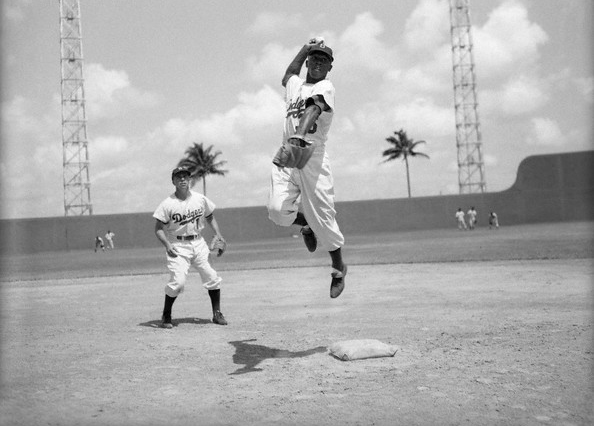
Junior Gilliam has a street named after him in Nashville (90 Feet of Perfection)
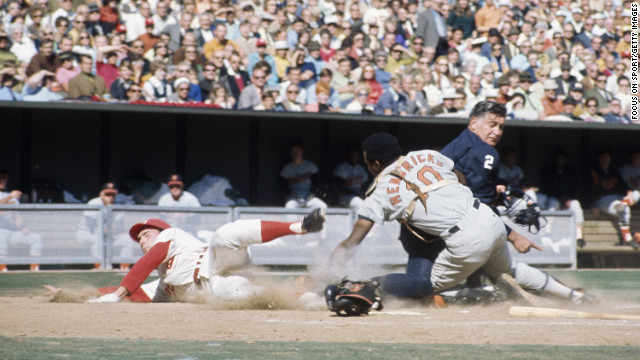
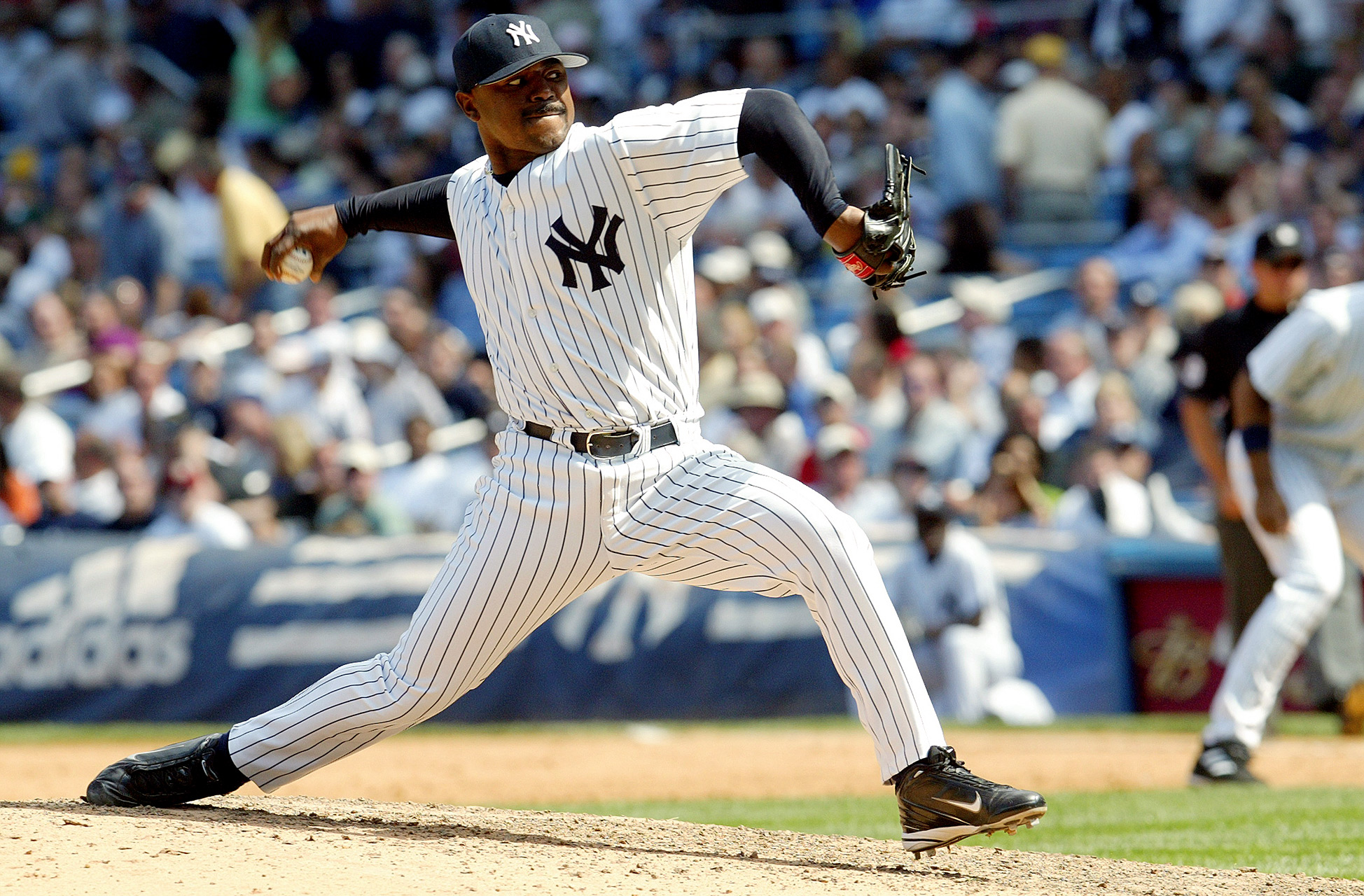
While walking around Nashville last weekend during CMA Fest, I noticed there was a street running through the heart of the city named "Junior Gilliam Way," not far from Rosa Parks Boulevard. That made me wonder what other players hail/hailed from Smashville, and if Gilliam was truly the best (and thus worthy of the distinction as the city's only ballplayer with a street named in his honor). Turns out there were quite a few players born in Nashville -- 39 and counting according to Baseball-Reference. While none are Hall of Famers (yet), there were a few who came close, as well as one who will likely go into Cooperstown one day wearing the cap of my beloved Boston Red Sox.

Best Players:

Ben Chapman (41.3 bWAR)
Chapman barely edges out Gilliam in terms of career value, but he was never going to have a street named after him following his shameful treatment of Jackie Robinson while managing the Phillies in 1947. While he was clearly a despicable human being, Chapman was also a pretty good ballplayer, leading the Major Leagues in steals four times (but also caught-stealing four times) and batting .302/.383/.440 (114 OPS+) for his career. His most memorable highlight as a player, however, was being told by Ted Williams, "I'll be back, and I'll make more money in this bleeping game than all three of you (Boston's outfield) combined!" after being sent down from Spring Training in 1938. With Chapman playing for Cleveland the following year, Williams arrived for good and set about delivering on that promise.

Jim Gilliam (40.7 bWAR)
Gilliam, more popularly known as "Junior," spent his entire 14-year career with the Dodgers. Despite spending most of those seasons on the trading block, he was only Boy of Summer from the '50s who was still a meaningful contributor during the Sandy Koufax-Don Drysdale era. The speedy switch-hitter proved to be a lesser version of Robinson -- his predecessor at second base -- with his baserunning, defensive versatility, and table-setting skills. A two-time All-Star, Gilliam won NL Rookie of the Year honors in 1953 and drew MVP votes four times, finishing in the top-six twice. He also played in seven World Series, winning four. Had he not begun his career in the Negro Leagues, he might have made it to the Hall of Fame.

Roy Cullenbine (31.4 bWAR)
Cullenbine was similar to Gilliam, as both were patient switch-hitters who made two All-Star teams, received MVP consideration four times, and led their league in walks once while playing the outfield a lot. A journeyman outfielder from 1938 to 1947, Cullenbine possessed one of the sharpest batting eyes in baseball history. He posted a career 17.8 percent walk rate and set a record by drawing a walk in 22 consecutive games, finishing with a career .408 OBP. He also developed power later in his career, slugging 73 of his 110 home runs over his final four seasons. Cullenbine played for a pair of pennant winners despite switching teams seven times in his career, helping Detroit win it all in 1945. With his solid pop, strong throwing arm and elite ability to get on base, he would have had a much longer and more stable career had he been born half a century later.

Best Names:

So many good ones. Here's a smattering: Tiny Graham, Noodles Hahn (think he had a weak arm, or just really liked spaghetti?), Ray Hamrick, Foster Castleman, Mickey Kreitner, Bubber Jonnard (brother of Claude Jonnard), Ike Fisher (brother of Bob Fisher), Clyde McCullough (say that one ten times fast). There were also a pair of "Lefty"s -- Lefty Davis and Lefty Sullivan. Now I'm wondering if a team has ever had two "Lefty"s at the same time...

Greatest What-if?

Johnny Beazley (4.6 bWAR)
Beazley burned bright and fast like a comet, going 21-6 with a 2.13 ERA and a 1.18 WHIP at age 24 to help his St. Louis Cardinals upset Joe DiMaggio's New York Yankees in the 1942 Fall Classic (the only World Series that DiMaggio would ever lose). Then he went into the service, and when he returned three years later he wasn't the same. Who knows how his career would've played out had he come up after the war instead of before.

Current Stars:

Mookie Betts (21.1 bWAR)
Just four seasons into his career, Betts has already accumulated more than half the WAR of any other Nashville-born player. A tremendous defensive outfielder with elite power, speed, and contact skills, he's arguably the American League's best all-around player not named Mike Trout. And the best part is -- he's only 24.

R.A. Dickey (20.8 bWAR)
Okay, maybe not a current star given how awful he's been this year, but he enjoyed a brief run as one of the game's top pitchers. In 2012, he prevented Clayton Kershaw from joining Greg Maddux and Randy Johnson as the only hurlers to win four straight Cy Young awards (Kershaw won in 2011, then again in 2014 and '15). The Mets, knowing how fickle knuckle-ballers can be, wisely traded the then-38-year-old for a package of prospects that included Noah Syndergaard. Dickey's reverted into a Tim Wakefield-esque innings-eater since then, but 15 years and nearly 2,000 innings in the Majors are nothing to sneeze at.

Sonny Gray (10.1 bWAR)
Gray's career got off to a promising start with Oakland, as he went 33-20 with a 2.88 ERA over his first three seasons and finished third in the 2015 AL Cy Young vote. He struggled during an injury-plagued 2016 and is still trying to get back on track this year. He's only 27, though, so hope remains that he will once again be a quality starter.

While not stars, this is where I give shout-outs to Andrew Triggs and Caleb Joseph.

Not bad, Nashville. While not as prolific as pumping out ballplayers as you are at country music stars, you can still lay claim to a National League Rookie of the Year and Cy Young winner, a likely future Hall of Famer, and a Hollywood villan.

Wednesday, November 18, 2015

Plenty of Power in 2015 Rookie Class

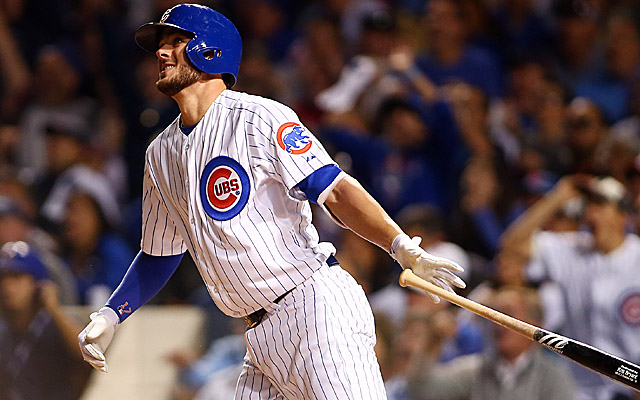
As expected, Bryant ran away with the National League award (CBS Sports)
In a year where power made a bit of a comeback in the MLB, 26 rookies reached double digit home run totals, including four who topped 20. With young guys like Mike Trout, Bryce Harper, Manny Machado, and Nolan Arenado all showing plenty of power early on, it's safe to say the next generation of sluggers has arrived.

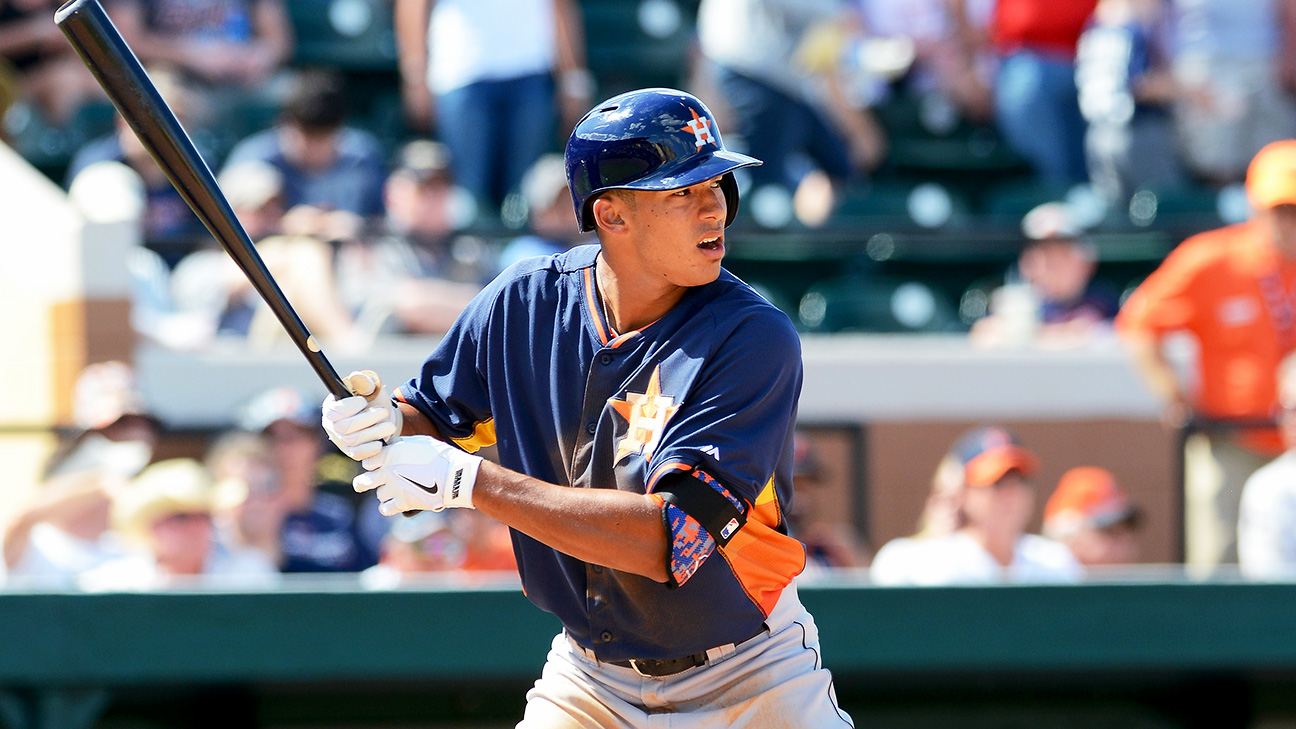
It was fitting, then, when the top rookie home run hitter in each league was named Rookie of the Year on Monday. In the AL that was Carlos Correa, the 20 year-old wunderkind who led all shortstops with 22 long balls. In the NL it was Kris Bryant, a unanimous selection after delivering on the immense hype that preceded his debut.

An awesome spring training made Bryant the frontrunner for the award, and he didn't disappoint after the Cubs promoted him in mid-April. Other than taking three weeks to launch his first big league bomb, everything about his rookie campaign went off without a hitch. He played a smooth third base in addition to displaying light-tower power, the Cubs made the playoffs, and he walked away with NL Rookie of the Year.

Bryant was an easy choice after leading his rookie class in, well, just about everything. He was tops among first-years in WAR (both versions), home runs, RBI, runs, and doubles. He also led National League rookies in OBP, slugging, and OPS. In fact, only one other player in baseball history had as many runs, homers, RBI, doubles, and walks in their rookie season as Bryant. You may have heard of him; his name was Ted Williams.

Comparing Bryant to Teddy Ballgame is both premature and unfair, as Bryant is more of a slugger whereas Williams was the best pure hitter ever, but you get the point. Bryant is already in special company, and this is just the start of what figures to be a marvelous career. If he can cut down on his strikeouts, he has the tools to challenge Trout and Harper as the best players in the game.

The only issue I had with the National League vote was Joc Pederson finishing outside the top five. That would have seemed inconceivable four months ago, when he was battling Bryant for top rookie status. Despite Pederson's second half slide (just nine home runs and a .622 OPS after June 3rd), he still finished the year with more home runs than every rookie besides Bryant and the sixth-best walk rate in baseball, all while patrolling center field for the NL West-winning Los Angeles Dodgers.

Plus, Pederson was severely hampered by his home park while Bryant got a major boost from his. Pederson's OPS was 142 points better away from Dodger Stadium, but that still doesn't come close to matching Bryant's ridiculous home/road split. Bryant was a beast at Wrigley, batting .311/.408/.629 and sending 21 balls over the ivy. Everywhere else, not so much. His road stats; .243/.333/.360 and five home runs. Put Pederson in Chicago and Bryant in LA, and there's a very good chance this award goes to Pederson instead. They're very similar hitters--lots of walks, plenty of homers, and tons of strikeouts--so it will be interesting to see how their careers play out in different settings.

Of course, Bryant and Pederson weren't the only NL rookies to shine this year. Matt Duffy had a tremendous season for the Giants, batting .295 with 4.9 WAR, 12 homers, and 12 steals (didn't take long for San Francisco to replace Pablo Sandoval). Jung Ho Kang had a similarly impressive debut with the Pirates, making a smooth transition from South Korea to the major leagues at 28 and establishing himself as one of the best-hitting shortstops in the game. Justin Bour quietly enjoyed a big breakout with the Marlins, thumping 23 homers and 20 doubles in just 402 official at-bats.

And then there was Noah Syndergaard, who many think has the raw talent to be better than rotation-mates Matt Harvey and Jacob deGrom. If you watched the playoffs, you know just how good he can be. With those three, plus Steven Matz and a healthy Zack Wheeler, the Mets have more young starting pitching than they know what to do with. But you know what they say about starting pitching and having too much of it...
Correa crushes another big fly (Red Orange Report)
The American League also featured an impressive collection of young talent, albeit not as strong as the National League's. The Junior Circuit's rookie field was headed by a pair of sensational shortstops, both of whom have yet to play their 100th game in the majors yet.

We'll remember 2015 as the year Carlos Correa took the baseball world by storm, just as Trout, Harper, and Yasiel Puig did in summers before him. Though he didn't debut until June 8th--a full two months into the season--he wasted no time getting his licks in against big league pitching. After just four weeks he was triple-slashing .315/.339/.593 and had already crushed seven home runs, resulting in a last-minute All-Star campaign for the slugging shortstop (based on how thin the AL was at the position, he certainly had a case). Correa came back to earth after that, but still finished the season with amazing numbers, especially for someone who didn't turn 21 until the regular season's penultimate week.

Like Bryant, he helped spark his team to a playoff berth for the first time this decade. Also like Bryant, he gained a huge advantage from his hitter-friendly home park, putting up a .949 OPS at Minute Maid compared to .773 everywhere else.

As good as Correa was, I actually think Francisco Lindor was a tad better. They were about even offensively, with Correa holding slight edges in wOBA (.365 to .358) and wRC+ (133 to 128). Over a full slate of games that difference would be more meaningful, but considering both played 99 it's essentially negligible.

But while Correa held a slight edge at the plate, Lindor was far superior in the field. Correa rated below average defensively, whereas Correa was the best-fielding shortstop in the American League according to FanGraphs. Even if he wasn't, the wide gap between their glovework easily exceeds the narrow one between their bats. Accordingly, Baseball-Reference and FanGraphs both deemed Lindor to be the more valuable player in 2015, Correa's moon shots be damned.

That said, I don't have a problem with Correa winning the award over Lindor, if only because defensive metrics are hard to trust and fluctuate wildly from year to year. The same metrics might say Correa's the better defender next year (though I doubt it). And with power-hitting shortstops all but extinct, Correa's going to be a special player in this game for a long time. He has a higher ceiling than Lindor, and I can't wait to see what he can do in a full season. Or Lindor. Or Miguel Sano.

The rest of the AL ballot more or less checks out, with the exception of poor Lance McCullers. McCullers, Correa's teammate, got shafted even worse than Pederso, as he was left off the ballot entirely. He deserved better after compiling a 3.22 ERA (125 ERA+) and striking out more than a batter per inning across 22 starts. The 21 year-old posted strong peripherals as well, with a 3.26 FIP, 1.19 WHIP, and 3.00 K/BB ratio. But McCullers was destined to be overshadowed this year, both by Correa and by rotationmate Dallas Keuchel--the deserving AL Cy Young winner. Hopefully he gets more credit for his talents going forward, but if the Astros remain competitive I'm sure he will.

Tuesday, October 6, 2015

AL Award Race Preview

The All-Star teammates are now going head-to-head for AL MVP (Bleacher Report)
On this tense day leading up to tonight's American League wild card game, we might as well lighten the mood by handing out some hardware to this year's top performers. Today I'll tackle the AL races before previewing the NL field tomorrow.

Let me just say that I don't envy the voters this year. This season's award races were some of the closest I can recall, with the AL awards all virtual toss-ups and there being no easy answer to the NL Cy Young conundrum. While I've spilled many words in this space criticizing poor BBWAA choices throughout the years, there will be no such backlash from me this year. I could stare at the numbers until I go blind and I still don't think I could give a definitive answer, so I certainly won't blast a writer for going with his gut on this one.

Anyways, on to the awards:

AL MVP
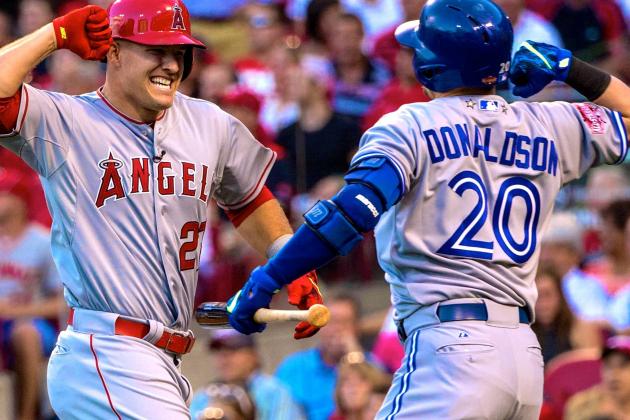
Last year Trout won in a landslide (unanimously, actually), but if he wins again this year it will be by the skin of his teeth--even though this season was superior to last's by almost every conceivable metric. Although he led all American Leaguers in WAR (both B-R and FanGraphs versions) and posted the league's highest OPS (and OPS+, and slugging percentage), he's once again at a disadvantage because his team failed to make the playoffs. Trout nearly dragged them there, though, keeping the Angels in contention until the season's final day. After a dreadful August slump by him and teammates, he recovered in September to post a 1.078 OPS over the season's final five weeks. It's not Trout's fault LA's bullpen imploded during Game 162, or that nobody besides him and Albert Pujols made a peep against Cole Hamels. One guy can only do so much in baseball (see Joey Votto), and in the end it just wasn't enough.

I won't hold that against Trout, but others might. One of the reasons Trout finished behind Miguel Cabrera in the hotly contested MVP races of 2012 and 2013 was that Cabrera's team made the playoffs while Trout's didn't. When he finally won last year, the Angels winning 98 games and the AL West was definitely a factor. This year they really had no business being in contention after their awful August, but like I said Trout nearly willed them to October.

For those seeking to reward the best player on a playoff team, they'll find few legitimate MVP candidates on the Yankees, Astros, Rangers, and Royals. That leaves the Blue Jays, who are loaded with them. Votes will undoubtedly be cast for big boppers Jose Bautista and Edwin Encarnacion as well as staff ace David Price, but the team's top player this year was clearly Josh Donaldson, a slick-fielding third baseman who also paced the Junior Circuit in runs, RBI, total bases, and extra base hits.

Already an MVP-caliber player his last few years in Oakland, Donaldson exploded his first year in Toronto. Many credit him for helping an underachieving Blue Jays squad snap its 22 year playoff drought--the longest in professional American sports. Not only was he the best hitter in a stacked lineup, but he also played a demanding defensive position and played it well.

So did Trout, which makes this such a close call. Their offensive numbers are eerily similar and they both play tough positions. Up until about three weeks ago I would have said Donaldson, but his late-season slump and Trout's strong finish was enough to sway me back to Team Trout. I think Toronto still makes the playoffs without Donaldson (though probably doesn't win the division), while Los Angeles is a losing team without its star center fielder.

Furthermore, Trout was simply the better player this year. He was a better hitter, especially after accounting for their ballparks (Trout's OPS and OPS+ led the AL). Donaldson played half his games in the Rogers Centre, a launching pad that significantly inflated his statistics. He hit three-fifths of his doubles and home runs there, batted 67 points higher there, and slugged 160 points higher there. It was a given that the move from the Coliseum's suffocating offensive environment to a more generous one in Toronto would boost his numbers, but no one could have foreseen him taking such extreme advantage of his home park.

Trout, however, did not enjoy the same home field boost. Anaheim is a better park for pitchers than hitters, which is evident in Trout's splits. He batted 35 points higher and increased his slugging percentage by almost 70 points on the road. He also had more home runs, more RBI, and nearly twice as many doubles on the road as he did in Anaheim. Had he played in even a neutral park, his numbers would look considerably better. That he still equaled Donaldson's dinger total and led the league in slugging percentage, then, is very impressive.

Bottom line: Donaldson had a great season, but Trout was just a little bit better.
Price positioned himself to win another Cy with his huge second half (Fox Sports)
AL Cy Young award
This one's another tough call. Sonny Gray was the frontrunner for much of the season with a 2.13 ERA and sub-1 WHIP through the end of August, only to falter in September by allowing 20 earned runs over his final five starts. His ERA ballooned more than half a run, costing him the ERA title that may have netted him his first Cy.

Meanwhile, David Price continued mowing down batters in Toronto, putting the finishing touches on what could be his second Cy in four years. His numbers were stellar across the board; first in ERA and fWAR, second in FIP, bWAR, and ERA+; third in innings pitched, fourth in strikeouts,, and fifth in WHIP--all while spending time in two of the tougher parks for pitchers.

He wasn't the American League's best pitcher this year, though; that would be Houston's Dallas Keuchel. The AL's lone 20-game winner finished a close second to Price in raw ERA but led the loop in ERA+. He was also tops in pitcher bWAR, WHIP, and innings pitched. Considering their run-prevention skills were dead-even, the tiebreaker goes to Keuchel for tossing an additional dozen innings--or roughly two extra starts' worth. That was huge for the Astros, who won the second wild card by one game over the Angels.
 
Both were part of compelling narratives after helping pitch their respective teams into the postseason, though obviously Houston misses the playoffs without Keuchel while Toronto probably still makes it in. Price is the bigger name but Keuchel's numbers are a touch better. He deserves to win by the slimmest of margins, so expect a repeat of last year's photo finish between Corey Kluber and Felix Hernandez (neither of whom are serious contenders again this year, by the way).

AL Rookie of the Year Award
What's interesting about the American League race is none of the best candidates played full seasons. Promoted throughout the summer, their campaigns were abbreviated, which makes these comparisons both easier and more difficult. They are easier in the sense that their playing time was roughly even, but more difficult due to their numbers being awfully close.

Carlos Correa's counting numbers--22 home runs, 68 RBI, 14 stolen bases, 4.1 bWAR--would have been phenomenal for a full season, but they're borderline insane considering he played barely three-fifths of one. We can only wonder what he could have accomplished had he debuted before June 8th. His full season numbers project to 36 home runs, 112 RBI, and 23 steals, which for a rookie shortstop is simply ridiculous. Even more ridiculous is that he just became old enough to legally buy a drink two weeks ago.
Correa's already earning comparisons to Alex Rodriguez (News Locker)
But wait, not so fast. What about the other wunderkind shortstop who played 99 games this year? Just 10 months older than Correa, Francisco Lindor was equally spectacular for the Indians, batting .313/.353/.482 (128 wRC+) with a dozen homers and steals. While his bat wasn't quite as potent, it was nearly so, and he was a considerably better defender. They were about even as baserunners, with the slight edge going to Correa. Baseball-Reference has them within half a win of each other in WAR, but FanGraphs gives Lindor a significant edge of more than one win.

I'd be remiss if I didn't mention Minnesota's Miguel Sano, who quietly enjoyed a monster season with the Twins. He was unquestionably the American League's best-hitting rookie, what with his .269/.385/.530 batting line, 151 wRC+, and .392 wOBA--not to mention his 18 home runs and 52 RBI in 80 games. Extrapolate his numbers over a full season and they're nearly identical to Correa's, But whereas Correa plays the most important non-catching position on the diamond, Sano hardly plays the field at all as a DH, making his production far less valuable. Had he played all year and amassed upwards of 30 homers and 100 RBI this would be a different conversation, but there's no reasonable explanation for choosing him over Correa or Lindor.

On the pitching side, Correa's teammate Lance McCullers made a good impression with a 3.22 ERA (80 ERA-), 3.26 FIP (79 FIP-), and over a strikeout per inning. Had he logged a full season, that performance might have merited the trophy, but it covered 22 starts and 125 innings. Two-thirds of a season is only slightly more than the three-fifths that Correa and Lindor played. Both were more dominant relative to their peers, as good-hitting shortstops are once again a rare commodity. In today's offensive environment, I bet most GMs would rather have the shortstop capable of hitting .300 with 20/20 potential rather than a midrotation starter.

So it comes down to Correa and Lindor. Lindor's the better all-around player at this point, but Correa is already showing Troy Tulowitzki-like prowess at the plate. With the margin between them so minute, I'm leaning towards the guy with the better offensive numbers. I think Correa made a little more of an impact in the games he played, and it also helps that he sparked his team to the postseason. Without him, the Astros are watching from home this year, so I think his outstanding performance in the heat of a pennant race deserves to be recognized.

When you get down to it, all of these awards are essentially two-horse races. Trout and Donaldson, Price and Keuchel, and Correa vs. Lindor. They're all so evenly matched you really can't go wrong with any of them. If it was me, I might just skip the analysis-induced headaches and flip three coins.

Saturday, January 3, 2015

Questionable Rookies of the Year: 1950s

Minoso was always tragically underrated (Grab Some Bench)
1951 AL Gil McDougald over Minnie Minoso
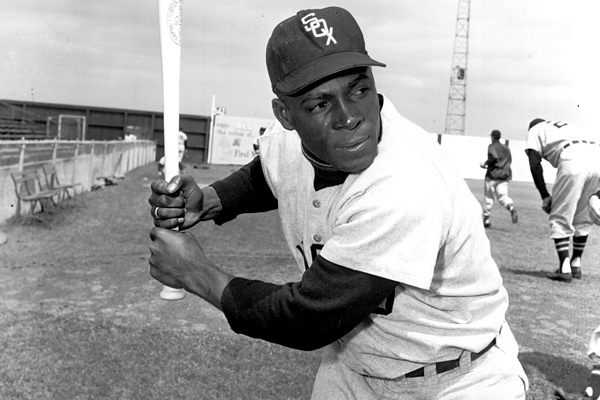
McDougald had an outstanding season for the Bronx Bombers, helping them win their third straight championship by hitting .306/.396/.488 with 14 homers, 14 steals, and 4.6 bWAR. Minoso was even better, however, batting .326/.422/.500 with 112 runs and 5.5 bWAR. Minoso also led the majors in triples with 14 and the American League in steals with 31. The BBWAA correctly recognized Minoso as the more valuable player, for he finished fourth in the MVP voting to McDougald's ninth, so I'm not sure what happened with the ROY vote. Most likely, McDougald benefited from Yankee bias (Minoso was traded from Cleveland to Chicago) and perhaps even racism (Minoso was a black Latin-American star).

1953 NL Jim Gilliam over Harvey Haddix
Big screw-up here, as Gilliam wasn't even worth four bWAR whereas Haddix had over seven. Make no mistake, Gilliam had a phenomenal season in which he scored 125 runs, drew 100 walks, and led the major leagues in triples all while playing second base, but Haddix had the superior season. Aside from winning 20 games, the St. Louis southpaw maintained a 3.06 ERA (139 ERA+) and 1.14 WHIP over 253 innings. He also paced the National League in shutouts with six. Again, the BBWAA identified Haddix as the more valuable player by giving him MVP consideration (Gilliam got none, but probably deserved some) but screwed up in the Rookie of the Year vote. Gilliam undoubtedly benefited from his role on a thoroughly dominant 105-win Dodgers team, whereas Haddix toiled for a more mediocre 83-win Cardinals outfit.

1956 AL Luis Aparicio over Rocky Colavito
Colavito's OPS was 250 points higher than Aparicio's, and he hit seven times as many home runs. While it's true that Aparicio was an everyday shortstop (and a good one at that) who led the league in steals, Colavito was still the more valuable player per bWAR despite playing 49 fewer games and manning right field. My guess is that Aparicio made an impression on voters with his flashy defense and speed--a rarity in the largely white 1950s American League.

1957 AL Tony Kubek over Frank Malzone
Another example of Yankee bias as Kubek beat out a more-deserving Red Sox player. Kubek was a good utilityman who played five different positions and delivered league-average offense, but Malzone played a sterling third base (winning his first of three straight Gold Gloves) while posting much better batting statistics. Malzone's OPS was 35 points higher, for instance, even though he had 203 more official at-bats. Sure enough, Malzone made a serious dent in MVP voting, finishing seventh, while Kubek hardly get any support and finished a distant 26th.

1958 AL Albie Pearson over everyone else
Pearson had a pretty pedestrian season for an outfielder, hitting .275/.354/.358 with little power (three home runs) and speed (seven steals). He did walk more than twice as often as he struck out, but that's really the only good thing one can say about Pearson's rookie campaign (which resulted in 0.9 bWAR). Third-place Gary Bell (2.9 bWAR) had a much stronger season, delivering a 3.31 ERA (112 ERA+) and 1.18 WHIP over 182 rock solid innings. Pearson was barely an average outfielder whereas Bell was clearly an above average starting pitcher, and I don't see how the voters missed that.

Friday, January 2, 2015

Questionable Rookies of the Year: 1960s

Joe Morgan should have taken the NL honors in 1965 (The Score)
1962 NL Ken Hubbs over everyone else
Hubbs had strong counting numbers because he played a full season--160 games--such as 90 runs and 172 hits. His rate stats, however, were horrible; .260/.299/.346 (70 OPS+). He also led the league in strikeouts and was thrown out in seven of his 10 steal attempts. Even for a Gold Glove-winning second baseman, those numbers are brutal, and he was worth exactly 0.0 bWAR that year. Don Clendenon, the runner-up and only other player to receive votes, was more valuable despite playing half as many games as Hubbs. The Pirates first baseman batted a robust .302/.376/.477 (127 OPS+) with 16 steals in 20 attempts, good for 1.6 bWAR. The best choice--Giants catcher Tom Haller--didn't receive a single vote despite hitting .261/.384/.515 with 18 home runs, 3.5 bWAR, and nearly as many walks (51) as strikeouts (55). Haller had the misfortune of playing in an era that underappreciated high OBPs, and like Clendenon was probably hurt by the fact that he appeared in fewer than 100 games.

1965 NL Jim Lefebvre over Joe Morgan
Lefebvre and Morgan make for an easy comparison, as they were both second basemen and played the same number of games (157). Morgan outproduced his Dodger counterpart in virtually every meaningful offensive statistic except RBI, but he toiled for the lowly Colt .45s while Lefebvre starred for the World Series champs (even though their success had more to do with Sandy Koufax and Don Drysdale). Morgan was robbed, plain and simple

1966 NL Tommy Helms over Sonny Jackson
For the second straight year, a deserving Houston player finished second. Helms had more home runs and RBI as well as a superior slugging percentage, but Jackson hit for a higher average and had a higher OBP. Jackson was also an elite table-setter, hitting second and swiping 49 bases in 63 tries. He also paced the major leagues in sacrifice hits. What makes the final results even more inexplicable is that Jackson manned a tougher position, as he was a shortstop while Helms handle second base.

1967 NL Tom Seaver over Gary Nolan
Seaver started two more games and won two more starts, but the numbers say Nolan was better. He had a lower ERA, WHIP, and 36 more strikeouts in 24 and 1/3 fewer innings. Seaver face about 100 more batters than Nolan, but Nolan's innings were clearly better quality and that's why I would have voted for him.

1968 NL Johnny Bench over Jerry Koosman
Bench had a good season (116 OPS+ and Gold Glove), but Koosman had a great one (145 ERA+). In addition to nearly winning 20 games (he went 19-12), Koosman compiled a sparkling 2.08 ERA and 1.10 WHIP over 263 and 2/3 innings. The BBWAA correctly recognized Koosman as more valuable, for he finished higher in the MVP vote than Bench, but for some reason flip-flopped in the Rookie of the Year race.

1969 AL Lou Piniella over everyone else
Piniella, who had debuted five years previously, hit a mediocre (for an outfielder) .282/.325/.416 (107 OPS+) with 11 home runs in 135 games. Runner-up Mike Nagy, who posted a 3.11 ERA (124 ERA+) in nearly 200 innings despite calling Fenway Park home, was more worthy. So was third-place Carlos May, an outfielder like Piniella but with much better offensive numbers. May mashed 18 home runs and hit .281/.385/.488 (137 OPS+), giving him a 132 point advantage in OPS over Piniella. Lastly, Ken Tatum shined as a reliever with a 4.8 bWAR thanks to his ridiculous 1.36 ERA and 1.04 WHIP in 86 and 1/3 innings.

1969 NL Ted Sizemore over everyone else
Sizemore hit a weak .271/.328/.342 with little power (four home runs) and speed (five steals). That's tolerable for an everyday second baseman (he had a 94 OPS+ and walked more than he struck out), but hardly award-worthy. Runner-ups Coco Laboy (18 homers, 83 RBI, everyday third baseman) and Al Oliver (118 OPS+ at three different positions) were more deserving, as was fourth-place Larry Hisle (20 homers and 124 OPS+). The most deserving was Oliver's teammate Richie Hebner, who was overlooked completely despite batting .301/.380/.420 (127 OPS+) while manning the hot corner.

Monday, December 29, 2014

Questionable Rookies of the Year: 1970s

Carbo (left) was robbed despite a monster offensive season (CNN)
1970 NL Carl Morton over Bernie Carbo
Morton made a strong first impression by hurling 284 and 2/3 innings and winning 18 games, but those innings weren't ultra-high quality. He led the league in walks, had a 1.43 WHIP, posted a 114 ERA+, and only struck out 29 more guys than he walked. Carbo, on the other hand, was one of baseball's best hitters on a per-game basis. Besides batting .310/.454/.551 (164 OPS+), Carbo also clubbed 21 home runs, stole 10 bases, and walked 17 times more often than he struck out. Given the depressed offensive environment, Carbo's season (a 1.004 OPS!) was much more impressive and worthy of the award. He also played a key role in helping the Reds win the National League pennant.

1971 AL Chris Chambliss over Bill Parsons
Chambliss would go on to have a fine career, but his rookie season was actually very mediocre, (0.4 bWAR). His nine homers, 48 RBI, and .749 OPS (104 OPS+) were pedestrian for a first baseman. Runner-up Bill Parsons, who compiled a 3.20 ERA over 244 and 2/3 innings, was valued at 3.1 bWAR and would have been my pick.

1976 NL Butch Metzger over Pat Zachry
This one went down as a tie but was a clear foul-up, as Zachry deserved to win outright. For reasons unexplained, voters failed to choose a very good starting pitcher over a decent reliever. Zachry had a superior ERA and WHIP while pitching over 80 additional innings. This disparity was evident in their bWAR totals, as Zachry compiled 3.5--two more than Metzger's 1.5. Zachry also pitched for the World Series-winning Cincinnati Reds, which should have gone in his favor.

1977 AL Eddie Murray over Mitchell Page
Murray wound up with the best career of the 1977 rookie class, but he was not the best rookie in the American League that year. Page, who batted .307/.405/.521 (154 OPS+) with 21 home runs and 42 steals in 47 attempts, was. His raw OPS was 123 points higher than Murray's, which more than made up for the fact that Murray appeared in 15 additional games and logged 110 additional official at-bats. At 6.0 bWAR, Page was nearly twice as valuable as Murray (3.2). Why did Murray win? He played more often, and thus had 27 home runs and 88 RBI to Page's 21 and 75.

1978 NL Bob Horner over Don Robinson
Horner, a slugging third baseman in the mold of Mark Reynolds, won on the strength of his 23 home runs (in just 359 plate appearances) and .852 OPS (124 OPS+). But with a .313 OBP and poor defense at the hot corner, he really wasn't that valuable. Robinson, who placed third, was more valuable in my opinion with his 228 and 1/3 frames of 3.47 ERA-ball. He also had strong periperhals with a 1.14 WHIP, 3.33 FIP, and 2.37 K/BB ratio. Robinson racked up 3.7 bWAR, considerably more than Horner's 2.1.

Sunday, December 28, 2014

Questionable Rookies of the Year: 1980s

Gordon, shown here with the Yankees, was robbed in '89 (ESPN)
Lots of questionable calls in this decade. Let's get down to it.

1980 NL Steve Howe over Lonnie Smith
Howe had 0.5 bWAR, the second-lowest total of the nine vote-getters. How he won over third-place Smith, who batted .339/.397/.443 (130 OPS+) with 33 steals, is beyond me.

1983 AL Ron Kittle over Mike Boddicker
Kittle had big-time power numbers with 35 home runs, 100 RBI, and a .504 slugging percentage, but he also whiffed a major league-leading 150 times, batted just .254, and was a poor defensive outfielder. In short, he was a one-dimensional slugger. Boddicker, on the other hand, had an unequivocally excellent season for the World Series champion Baltimore Orioles, going 16-8 with a 2.77 ERA (143 ERA+), 1.08 WHIP, and the most shutouts in baseball (5). He also posted the lowest hit rate in the American League at 7.1/9. Boddicker's 4.2 bWAR were more than double Kittle's 1.8.

1985 AL Ozzie Guillen over Teddy Higuera
This one utterly baffles me. Guillen hit an empty .273 (just one home run) with no speed (seven steals) and only a dozen walks. I don't care if you play Ozzie Smith-like defense at short; a 74 OPS+ isn't going to cut it. Higuera, the runner-up, hurled 212 and 1/3 quality innings with a 107 ERA+, 3.77 FIP, and 1.17 WHIP. That's much more valuable than a shortstop who can't hit his way out of a paper bag.

1985 NL Vince Coleman over Tom Browning
Steals are overrated, and so was Coleman. Granted, he stole 110 of them, which is sensational, but he also caught 25 times and hit a lackluster .267/.320/.335 with just one home run. Had he been a shortstop, like Maury Wills, that would have been more tolerable, but a .655 OPS (84 OPS+) from a left fielder is simply unacceptable. Browning, who placed second, won 20 games with a 3.55 ERA and 1.21 WHIP in 261 and 1/3 innings. That combination of quality and quantity made him nearly twice as valuable as Coleman, and thus the more deserving candidate.

1986 AL Jose Canseco over Mark Eichhorn
Once again, voters were swayed by Canseco's monster power numbers (33 bombs, 117 RBI) overlooked his 175 strikeouts, .240 batting average, and .318 on-base percentage. Runner-up Wally Joyner had a more productive offensive campaign, with his .805 OPS (119 OPS+) comfortably above Canseco's /775 (116). But third place Eichhorn, with his 7.4 bWAR, should have walked away with the award. Though he pitched exclusively in relief, his workload was more like a starter's as he delivered 157 innings. And let me tell you, he pitched like an ace with a 1.72 ERA (246 ERA+), 0.96 WHIP, 3.69 K/BB ratio, and 2.31 FIP.

1986 NL Todd Worrell over Robby Thompson
Everyday second baseman with league average bat trumps a good-not-great closer in my book.

1988 AL Walt Weiss over everyone else
Weiss was really mediocre, hitting just .250/.312/.321 (81 OPS+), which is pretty brutal even for a shortstop. He offered neither power nor speed, with only three home runs and four stolen bases. Runner-up Bryan Harvey had a strong season out of the Angels bullpen (2.13 ERA, 1.04 WHIP). Third-place Jody Reed played the same position as Weiss--shortstop--but was a much better hitter with his .293/.380/.376 (110 OPS+) batting line. Don August (13-7, 3.09 ERA) also would have made a fine choice and probably would have been my pick.

1989 AL Gregg Olson over Tom Gordon
Olson's 1/69 ERA and 9.5 K/9 rate must have dazzled voters, because Gordon pitched almost twice as many innings and went 17-9. A true swingman, Gordon made 16 starts, finished 16 games, and made 17 relief appearances in between. He did a little bit of everything and performed well, which I value more than a one-inning closer. I also would have preferred third-place Ken Griffey Jr. (16 homers, 16 steals, center fielder) to Olson.

1989 NL Jerome Walton over Dwight Smith
The writers gave the award to the wrong Cub. Smith posted an OPS that was 154 points higher than Walton while playing only seven fewer games. Granted, Walton was a center fielder whereas Smith was a corner outfield, but at 150+ point differential in OPS is just too great to ignore.

Friday, December 26, 2014

Questionable Rookies of the Year: 1990s

Kenny Lofton (pictured) deserved the 1992 award over Pat Listach (CheapSeatsPlease)
1990 AL Sandy Alomar over everyone else
Roberto Alomar's older brother has to be one of the most overrated players in baseball history. He somehow swindled his way onto six All-Star teams despite totaling a mere 13.7 bWAR across 20 big league seasons. Such was the case in 1990, when he earned the first of those All-Star nods and walked away with Rookie of the Year honors by batting an empty .290. Runner-up Kevin Maas, who slugged 21 home runs and posted a .902 OPS (150 OPS+) was a more deserving candidate, as was another Kevin--third-place Kevin Appier. Appier, who led all rookies that year with 5.3 bWAR, should have been a no-brainer after compiling a 2.76 ERA (139 ERA+) in 185 and 2/3 innings with Kansas City. He would go on to become one of the best pitchers of the 1990s but was rarely recognized as such, making just one All-Star team and drawing Cy Young consideration only once.

1992 AL Pat Listach over Kenny Lofton
I don't get this one at all. Listach and Lofton were basically the same player offensively, only Lofton did everything a little better. He scored a few more runs, hit a handful of more home runs, stole a dozen more bases, got on base more frequently, and slugged a little more. Sure, Listach played shortstop, but he was merely adequate, whereas Lofton became a Gold Glove-winning center fielder. Lofton was actually much more valuable defensively in addition to being a better hitter and baserunner, which is reflected in the fact that he was worth close to six wins while Listach came in around four. It was a fitting beginning to what turned out to be a very underappreciated career by Lofton, a poor man's Tim Raines who fell off the Hall of Fame ballot after his first year of eligibility.

1992 NL Eric Karros over everyone else
Voters were so swayed by Karros's 20 home runs and 88 RBI that they overlooked his terrible .304 OBP and pedestrian (especially for a first baseman) .730 OPS. At 0.4 bWAR, Karros was barely above replacement level and had no business being named Rookie of the Year. Runner-up Moises Alou played 34 fewer games but was much better offensively, hitting .282/.328/.455 (120 OPS+) while throwing in 16 steals. Reggie Sanders, who finished fourth, probably had the best case given his .831 OPS (127 OPS+), power/speed combo (12 dingers/16t thefts), and 77 games in center field. Karros went on to become extremely overrated due to his strong home run and RBI totals, which belied his middling on-base and power numbers.

1996 NL Todd Hollandsworth over Edgar Renteria
Hollandsworth had 1.1 bWAR in '96, but somehow finished in front of Edgar Renteria and Jason Kendall even though they hit roughly as well as he did while playing shortstop and catcher, respectively (Hollandsworth was a left field). His .785 OPS, for instance, is not significantly better than Renteria's .757 or Kendall's .773, both of whom contributed much more defensively. Looking back, it's clear Hollandsworth was not worthy.

1999 NL Scott Williamson over Preston Wilson
An everyday center fielder who bats .280/.350/.502 with 26 home runs and 11 steals should beat out a reliever who doesn't even pitch 100 innings, unless said reliever pitches like Clayton Kershaw or Pedro Martinez. Williamson was very good, but I'm siding with the position player on this one.

Questionable Rookies of the Year: 2000s

In past years I've looked at where writers went wrong in determining MVP and Cy Young winners. Now I re-examine their missteps in the Rookie of the Year races.

2000 AL Kazuhiro Sasaki over everyone else
Of the nine American Leaguers who received votes, Sasaki ranked seventh in bWAR with 1.3. He had a nice season with a 3.16 ERA (146 ERA+), 1.17 WHIP, 11.2 K/9 rate and 37 saves in 40 attempts, but hardly a great one (4.30 FIP, 2.52 K/BB ratio). I'm more impressed by third-place Mark Quinn, who hit .294/.342/.488 with 20 home runs in a tough hitter's park in Kansas City, and runner-up Terrence Long, who batted .288/.336/.452 with 18 homers and 104 runs in an even tougher park in Oakland. Meanwhile, Sasaki benefited enormously from Safeco Field, where he had a 1.60 ERA and 0.92 WHIP as opposed to a 4.97 ERA and 1.45 WHIP everywhere else. I'm generally opposed to relievers winning awards because they pitch so infrequently and can't impact games nearly as much as position players. There are exceptions, of course, of a reliever has a truly outstanding season or if it's a weak year for position players, but Sasaki's year definitely doesn't qualify as "outstanding"; he wasn't even one of the top 60 relievers per fWAR.

2002 NL Jason Jennings over Austin Kearns
Jennings might be the most mediocre Rookie of the Year in recent memory. How he won with a 4.52 ERA, 4.68 FIP, and 1.46 WHIP is beyond me (think it had something to do with that 16-8 record of his?). Granted, he pitched half his games at Coors Field during the height of the steroid era, so his numbers weren't quite as bad as they seemed, but they're still very mediocre. Outfielders Brad Wilkerson and Austin Kearns, who finished second and third, respectively, had better cases. Wilkerson whacked 20 home runs, scored 92 runs, and worked 81 walks while slashing .266/.370/.469 (117 OPS+) and playing 153 games for the Montreal Expos, including 73 in center field. Kearns, a right fielder, only played 107 games but raked when he suited up, batting .315/.407/.500 (134 OPS+) with 13 home runs. Those are huge rate stats for a rookie, even after adjusting for the era. Seeing as how Kearns was worth 4.1 bWAR for Cincy while Wilkinson was only worth 1.2, the former deserved to win (Jennings was worth 2.7, for what it's worth).

2003 NL Dontrelle Willis over Brandon Webb
Remember them? Willis and Webb were two tremendous young pitchers who flamed out before they were 30. Both debuted in 2003 with incredible promise, culminating in the Rookie of the Year going to Willis while Webb finished third. Looking, back, it's clear Webb should have won. Not only did he pitch 20 more innings than Willis, but his ERA was nearly half a run lower despite pitching in a much better park for hitters. As such, Webb's 165 ERA+ dwarfed Willis's 127 mark. Webb also held a sizable advantage in pitching bWAR (6.2 to 3.9) and WHIP (1.15 to 1.28) with slight edges in FIP, strikeout rate, and K/BB rate. So why did the writers choose Willis? He went 14-6 while Webb was barely above .500 at 10-9, primarily because he played for a better team. Willis won because of narrative, as he helped pitch his Marlins to the postseason and World Series glory while Webb starred for a .500-ish D-backs squad. Furthermore D-Train, an electric 21 year-old southpaw, was more exciting to watch than Webb, who was three years older and more polished.

2006 AL Justin Verlander over everyone else
Not sure why Verlander was the runaway winner here when Jonathan Papelbon and Francisco Liriano both had better cases. I think it's because the hard-throwing Verlander went 17-9 and pitched the previously mediocre Tigers to the World Series, even though his other numbers weren't really anything special (1.33 WHIP, 4.35 FIP, 2.07 K/BB ratio).  Jonathan Papelbon, the runner-up, was literally unhittable, what with his 0.92 ERA (that's not a misprint) and 517 ERA+, not to mention a 0.77 WHIP, 2.14 FIP and 5.77 K/BB ratio. He had a five-win season, which is nearly impossible for a reliever to attain given their workload. Third-place Francisco Liriano was also way better than Verlander on a per-inning basis and pitched more than twice as many innings as Papelbon, albeit still 65 fewer than Verlander. Even so, His 2.16 ERA (208 ERA+), 1.00 WHIP, 2.55 FIP and 4.5 K/BB ratio all put Verlander to shame. Even though Liriano made just two starts after August 1st, he was still worth more than Verlander per bWAR (as was Papelbon). It's true that Verlander pitched wire-to-wire while Liriano and Papelbon made only one appearance in September, but if anything his late season performance should be held against him, as he faltered down the stretch with a 5.86 ERA over his final nine starts. Had Liriano just stayed healthy, I think he beats out Verlander.

2010 AL Neftali Feliz over Austin Jackson
The 22 year-old Feliz was a top 10 reliever, finishing a league-high 59 games with a 2.73 ERA (165 ERA+), 2.96 FIP, 0.88 WHIP, and 40 saves in 43 chances. He also struck out more than a batter per inning and totaled nearly four times as many strikeouts as walks. While Feliz was more dominant compared to his fellow relievers, Jackson was more than twice as valuable with 5.1 bWAR to Feliz's 2.3. Jackson, a top 10 center fielder, batted .293/.345/.400 (102 OPS+), scored 103 runs, and stole 27 bases in 33 attempts in addition to his strong defense at a premium position. I suspect the writers dinged Jackson for his meager four home runs and 41 RBI, but I'll take the everyday center fielder and leadoff man over a one-inning reliever any day.


Monday, November 24, 2014

Ramirez Rejoins Red Sox

9 years after Boston traded him, Ramirez is back (ProSportsBlogging)
10 years ago Hanley Ramirez was the Boston Red Sox's shortstop of the future, heir apparent to Nomar Garciaparra. Then the Sox traded him to the then-Florida Marlins for Josh Beckett in a move that altered the course of both franchises.

Boston, of course, went on to win the 2007 World Series on the backs of Beckett and Lowell, that year's ALCS and World Series MVPs. Meanwhile, Ramirez blossomed in Florida, winning NL Rookie of the Year in 2006 before earning three top-10 MVP finishes and a trio of All-Star nods over the next four seasons. The former batting champion spent the last two and a half seasons with the Dodgers, helping them to division titles in 2013 and 2014.

Now, Ramirez is returning to the team that signed him as an amateur free agent out of the Dominican Republic when he was just 16. With 10 big league seasons under his belt, the 30 year-old has delivered on the superstar promise he flashed in Boston's farm system. He returns a fully-formed product.

While HanRam's defense has suffered in recent years, necessitating a move off shortstop (likely to third), his bat has remained potent. In 2013 he slammed 20 home runs to go along with a sky-high 1.040 OPS (189 OPS+), followed by a 132 OPS+ performance in 2014. Excluding his two-game cameo with the Sox in 2005, Ramirez has had an above-average OPS in all but one of his seasons--his injury-marred 2011. His bat is most valuable at shortstop, obviously, but still plays at the hot corner or in the outfield should he move there.

2011 was an aberration in terms of Ramirez's offensive production, but it was not out of the ordinary in regards to his health. He missed time the year before that (2010), played just 86 games in 2013, then sat out 34 games last year. That's 205 missed games over the past five seasons, an average of 41 per year. Ramirez is going to be 31 next year, so the Red Sox shouldn't expect to get many, if any, full seasons out of him. But like Jose Reyes, Ramirez is so good when he does play that he still earns his keep: just make sure you have a quality backup plan.

A righthanded hitter with good power (career .200 ISO), Ramirez should excel in Fenway Park. Trading the run-parched environment of Dodger Stadium for one of the best hitter's parks in baseball should help ward off any age-related decline in the immediate future. He's also a versatile offensive performer, capable of hitting .300 with 20 homers and a similar number of steals when healthy. He walks a fair amount and doesn't strike out much, so one would expect him to age gracefully anyways.

The Red Sox are going to pay Ramirez $90 million over the next five years, an average annual value of $18 million per season. That's a considerable pay bump from his contract that just expired, a six-year, $70 million that paid him less than $12 million a season on average. Ramirez is not nearly the all-around force he was five years ago, but inflation and free agent scarcity means he'll be paid more to do less. It's still a pretty good deal if Ramirez continues to play shortstop or third, less so if he moves to left field.

So while Ramirez has question marks about his durability and defense, there's no disputing the fact that he makes Boston's lineup significantly stronger. He's still a four-win player, and I'm more optimistic about how his early 30s will play out than I am about, say, Billy Butler's. The Red Sox didn't need a shortstop with Xander Bogaerts already there, but they could certainly use a third baseman (unless Pablo Sandoval also signs) and a big bat in general. Ramirez fits the bill.