Showing posts with label David Price. Show all posts

Sunday, March 12, 2017

Sale Already a Savior

Sale was solid in Monday's Spring Training debut (Chowder and Champions)
It's been a little more than three months since the Red Sox rocked the sports world by trading for Chris Sale, and I'm still having trouble eating solid food. That's because my jaw is still unhinged from when I first heard the news of baseball's biggest offseason maneuver, a stunning blockbuster that altered the courses of both franchises for years to come. Four months after courting Sale at the trade deadline, Boston finally got its man -- at an exorbitant price.

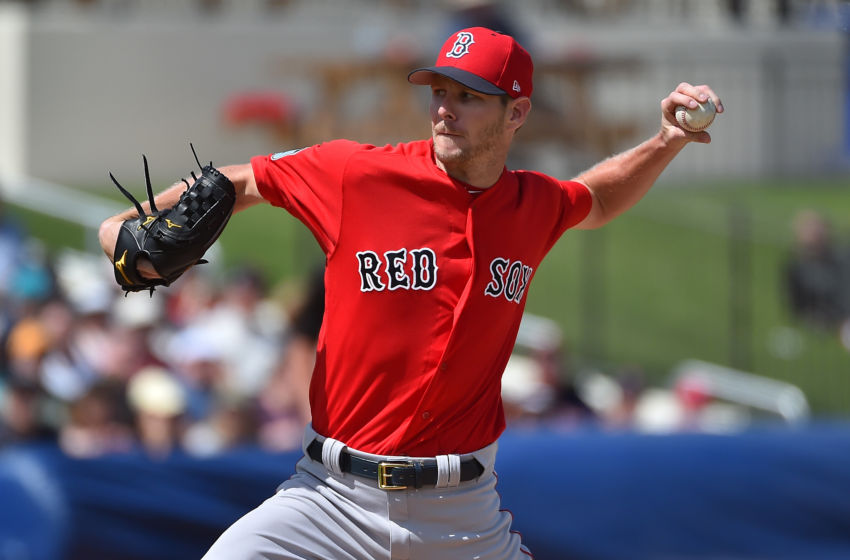
Only now is it starting to sink in. Sale made his first appearance with his new team in Spring Training this week, and it went reasonably well. He didn't dominate, but he "felt strong," which is all anyone cares about this time of year. The rust will dissipate, the command will come.

Of course, any other news would have been worrisome. It was Sale's first start -- he should feel strong. But with the aftershocks from last week's David Price scare still reverberating throughout New England, a positive update on his co-ace was highly encouraging for Red Sox Nation. At least one of Boston's elite arms is healthy.

Most teams don't even have a pitcher like Price to begin with, and the ones that do could hardly afford to lose him. The Red Sox can, however, because they are in a unique position. They have a younger, better version of Price in Sale -- a poor man's Clayton Kershaw. If the whitecoats pronounced Price out for the season tomorrow, Boston could still be reasonably expected to win 90 games and the AL East. That speaks to how good the rest of their roster is, as well as Sale's ability to carry a staff.

That's what the Red Sox envisioned when they mortgaged their future for him. Boston failed to land Sale at the deadline, settling for Drew Pomeranz instead, but upped the ante when Chicago made him available again during baseball's winter meetings. Once Dave Dombrowski fixates on a player, he'll do whatever it takes to acquire him, whether that's shell out over $200 million for Prince Fielder (and Price) or strip his franchise of its most coveted prospects.

Given that Boston already runs one of the highest payrolls in professional sports, Dombrowski's resorted to cannibalizing its once-bright farm system in a series of trades for Pomeranz, Craig Kimbrel, Tyler Thornburg, and now Sale. No team had ever traded the number one prospect before, until Dealin' Dave flipped Yoan Moncada to the White Sox along with Michael Kopech -- a flamethrower who's been clocked at 105 -- and a pair of decent throw-ins (Victor Diaz and Luis Alexander Basabe, both of whom have big league potential). Boston boasted the sport's best farm system when Dombrowski took over in August, 2015. Eighteen months later, they have one of the worst.

The transformation at the Major League level has been equally swift, however, as Dombrowski's wheeling and dealing paid immediate dividends. A last place team when Dombrowski arrived on the scene, the Red Sox won the division in their first full year under his watch and enter 2017 as favorites to make the World Series. Not since 2011 have the Sox been so star-studded.

Their loaded roster is a byproduct of Dombrowski's eternal commitment to winning now, future be damned. Whereas his predecessor, Ben Cherington, was a conservative prospect-hugger who preferred to open his checkbook for players he wanted, Dombrowski never met a prospect he wouldn't trade (not even Andrew Benintendi, baseball's new number one prospect and already a fan favorite, was safe). Their wildly different approaches manifested in the players they pursued; Cherington sought mid-tier, impact veterans such as Shane Victorino, Hanley Ramirez, and Pablo Sandoval, whereas Dombrowski reaches for the stars. Cherington didn't acquire a true superstar during his four years at the helm, while Dombrowski has already acquired two future Hall of Fame starters and the decade's best closer in half the time. Cherington's 2015 club didn't have an ace; Dombrowski obtained two in the span of 12 months.

There's a new sheriff in town, and a trigger-happy gunslinger at that.
Price has struggled with his health and performance in Boston (CBS Boston)
It was this sweeping shift in philosophy that made the Sale swap possible, because Cherington never would have had the stomach for it. To get a lot you need to give a lot in return, and Dombrowski was willing to pony up. Boston got another ace to pair with Price, giving them their best 1-2 pitching punch since Curt Schilling joined Pedro Martinez in 2004. Chicago netted a budding superstar and a potential ace in return, accelerating its rebuild with what Dave Cameron hailed as the winter's best transaction.

Indeed, the future is bright for both sides. The Red Sox are the prohibitive favorites in the AL East and a top-five team despite losing David Ortiz -- the best hitter in baseball last year -- to retirement. The White Sox now have the foundation for a winning team and should emerge as contenders by decade's end. On paper, the trade was a classic win-win.

And yet, I was admittedly lukewarm about the Sale acquisition when it was announced back in December. I felt then, and still feel now, that Boston overpaid for Sale's services. They gave up six years of Moncada for three years of Sale, plus whatever Kopech and co. provide (which could be substantial, given how hard Kopech and Diaz throw and the tools Basabe displayed as a teenager). If Moncada and Kopech realize their potential, this trade is a clear win for Chicago. If all four do, it will be disgustingly lopsided.

What bothered me most about the trade, however, was that the Red Sox didn't need Sale. They already had an ace and one of the best rotations in baseball, finishing top-10 in ERA and fWAR last year. Their stable featured two Cy Young winners (Price and Rick Porcello) at the top, two 2016 All-Stars (Steven Wright and Drew Pomeranz), and a likely future All-Star in Eduardo Rodriguez. They still had Clay Buchholz at the time too, another former All-Star and occasional Cy Young contender when healthy, but quickly dumped him on Philadelphia after Sale made him expendable.

For all of Buchholz's struggles last year, he was a meaningful contributor in a variety of roles and was a dominant starter as recently as 2015. He still provided value last year despite posting the
second-worst ERA (4.78) and highest FIP (5.06) of his career, and almost certainly would have pitched better this year, especially if used exclusively in relief. He could have given this year's outfit something if not depth, but obviously Dombrowski felt differently. Gaining Sale meant losing Buchholz along with the aforementioned prospects -- too much, in my estimation.

And so I did not feel the ecstasy that baseball fans are supposed to feel when their team scores an ace, the way I felt when the Sox got Schilling and Josh Beckett and Daisuke Matsuzaka. Too much had been sacrificed to fill a void that did not exist, to make an already great team marginally better. It did nothing to address the gaping hole in the middle of Boston's lineup, which most agreed was the team's most pressing issue entering the offseason and one that could have been readily filled by any number of inexpensive right-handed sluggers (Mike Napoli, Chris Carter, Mark Trumbo, et. all) who would have fit perfectly in Fenway. If Dombrowski wanted to make a splash, he could have wooed Edwin Encarnacion or Jose Bautista a moderate sum. Instead, he paid a king's ransom for Sale and signed Mitch Moreland to man first.

Circumstances have changed since December, however, and now Sale appears even more valuable. With Price's 31-year-old elbow in question and his future uncertain, it's comforting to know that Boston still has someone to lead the rotation. Were it not for Sale that would have been Porcello, who's had one great year in his eight-year career and is more of a number two at best. The pressure on him would have been enormous, and we all remember how well (or rather, how poorly) he performed the last time he faced sustained pressure after signing his huge contract extension early in 2015. His postseason numbers (0-3, 5.66 ERA) tell a similar story.

Sale has never pitched in October, but he has fronted a staff for the past half-decade. All he's done during that time is make five straight All-Star teams and finish in the top six of Cy Young voting every year. Last year he focused on pitching deeper into games and recorded a career-high 226 2/3 innings -- just 10 outs shy of Price's ML-leading 230 -- and won 17 games for a losing team. He could easily win 20 on the Sox and possibly the Cy which has eluded him. Sale can be counted on for over 200 quality innings, a similar number of strikeouts and an ERA around three -- the same steady production for which Boston made Price the highest-paid pitcher in history. If both stay healthy, the Red Sox should have one of the best rotations in baseball and will be difficult to beat come playoff time.

Dombrowski drew a fair amount of criticism for going all-in on Sale. After investing nearly a quarter-billion dollars in Price the previous winter, it was hard for him to justify doubling down on another ace. Sale was a luxury Boston didn't need. But when you splurge on a sports car the warranty becomes an afterthought, and whether they knew it or not the Red Sox were essentially getting an insurance policy on Price in Sale. And like all insurance policies, you never truly appreciate it until you need it.

Thursday, December 15, 2016

Boston Finds Another Ace

When Boston needed an ace last year, Porcello stepped up (BoSox Injection)
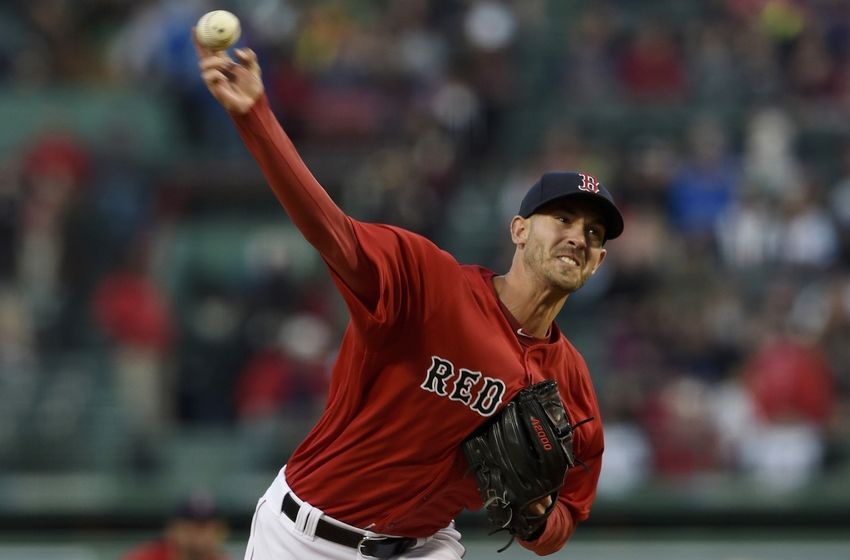
When the Red Sox signed David Price to a seven-year, $217 million contract last winter, they got one of baseball’s finest pitchers in return. In a rotation without a clear number one starter, he immediately became Boston’s undisputed ace.

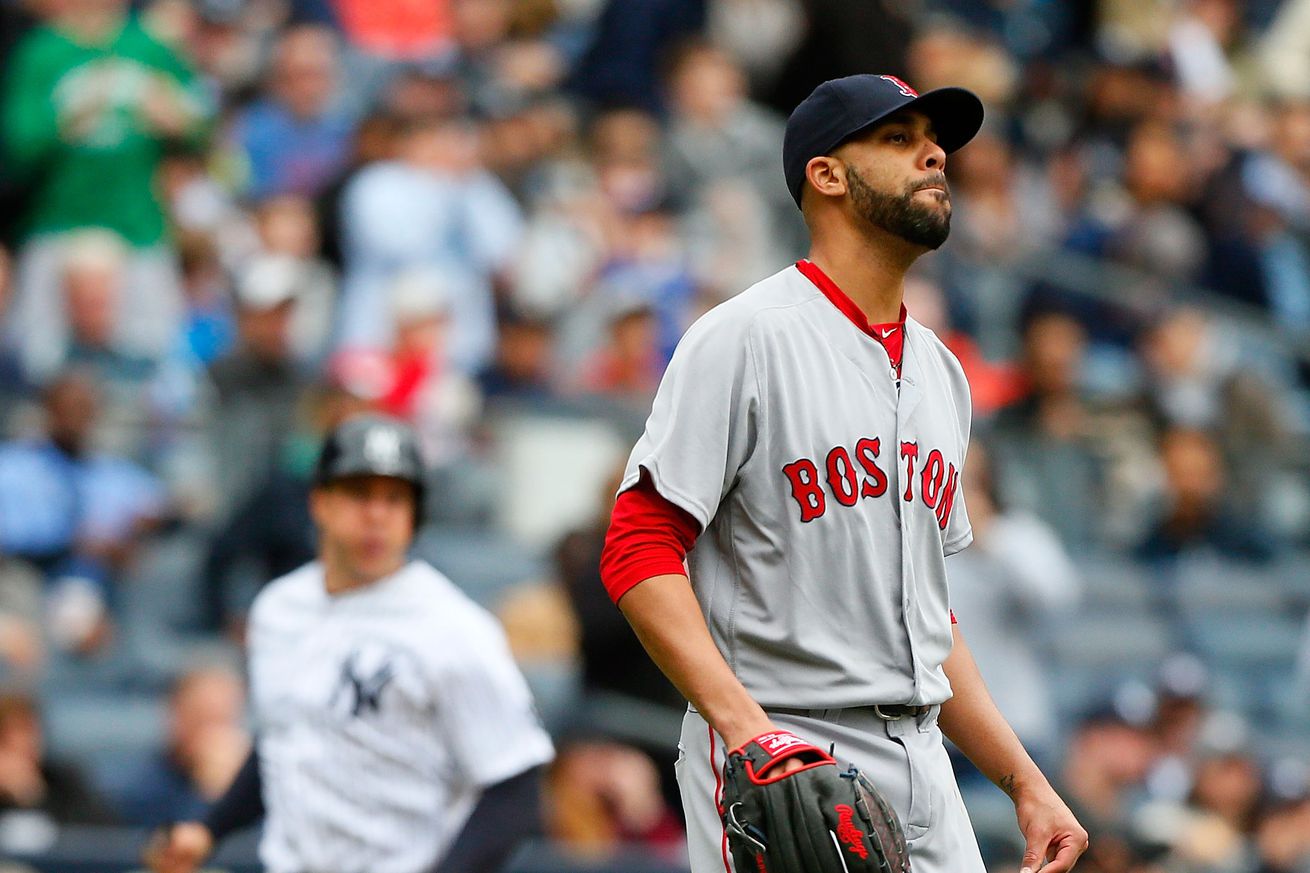
In his first season with the Red Sox, however, Price was anything but. He struggled mightily during the first half, carrying a 4.74 ERA into July before settling at 3.99 -- his worst mark since he was a 23-year-old rookie (as was his 1.20 WHIP). He surrendered the most hits (227) in the Majors and was prone to mid-game meltdowns, including one that ended his lone postseason start after 3 1/3 innings.

Thankfully for Boston, another pitcher stepped up to lead its rotation. Enter Rick Porcello, Price’s former teammate in Detroit who now finds himself flanking the 2012 AL Cy Young winner yet again.

Only this time, the roles are reversed. Porcello was Boston’s top starter in his second year with the club while Price is still finding his groove. After scuffling in his Red Sox debut, Porcello bounced back to win the AL Cy Young, leading the Majors with 22 wins and a 5.91 K/BB ratio.

Porcello's success wasn't just limited to 2016, either, as he was arguably Boston’s best pitcher in the second half of 2015, posting a 3.49 ERA after Independence Day. He was even better down the stretch with a 3.14 ERA over his final eight starts. Since coming off the Disabled List that August, Porcello has looked like a completely different pitcher, striking out batters at the highest rate of his career.

Once a ground-baller who struggled to miss bats, Porcello’s now a whiff-machine. He went from middle-of-the-rotation innings-eater to staff ace almost overnight–a truly stunning transformation. He began relying on his sinker again after getting away from it in the early part of 2015, mixing it with nasty change-ups and cutters. The result has been a whole new pitcher; Rick Porcello 2.0.

Of course, Porcello is unlikely to be the ace in 2017 with Chris Sale now on board and Price expected to bounce back, but he doesn't have to be. Even if he regresses to 2015 levels, he'll still be a strong number-three -- precisely what the Red Sox were hoping for when they signed him to that $82.5 million extension.

Monday, August 15, 2016

Red Sox Rundown

Boston's ace has not lived up to his new contract so far (Over The Monster)
Got to answer a few questions about the Sox last month from fellow Baseball Blogger Alliance member Peter Schiller over at baseballreflections.com. Thanks for the shout-out Pete!

Q: How are the Red Sox’s offseason acquisitions working out so far? Any concerns?

A: Alright. Their four main acquisitions were David Price, Craig Kimbrel, Carson Smith, and Chris Young. Price has been up-and-down, but overall he’s made the rotation better. Kimbrel has been shaky at times, but for the most part has been about as good as advertised. Smith has been hurt all year, so he hasn’t made any impact. Young has been solid in left field, but John Farrell’s had to over-rely on him with alternatives Brock Holt and Blake Swihart out for extended periods of time.  Price hasn’t been himself, which is definitely a concern when you’ve got him signed to the most expensive contract ever for a pitcher, and Smith underwent Tommy John which is never a positive.

Q: Who has been the most disappointing player so far this season? Will they improve as the season goes on?

A: Gotta be Price. The Sox are paying him close to $1 million per start and roughly half of his starts have been duds. He’s running the highest ERA of his career and has struggled against weak offenses like Tampa Bay and New York. He’ll have innings where he just loses it and completely melts down, which you typically don’t see from your ace. That said, he should improve as his peripherals are excellent (he leads the league in strikeouts) and he’s gotten unlucky with balls in play and strand rate. He was a monster for Toronto in the second half last year, and if he can do that again his rough first half will be forgotten.

Q: Who has been the most surprising player so far this season? Can they sustain this pace?

A: It’s a toss-up between Jackie Bradley Jr., who’s been the team’s MVP after not being able to hit at all during first three seasons (save for one month last year), and Steven Wright, who’s emerged as a Cy Young candidate and could potentially start the All-Star Game. I guess you’d have to say Wright is more surprising given his age (31) and the fact that he almost didn’t make Boston’s rotation this year. Bradley had shown flashes of brilliance before -- so we knew he had it in him -- and he’s 26, which is a normal breakout age.  Bradley has a decent shot of keeping this up based on his minor league track record, but Wright is a knuckleballer which makes his dominance unlikely to continue.

Q: What top prospects might we see before the All Star break (What type of player are they: 5 tool player, speedster, defensive, power hitter, etc.)? What will be their impact on the team?

A: Andrew Benintendi may get some run in left field with the injuries to Holt, Swihart and Young.  He’s a 5 tool player who could help Boston down the stretch, allowing Holt and Swihart to slide back to their natural positions and allowing Farrell to use Young strictly against lefties. If the Sox don’t promote him this summer, he’ll probably get called up for a cup of coffee when rosters expand in September.
The Red Sox have arguably baseball's top prospect in Moncada (Fox Sports)
Q: What top prospects are currently being blocked by current players on the big club? Will this make them trade bait, will they switch positions or will the vet eventually be traded?

A: Yoan Moncada is Boston’s best prospect and most untouchable asset, but he’s currently blocked at second base by Dustin Pedroia. Moncada seems unlikely to be traded (unless it’s for an ace-level starter in return) and Pedroia’s not going anywhere, which means he’s going to have to change positions at some point. He could convert to an outfielder, like Mookie Betts did, or possibly play third. He can play pretty much anywhere with his athleticism, so the Sox shouldn’t have any problem finding a place for him.

Q: What is the team lacking that either wasn’t addressed in the offseason or the offseason acquisition isn’t cutting it?

A: Quality starting pitching beyond Price, who hasn’t been nearly as good as expected. They have three good starters with him, Wright, and Rick Porcello, but the back of the rotation has been a dumpster fire. It’s clear the team will need to trade for another starter or two as the deadline rolls around, which will probably require sacrificing one of their prized prospects.

Q: Are they better or worse off now than they were at the end of last season?

A: There’s no question that they’re better, although it’s important to remember that they were one of baseball’s better teams in the second half last year. Adding Price gives them the ace they’ve lacked since trading Jon Lester, while Kimbrel gives the bullpen a much-needed power arm. Losing Pablo Sandoval for the year is addition by subtraction, especially since it allows Travis Shaw to play everyday. Hanley Ramirez has proven to be a competent first baseman, which is a huge upgrade over his terrible defense in left field last year.

Q: What is your predicted outcome for the team this season? Why?

A: I expect they’ll win 88-90 games and one of the two wild cards. They’re really strong up the middle and have arguably the league’s best starting pitcher and closer, but lack of depth in the rotation will ultimately prevent them from winning 95 games and the division.

Q: What players need to go (traded, released, etc.) & why?

A: Sandoval needs to go, but there’s no way to get rid of him. His trade value’s at an all-time low, and releasing him would mean eating the next three years of his contract. The Red Sox should also part ways with catcher Ryan Hanigan, as they have two great young catchers in Swihart and Christian Vazquez. They should also try to find a way to get rid of Clay Buchholz, since he’s no longer a reliable starter and doesn’t make much sense as a bullpen option.

Friday, December 18, 2015

Boston Pays the Price

Dombrowski got his man, but at a steep price (USA Today)
It's been awhile since the Boston Red Sox spent serious money on a free agent pitcher. Their most recent multi-year, big bucks contract went to John Lackey after the 2009 season, during Theo Epstein's open-checkbook regime. Three years before that, he dropped over $100 million on Daisuke Matsuzaka. While both helped Boston to a world championship during their time with the club, neither panned out in terms of health or overall performance.Maybe that's why Epstein's successor, Ben Cherington, stayed away from big-ticket starting pitchers, especially ones over 30.

But after rolling the dice with an aceless staff last year (and finishing last again), Boston was willing to pay the price to secure a top-shelf starter. As it turned out, they were willing to shell out more for a pitcher ($216 million over six years) than anybody had ever shelled out before.

That represents quite a departure from the way Boston operated under Cherington, who's largest contract--Dustin Pedroia's extension--went for $100 million less. But then, so has everything that Dave Dombrowski has done since taking office.

It should come as no surprise that the Red Sox were the ones to land Price, given his history with Dombrowski. Dombrowski traded for Price in 2014 while general manager of the Tigers, hoping to get his team over the hump and win a championship for aging owner Mike Llitch. When they failed to do so in 2014 and sputtered last year, Dombrowski dealt Price to the Blue Jays in one of his last moves before being fired.

Now, the two have reunited in Boston, where they'll get a fresh start and another shot at a championship.

It's not hard to see why Boston--Dombrowski in particular--was so enamored with Price. The former Cy Young winner (and two-time runner-up) has been steadily terrific throughout his career, despite being traded midway through each of the last two seasons. Both times he quickly adapted to a new, more hitter-friendly environment, suggesting he shouldn't have much trouble acclimating to Fenway Park. His career numbers back this up, as he's 6-1 with a 1.95 ERA in 11 regular season starts at Fenway.

That's only one reason why Price will be a great fit in Boston. He just turned 30, which means he should still have several fine seasons ahead of him. He's durable, having logged the fourth-most innings in baseball since 2010. And he's a battle-tested AL East veteran, having spent all but one one of his eight seasons in the division. He strikes guys out, doesn't walk very many, and keeps the ball in the yard. What's not to love?

The only negative thing I can say about Price is, well, his price. The Red Sox could have acquired two great starting pitchers for what they spent on Price, as the Giants did after losing out on Zack Greinke. I would have rather seen them get any combination of Jordan Zimmermann, Johnny Cueto, and Jeff Samardzija, preferably the first two. Boston was more than one good starter away from being a contender last year, and probably still are if they don't add another starter between now and Opening Day.

Because even with Price, the rest of their rotation still looks pretty shaky. You never know what you're going to get out of Clay Buchholz, or which Rick Porcello is going to show up. 23 year-olds Henry Owens and Eduardo Rodriguez have a combined 32 major league starts under their belts, so counting on both of them to be productive starters next year is risky. Roenis Elias could spell Wade Miley, but he's yet to complete more than 165 innings in a season.

Boston's rotation projects to be Price and a bunch of question marks. Had they spent their money more wisely, however, there could have been one less wild card to worry about.


Thursday, November 19, 2015

Cubs Cleaning Up

Arrieta rode a historic second half to his first Cy Young award (MLB.com)
2015 was a pretty good year for the Cubs. Kris Bryant and Kyle Schwarber had outstanding debuts, Jake Arrieta evolved into one of the best pitchers in baseball, and Joe Maddon worked his usual magic from the dugout, guiding Chicago to 97 wins and the World Series championship that Back to the Future II predicted 26 years ago a postseason berth.

One would think the Cubbies won it all this year, based on how they've fared in the BBWAA awards thus far. On Monday it was announced that Bryant won NL Rookie of the Year unanimously. Tuesday brought the news that Joe Maddon had been named NL Manager of the Year, and Wednesday made it a three-peat when Jake Arrieta was voted NL Cy Young over Clayton Kershaw and Zack Greinke. That streak will end today, however, as Anthony Rizzo doesn't stand a chance against Bryce Harper for NL MVP honors.

As I wrote yesterday, Bryant was an easy choice based on the way he dominated this year's rookie leaderboards. Maddon was also an obvious pick after helming the Cubs--a last place team the last two years--to its first playoff appearance of the Obama administration. 

But Arrieta, as many have written, was not an obvious choice by any stretch. In fact, I'm pretty sure he was the wrong one.

Let me backtrack a bit. There really was no wrong choice for this year's NL Cy Young, as Arrieta, Greinke, and Kershaw were all equally worthy. They all had different things going for them. Arrieta led the majors in wins, complete games, shutouts, hit rate, and home run rate, plus enjoyed the best second half any pitcher has ever had. Greinke was tops in winning percentage, ERA, ERA+, WHIP, and pitcher bWAR. Kershaw tied Arrieta for most complete games and shutouts while registering the most innings, strikeouts, and pitcher fWAR. He also had the major's lowest FIP and National League's best strikeout rate. In the end, who you voted for was a matter of personal taste. 

Since I'm on board with the whole sabermetrics thing, I prefer FIP to ERA. I like lots of strikeouts and few walks. I want to see a low WHIP. And I want to see all of those things sustained over a large workload.

I think you see where I'm going with this. Nobody combined quantity with quality this year like Kershaw. He was the best pitcher in baseball based on things pitchers can control (though I still don't buy the idea that pitchers can control home runs, as that's heavily influenced by weather and ballpark) and threw more innings than anyone else. No pitcher was more valuable, in my eyes, at least. 

I don't mean to take anything away from Arrieta, because he had a Cy-worthy season as well. I just can't help but wonder how the voting would have played out had the Cubs finished last again, or had Greinke not split the vote with his rotationmate (Kershaw wins if you give him half of Greinke's point total). Since it was pretty much impossible to tell which Dodger pitcher was better, that all but guaranteed the award would go to Arrieta--Chicago's clear ace.

I also think it's funny that for the second year in a row, a pitcher rode a big second half to Cy Young glory over a pitcher who I thought was more deserving. Last year saw Corey Kluber edge out Felix Hernandez, and this year Arrieta won despite having a 3.40 ERA through mid-June. It's also interesting that Kluber and Arrieta were both first-time winners who were rewarded for their first season of dominance, whereas Hernandez and Kershaw had both won before with superior seasons. I'm sure there are some voters out there who'd rather not vote for the same guy year after year, who instead try to pick the player with the better narrative. That's why Josh Donaldson will beat out Mike Trout for AL MVP, even though Trout's numbers are better than Donaldson's as well as the ones he posted during his MVP campaign last year.
Keuchel shut out the Yankees in the AL Wild Card game (MLB.com)
While big second halves helped Kluber and Arrieta capture their first Cy Young awards, a strong finishing kick did not help David Price secure his second.

I was both surprised and happy to see Dallas Keuchel eek by David Price in the American League. I thought Price would win after sparking Toronto's second-half turnaround, essentially pitching them to the postseason the way CC Sabathia did Milwaukee in 2008. I guess that's karma for Price stealing the 2012 Cy Young that Justin Verlander deserved

Of course, Keuchel was every bit as instrumental as Price in helping his team reach the playoffs. He was the American League's most valuable pitcher per bWAR (FanGraphs had Chris Sale, which I don't buy considering he threw 23 fewer innings with an ERA nearly a full run higher) and led the league in a host of categories, including innings, shutouts, ERA+, WHIP, and wins. 

Keuchel "won" 20 regular season games--the only AL starter to do so--but that total doesn't include Houston's most important game of the season--a do-or-die, single elimination game at Yankee Stadium for the right to advance to the ALDS. Keuchel was masterful, spinning six shutout innings and limiting the Bombers to just three hits in his first-ever postseason start. He was equally dominant in his lone ALDS turn, stifling the Royals to one run over seven frames as he helped Houston come within one win of the ALCS. That proved to be Keuchel's last start of 2015, as the Astros never got that last win.

I don't mean to say that Price would have been a poor pick. His numbers were nearly identical to Keuchel's, so as in the NL it was a toss-up. For me it was innings--Keuchel threw 11 and 2/3 more, or about a start and a half--that made Keuchel the superior candidate. That doesn't sound like much over the course of a season, but when you consider that Houston won the second wild card by one game over the Angels, those dozen innings might have been the difference. No American League starter had more of an impact than Keuchel, who led the loop in batters faced, and nobody was definitively better. Price was just as good, but he simply wasn't as dominant; the only stat he led in was ERA--by 0.03 over Keuchel, which of course means nothing over 162 games.

In both leagues the voters had to split hairs. I think they split the right ones in the AL but the wrong ones in the NL. 

Tuesday, October 1, 2013

Rays Win Game 163

After their 5-2 win last night the Rays live to play another day (Yahoo Sports)
Last night the Tampa Bay Rays and Texas Rangers, both of whom finished the regular season with identical 91-71 records, squared off in Arlington last night to determine the American League's second Wild Card team.

This game--Game 163--wouldn't have happened two years ago. Instead, both teams would be lamenting how they finished one game behind the Cleveland Indians--the true Wild Card winners. But the times, and rules, have changed, so both teams were given a second shot at October baseball.

The Rangers were red-hot, having won seven straight games to close out the year. That sprint to the finish left Ron Washington unable to start Yu Darvish or Derek Holland. He went with 22 year-old rookie Martin Perez, who acquitted himself well this year but wouldn't have been anyone's first choice to start a game of this magnitude.

That's what made the Rays clear favorites to win. In this do-or-die, win-or-go-home cage-match,Tampa Bay turned to its ace and reigning AL Cy Young winner David Price. Putting his postseason struggles against Texas aside, the three-time All-Star is widely considered to be one of baseball's best pitchers and his availability seemed likely to swing the game in Tampa Bay's favor.

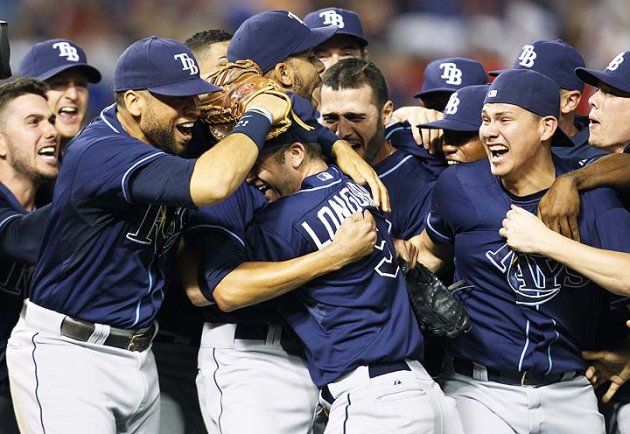
Sure enough, it did. Price pitched the Rays into the playoffs by going the distance, scattering seven hits and allowing just two runs. Tampa Bay staked him to an early lead, drawing first blood on Delmon Young's sac fly in the top of the first. The Rays led from that point forward, and with Price pitching their lead was never seriously threatened.

Perez didn't pitch poorly, but simply wasn't good enough to outduel Price. He departed in the sixth after striking out Ben Zobrist to open the frame, giving way to Alexi Ogando. Texas was losing 3-1 at the time, but doubles from Evan Longoria and David DeJesus made that deficit 4-1 before Ogando could close out the inning.

The Rangers responded with a run in their half of the inning on an RBI double from Alex Rios, but Price shut them out for the rest of the night. Tampa added an insurance run in the top of the ninth to make the score 5-2. Rather than tap into his bullpen, Joe Maddon let Price, who had thrown 108 pitches through eight, come back out to finish what he started. He finished strong, setting down Adrian Beltre, A.J. Pierzynski and Nelson Cruz in order.

(Speaking of Cruz, all the hoopla surrounding his return from a 50 game suspension turned out to be much ado about nothing. Cruz was a non-factor, going 0-for-4 with a strikeout).

Price put the team on his back, but so did Evan Longoria, who continued his run of monster games on the final day of the season. Longo went 3-for-4 with a single, double, and two-run homer. The long ball was his seventh career blast on the final day of the season, breaking a tie with Stan Musial. Longoria clearly understands the importance of saving his best for last.

So for the second year in a row, the Rangers are headed home after narrowly missing the postseason and Washington will likely be fired as a result. The Rays travel to Cleveland, where they will take on Terry Francona's Indians tomorrow night in another sudden-death affair--the Wild Card (aka coin toss) playoff game. Tampa Bay will pin its playoff hopes on Alex Cobb, while Cleveland will ride rookie Danny Salazar, who has just ten big league starts under his belt.

Obviously this game could go either way, but my gut tells me the Rays will come out on top. I say Tampa Bay 4, Cleveland 3.