Showing posts with label Breakout. Show all posts
Saturday, October 11, 2014
2014 All-Breakout Team
Here's my list of top breakout players at each position. I exclude rookies (sorry, Jose Abreu) and try to avoid established big leaguers where possible (so no Jose Altuve or Michael Brantley).
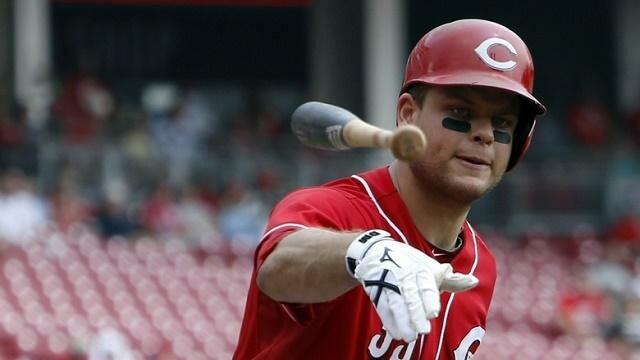
C Devin Mesoraco
I covered Mesoraco's mega-breakthrough in early September, but it's worth repeating here. Jonathan Lucroy and Buster Posey may have gotten more ink, but the numbers say Mesoraco was baseball's best-hitting catcher this year, at least on a per-game basis. His 25 home runs, .387 wOBA and 147 wRC+ were tops at the position (minimum 200 plate appearances). He also had the highest slugging (.534) and ISO (.260), and was second in RBI with 80. Only Posey and Lucroy provided more offensive value from behind the plate this year, and both only because they accumulated many more at-bats. Even after accounting for his pedestrian defense, poor baserunning, and somewhat limited playing time (440 PA), he still ranked as the sport's fifth most valuable receiver this year with 4.4 fWAR. Not bad for a career .225/.282/.359 hitter coming into the season.
1B Steve Pearce
Pearce was this year's Jose Bautista, an unheralded journeyman who blew down the doors with an AL East club. Regarded by many as Baltimore's MVP this year, the 31 ear-old was worth six bWAR this year--ten times his career mark--despite appearing in just 102 games. Even more amazing was that he put seven years of middling results behind him to become one of the best hitters in baseball. After hitting just 17 home runs in his career leading up to 2014, Pearce parked 21 this year in only 383 plate appearances. What's more, he batted .293/.373/.556--nearly dead even with Mike Trout's rate stats--for a 160 OPS+. The Orioles nearly let him go, too, releasing him on April 27th. Good thing they re-signed him two days later.
2B Brian Dozier
At age 27, Dozier built off a solid sophomore season to become a bona fide star in his third year. His 112 runs were second only to some guy named Trout but easily paced the division. His 23 big flies were tied for most at the keystone with Neil Walker. In fact, with 21 steals he was the only second baseman to go 20/20 this year. And his 89 walks--third most in the Junior Circuit--also led the position. Though his defense was suspect, Dozier produced more offensive value than all but two second basemen you may have heard of: Robinson Cano and Jose Altuve.
3B Nolan Arenado
Arenado's reputation as a defensive wizard was already established, but we couldn't help but wonder whether he was going to hit or merely become the third base equivalent of Andrelton Simmons. Well, he hit all right. After batting a paltry .267/.301/.405 (81 OPS+) as a rookie last year, this year he stepped it up to hit .287/.328/.500 (116 OPS+). He showed a much improved power stroke, nearly doubling his home run output and clubbing more doubles despite playing 22 fewer games this year. Even better, he added pop without trading contact, as his batting average increased 20 points and his strikeout rate actually went down.
SS Danny Santana
Though he played twice as many games in center as he did at short, I'm going to include him here anyways. There really wasn't a breakout shortstop this year, either, so I'm going to include Santana even though 2014 was his first season. The 23 year-old only appeared in 101 games for the Twins this year, but still made a huge impact by batting .319/.353/472 (130 OPS+), scoring 70 runs and banging out 41 extra base hits. He also swiped 20 bases in 24 attempts and compiled nearly 200 total bases. Worth close to four wins this year, Santana is an obvious regression candidate (especially with that 98/19 K/BB ratio) but should be a solid shortstop going forward.
OF Corey Dickerson
The 25 year-old was a beast in his sophomore season, batting .312/.364/.567 with 24 home runs and 76 RBI in 478 plate appearances. Though missing 31 games hindered his counting numbers, Dickerson still posted the league's ninth-best batting average, third-best slugging percentage and fifth-highest OPS, all while homering more frequently than all but five National Leaguers.
OF J.D. Martinez
I just wrote about Martinez, but yeah, he was really good this year.
OF Charlie Blackmon
Given the chance to play everyday after batting .309/.336/.467 in half a season last year, Blackmon made the most of it. A hot start catapulted the 27 year-old to his first All-Star nod, and while he tailed off in the second half he still finish with solid overall numbers (.288/.335/.440 and 2.1 bWAR). Colorado's leadoff man also fell one long ball shy of 20/20, settled for 19 dingers and 28 steals, respectively.
U Josh Harrison
Following three uninspiring seasons as a utilityman, Harrison settled into an everyday role with the Bucs this year and delivered monster numbers. In addition to making his first All-Star team, he also hit .315/.347/.490 (134 OPS+) with 58 extra base hits and 18 steals. Worth more than five bWAR, Harrison has the vote of teammate Andrew McCutchen (and some media members) for team MVP.
SP Garrett Richards
Richards was in the midst of a Cy Young-caliber campaign when he suffered a season-ending knee injury while trying to turn a double play at Fenway on August 20th. Before that Richards, who entered the season with just 29 big league starts under his belt through three years, was stellar. Despite missing the final six weeks of the season, Richards ended the season with his 2.61 ERA and 139 ERA+ ranked fifth in the AL, his 2.60 FIP was fourth, and his 1.04 WHIP placed third. He also finished second in H/9 and first in HR/9. It's impossible to overstate the effect his loss had on the Angels' rotation, especially as they were swept out of the postseason.
SP Tanner Roark
Roark impressed as a rookie last year, going 7-1 with a 1.51 ERA and 0.91 WHIP in 14 appearances (five starts), but nobody could have guessed that he would finish 2014 among the top starters in the National League. The 27 year-old Illinois native delivered nearly 200 innings of 2.85 ERA ball, providing roughly five wins above replacement for the Nationals. Roark concluded his first full season ranked among the NL's top 10 in wins, ERA, ERA+, WHIP, BB/9, shutouts, and pitching bWAR. His development was a big reason why Washington ran away with the division this year.
SP Jake Arrieta
After struggling mightily with Balitmore over his first three-plus seasons, Arrieta was traded to the Chicago Cubs last summer. Moving out of the AL Beast to the weaker National League appears to have done wonders for him, as he went from one of baseball's worst starters to one of its best. In 25 starts this year he posted a 2.53 ERA, well below his 5.23 career mark coming into the season, along with a 0.99 WHIP. His FIP was even better at 2.26, reflecting his superb 4.07 K/BB ratio and microscopic home run rate (just five long balls allowed in more than 156 innings of work). The Cubs have all the young hitting talent in the world, but in order to contend they'll need guys like Arrieta in the rotation.
SP Sonny Gray
Gray delivered on the exceptional promise he displayed last year as a rookie, turning in 219 innings of 3.08 ERA ball (seventh and eighth in the American League, respectively). The fireballer was a force in Oakland's stacked rotation, racking up 183 strikeouts (ninth) and limiting opponents to a .232/.301/.327 slash line. The future is bright for Oakland's 24 year-old ace, and he'll be expected to step up next year following Jon Lester's departure.
SP Dallas Keuchel
The third-year starting pitcher took a quantum leap this year after two seasons with ERAs over five. In 2014 it was under three--at 2.93--good for seventh in the AL and sustained over 200 innings. The southpaw completed five games--most in the American League--and was fifth in pitching bWAR with 5.1. With a 3.21 FIP, 3.04 K/BB ratio and 1.18 WHIP, there's little reason to believe his success this year was entirely a fluke.
CL Zach Britton
A failed starter, Britton had never finished a game before this year, much less saved one. That quickly changed when Buck Showalter thrust him into the closer's role after Tommy Hunter proved ineffective. Britton was up to the task, piling up 37 saves (against only four blown opportunities) and not allowing an earned run over the season's final six weeks. The southpaw took to the bullpen wonderfully, finishing his first season as a reliever with a 1.65 ERA and 0.90 WHIP. He remained effective in the ALDS versus Detroit, securing a hold and nailing down two saves as the Orioles swept the Tigers.
Thursday, September 18, 2014
The Other Martinez
| Martinez has been a force since the calendar flipped to June (CBS) |
Just don't forget about the "other" Martinez on the Tigers, an unheralded Spring Training pickup who's having an outstanding season in his own right. I'm talking about J.D. Martinez (no relation), this year's Jose Bautista or Adam Lind.
Martinez was virtually unheard of before this year, but so it goes when you're a bad player on an awful team. You see, Martinez was a corner outfielder who didn't hit much or play much in his first three big league seasons, averaging just 84 games per campaign after arriving as a late-July call-up in 2011. Martinez actually hit decently that year with a .274/.319/.423 batting line (104 OPS+) and numbers that, when projected out over 160 games, worked out to be around 40 doubles, 18 home runs and 105 RBI. Martinez, just 23 years-old at the time, was a mild success on an abysmal Astros club that lost 106 games.
2012 wasn't any better for Houston, which lost 107 games, or Martinez, who struggled in his first taste as an everyday player. Despite a strong start his batting line shrunk to .240/.311/.375 (86 OPS+), leaving him below replacement level at -0.6 bWAR. On the plus side he showed a bit more patience and his power held steady, but didn't build off his solid debut so much as he took a step back from it.
2013 marked continued decline for Martinez, who batted an anemic .250/.272/.378 and was worth a full win below replacement despite barely playing half a season (86 games). Whatever strides he'd made in plate discipline the year before had disappeared, as he posted an abominable 82/10 K/BB ratio. The 25 year-old was supposed to be coming into his prime, but instead was merely treading water as a below average player. With minimal contributions in power, speed, and fielding, Martinez was a liability even the horrid Houston Astros couldn't afford to keep around.
So, in March of this year, with Spring Training drawing to a close, the Astros cut him. Based on what they'd seen from him--a .251 batting average, .300 on-base percentage, and sub-.400 slugging percentage in nearly 1,000 plate appearances--they were totally justified in doing so. Most teams would have given up on Martinez as well, I suspect.
The Tigers didn't. They scooped him up two days later, signing him to a minor league contract. Given his age (26) it wasn't entirely unreasonable for them to bank on a breakout, or at least hope he could be a productive fourth outfielder. But I'm guessing not even in their wildest dreams would they ever have expected Martinez to become a full-blown star.
| An improved swing has led to better results at the plate (Boston Herald) |
In Detroit Martinez has not only resurrected his career, but he's also emerged as one of the best hitters in baseball with his .398 wOBA, 157 wRC+, and .928 OPS. With his remade swing he's hitting well over .300, which makes up for his iffy on-base skills (only 25 unintentional walks) but is also completely tied to his .382 BABiP--a ridiculous number given his average footspeed that becomes even harder to explain after seeing only a slight uptick in line drive rate and considerable drop-off in ground ball rate.
But what's been most surprising has been his power. After managing just 24 home runs in his first three seasons (averaging one every 37.5 at-bats) he's already slugged 23 this year, going yard once every 17.6 ABs. He has as many home runs as Miguel Cabrera and his ISo is twice what it was last year. Power progression is to be expected as a player reaches his mid-20s, but seemed unlikely given his shift from a great home run park for righties in Houston to a much tougher one in Detroit. He's hit a few more fly balls than last year, but not enough to explain how he more than doubled his home run frequency.
Rather, that can be explained by his HR/FB ratio, which has more than doubled from last year's 9.5 percent to over 21 percent this year. There's probably some luck in there, as according to the ESPN home run tracker eight of his bombs just barely got out, but even if you take all those shots away he'd still have 15 on the year--a career high.
Martinez has noticeably improved against almost every type of pitch, but none more so than fastballs. After posting negative values against the heater in each of his first three seasons, he's been worth more than 21 runs above average against them this year. That, combined with better success against curveballs, sliders, and changeups, have made him a much more effective hitter.
And that's been huge for the Tigers this year, who've need every one of the four wins above replacement he's provided for them. If Detroit does hold on and win the division, Martinez's breakout season will be a big reason why.
Friday, September 5, 2014
Mesoraco's Monster Breakout
| Though inconsistent, Mesoraco has enjoyed a tremendous season (RantSports) |
One positive takeaway from this season, however, is that Cincinnati appears to have developed an All-Star caliber catcher. 26 year-old Devin Mesoraco's been a revelation behind the plate, emerging as one of the game's most dangerous offensive catchers in his fourth big league season. In the wake of yesterday's 4-for-4 performance, he's now batting an eye-popping .286/.365/.542 (153 OPS+) on the year with 21 home runs--most among everyday catchers. His 69 RBI rank third behind Buster Posey and Miguel Montero, both of whom have significant advantages in playing time. In the National League only Giancarlo Stanton has a superior AB/HR ratio. If the Reds weren't so helpless out of the race, he'd make a pretty good MVP candidate.
It's not unusual to see catchers break out later than position players at other positions, but Mesoraco's transformation has been truly stunning. He was a nothing before this year, a career .225 hitter with 16 home runs and -0.5 bWAR to his name. Now he's one of the best hitters in baseball. Out of all this year's biggest breakthroughs (Charlie Blackmon, Corey Dickerson, Josh Harrison, Brock Holt), none of shined brighter than Mesoraco.
The only issue with Mesoraco (besides subpar baserunning, but good luck finding a catcher who runs well) is his incredible streakiness. All year long, it seems, has been alternating hot and cold streaks for the Reds' backstop, who began the year on fire. He was hitting .500/.541/.870 through May 18th, only to post a .521 OPS with 23 strikeouts over his next 21 games. That was followed by a torrid three-week stretch ending on the Fourth of July where he blasted six home runs and OPS'ed 1.287. He leveled off through the rest of July, then hit the skids in August, batting a measly .228/.340/.354 with just two home runs.
September should bring better results for Mesoraco, and by the looks of things yesterdat, it already has.
Labels:
Baseball,
Breakout,
Catchers,
Cincinatti,
MLB,
National League,
NL,
NL Central,
Reds
Tuesday, August 5, 2014
What's Behind Brantley's Breakout?
| An All-Star for the first time this year, Brantley's having an MVP caliber season |
Is Michael Brantley baseball’s best kept secret? If he played on a better team in a bigger market, wouldn't we be talking about him the way we talk about Mike Trout, Andrew McCutchen, Adam Jones, and Yasiel Puig?
I think so. Don't believe me? Go ahead. Check the numbers. They're closer than you think. Seriously, see for yourself. I'll wait.
Over the first five years of his career, Brantley was pretty much the definition of an average everyday outfielder. With an OPS+ of 100, his bat was perfectly pedestrian. He hit for a little bit of power and flashed a little bit of speed, got on base at a solid rate and played decent defense, too. He didn’t really have any holes in his game, but at the same time failed to stand out. He was productive, capable, solid, but boring. Nothing special.
Not this year. Brantley, a beast all season long and first-time All-Star, is playing like an MVP. That's been even more true lately, as he's recorded five straight multi-hit games and seven in his past nine. With his batting line now up to .324/.383/.515 on the season, Brantley can say there's nobody in the American league who beats him in all three triple slash categories. In fact, there's only one player in baseball who can beg to differ, and it's Troy Tulowitzki. Only three players have provided more offensive value than Brantley, and their names are Trout, McCutchen, and Puig, all serious MVP candidates. Brantley deserves to be, too.
Because in his age-27 season, Brantley's taken a quantum leap from average hitter to one of the best in baseball, enjoying an unexpected breakout in the same vein as Melky Cabrera and Daniel Nava. His 154 wRC+ ties him with Jose Bautista for tenth-highest in baseball, better than Miguel Cabrera, Robinson Cano, and Ryan Braun. With roughly one-third of the season still to go, B-R has already valued Brantley's performance at almost five wins above replacement. Per FanGraphs, Brantley has been baseball's ninth-most valuable position player this year, including the third-best outfielder in the American League to only Trout and Alex Gordon (and most of Gordon’s value comes from his defense, at which Brantley is merely okay).
So what’s fueling Brantley’s big, out-of-nowhere season? Surprisingly not BABiP, which at .325 is almost dead even with his actual average of .324. Considering Brantley’s career BABiP is .308, one can't merely chalk his success up to good luck. What's driving his robust batting average is the highest line drive rate of his career at nearly 27 percent. When more than one in four of your batted balls are frozen ropes, chances are you're doing something right.
As for the power surge, well, that's easy to explain. Brantley's boasting the highest HR/FB rate of his career by far. At 14.7 percent, it’s more than double last year’s 6.8 percent and his 6.7 percent career rate. That explains why he already has 16 home runs--on pace for 24--after never hitting more than 10 in a season before. In turn his ISO, which hovered in the .110-.120 range the past three years, has jumped up close to .200.
He’s also being pitched to a little differently. Whether that's because of his newfound success or vice-versa is up for debate, but this isn't: after struggling mightily against fastballs last year, Brantley's been well above average against the heater this year (two and four-seamers). On a similar note he’s also enjoyed much more success against the cutter, a pitch that tends to give lefty hitters such as Brantley trouble by exploding in on their hands when thrown from a righthander. Pitchers appear to be taking notice, as they’ve given him fewer fastballs this year and more changeups, perhaps trying to catch Brantley off guard or get him out in front. But Brantley’s always been a good hitter against changeups, and that has remained true this year.
On top of all that, Brantley's been much better on the basepaths as well. With 13 stolen bases in 14 attempts, he's been almost impossible to throw out. That represents a big step up over just two years ago, when he was nabbed nearly as many times (9) as he was successful (12). FanGraphs estimates he's provided more baserunning value than all but 14 major leaguers this year. Among players who have been less valuable than Brantley on the bases; Carlos Gomez, Jacoby Ellsbury, Brett Gardner, and Trout.
Offensively, Brantley's playing at his absolute best right now. His walks are up from last year and his strikeouts are down, so much so that the rates are almost dead even. He's hitting for power and getting on base a ton, and when he does get on base he makes a positive difference with his legs. The only area in which he hasn't improved is defense, where he's average at best and subpar at worst. At this point in his career Brantley's probably never going to be a great defensive outfielder, as he already plays a corner spot and can be expected to cover less ground with each passing year.
But as long as he keeps hitting the way he is, then that's something the Indians can live with.
Sunday, March 9, 2014
Reviewing Carpenter's Contract Extension
| The Cardinals locked up Carpenter (StL Sports Page) |
Carpenter's contract comes off the heels of an MVP-caliber season in which he hit .318/.392/.481 and led the majors with 126 runs, 199 hits and 55 doubles, all while playing second base and batting leadoff for the NL Champion Cardinals. He was an All-Star for the first time, won his first Silver Slugger award and finished fourth in the MVP race behind Andrew McCutchen, Paul Goldschmidt and teammate Yadier Molina.
It goes without saying that if he can be anything close to the seven win player he was a year ago, St. Louis is going to get a massive bargain, especially in the short-run. Like Mike Trout, Carpenter debuted in 2011, made the league minimum in both 2012 and 2013, and will make just $1 million in 2014. Carpenter's salary escalates every year after that, but he'll still get only $3.5 million in 2015, 6.25 million in 2016 and $9.75 million in 2017. He won't make eight figures until 2018, by which point he'll be 32.
And for those under the impression that Carpenter's breakout was the mere byproduct of an age 27 fluke season, remember that his .294/.365/.463 line in 2012 wasn't far off last year's rate stats, not to mention 26 percent better than average when adjusted for league and park. It's also worth noting that from 2012 to 2013 his walk rate remained exactly the same, his BABiP rose just seven points and his Iso actually decreased by six points.
His main improvement was cutting his strikeout rate by nearly one-third, which explains the uptick in his contact rate and batting average. He scratched out a few infield hits and smashed more line drives, which means he'll probably bat closer to .300 than .320, but there's nothing else in his batted ball or plate discipline data that suggests big-time regression is on the horizon (even though ZiPS is projecting him to bat .272/.351.,413 next year, which feels way too pessimistic).
So even if Carpenter never again reaches the lofty heights of his stellar 2013, he still figures to be pretty good. I think his numbers are going to look very similar to those of Dustin Pedroia (whose 2008 MVP campaign is almost indistinguishable from Carpenter's 2013) or Martin Prado. Translation: the Redbirds will get their money's worth.
Saturday, November 30, 2013
2013 MLB All Breakout Team
My one rule is that I don't include anyone who received Rookie of the Year votes:
C Jason Castro
The rebuilding Astros were terrible again in 2013, losing 111 games and finishing dead last in their first season in the American League West. But Castro, the team's lone All-Star representative, was one of their few bright spots. In his third big league season, the tenth overall pick of the 2008 draft built off a solid 2012 by hitting .276/.350/.485, good for a 130 OPS+. He showed good power, too, crushing 35 doubles and 18 home runs in just 120 games. Throw in his not-terrible baserunning (especially for a catcher) and respectable defense, and he was worth 4.5 bWAR. He's worth keeping an eye on in 2014--his age 27 season.
1B Matt Adams
The beefy slugger asserted himself while Allen Craig was out by popping 17 home runs in just 296 official at-bats. He batted a rock solid .284/.335/.503 in his sophomore season, leading Cardinals fans to wonder what kind of fireworks he has in store for 2014.
2B Matt Carpenter
Carpenter was arguably the most valuable player in the National League this season with more runs (126), hits (199), and doubles (55) than anybody in baseball. And yet, MVP voters felt Yadier Molina to be the more valuable Cardinal.
3B Josh Donaldson
Unheard of coming into the season, he was being hailed as a legitimate MVP candidate come September. He finished fourth behind Miguel Cabrera, Mike Trout and Chris Davis after leading Oakland to its second straight division title. All the 27 year-old did was hit .301/.384/.499 (148 OPS+) with 24 home runs and 93 RBI. Donaldson's potent bat combined with top-notch defense at the hot corner made him an eight-win player in 2013. Manny Machado has a case to be made as well, but we all knew he was going to be great.
SS Jean Segura
The 23 year-old Dominican emerged as one of the best shortstops in baseball. Coming off an unspectacular 45-game debut in 2012, Segura settled in as the Brewers' everyday shortstop and proved he belonged in the Show. He made his first All-Star team on the way to batting .294 with 44 steals--second only to Eric Young in the Senior Circuit. He also flashed decent power with 12 home runs, 10 triples and 20 doubles, putting together a Starlin Castro-esque season that was worth close to four wins above replacement.
LF Domonic Brown
Hailed by many during the preseason as a breakout candidate, Brown made good on those predictions in his first full big league campaign. He was named to the All-Star team after a sizzling five-week stretch from May 2nd through June 8th in which he bashed 16 home runs and drove in 36 runs over a 35-game span. May's NL Player of the Month cooled off considerably after that and was slowed by injuries as well, but still finished the season with 27 big flies, 83 RBI and an .818 OPS. The slugging left fielder needs to show more plate discipline but certainly has the potential for a 30 homer, 100 RBI season in 2014.
CF Carlos Gomez
I covered Gomez's sterling first half in June, and while he wasn't able to maintain that pace he still wound up with some pretty amazing numbers. Like his 8.4 bWAR--more than any National League position player--which he owes mainly to tremendous defense in center field as well as his excellent baserunning. With 24 roundtrippers and 40 steals in 47 attempts, Gomez was the best blend of power and speed in the game (better than Trout, Andrew McCutchen, and the next guy on this list).
RF Will Venable
It's strange to see a 30 year-old break out in his sixth major league season, but that's exactly what Venable did. He had been a serviceable outfielder for San Diego but took his game to new heights in 2013. He set career highs in numerous categories, including the three triple crown categories (.268--22--53) in what was easily his best season to date.
U Daniel Nava
Nava's incredible life story is well-known by this point, but few expected him to be much of anything for the Red Sox in 2013, let alone their best hitter outside of David Ortiz. The 30 year-old outfielder batted .303/.385/.445, posting the fifth-best OBP in the American League and forcing his way into 134 games. He was one of the most pleasant surprises on a team that exceeded everyone's expectations by winning the World Series.
SP Hisashi Iwakuma
Iwakuma took a major leap in his second big league season and his first as an everyday starting pitcher. He finished third in the AL Cy Young race behind Max Scherzer and Yu Darvish thanks to his 2.66 ERA (third among AL hurlers) and 1.01 WHIP (second) in almost 220 innings (second), a marriage of excellence and durability that was worth seven wins above replacement. More impressively, he managed to outpich star rotationmate Felix Hernandez.
SP Andrew Cashner
Following three middling seasons as a reliever, Cashner established himself as a capable starting pitcher after moving into the Padres rotation. Along with the best walk and home run rates of his career, Cashner posted a 3.09 ERA and 1.13 WHIP in 175 innings.
SP Patrick Corbin
Wasn't anything special as a rookie in 2012 but made the All-Star team in 2013 on his way to going 14-8 with a 3.41 ERA and 178 punchouts in 208.1 innings. He emerged as the ace of the Diamondbacks staff, outpitching more established hurlers such as Wade Miley, Ian Kennedy, and Brandon McCarthy.
RP Luke Hochevar
Terrible as a starter (5.44 ERA), the seven-year veteran came out of the Royals bullpen exclusively in 2013 and was one of the team's top relievers. In 58 appearances he managed a 1.92 ERA, 0.83 WHIP and 4.82 K/BB ratio. Finally realizing that Hochevar was not cut out to be a starter has to rate as one of the organization's smartest decisions in the past two decades.
RP Jason Grilli
With Joel Hanrahan gone, Grilli emerged as one of the National League's premier closers. A first-time All-Star at age 36, he saved 33 games for Pittsburgh in his first season as a full-time closer. He also posted a 2.70 ERA, 1.06 WHIP, and an outrageous 13.3 K/9 rate.
C Jason Castro
The rebuilding Astros were terrible again in 2013, losing 111 games and finishing dead last in their first season in the American League West. But Castro, the team's lone All-Star representative, was one of their few bright spots. In his third big league season, the tenth overall pick of the 2008 draft built off a solid 2012 by hitting .276/.350/.485, good for a 130 OPS+. He showed good power, too, crushing 35 doubles and 18 home runs in just 120 games. Throw in his not-terrible baserunning (especially for a catcher) and respectable defense, and he was worth 4.5 bWAR. He's worth keeping an eye on in 2014--his age 27 season.
1B Matt Adams
The beefy slugger asserted himself while Allen Craig was out by popping 17 home runs in just 296 official at-bats. He batted a rock solid .284/.335/.503 in his sophomore season, leading Cardinals fans to wonder what kind of fireworks he has in store for 2014.
2B Matt Carpenter
Carpenter was arguably the most valuable player in the National League this season with more runs (126), hits (199), and doubles (55) than anybody in baseball. And yet, MVP voters felt Yadier Molina to be the more valuable Cardinal.
3B Josh Donaldson
Unheard of coming into the season, he was being hailed as a legitimate MVP candidate come September. He finished fourth behind Miguel Cabrera, Mike Trout and Chris Davis after leading Oakland to its second straight division title. All the 27 year-old did was hit .301/.384/.499 (148 OPS+) with 24 home runs and 93 RBI. Donaldson's potent bat combined with top-notch defense at the hot corner made him an eight-win player in 2013. Manny Machado has a case to be made as well, but we all knew he was going to be great.
SS Jean Segura
The 23 year-old Dominican emerged as one of the best shortstops in baseball. Coming off an unspectacular 45-game debut in 2012, Segura settled in as the Brewers' everyday shortstop and proved he belonged in the Show. He made his first All-Star team on the way to batting .294 with 44 steals--second only to Eric Young in the Senior Circuit. He also flashed decent power with 12 home runs, 10 triples and 20 doubles, putting together a Starlin Castro-esque season that was worth close to four wins above replacement.
LF Domonic Brown
Hailed by many during the preseason as a breakout candidate, Brown made good on those predictions in his first full big league campaign. He was named to the All-Star team after a sizzling five-week stretch from May 2nd through June 8th in which he bashed 16 home runs and drove in 36 runs over a 35-game span. May's NL Player of the Month cooled off considerably after that and was slowed by injuries as well, but still finished the season with 27 big flies, 83 RBI and an .818 OPS. The slugging left fielder needs to show more plate discipline but certainly has the potential for a 30 homer, 100 RBI season in 2014.
CF Carlos Gomez
I covered Gomez's sterling first half in June, and while he wasn't able to maintain that pace he still wound up with some pretty amazing numbers. Like his 8.4 bWAR--more than any National League position player--which he owes mainly to tremendous defense in center field as well as his excellent baserunning. With 24 roundtrippers and 40 steals in 47 attempts, Gomez was the best blend of power and speed in the game (better than Trout, Andrew McCutchen, and the next guy on this list).
RF Will Venable
It's strange to see a 30 year-old break out in his sixth major league season, but that's exactly what Venable did. He had been a serviceable outfielder for San Diego but took his game to new heights in 2013. He set career highs in numerous categories, including the three triple crown categories (.268--22--53) in what was easily his best season to date.
U Daniel Nava
Nava's incredible life story is well-known by this point, but few expected him to be much of anything for the Red Sox in 2013, let alone their best hitter outside of David Ortiz. The 30 year-old outfielder batted .303/.385/.445, posting the fifth-best OBP in the American League and forcing his way into 134 games. He was one of the most pleasant surprises on a team that exceeded everyone's expectations by winning the World Series.
SP Hisashi Iwakuma
Iwakuma took a major leap in his second big league season and his first as an everyday starting pitcher. He finished third in the AL Cy Young race behind Max Scherzer and Yu Darvish thanks to his 2.66 ERA (third among AL hurlers) and 1.01 WHIP (second) in almost 220 innings (second), a marriage of excellence and durability that was worth seven wins above replacement. More impressively, he managed to outpich star rotationmate Felix Hernandez.
SP Andrew Cashner
Following three middling seasons as a reliever, Cashner established himself as a capable starting pitcher after moving into the Padres rotation. Along with the best walk and home run rates of his career, Cashner posted a 3.09 ERA and 1.13 WHIP in 175 innings.
SP Patrick Corbin
Wasn't anything special as a rookie in 2012 but made the All-Star team in 2013 on his way to going 14-8 with a 3.41 ERA and 178 punchouts in 208.1 innings. He emerged as the ace of the Diamondbacks staff, outpitching more established hurlers such as Wade Miley, Ian Kennedy, and Brandon McCarthy.
RP Luke Hochevar
Terrible as a starter (5.44 ERA), the seven-year veteran came out of the Royals bullpen exclusively in 2013 and was one of the team's top relievers. In 58 appearances he managed a 1.92 ERA, 0.83 WHIP and 4.82 K/BB ratio. Finally realizing that Hochevar was not cut out to be a starter has to rate as one of the organization's smartest decisions in the past two decades.
RP Jason Grilli
With Joel Hanrahan gone, Grilli emerged as one of the National League's premier closers. A first-time All-Star at age 36, he saved 33 games for Pittsburgh in his first season as a full-time closer. He also posted a 2.70 ERA, 1.06 WHIP, and an outrageous 13.3 K/9 rate.
Tuesday, June 18, 2013
Kyle Blanks Breaking Out (Again)
By now, most baseball fans are familiar with the rollercoaster of a career arc experienced by Alex Gordon. Hailed as the next George Brett, Gordon ripped up minor league pitching but failed to satisfy those lofty expectations once he reached the majors. After four frustrating seasons with Kansas City, Gordon finally broke through in 2011 and has since settled into one of baseball's best (and most underrated) outfielders.
Gordon's come to epitomize the post-hype sleeper, a player who attracted lots of attention early in his career and eventually realized his talent, but only after injuries/subpar performance sidetracked his career and caused people to forget about (or even give up) on him.
Chris Davis is one such player. Kyle Blanks is another.
Drafted by the San Diego Padres in the 42nd round (1,241st overall) of the 2004 draft, then 17 year-old Blanks didn't make much of an impression. Like most teenagers, he was raw, unpolished, and inexperienced. Even so, he excelled in the minor leagues, becoming the Padres top prospect after being named the organization's Minor League Player of the Year in 2008. The following year he was promoted to the Show on June 19th when Cliff Floyd went on the Disabled List, never to play again.
It took the 22 year-old a month to get his feet wet before he exploded. From July 21st onward he batted .296/.389/.653 with 10 home runs in 113 plate appearances before plantar fasciitis ended his power binge and his season on August 28th.
Accordingly, expectations were high for Blanks in 2010. He was installed as the club's cleanup hitter behind Adrian Gonzalez and homered on Opening Day, but his season only went south from there as pitchers began exploiting the holes in his swing. The strikeouts piled up and his batting average plunged below the Mendoza Line. Six weeks into the season, his year was mercifully cut short by elbow reconstruction surgery.
Blanks began 2011 on the Disabled List and didn't return to the majors until July 22nd. He hit well in August (.890 OPS) but went homerless in September. Despite his horrendous finish to the season, he could feel good about cutting his strikeout rate from 38.3 percent to 26.8 percent.
With his re-tooled approach, there was hope Blanks would make good on his promise in 2012. His body did not cooperate, however, and he appeared in only four games before tearing the labrum in his left (nonthrowing) shoulder.
Free of the burdens that weighed down his first few seasons and finally healthy, Banks has come back strong. He played well during spring training, only to find there was no room for him on the big league roster with Yonder Alonso holding down first base and Carlos Quentin patrolling left field. He didn't have to wait long for the opportunity to prove himself, though. In mid-April Quentin got suspended for his role in a fight, opening up space for Blanks. An injury to Cameron Maybin gave him additional job security and allowed him to play everyday.
After a slow start he's hit his stride; since the calendar flipped to June he's belted five home runs, knocked in 13 runs and compiled a 1.003 OPS, moving his batting line up to .282/.362/.507 on the year. His strikeout rate is all the way down to 21.5 percent--easily the best mark of his career. At 26 the hulking slugger seems to have finally figured it out and should be a major offensive force for the Padres going forward.
Gordon's come to epitomize the post-hype sleeper, a player who attracted lots of attention early in his career and eventually realized his talent, but only after injuries/subpar performance sidetracked his career and caused people to forget about (or even give up) on him.
Chris Davis is one such player. Kyle Blanks is another.
Drafted by the San Diego Padres in the 42nd round (1,241st overall) of the 2004 draft, then 17 year-old Blanks didn't make much of an impression. Like most teenagers, he was raw, unpolished, and inexperienced. Even so, he excelled in the minor leagues, becoming the Padres top prospect after being named the organization's Minor League Player of the Year in 2008. The following year he was promoted to the Show on June 19th when Cliff Floyd went on the Disabled List, never to play again.
It took the 22 year-old a month to get his feet wet before he exploded. From July 21st onward he batted .296/.389/.653 with 10 home runs in 113 plate appearances before plantar fasciitis ended his power binge and his season on August 28th.
Accordingly, expectations were high for Blanks in 2010. He was installed as the club's cleanup hitter behind Adrian Gonzalez and homered on Opening Day, but his season only went south from there as pitchers began exploiting the holes in his swing. The strikeouts piled up and his batting average plunged below the Mendoza Line. Six weeks into the season, his year was mercifully cut short by elbow reconstruction surgery.
Blanks began 2011 on the Disabled List and didn't return to the majors until July 22nd. He hit well in August (.890 OPS) but went homerless in September. Despite his horrendous finish to the season, he could feel good about cutting his strikeout rate from 38.3 percent to 26.8 percent.
With his re-tooled approach, there was hope Blanks would make good on his promise in 2012. His body did not cooperate, however, and he appeared in only four games before tearing the labrum in his left (nonthrowing) shoulder.
Free of the burdens that weighed down his first few seasons and finally healthy, Banks has come back strong. He played well during spring training, only to find there was no room for him on the big league roster with Yonder Alonso holding down first base and Carlos Quentin patrolling left field. He didn't have to wait long for the opportunity to prove himself, though. In mid-April Quentin got suspended for his role in a fight, opening up space for Blanks. An injury to Cameron Maybin gave him additional job security and allowed him to play everyday.
After a slow start he's hit his stride; since the calendar flipped to June he's belted five home runs, knocked in 13 runs and compiled a 1.003 OPS, moving his batting line up to .282/.362/.507 on the year. His strikeout rate is all the way down to 21.5 percent--easily the best mark of his career. At 26 the hulking slugger seems to have finally figured it out and should be a major offensive force for the Padres going forward.
Friday, June 14, 2013
Gomez Getting No Love
| Gomez belongs in the discussion of baseball's best players |
Trout's 2012: 129 runs 182 hits 27 doubles 30 home runs 83 RBI 49 steals .326/.399/.564
Gomez's pace: 103 runs 191 hits 37 doubles 27 home runs 88 RBI 32 steals .326/.366/.594
But even with Gomez doing his best Trout impersonation, the Milwaukee Brewers have been terrible. Poor pitching has sunk them 11 games below .500 with only half a game separating them from the Chicago Cubs and last place in the NL Central.
Because of their struggles (and, to some degree, his unimpressive track record) Gomez isn't getting the attention his stellar first half deserves. Accordingly, he's getting shafted in the All-Star voting. Among National League outfielders he ranks twelfth (!) behind guys like Hunter Pence (6th), Angel Pagan (9th), Matt Holliday (10th) and, worst of all, Gregor Blanco (11th).
Pence (2.7 bWAR) has been good this year--much better than he was last year--but not better than Gomez. Angel Pagan should change his name to "Average" Pagan with his 99 OPS+ and 0.0 bWAR. Holliday's having the worst season of his career. And then there's Blanco, who has yet to hit a home run this season and slugging a pitiful .358.
Give me a break. Gomez will make the team as a reserve, but he deserves to start. Instead, he's going to have to settle for being the other Brewers outfielder (the one not named Ryan Braun) at this year's Midsummer Classic.
But after playing six seasons in relative obscurity, the 27 year-old should be used to flying under the radar. Signed out of the Dominican Republic at 16 and promoted to the Show at 21, Gomez stalled out in the majors when his power failed to develop. His speed was evident from day one, when he outraced Jose Reyes in spring training, but he frustrated the Mets, Twins, and Brewers by producing just 30 home runs and a sub-.300 OBP in his first 1,875 big league plate appearances.
Then, halfway through last year, something clicked. From July 23rd onward, he mashed 14 homers and stole 22 bases (getting caught just three times). He also struck out six times as often as he walked over the same stretch; hardly a recipe for success. Gomez appeared to be another B.J. Upton in the making, but instead he's elevated himself into baseball's elite.
So what's driving his MVP-level performance? The first thing that jumps out his is BABiP, which has skyrocketed 80 points from .296 last year to .376 this season. The rest of his peripherals haven't changed much from 2012 His walk rate has remained the same, and he's striking out a little less. His contact rate and line drive rate are up a bit, and he's not popping up as much.
What we're seeing is an excellent all-around player finally putting it all together, like Matt Kemp did in 2011 and Andrew McCutchen did last year. He's taking the leap to stardom, even if few people outside Milwaukee seem to notice or care.
Sunday, January 6, 2013
2012 All Breakout Team (AL)
C Jarrod Saltalamacchia
In his age 27 season, Salty finally started to make good on the promise that made him a highly regarded prospect with the Braves and Rangers. The switch-hitting backstop posted a .232 ISO and crushed 25 home runs, a number topped only by A.J. Pierzynski and Wilin Rosario among big league catchers. No longer splitting time with Jason Varitek, Saltalamacchia settled in as Boston's everyday catcher and set career highs across the board. Incredibly, 24 of his 25 dingers came at the expense of righthanded pitching, which leads me to wonder why he doesn't bat from the left side every time.
1B Edwin Encarnacion
The 29 year-old finally broke out--Jose Bautista style--after teasing the baseball world with his power stroke for years. E-5 posted the best AB/HR rate in the American League, finished third in slugging (.557) and RBI (110) while his 42 big flies placed him fourth. Amazingly, he provided all that power without striking out 100 times. On an injury-riddled Blue Jays squad, Encarnacion was one of the few bright spots. Surely he would have placed higher than eleventh in the MVP race had Toronto won more than 73 games. As it is, I just can't get over the fact that he didn't make the All-Star team in a year when he was more valuable than Josh Hamilton, Adam Jones and Derek Jeter according to bWAR.
2B Jason Kipnis
The second-year second baseman tailed off in the second half but still finished his first full season with 14 home runs, 31 stolen bases and 3.7 bWAR. Kipnis isplayed good patience by drawing 67 walks to help compensate for his .257 batting average. He established himself as one of the better defensive keystones in the league, too. At 25, he's just coming into his prime and should be one of the league's best players at the position for years to come.
3B Kyle Seager
Seattle's second-year third baseman slugged 20 home runs, belted 35 doubles and knocked in 86 runs, leading the Mariners in all three categories. He also chipped in 13 steals and held his own at the hot corner, more or less replicating the annual value Adrian Beltre provided during his underwhelming seasons with the M's.
SS Alcides Escobar
After back-to-back disappointing seasons as an everyday player, Escobar broke out in his second year with Kansas City. The slick-fielding shortstop batted a rock solid .293 and went 35-for-40 in stolen base attempts to make up for his lack of power (.390 SLG). The Royals need him to carry his weight on offense if they're going to have any shot at competing this year.
OF Austin Jackson
One of the most underrated players in the game last year, Jackson (5.2 bWAR) led the league in triples, batted a career best .300/.377/.479 and scored 103 runs while providing plenty of RBI opportunities for Prince Fielder and Triple Crown winner Miguel Cabrera. Miggy plated Jackson with 38 of his 139 ribbies (27.3 percent) while Cecil Fielder's son drove Detroit's leadoff man home 22 times (approximately one-fifth of Fielder's 108 RBI). Since Jackson knocked himself in 16 times via the long ball, the Tiger center fielder can attribute 69 percent of his team-dependent runs total to the dynamic duo. With RBI machine Victor Martinez returning to Motown's top-heavy lineup this year, Jackson should rank near the top of the league in runs scored once again.
OF Alejandro De Aza
Carried over his strong finish (.920 OPS) to the 2011 season and had a good year hitting leadoff in Chicago's lineup. Posted a .349 OBP, stole 26 bases and scored 81 runs while setting the table for Adam Dunn, Paul Konerko and Alex Rios.
OF Josh Reddick
Was blocked by J.D. Drew in Boston but took off in Oakland after Ben Cherington traded him for Ryan Sweeney and Andrew Bailey. Reddick teamed up with rookie Yoenis Cespedes to supply the firepower in the heart of Oakland's lineup. Helped lead the A's to the division title by slamming 32 home runs, stealing 11 bases and accumulating 4.5 bWAR. To top it off, he won his first Gold Glove on the strength of his terrific glovework and powerful throwing arm in right field. Another score for Billy Beane, who nabbed the long-haired outfielder just in time for his prime years.
DH Chris Davis
Much like Alex Gordon, Crush endured his share of disappointment in the majors before finally busting out in his fifth big league season. Picked up the slack for slumping infielders Mark Reynolds and J.J. Hardy by cranking 33 home runs and batting a respectable .270 despite fanning 169 times. To read more about his breakthrough, go here.
SP Chris Sale
Sale (5.7 bWAR) was nothing short of phenomenal in his first season in Chicago's starting rotation. After spending two years in the White Sox bullpen, the 23 year-old made a smooth transition to starting and formed a dominant 1-2 punch at the top of the rotation with Jake Peavy. Sale etched his name into the AL leaderboards, ranking among the league's best in nearly every category. Made his first All-Star team, finished sixth in the Cy Young voting and helped keep the Sox atop the AL Central for most of the summer before they collapsed during the season's final two weeks.
SP Brandon Morrow
A strained oblique sidelined him for most of the summer, but in his 21 starts the budding ace compiled a 2.96 ERA, 1.12 WHIP and trimmed his walk rate for the third year in a row. If he stays healthy next year, he could wind up in the Cy Young discussion, but it's going to be difficult for him to stand out in a retooled rotation headed by Josh Johnson, Mark Buehrle, and NL Cy Young winner R.A. Dickey.
SP Scott Diamond
Diamond was dismal when Minnesota brought him up for a cup of coffee in 2011 but emerged as the rotation's only bright spot last season. He began the season in Triple-A and didn't make his first start until May 8th, which he won by outdueling Dan Haren and shutting out an Angels lineup featuring Albert Pujols, Torii Hunter, Mark Trumbo and Mike Trout. He blanked the Blue Jays in his next turn and was off and running. He wore down a bit during the dog days of summer but still led the Twins staff in wins, ERA, starts, and innings pitched in hist first full season. Diamond succeeded in spite of his paltry 4.7 K/9 rate by posting the lowest walk rate in the league and keeping the ball in the park, which isn't too difficult when you make half your starts at Target Field.
SP Chris Tillman
Came into 2012 with 36 starts under his belt, a 5.58 ERA, 1.58 WHIP and more than twice as many losses as wins in his first three seasons. To his credit, he did show signs of improvement in 2011 by cutting his home run rate in half, trimming his walk rate from and striking out more hitters. Even so, he began the year in the minors and spent the first half of the season there, but pitched well enough to get another shot with the big club. Tillman proved to be Baltimore's best starter down the stretch, going 9-3 with a 2.93 ERA and 1.05 WHIP in his 15 starts. His Kris Medlen-esque impact helped the Orioles survive the loss of Jason Hammel (who was well on his way to a breakout year of his own) and get back to the postseason for the first time since 1997.
SP Max Scherzer
Has been up and down during his career, but there's no denying his ability to dominate hitters on any given day. Last year he strung enough of those performances together to develop into a reliable number two starter behind Justin Verlander. Scherzer's 231 strikeouts placed second to Verlander's league leading total of 239 but his 11.1 K/9 rate ranked first in the majors. He's always going to strike out batters in bunches, but his inconsistency and inability to pitch deep into games (he's never gone the distance in any of his 133 career starts) stand in the way of acehood.. Nevertheless, with Anibal Sanchez back on board for 2013 the reigning American League champs have a formidable trio at the top of their rotation.
RP Jake McGee
Rebounded from a poor 2011 to become an elite reliever, limiting opponents to a .168/.213/.239 batting line. The Tampa Bay Ray maintained a sparkling 1.95 ERA and 0.80 WHIP over his 69 appearances. More impressively, he racked up 73 strikeouts while walking only 11, good for a ridiculous 6.64 K/BB ratio. Unfortunately Fernando Rodney's historic season overshadowed McGee's outstanding relief work.
CL Jim Johnson
In his seventh season working out of Baltimore's bullpen, Johnson emerged as one of the best finishers in the Junior Circuit despite his anemic 5.4 K/9 rate. He entered the season with just 21 saves to his name but Buck Showalter handed him the closing gig in the wake of Kevin Gregg's disastrous 2011 season (1.64 WHIP). Johnson shocked the baseball world by leading the majors with 51 saves, becoming just the tenth player in MLB history to record at least 50 saves. He bookended his marvelous season with an awesome start and even better finish, allowing just two earned runs in his first 23 innings and only one earned run in his final 25 innings. For his efforts he was selected to his first All-Star team, received the AL Rolaids Relief Man award, placed seventh in the Cy Young voting (ahead of Yu Darvish and Matt Harrison) and earned more MVP shares than Pujols, Joe Mauer and Ben Zobrist combined.
To see the American League 2011 breakout team, go here.
In his age 27 season, Salty finally started to make good on the promise that made him a highly regarded prospect with the Braves and Rangers. The switch-hitting backstop posted a .232 ISO and crushed 25 home runs, a number topped only by A.J. Pierzynski and Wilin Rosario among big league catchers. No longer splitting time with Jason Varitek, Saltalamacchia settled in as Boston's everyday catcher and set career highs across the board. Incredibly, 24 of his 25 dingers came at the expense of righthanded pitching, which leads me to wonder why he doesn't bat from the left side every time.
1B Edwin Encarnacion
The 29 year-old finally broke out--Jose Bautista style--after teasing the baseball world with his power stroke for years. E-5 posted the best AB/HR rate in the American League, finished third in slugging (.557) and RBI (110) while his 42 big flies placed him fourth. Amazingly, he provided all that power without striking out 100 times. On an injury-riddled Blue Jays squad, Encarnacion was one of the few bright spots. Surely he would have placed higher than eleventh in the MVP race had Toronto won more than 73 games. As it is, I just can't get over the fact that he didn't make the All-Star team in a year when he was more valuable than Josh Hamilton, Adam Jones and Derek Jeter according to bWAR.
2B Jason Kipnis
The second-year second baseman tailed off in the second half but still finished his first full season with 14 home runs, 31 stolen bases and 3.7 bWAR. Kipnis isplayed good patience by drawing 67 walks to help compensate for his .257 batting average. He established himself as one of the better defensive keystones in the league, too. At 25, he's just coming into his prime and should be one of the league's best players at the position for years to come.
3B Kyle Seager
Seattle's second-year third baseman slugged 20 home runs, belted 35 doubles and knocked in 86 runs, leading the Mariners in all three categories. He also chipped in 13 steals and held his own at the hot corner, more or less replicating the annual value Adrian Beltre provided during his underwhelming seasons with the M's.
SS Alcides Escobar
After back-to-back disappointing seasons as an everyday player, Escobar broke out in his second year with Kansas City. The slick-fielding shortstop batted a rock solid .293 and went 35-for-40 in stolen base attempts to make up for his lack of power (.390 SLG). The Royals need him to carry his weight on offense if they're going to have any shot at competing this year.
OF Austin Jackson
One of the most underrated players in the game last year, Jackson (5.2 bWAR) led the league in triples, batted a career best .300/.377/.479 and scored 103 runs while providing plenty of RBI opportunities for Prince Fielder and Triple Crown winner Miguel Cabrera. Miggy plated Jackson with 38 of his 139 ribbies (27.3 percent) while Cecil Fielder's son drove Detroit's leadoff man home 22 times (approximately one-fifth of Fielder's 108 RBI). Since Jackson knocked himself in 16 times via the long ball, the Tiger center fielder can attribute 69 percent of his team-dependent runs total to the dynamic duo. With RBI machine Victor Martinez returning to Motown's top-heavy lineup this year, Jackson should rank near the top of the league in runs scored once again.
OF Alejandro De Aza
Carried over his strong finish (.920 OPS) to the 2011 season and had a good year hitting leadoff in Chicago's lineup. Posted a .349 OBP, stole 26 bases and scored 81 runs while setting the table for Adam Dunn, Paul Konerko and Alex Rios.
OF Josh Reddick
Was blocked by J.D. Drew in Boston but took off in Oakland after Ben Cherington traded him for Ryan Sweeney and Andrew Bailey. Reddick teamed up with rookie Yoenis Cespedes to supply the firepower in the heart of Oakland's lineup. Helped lead the A's to the division title by slamming 32 home runs, stealing 11 bases and accumulating 4.5 bWAR. To top it off, he won his first Gold Glove on the strength of his terrific glovework and powerful throwing arm in right field. Another score for Billy Beane, who nabbed the long-haired outfielder just in time for his prime years.
DH Chris Davis
Much like Alex Gordon, Crush endured his share of disappointment in the majors before finally busting out in his fifth big league season. Picked up the slack for slumping infielders Mark Reynolds and J.J. Hardy by cranking 33 home runs and batting a respectable .270 despite fanning 169 times. To read more about his breakthrough, go here.
SP Chris Sale
Sale (5.7 bWAR) was nothing short of phenomenal in his first season in Chicago's starting rotation. After spending two years in the White Sox bullpen, the 23 year-old made a smooth transition to starting and formed a dominant 1-2 punch at the top of the rotation with Jake Peavy. Sale etched his name into the AL leaderboards, ranking among the league's best in nearly every category. Made his first All-Star team, finished sixth in the Cy Young voting and helped keep the Sox atop the AL Central for most of the summer before they collapsed during the season's final two weeks.
SP Brandon Morrow
A strained oblique sidelined him for most of the summer, but in his 21 starts the budding ace compiled a 2.96 ERA, 1.12 WHIP and trimmed his walk rate for the third year in a row. If he stays healthy next year, he could wind up in the Cy Young discussion, but it's going to be difficult for him to stand out in a retooled rotation headed by Josh Johnson, Mark Buehrle, and NL Cy Young winner R.A. Dickey.
SP Scott Diamond
Diamond was dismal when Minnesota brought him up for a cup of coffee in 2011 but emerged as the rotation's only bright spot last season. He began the season in Triple-A and didn't make his first start until May 8th, which he won by outdueling Dan Haren and shutting out an Angels lineup featuring Albert Pujols, Torii Hunter, Mark Trumbo and Mike Trout. He blanked the Blue Jays in his next turn and was off and running. He wore down a bit during the dog days of summer but still led the Twins staff in wins, ERA, starts, and innings pitched in hist first full season. Diamond succeeded in spite of his paltry 4.7 K/9 rate by posting the lowest walk rate in the league and keeping the ball in the park, which isn't too difficult when you make half your starts at Target Field.
SP Chris Tillman
Came into 2012 with 36 starts under his belt, a 5.58 ERA, 1.58 WHIP and more than twice as many losses as wins in his first three seasons. To his credit, he did show signs of improvement in 2011 by cutting his home run rate in half, trimming his walk rate from and striking out more hitters. Even so, he began the year in the minors and spent the first half of the season there, but pitched well enough to get another shot with the big club. Tillman proved to be Baltimore's best starter down the stretch, going 9-3 with a 2.93 ERA and 1.05 WHIP in his 15 starts. His Kris Medlen-esque impact helped the Orioles survive the loss of Jason Hammel (who was well on his way to a breakout year of his own) and get back to the postseason for the first time since 1997.
SP Max Scherzer
Has been up and down during his career, but there's no denying his ability to dominate hitters on any given day. Last year he strung enough of those performances together to develop into a reliable number two starter behind Justin Verlander. Scherzer's 231 strikeouts placed second to Verlander's league leading total of 239 but his 11.1 K/9 rate ranked first in the majors. He's always going to strike out batters in bunches, but his inconsistency and inability to pitch deep into games (he's never gone the distance in any of his 133 career starts) stand in the way of acehood.. Nevertheless, with Anibal Sanchez back on board for 2013 the reigning American League champs have a formidable trio at the top of their rotation.
RP Jake McGee
Rebounded from a poor 2011 to become an elite reliever, limiting opponents to a .168/.213/.239 batting line. The Tampa Bay Ray maintained a sparkling 1.95 ERA and 0.80 WHIP over his 69 appearances. More impressively, he racked up 73 strikeouts while walking only 11, good for a ridiculous 6.64 K/BB ratio. Unfortunately Fernando Rodney's historic season overshadowed McGee's outstanding relief work.
CL Jim Johnson
In his seventh season working out of Baltimore's bullpen, Johnson emerged as one of the best finishers in the Junior Circuit despite his anemic 5.4 K/9 rate. He entered the season with just 21 saves to his name but Buck Showalter handed him the closing gig in the wake of Kevin Gregg's disastrous 2011 season (1.64 WHIP). Johnson shocked the baseball world by leading the majors with 51 saves, becoming just the tenth player in MLB history to record at least 50 saves. He bookended his marvelous season with an awesome start and even better finish, allowing just two earned runs in his first 23 innings and only one earned run in his final 25 innings. For his efforts he was selected to his first All-Star team, received the AL Rolaids Relief Man award, placed seventh in the Cy Young voting (ahead of Yu Darvish and Matt Harrison) and earned more MVP shares than Pujols, Joe Mauer and Ben Zobrist combined.
To see the American League 2011 breakout team, go here.
Saturday, January 5, 2013
2012 All Breakout Team (NL)
A look back at some of the top breakouts in the National League from 2011. Rookies are ineligible, so you won't find the likes of Bryce Harper, Wade Miley, Todd Frazier or Kris Medlen below. For the most part, I tried not to include guys who were already established big league stars that took their games to new heights, a la Buster Posey, Yadier Molina, and Matt Cain.
C Carlos Ruiz
The first time All-Star was one of the few bright spots in an otherwise disappointing year for the Philadelphia Phillies. At the ripe old age of 33, Ruiz rode a monster first half to a career year highlighted by his .Mike Piazza-esque 325/.394/.540 batting line. There were stretches early in the season when it seemed like he was the only Philly inflicting any damage with his bat.
1B Allen Craig
Craig's potential was on display during his injury-shortened 2011 season and again throughout the Cardinals' championship run. He missed more time in 2012--all of April and two weeks in May--but when healthy he was one of the better hitters in the National League. In just 119 games he belted 22 home runs, knocked in 92 runs and batted .307 while manning first base in place of a wounded Lance Berkman. Also gave some thought to Paul Goldschmidt here.
2B Jose Altuve
The diminutive second baseman makes Dustin Pedroia look big, but his lack of size didn't stop him from batting .290 and making his first All-Star team at the tender age of 22. Houston's leadoff hitter was also aggressive on the basepaths, stealing 33 bases to help make up for his lack of power (.399 SLG). The speedy keystone is a great building block for the 'Stros as they rebuild their team around young talent.
3B Chase Headley
Headley put together a monster offensive season not seen in San Diego since Adrian Gonzalez. The switch-hitting third baseman entered 2012 with just 36 home runs and a .392 slugging percentage to his name before morphing into Chipper Jones. Produced a six-win season on the back of his 31 home runs and league-leading 115 RBI. Won his first Gold Glove and Silver Slugger on his way to a fifth place finish in the NL MVP voting. If he could just get out of Petco (.695 OPS there compared to .836 everywhere else) he'd be a star. Honorable Mention goes to Pedro Alvarez, who launched 30 home runs in his first full season with the Pittsburgh Pirates.
SS Ian Desmond
After a pair of disappointing seasons in 2010 and 2011, Washington's shortstop busted out this year. His power--25 circuit drives and a .511 SLG, both figures topped the position--developed to supplement his already solid defense and baserunning. Was one of three shortstops to go 20/20 this season, along with Jimmy Rollins and Hanley Ramirez. Expect another strong performance in 2013, his age 27 season. Jed Lowrie was headed for a breakout year as well before a sprained ankle cost him two months of games post-All-Star Break.
OF Garrett Jones
The quintessential late bloomer, Jones appeared in his first major league game at the age of 25 and didn't play his first full season until he was 29. While he's been a steady source of power during his time in the bigs, low batting averages and high strikeout totals cut into his value. In 2012 he managed to cut down on his whiff rate and boost his average to .274 while smacking a career high 27 home runs and tying his personal best with 86 RBI. Those numbers remind me of a typical Adam LaRoche season.
OF Andrew McCutchen
'Cutch had already flashed the tools that alluded to his Matt Kemp potential, but he finally put them all together this year with an MVP caliber season. His 194 hits, 269 times on base and 7.5 Offensive WAR paced the NL, but that's just the tip of the iceberg. He ranked second in runs scored, total bases, batting average, and OPS+ while rating third in OBP and SLG, all while playing Gold Glove defense in center and keeping the Pirates in the playoff picture for most of the summer.
OF Dexter Fowler
Colorado's center fielder took a big step forward in 2012 when he batted a career best .300/.389/.474 with double digit totals in doubles, triples, homers, and stolen bases. Statistically speaking, he was the NL's equivalent of Austin Jackson (minus the superlative defense). Not as good as Carlos Gonzalez, but turns 27 this spring and could be in line for another strong season.
SP R.A. Dickey
Sneaky good in 2010 and '11 but became a household name and Cy Young winner in 2012. Made his first All-Star team following a dominant first half reminiscent of Ubaldo Jimenez's 2010. Matt Cain started the Midsummer Classic even though Dickey was 12-1 with a 2.40 ERA and 0.93 WHIP at that point. Predictably, he leveled off a bit in the season's final three months, but still pitched well enough to finish with outstanding overall numbers. He won 20 games while pacing the league in innings, shutouts, complete games, and strikeouts. Most impressively, the 38 year-old knuckleballer entered the season with a career 5.5 K/ rate but whiffed nearly a batter per inning in 2012 and fanned almost as many hitters as he did in his previous two seasons combined. It will be interesting to see how he fares against American League competition in 2013.
SP Gio Gonzalez
After a couple solid seasons with Oakland, Gonzalez emerged as one of the NL's top pitchers in his debut with the Washington Nationals. He finished third in the Cy Young race behind Dickey and Clayton Kershaw after leading the majors with 21 wins and his 0.4 HR/9. He also posted the best strikeout rate in the NL, outpitched Stephen Strasburg and helped lead the Nats to the best record in baseball.
SP Jonathon Niese
Was overshadowed by rotation-mates Dickey and Johan Santana, but was clearly the team's second best starter behind Dickey. Trimmed a full run of his 2011 ERA (4.40 to 3.40), posted a 1.17 WHIP and struck out more than three batters for every walk. With Dickey in Toronto and Santana in decline, look for Niese to step up and lead the rotation in 2013.
SP Lance Lynn
In his first year in the St. Louis Cardinals' rotation, the 25 year-old helped fill in the void left by Chris Carpenter by winning 18 of his 29 starts and making the All-Star team. Had 180 strikeouts in 176 innings, but will have to fight to keep his spot in a crowded rotation next season.
SP Homer Bailey
After several disappointing years, the former first round draft pick finally emerged as a reliable mid-rotation workhorse. He made all 33 starts, surpassed 200 innings for the first time in his career and maintained a 3.23 K/BB ratio. Was overshadowed by Johnny Cueto and Mat Latos, but he looks like a solid frontline starter for years to come.
RP Craig Stammen
His career got off to a rough start, but the Nationals reliver rebounded with a strong 2012. Struck out almost a batter per inning and went 6-1 out of Washington's bullpen with a 2.34 ERA.
CL Jason Motte
Tony LaRussa's retirement opened the door for Motte to be the Cardinals' regular closer, and he did not disappoint. Besides leading the National League with 42 saves, Motte posted a 0.92 WHIP and a 5.06 K.BB ratio in Mike Matheny's first year at the helm. Had all of twelve career saves prior to 2012.
CL Aroldis Chapman
Cincinatti's flamethrowing southpaw stepped into the closer's role to replace the departed Francisco Cordero. After two years of teasing the baseball world with his superhuman velocity, the Cuban Missile polished his shaky command (6.5 BB/9 rate entering the season) and challenged Craig Kimbrel for the title of baseball's best closer. Chapman dominated opponents, holding them to a .141 batting average and fanning 122 of them in his 68 appearances. The first time All-Star saved 38 games with his tidy 1.51 ERA and 0.81 WHIP while also picking up MVP and Cy Young consideration. He's the Justin Verlander of relievers.
To see last year's NL breakouts, go here
C Carlos Ruiz
The first time All-Star was one of the few bright spots in an otherwise disappointing year for the Philadelphia Phillies. At the ripe old age of 33, Ruiz rode a monster first half to a career year highlighted by his .Mike Piazza-esque 325/.394/.540 batting line. There were stretches early in the season when it seemed like he was the only Philly inflicting any damage with his bat.
1B Allen Craig
Craig's potential was on display during his injury-shortened 2011 season and again throughout the Cardinals' championship run. He missed more time in 2012--all of April and two weeks in May--but when healthy he was one of the better hitters in the National League. In just 119 games he belted 22 home runs, knocked in 92 runs and batted .307 while manning first base in place of a wounded Lance Berkman. Also gave some thought to Paul Goldschmidt here.
2B Jose Altuve
The diminutive second baseman makes Dustin Pedroia look big, but his lack of size didn't stop him from batting .290 and making his first All-Star team at the tender age of 22. Houston's leadoff hitter was also aggressive on the basepaths, stealing 33 bases to help make up for his lack of power (.399 SLG). The speedy keystone is a great building block for the 'Stros as they rebuild their team around young talent.
3B Chase Headley
Headley put together a monster offensive season not seen in San Diego since Adrian Gonzalez. The switch-hitting third baseman entered 2012 with just 36 home runs and a .392 slugging percentage to his name before morphing into Chipper Jones. Produced a six-win season on the back of his 31 home runs and league-leading 115 RBI. Won his first Gold Glove and Silver Slugger on his way to a fifth place finish in the NL MVP voting. If he could just get out of Petco (.695 OPS there compared to .836 everywhere else) he'd be a star. Honorable Mention goes to Pedro Alvarez, who launched 30 home runs in his first full season with the Pittsburgh Pirates.
SS Ian Desmond
After a pair of disappointing seasons in 2010 and 2011, Washington's shortstop busted out this year. His power--25 circuit drives and a .511 SLG, both figures topped the position--developed to supplement his already solid defense and baserunning. Was one of three shortstops to go 20/20 this season, along with Jimmy Rollins and Hanley Ramirez. Expect another strong performance in 2013, his age 27 season. Jed Lowrie was headed for a breakout year as well before a sprained ankle cost him two months of games post-All-Star Break.
OF Garrett Jones
The quintessential late bloomer, Jones appeared in his first major league game at the age of 25 and didn't play his first full season until he was 29. While he's been a steady source of power during his time in the bigs, low batting averages and high strikeout totals cut into his value. In 2012 he managed to cut down on his whiff rate and boost his average to .274 while smacking a career high 27 home runs and tying his personal best with 86 RBI. Those numbers remind me of a typical Adam LaRoche season.
OF Andrew McCutchen
'Cutch had already flashed the tools that alluded to his Matt Kemp potential, but he finally put them all together this year with an MVP caliber season. His 194 hits, 269 times on base and 7.5 Offensive WAR paced the NL, but that's just the tip of the iceberg. He ranked second in runs scored, total bases, batting average, and OPS+ while rating third in OBP and SLG, all while playing Gold Glove defense in center and keeping the Pirates in the playoff picture for most of the summer.
OF Dexter Fowler
Colorado's center fielder took a big step forward in 2012 when he batted a career best .300/.389/.474 with double digit totals in doubles, triples, homers, and stolen bases. Statistically speaking, he was the NL's equivalent of Austin Jackson (minus the superlative defense). Not as good as Carlos Gonzalez, but turns 27 this spring and could be in line for another strong season.
SP R.A. Dickey
Sneaky good in 2010 and '11 but became a household name and Cy Young winner in 2012. Made his first All-Star team following a dominant first half reminiscent of Ubaldo Jimenez's 2010. Matt Cain started the Midsummer Classic even though Dickey was 12-1 with a 2.40 ERA and 0.93 WHIP at that point. Predictably, he leveled off a bit in the season's final three months, but still pitched well enough to finish with outstanding overall numbers. He won 20 games while pacing the league in innings, shutouts, complete games, and strikeouts. Most impressively, the 38 year-old knuckleballer entered the season with a career 5.5 K/ rate but whiffed nearly a batter per inning in 2012 and fanned almost as many hitters as he did in his previous two seasons combined. It will be interesting to see how he fares against American League competition in 2013.
SP Gio Gonzalez
After a couple solid seasons with Oakland, Gonzalez emerged as one of the NL's top pitchers in his debut with the Washington Nationals. He finished third in the Cy Young race behind Dickey and Clayton Kershaw after leading the majors with 21 wins and his 0.4 HR/9. He also posted the best strikeout rate in the NL, outpitched Stephen Strasburg and helped lead the Nats to the best record in baseball.
SP Jonathon Niese
Was overshadowed by rotation-mates Dickey and Johan Santana, but was clearly the team's second best starter behind Dickey. Trimmed a full run of his 2011 ERA (4.40 to 3.40), posted a 1.17 WHIP and struck out more than three batters for every walk. With Dickey in Toronto and Santana in decline, look for Niese to step up and lead the rotation in 2013.
SP Lance Lynn
In his first year in the St. Louis Cardinals' rotation, the 25 year-old helped fill in the void left by Chris Carpenter by winning 18 of his 29 starts and making the All-Star team. Had 180 strikeouts in 176 innings, but will have to fight to keep his spot in a crowded rotation next season.
SP Homer Bailey
After several disappointing years, the former first round draft pick finally emerged as a reliable mid-rotation workhorse. He made all 33 starts, surpassed 200 innings for the first time in his career and maintained a 3.23 K/BB ratio. Was overshadowed by Johnny Cueto and Mat Latos, but he looks like a solid frontline starter for years to come.
RP Craig Stammen
His career got off to a rough start, but the Nationals reliver rebounded with a strong 2012. Struck out almost a batter per inning and went 6-1 out of Washington's bullpen with a 2.34 ERA.
CL Jason Motte
Tony LaRussa's retirement opened the door for Motte to be the Cardinals' regular closer, and he did not disappoint. Besides leading the National League with 42 saves, Motte posted a 0.92 WHIP and a 5.06 K.BB ratio in Mike Matheny's first year at the helm. Had all of twelve career saves prior to 2012.
CL Aroldis Chapman
Cincinatti's flamethrowing southpaw stepped into the closer's role to replace the departed Francisco Cordero. After two years of teasing the baseball world with his superhuman velocity, the Cuban Missile polished his shaky command (6.5 BB/9 rate entering the season) and challenged Craig Kimbrel for the title of baseball's best closer. Chapman dominated opponents, holding them to a .141 batting average and fanning 122 of them in his 68 appearances. The first time All-Star saved 38 games with his tidy 1.51 ERA and 0.81 WHIP while also picking up MVP and Cy Young consideration. He's the Justin Verlander of relievers.
To see last year's NL breakouts, go here
Subscribe to:
Posts (Atom)