Sunday, October 12, 2014

Dunn Done

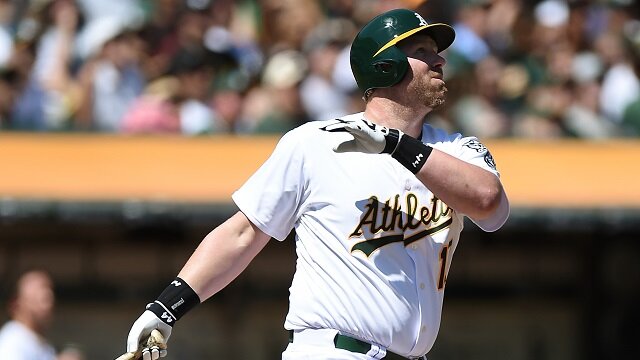
Dunn's swan song saw him hit .219 and blast 22 home runs (RantSports)
Adam Dunn, the pre-eminent three-true outcome hitter of our time, is calling it a career. His contract is up, and so is his time in the Show.

The 34 year-old slugger has hit his last home run, drawn his last free pass, and struck out for the final time. Those events comprised nearly half of Dunn's career--49.93 percent of his plate appearances, to be exact. With 2,379 whiffs, Dunn retires as the active leader in strikeouts and ranks third on the all-time list, behind only Jim Thome and Reggie Jackson. Four times Dunn led the major leagues in strikeouts, most recently with a career-high of 222 in 2012--one short of Mark Reynolds'dubious record.

At least Dunn's whopping strikeout figures were accompanied by impressive power totals. His .253 ISO is exceptional--18th-highest among players with at least 8,000 plate appearances (better than Harmon Killebrew, Hank Aaron, and Willie McCovey)--and his 462 round-trippers were exceeded only by Albert Pujols and Alex Rodriguez during Dunn's playing days. He's tied with Jose Canseco, Dunn's second most similar batter, for 35th all-time. And while Dunn never led the league in big flies, he topped 40 on six occasions, same as Willie Mays, Mark McGwire, Thome, and Pujols. Pretty prestigious company. If he had just managed two more home runs in 2009 and 2010, when he finished each season with 38, he'd trail only Babe Ruth in 40-homer seasons.

Although Dunn struck out too much and was too slow to hit for high averages (he peaked at .267 and settled at .237 for his career), he made up for his lack of hits with high walk totals. From Dunn's first game to his last, nobody worked more walks. In fact, no one was within 150 of him. He reached triple digits eight times in his career, leading the bigs twice. Accordingly, his career .364 OBP is very good, 28 points above what a league average hitter would have been expected to produce in the same parks.

Despite walking and striking out so much, Dunn still managed to drive in tons of runs. The two-time All-Star had six seasons where he knocked in more than 100 and two others with over 90. Pretty good for a guy who only once eclipsed 150 hits in a season.

The great tragedy of Adam Dunn's career is that he just seemed to be in the wrong place at the wrong time. He was in Cincinnati during the Ken Griffey, Jr. era, which didn't end well for anybody. He spent two seasons with Washington when they were terrible, just missing their recent rise to dominance. Then he signed a backloaded four-year, $56 million contract with the Chicago White Sox after his age-30 season. It would be the last big league deal he'd ever sign.

This year, with the White Sox once again going nowhere, he was granted a trade to the Oakland A's at the end of August, just in time to experience their mega-collapse. The A's backed into the postseason, giving Dunn his first crack at playoff baseball after 2,001 regular season games. Oakland promptly lost the Wild Card playoff to Kansas City in heartbreaking fashion, 9-8 in 12 innings. Dunn never left the bench, ending his career without ever having batted in the postseason. That was pretty hard to do considering he played for five teams across 14 seasons of the Wild Card era.

If Dunn had gotten into that game, though, we have a pretty good idea of how his at-bat would have transpired. He might have gone deep. He could have walked. He probably would have struck out.

Saturday, October 11, 2014

Hate Hardy's Extension

Hardy's still great in the field, but his bat has slipped (BaltimoreSports)
I was surprised to hear the other day that the Baltimore Orioles inked shortstop J.J. Hardy to a three-year, $40 million extension. Teams usually wait to take care of this stuff until after the postseason, but with Baltimore still basking in the afterglow of its first AL East title since 1997 perhaps Dan Duquette was feeling a little bold.

Not saying this move is bold, per se, but it could easily backfire. This move has been largely well-received, and frankly I'm not sure why. Hardy's a 32 year-old shortstop, after all, and is coming off a poor season with the bat. He managed just nine home runs last year after swatting 77 over the previous three seasons, with a career-low .104 ISO to go with it. He also posted the worst walk rate of his career at 5.1 percent, as well as the highest K rate (18.3 percent). None of that bodes well for a hitter who previously derived most of his offensive value from power due to his subpar on-base skills and non-existent speed.

So even though Hardy had just as much value this year as he did in 2013 (3.4 fWAR), when he was a Gold Glove and Silver Slugger-winning All-Star, I see a player in decline. Most of that value stems from his stellar defense, which by itself was worth at least two wins this year according to both B-R and FanGraphs. Hardy won't win another Silver Slugger, but he deserves a third straight Gold Glove award.

The problem is that sooner or later, Hardy's defense is going to start slipping. He's getting to that age where reflexes begin to slow down and range starts diminishing. Maybe not next year or maybe not the year after, but it will happen eventually because it happens to everyone, including shortstops much more gifted than Hardy.

And given his spotty track record at the dish (his wRC+ has been above 100 just once in the past six seasons), Hardy's hardly a guarantee to bounce back offensively. An average hitter at best, Hardy will be a real liability at the plate if he can't recoup some of the power that made him an annual 20-25 home run threat prior to this year. He doesn't walk enough, run enough, and strikes out way too much for a guy with single-digit home run pop.

If I'm Dan Duquette, I'm not giving three years and $40 million to a 32 year-old who's batted .255/.298/.399 over the past three years, and I'm definitely not banking on him to rebound.

2014 All-Breakout Team


Here's my list of top breakout players at each position. I exclude rookies (sorry, Jose Abreu) and try to avoid established big leaguers where possible (so no Jose Altuve or Michael Brantley).

C Devin Mesoraco
I covered Mesoraco's mega-breakthrough in early September, but it's worth repeating here. Jonathan Lucroy and Buster Posey may have gotten more ink, but the numbers say Mesoraco was baseball's best-hitting catcher this year, at least on a per-game basis. His 25 home runs, .387 wOBA and 147 wRC+ were tops at the position (minimum 200 plate appearances). He also had the highest slugging (.534) and ISO (.260), and was second in RBI with 80. Only Posey and Lucroy provided more offensive value from behind the plate this year, and both only because they accumulated many more at-bats. Even after accounting for his pedestrian defense, poor baserunning, and somewhat limited playing time (440 PA), he still ranked as the sport's fifth most valuable receiver this year with 4.4 fWAR. Not bad for a career .225/.282/.359 hitter coming into the season.

1B Steve Pearce
Pearce was this year's Jose Bautista, an unheralded journeyman who blew down the doors with an AL East club. Regarded by many as Baltimore's MVP this year, the 31 ear-old was worth six bWAR this year--ten times his career mark--despite appearing in just 102 games. Even more amazing was that he put seven years of middling results behind him to become one of the best hitters in baseball. After hitting just 17 home runs in his career leading up to 2014, Pearce parked 21 this year in only 383 plate appearances. What's more, he batted .293/.373/.556--nearly dead even with Mike Trout's rate stats--for a 160 OPS+. The Orioles nearly let him go, too, releasing him on April 27th. Good thing they re-signed him two days later.

2B Brian Dozier
At age 27, Dozier built off a solid sophomore season to become a bona fide star in his third year. His 112 runs were second only to some guy named Trout but easily paced the division. His 23 big flies were tied for most at the keystone with Neil Walker. In fact, with 21 steals he was the only second baseman to go 20/20 this year. And his 89 walks--third most in the Junior Circuit--also led the position. Though his defense was suspect, Dozier produced more offensive value than all but two second basemen you may have heard of: Robinson Cano and Jose Altuve.

3B Nolan Arenado
Arenado's reputation as a defensive wizard was already established, but we couldn't help but wonder whether he was going to hit or merely become the third base equivalent of Andrelton Simmons. Well, he hit all right. After batting a paltry .267/.301/.405 (81 OPS+) as a rookie last year, this year he stepped it up to hit .287/.328/.500 (116 OPS+). He showed a much improved power stroke, nearly doubling his home run output and clubbing more doubles despite playing 22 fewer games this year. Even better, he added pop without trading contact, as his batting average increased 20 points and his strikeout rate actually went down.

SS Danny Santana
Though he played twice as many games in center as he did at short, I'm going to include him here anyways. There really wasn't a breakout shortstop this year, either, so I'm going to include Santana even though 2014 was his first season. The 23 year-old only appeared in 101 games for the Twins this year, but still made a huge impact by batting .319/.353/472 (130 OPS+), scoring 70 runs and banging out 41 extra base hits. He also swiped 20 bases in 24 attempts and compiled nearly 200 total bases. Worth close to four wins this year, Santana is an obvious regression candidate (especially with that 98/19 K/BB ratio) but should be a solid shortstop going forward.

OF Corey Dickerson
The 25 year-old was a beast in his sophomore season, batting .312/.364/.567 with 24 home runs and 76 RBI in 478 plate appearances. Though missing 31 games hindered his counting numbers, Dickerson still posted the league's ninth-best batting average, third-best slugging percentage and fifth-highest OPS, all while homering more frequently than all but five National Leaguers.

OF J.D. Martinez
I just wrote about Martinez, but yeah, he was really good this year.

OF Charlie Blackmon
Given the chance to play everyday after batting .309/.336/.467 in half a season last year, Blackmon made the most of it. A hot start catapulted the 27 year-old to his first All-Star nod, and while he tailed off in the second half he still finish with solid overall numbers (.288/.335/.440 and 2.1 bWAR). Colorado's leadoff man also fell one long ball shy of 20/20, settled for 19 dingers and 28 steals, respectively.

U Josh Harrison
Following three uninspiring seasons as a utilityman, Harrison settled into an everyday role with the Bucs this year and delivered monster numbers. In addition to making his first All-Star team, he also hit .315/.347/.490 (134 OPS+) with 58 extra base hits and 18 steals. Worth more than five bWAR, Harrison has the vote of teammate Andrew McCutchen (and some media members) for team MVP.

SP Garrett Richards
Richards was in the midst of a Cy Young-caliber campaign when he suffered a season-ending knee injury while trying to turn a double play at Fenway on August 20th. Before that Richards, who entered the season with just 29 big league starts under his belt through three years, was stellar. Despite missing the final six weeks of the season, Richards ended the season with his 2.61 ERA and 139 ERA+ ranked fifth in the AL, his 2.60 FIP was fourth, and his 1.04 WHIP placed third. He also finished second in H/9 and first in HR/9. It's impossible to overstate the effect his loss had on the Angels' rotation, especially as they were swept out of the postseason.

SP Tanner Roark
Roark impressed as a rookie last year, going 7-1 with a 1.51 ERA and 0.91 WHIP in 14 appearances (five starts), but nobody could have guessed that he would finish 2014 among the top starters in the National League. The 27 year-old Illinois native delivered nearly 200 innings of 2.85 ERA ball, providing roughly five wins above replacement for the Nationals. Roark concluded his first full season ranked among the NL's top 10 in wins, ERA, ERA+, WHIP, BB/9, shutouts, and pitching bWAR. His development was a big reason why Washington ran away with the division this year.

SP Jake Arrieta
After struggling mightily with Balitmore over his first three-plus seasons, Arrieta was traded to the Chicago Cubs last summer. Moving out of the AL Beast to the weaker National League appears to have done wonders for him, as he went from one of baseball's worst starters to one of its best. In 25 starts this year he posted a 2.53 ERA, well below his 5.23 career mark coming into the season, along with a 0.99 WHIP. His FIP was even better at 2.26, reflecting his superb 4.07 K/BB ratio and microscopic home run rate (just five long balls allowed in more than 156 innings of work).  The Cubs have all the young hitting talent in the world, but in order to contend they'll need guys like Arrieta in the rotation.

SP Sonny Gray
Gray delivered on the exceptional promise he displayed last year as a rookie, turning in 219 innings of 3.08 ERA ball (seventh and eighth in the American League, respectively). The fireballer was a force in Oakland's stacked rotation, racking up 183 strikeouts (ninth) and limiting opponents to a .232/.301/.327 slash line. The future is bright for Oakland's 24 year-old ace, and he'll be expected to step up next year following Jon Lester's departure.

SP Dallas Keuchel
The third-year starting pitcher took a quantum leap this year after two seasons with ERAs over five. In 2014 it was under three--at 2.93--good for seventh in the AL and sustained over 200 innings. The southpaw completed five games--most in the American League--and was fifth in pitching bWAR with 5.1. With a 3.21 FIP, 3.04 K/BB ratio and 1.18 WHIP, there's little reason to believe his success this year was entirely a fluke.

CL Zach Britton
A failed starter, Britton had never finished a game before this year, much less saved one. That quickly changed when Buck Showalter thrust him into the closer's role after Tommy Hunter proved ineffective. Britton was up to the task, piling up 37 saves (against only four blown opportunities) and not allowing an earned run over the season's final six weeks. The southpaw took to the bullpen wonderfully, finishing his first season as a reliever with a 1.65 ERA and 0.90 WHIP. He remained effective in the ALDS versus Detroit, securing a hold and nailing down two saves as the Orioles swept the Tigers. 
Thursday, October 2, 2014

Inconsistent Cabrera

Though his numbers were excellent, Cabrera had an uneven season (FantasySmackTalk)
I was looking at Miguel Cabrera's game log today, trying to figure out how his great season went so unnoticed, and I think I figured it out. The two-time defending AL MVP got off  to a slow start (.728 OPS through May 2nd), which always makes it easier to forget about a player because his numbers are depressed for a good chunk of the season (see: Matt Holliday). But his numbers weren't depressed very long, as he went bananas in May to quickly get his stats back up to his career norms.

Then, over the next three months, he basically became Alex Gordon, minus the exceptional defense and baserunning. In 81 games--that's half a season--he managed just seven home runs and a very unCabrera-esque .278/.355/.431 slash line. His prolonged slump cause his batting line to steadily decline throughout the summer, falling from its peak of .332/.377/.569 at the dawn of June to .299/.363/.486 by the end of August. With "only" 17 home runs and 91 RBI, Cabrera was having an Adrian Gonzalez type of season. Good numbers, to be sure, but also not what we've come to expect from Cabrera after his past few seasons.

So by that point, he'd had four average to below average months and one monster month. No wonder nobody was saying much about him. September turned out be like May, as Cabrera batted .379/.409/.709 (right in line with May's .380/.423/.704) and slugged eight home runs (same as May). That finishing kick enabled Cabrera to hike his OPS 45 points in the season's final month, raising it from .850 to .895 in four weeks.

I suspect Cabrera wasn't appreciated this year because he was mediocre for such a long stretch there, reminiscent of Alex Rodriguez's roller-coaster 2006 campaign, which followed the same pattern of bookending three tough summer months with a huge May and September. Like Rodriguez that year, Cabrera provided the bulk of his production in two months, one of which was May (not exactly the most exciting time in baseball). In those two amazing months combined he mashed 21 doubles, 16 homers, knocked in 52 runs and batted roughly .380/.415/.706. For a third of the season, he was otherworldly. But for the other two-thirds he was merely pedestrian.

An old baseball idiom is that sluggers typically do 50 percent of their damage in a quarter of the season. That was absolutely the case with Cabrera this year. It's funny he was so streaky this year because he's made a reputation out of being machine-like for more than a decade. But that's just what happens as players age--their slumps last longer and their hot streaks become less frequent.

And at 31 with a dozen big league seasons under his belt, Cabrera ain't getting any younger.