Showing posts with label Cy Young. Show all posts

Monday, June 19, 2017

Nashville-Born Ballplayers

Junior Gilliam has a street named after him in Nashville (90 Feet of Perfection)
While walking around Nashville last weekend during CMA Fest, I noticed there was a street running through the heart of the city named "Junior Gilliam Way," not far from Rosa Parks Boulevard. That made me wonder what other players hail/hailed from Smashville, and if Gilliam was truly the best (and thus worthy of the distinction as the city's only ballplayer with a street named in his honor). Turns out there were quite a few players born in Nashville -- 39 and counting according to Baseball-Reference. While none are Hall of Famers (yet), there were a few who came close, as well as one who will likely go into Cooperstown one day wearing the cap of my beloved Boston Red Sox.

Best Players:

Ben Chapman (41.3 bWAR)
Chapman barely edges out Gilliam in terms of career value, but he was never going to have a street named after him following his shameful treatment of Jackie Robinson while managing the Phillies in 1947. While he was clearly a despicable human being, Chapman was also a pretty good ballplayer, leading the Major Leagues in steals four times (but also caught-stealing four times) and batting .302/.383/.440 (114 OPS+) for his career. His most memorable highlight as a player, however, was being told by Ted Williams, "I'll be back, and I'll make more money in this bleeping game than all three of you (Boston's outfield) combined!" after being sent down from Spring Training in 1938. With Chapman playing for Cleveland the following year, Williams arrived for good and set about delivering on that promise.

Jim Gilliam (40.7 bWAR)
Gilliam, more popularly known as "Junior," spent his entire 14-year career with the Dodgers. Despite spending most of those seasons on the trading block, he was only Boy of Summer from the '50s who was still a meaningful contributor during the Sandy Koufax-Don Drysdale era. The speedy switch-hitter proved to be a lesser version of Robinson -- his predecessor at second base -- with his baserunning, defensive versatility, and table-setting skills. A two-time All-Star, Gilliam won NL Rookie of the Year honors in 1953 and drew MVP votes four times, finishing in the top-six twice. He also played in seven World Series, winning four. Had he not begun his career in the Negro Leagues, he might have made it to the Hall of Fame.

Roy Cullenbine (31.4 bWAR)
Cullenbine was similar to Gilliam, as both were patient switch-hitters who made two All-Star teams, received MVP consideration four times, and led their league in walks once while playing the outfield a lot. A journeyman outfielder from 1938 to 1947, Cullenbine possessed one of the sharpest batting eyes in baseball history. He posted a career 17.8 percent walk rate and set a record by drawing a walk in 22 consecutive games, finishing with a career .408 OBP. He also developed power later in his career, slugging 73 of his 110 home runs over his final four seasons. Cullenbine played for a pair of pennant winners despite switching teams seven times in his career, helping Detroit win it all in 1945. With his solid pop, strong throwing arm and elite ability to get on base, he would have had a much longer and more stable career had he been born half a century later.

Best Names:

So many good ones. Here's a smattering: Tiny Graham, Noodles Hahn (think he had a weak arm, or just really liked spaghetti?), Ray Hamrick, Foster Castleman, Mickey Kreitner, Bubber Jonnard (brother of Claude Jonnard), Ike Fisher (brother of Bob Fisher), Clyde McCullough (say that one ten times fast). There were also a pair of "Lefty"s -- Lefty Davis and Lefty Sullivan. Now I'm wondering if a team has ever had two "Lefty"s at the same time...

Greatest What-if?

Johnny Beazley (4.6 bWAR)
Beazley burned bright and fast like a comet, going 21-6 with a 2.13 ERA and a 1.18 WHIP at age 24 to help his St. Louis Cardinals upset Joe DiMaggio's New York Yankees in the 1942 Fall Classic (the only World Series that DiMaggio would ever lose). Then he went into the service, and when he returned three years later he wasn't the same. Who knows how his career would've played out had he come up after the war instead of before.

Current Stars:

Mookie Betts (21.1 bWAR)
Just four seasons into his career, Betts has already accumulated more than half the WAR of any other Nashville-born player. A tremendous defensive outfielder with elite power, speed, and contact skills, he's arguably the American League's best all-around player not named Mike Trout. And the best part is -- he's only 24.

R.A. Dickey (20.8 bWAR)
Okay, maybe not a current star given how awful he's been this year, but he enjoyed a brief run as one of the game's top pitchers. In 2012, he prevented Clayton Kershaw from joining Greg Maddux and Randy Johnson as the only hurlers to win four straight Cy Young awards (Kershaw won in 2011, then again in 2014 and '15). The Mets, knowing how fickle knuckle-ballers can be, wisely traded the then-38-year-old for a package of prospects that included Noah Syndergaard. Dickey's reverted into a Tim Wakefield-esque innings-eater since then, but 15 years and nearly 2,000 innings in the Majors are nothing to sneeze at.

Sonny Gray (10.1 bWAR)
Gray's career got off to a promising start with Oakland, as he went 33-20 with a 2.88 ERA over his first three seasons and finished third in the 2015 AL Cy Young vote. He struggled during an injury-plagued 2016 and is still trying to get back on track this year. He's only 27, though, so hope remains that he will once again be a quality starter.

While not stars, this is where I give shout-outs to Andrew Triggs and Caleb Joseph.

Not bad, Nashville. While not as prolific as pumping out ballplayers as you are at country music stars, you can still lay claim to a National League Rookie of the Year and Cy Young winner, a likely future Hall of Famer, and a Hollywood villan.

Thursday, December 15, 2016

Boston Finds Another Ace

When Boston needed an ace last year, Porcello stepped up (BoSox Injection)
When the Red Sox signed David Price to a seven-year, $217 million contract last winter, they got one of baseball’s finest pitchers in return. In a rotation without a clear number one starter, he immediately became Boston’s undisputed ace.

In his first season with the Red Sox, however, Price was anything but. He struggled mightily during the first half, carrying a 4.74 ERA into July before settling at 3.99 -- his worst mark since he was a 23-year-old rookie (as was his 1.20 WHIP). He surrendered the most hits (227) in the Majors and was prone to mid-game meltdowns, including one that ended his lone postseason start after 3 1/3 innings.

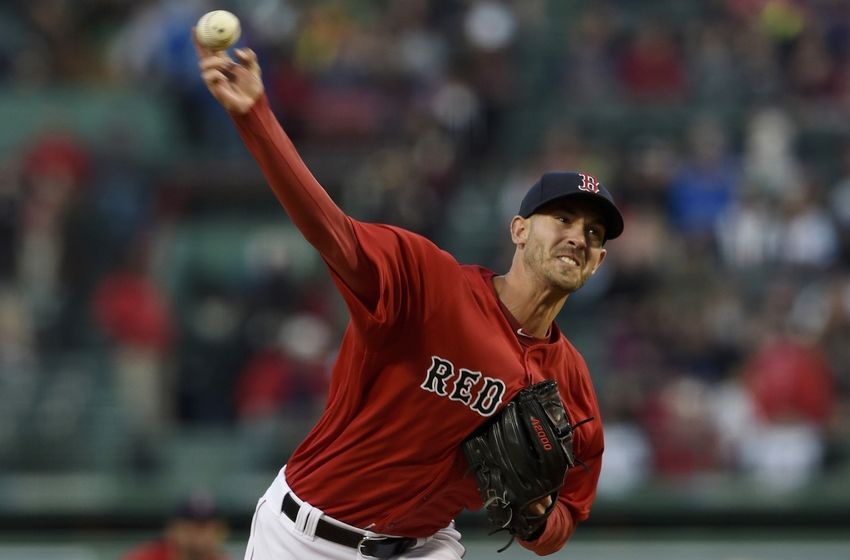
Thankfully for Boston, another pitcher stepped up to lead its rotation. Enter Rick Porcello, Price’s former teammate in Detroit who now finds himself flanking the 2012 AL Cy Young winner yet again.

Only this time, the roles are reversed. Porcello was Boston’s top starter in his second year with the club while Price is still finding his groove. After scuffling in his Red Sox debut, Porcello bounced back to win the AL Cy Young, leading the Majors with 22 wins and a 5.91 K/BB ratio.

Porcello's success wasn't just limited to 2016, either, as he was arguably Boston’s best pitcher in the second half of 2015, posting a 3.49 ERA after Independence Day. He was even better down the stretch with a 3.14 ERA over his final eight starts. Since coming off the Disabled List that August, Porcello has looked like a completely different pitcher, striking out batters at the highest rate of his career.

Once a ground-baller who struggled to miss bats, Porcello’s now a whiff-machine. He went from middle-of-the-rotation innings-eater to staff ace almost overnight–a truly stunning transformation. He began relying on his sinker again after getting away from it in the early part of 2015, mixing it with nasty change-ups and cutters. The result has been a whole new pitcher; Rick Porcello 2.0.

Of course, Porcello is unlikely to be the ace in 2017 with Chris Sale now on board and Price expected to bounce back, but he doesn't have to be. Even if he regresses to 2015 levels, he'll still be a strong number-three -- precisely what the Red Sox were hoping for when they signed him to that $82.5 million extension.

Wednesday, December 23, 2015

How Greinke Got (Over-) Paid

Greinke's LA numbers were better even though he stayed the same (Yahoo Sports)
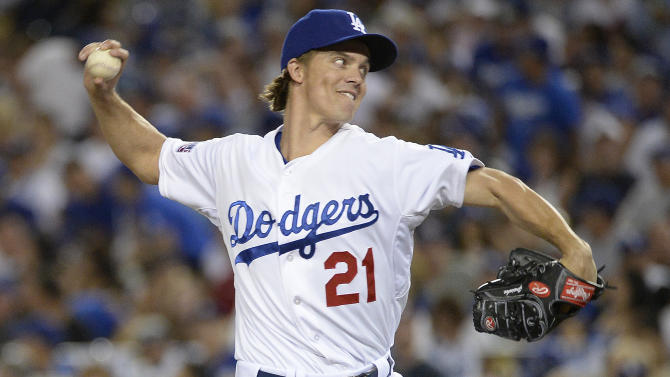
When Zack Greinke signed his six-year, $147 million contract with the Los Angeles Dodgers after the 2012 season, he became the highest-paid pitcher in baseball history in terms of annual salary. Now, after opting out of that deal and inking an even bigger one with the Arizona Diamondbacks, he’s the highest-paid player in baseball history in terms of annual salary.
How did Greinke get the same contract length and $60 million more at 32 than he he did at 29? By stringing together three straight dominant seasons in Los Angeles, the last of which was easily the best of his career and, in a normal year, would have earned him his second Cy Young. Greinke’s timing was impeccable, as he hit the open market after posting the lowest ERA (1.66) in 20 years and leading the majors in WHIP (0.84), winning percentage (.864), pitcher WAR (as calculated by Baseball-Reference), and ERA+ (225). His two years before that weren’t too shabby, either, as he posted sub-three ERAs and drew Cy Young votes both years.
But were his last three campaigns really that much better than the three that preceded his Dodgers contract? It depends which stats you use:
2010-2012: 41-25 W-L 3.83 ERA (106 ERA+) 1.22 WHIP .248 BA 8.4 bWAR
2013-2015: 51-15 W-L 2.30 ERA (156 ERA+) 1.03 WHIP .219 BA 17.5 bWAR
By traditional metrics, Greinke was a much better pitcher from ages 29-31 than he was from 26-28, which are supposed to be a player’s prime years. His ERA was a run and a half lower in the same number of innings, which explains why his bWAR more than doubled (B-R bases pitcher WAR off ERA and innings pitched). He won more games, lost fewer, and improved his WHIP and opponent batting average considerably.
Advanced metrics tell another story. Let’s start by looking at the two things pitchers can control, strikeouts and walks. I don’t include home runs because those are heavily influenced by park factors, temperature, air density, wind currents, and a bunch of other things beyond a pitcher’s sphere of influence:
2010-2012: 23.3 K% 6.2 BB%
2013-2015: 23.3 K% 5.4 BB%
Greinke’s strikeout rate remained identical, which one would expect given that nobody gains velocity as they get older. His walk rate improved a bit, which works out to be one fewer walk every two or three starts — hardly a big difference in the grand scheme of things.
People also believe pitchers have control over the type of hits they allow. Has Greinke’s distribution of batted balls become more favorable?
2010-2012: 20.3% LD 47.4% GB 32.3% FB 7.9 % IFFB
2013-2015: 21.8% LD 47.5% GB 30.8% FB 11.1% IFFB
Not really. Greinke’s groundball rate stayed the same, and he offset an increase in line drives with an increase in pop-ups. It’s weird that his line-drive rate went up, seeing as how he induced more soft contact and less hard contact over the past three years:
2010-2012: Soft 17.0% Med 54.7 % Hard 28.3%
2013-2015: Soft 19.3% Med 53.3% Hard 27.6%
Again, not much change, though there is some indication that he’s gotten better at generating weaker contact. Not enough to radically improve his results, mind you, or significantly alter his BABiP (keep that in mind for a minute).
While his ERA doesn’t reflect his stable peripherals, his FIP, xFIP, and SIERA do.
2010-2012: 3.16 FIP 3.17 xFIP 3.26 SIERA
2013-2015: 2.97 FIP 3.12 xFIP 3.23 SIERA
As you can see, fielding-independent metrics support the information above, suggesting Greinke was essentially the same pitcher over the past six years.
So why, then, are his Dodgers numbers so much shinier? Moving to Dodger Stadium (where he has a 2.00 career ERA) and a weaker division gave him a boost. Leaving behind a god-awful defense in Milwaukee helped. Having a better bullpen behind him didn’t hurt.
But also, a lot of it was just pure luck. Greinke was fairly unlucky in the three years before coming to Los Angeles, only to become one of the most fortunate pitchers in baseball during his time with the Dodgers. Greinke had the highest strand rate in baseball over the last three years, but from 2010-2012 he had one of the worst. Dodger Stadium and superior defense also helped him on balls in play. From 2010-2012, only Justin Masterson had a higher BABiP among pitchers who threw at least 600 innings. Over the last three years, however, Greinke had the third-lowest BABiP at .271 — roughly 30 points below the league average.
Greinke also had better luck on balls not in play, as in home runs. His HR/FB% dropped almost a full percentage point, which is substantial considering the league average is around 10% (Greinke’s mark from 2010-2012). Accordingly, his HR/9 rate improved by 16 percent. That works out to be only a handful of homers per season, but those long balls can make a serious dent in a pitcher’s ERA if they come with multiple guys on base.
Taking all this into consideration, Greinke is not a better pitcher now than he was three years ago. His park, fielders, and bullpen have made him look like a better pitcher, as has better luck, but at his core he’s the same guy. Here’s one more figure to prove it:
2010-2012: 13.6 fWAR (8th in pitcher fWAR)
2013-2015: 13.6 fWAR (8th in pitcher fWAR)
Greinke is getting paid to be the best pitcher in baseball, even though he’s not. After a few starts in the Arizona heat, that should become abundantly clear.

Thursday, November 19, 2015

Cubs Cleaning Up

Arrieta rode a historic second half to his first Cy Young award (MLB.com)
2015 was a pretty good year for the Cubs. Kris Bryant and Kyle Schwarber had outstanding debuts, Jake Arrieta evolved into one of the best pitchers in baseball, and Joe Maddon worked his usual magic from the dugout, guiding Chicago to 97 wins and the World Series championship that Back to the Future II predicted 26 years ago a postseason berth.

One would think the Cubbies won it all this year, based on how they've fared in the BBWAA awards thus far. On Monday it was announced that Bryant won NL Rookie of the Year unanimously. Tuesday brought the news that Joe Maddon had been named NL Manager of the Year, and Wednesday made it a three-peat when Jake Arrieta was voted NL Cy Young over Clayton Kershaw and Zack Greinke. That streak will end today, however, as Anthony Rizzo doesn't stand a chance against Bryce Harper for NL MVP honors.

As I wrote yesterday, Bryant was an easy choice based on the way he dominated this year's rookie leaderboards. Maddon was also an obvious pick after helming the Cubs--a last place team the last two years--to its first playoff appearance of the Obama administration. 

But Arrieta, as many have written, was not an obvious choice by any stretch. In fact, I'm pretty sure he was the wrong one.

Let me backtrack a bit. There really was no wrong choice for this year's NL Cy Young, as Arrieta, Greinke, and Kershaw were all equally worthy. They all had different things going for them. Arrieta led the majors in wins, complete games, shutouts, hit rate, and home run rate, plus enjoyed the best second half any pitcher has ever had. Greinke was tops in winning percentage, ERA, ERA+, WHIP, and pitcher bWAR. Kershaw tied Arrieta for most complete games and shutouts while registering the most innings, strikeouts, and pitcher fWAR. He also had the major's lowest FIP and National League's best strikeout rate. In the end, who you voted for was a matter of personal taste. 

Since I'm on board with the whole sabermetrics thing, I prefer FIP to ERA. I like lots of strikeouts and few walks. I want to see a low WHIP. And I want to see all of those things sustained over a large workload.

I think you see where I'm going with this. Nobody combined quantity with quality this year like Kershaw. He was the best pitcher in baseball based on things pitchers can control (though I still don't buy the idea that pitchers can control home runs, as that's heavily influenced by weather and ballpark) and threw more innings than anyone else. No pitcher was more valuable, in my eyes, at least. 

I don't mean to take anything away from Arrieta, because he had a Cy-worthy season as well. I just can't help but wonder how the voting would have played out had the Cubs finished last again, or had Greinke not split the vote with his rotationmate (Kershaw wins if you give him half of Greinke's point total). Since it was pretty much impossible to tell which Dodger pitcher was better, that all but guaranteed the award would go to Arrieta--Chicago's clear ace.

I also think it's funny that for the second year in a row, a pitcher rode a big second half to Cy Young glory over a pitcher who I thought was more deserving. Last year saw Corey Kluber edge out Felix Hernandez, and this year Arrieta won despite having a 3.40 ERA through mid-June. It's also interesting that Kluber and Arrieta were both first-time winners who were rewarded for their first season of dominance, whereas Hernandez and Kershaw had both won before with superior seasons. I'm sure there are some voters out there who'd rather not vote for the same guy year after year, who instead try to pick the player with the better narrative. That's why Josh Donaldson will beat out Mike Trout for AL MVP, even though Trout's numbers are better than Donaldson's as well as the ones he posted during his MVP campaign last year.
Keuchel shut out the Yankees in the AL Wild Card game (MLB.com)
While big second halves helped Kluber and Arrieta capture their first Cy Young awards, a strong finishing kick did not help David Price secure his second.

I was both surprised and happy to see Dallas Keuchel eek by David Price in the American League. I thought Price would win after sparking Toronto's second-half turnaround, essentially pitching them to the postseason the way CC Sabathia did Milwaukee in 2008. I guess that's karma for Price stealing the 2012 Cy Young that Justin Verlander deserved. 

Of course, Keuchel was every bit as instrumental as Price in helping his team reach the playoffs. He was the American League's most valuable pitcher per bWAR (FanGraphs had Chris Sale, which I don't buy considering he threw 23 fewer innings with an ERA nearly a full run higher) and led the league in a host of categories, including innings, shutouts, ERA+, WHIP, and wins. 

Keuchel "won" 20 regular season games--the only AL starter to do so--but that total doesn't include Houston's most important game of the season--a do-or-die, single elimination game at Yankee Stadium for the right to advance to the ALDS. Keuchel was masterful, spinning six shutout innings and limiting the Bombers to just three hits in his first-ever postseason start. He was equally dominant in his lone ALDS turn, stifling the Royals to one run over seven frames as he helped Houston come within one win of the ALCS. That proved to be Keuchel's last start of 2015, as the Astros never got that last win.

I don't mean to say that Price would have been a poor pick. His numbers were nearly identical to Keuchel's, so as in the NL it was a toss-up. For me it was innings--Keuchel threw 11 and 2/3 more, or about a start and a half--that made Keuchel the superior candidate. That doesn't sound like much over the course of a season, but when you consider that Houston won the second wild card by one game over the Angels, those dozen innings might have been the difference. No American League starter had more of an impact than Keuchel, who led the loop in batters faced, and nobody was definitively better. Price was just as good, but he simply wasn't as dominant; the only stat he led in was ERA--by 0.03 over Keuchel, which of course means nothing over 162 games.

In both leagues the voters had to split hairs. I think they split the right ones in the AL but the wrong ones in the NL. 

Monday, October 12, 2015

NL Awards Preview: Can Kershaw Repeat?

Who deserves the NL MVP? That's a clown question, bro (CBS Sports)
First let me apologize, for the title and picture above are a little misleading. While technically an awards (plural) preview, 90 percent of this piece is devoted to the controversial Cy Young race. Whereas all three AL races are virtual toss-ups, the only tight one in the NL is for the Cy Young award, though it might be the closest I've ever seen. The MVP award has belonged to Bryce Harper since May, and Kris Bryant pulled ahead of Joc Pederson for rookie of the year honors months ago. That leaves us with the NL Cy Young, which could go to one of three candidates, two of whom are teammates.

You could argue any of them for MVP as well, but you really have to bend over backwards to find a way not to elect Bryce Harper. Because let's face it; Harper has been the league's undisputed MVP since Memorial Day. Head over to the NL leaderboards, and you'll see Harper's name in numerous top spots. Baseball-Reference and FanGraphs both rated him as the most valuable player in baseball per wins above replacement, which you might have figured based on his major league-leading .460 OBP, .649 slugging, 1.109 OPS, and 195 OPS+. The Nats were massive busts, they don't stay in contention into September without Harper's monster season.

The Rookie of the Year is also a foregone conclusion, having been Kris Bryant's to lose since his big league debut. Joc Pederson hung with him throughout the first half, only to tail off after the All-Star Break as his flaws became exposed. His 26 home runs, .346 OBP, and .206 ISO are nothing to sneeze at for a rookie center fielder, but his defense leaves a lot to be desired and he doesn't have make an impact with his legs the way most center fielders do (Mike Trout he is not).

Bryant's OPS was nearly 100 points higher than Pederson's, still a sizable advantage even after accounting for their home parks. Like Pederson he struck out a lot, but unlike Pederson he did more than just hit home runs when he made contact. He would have knocked in 100 runs had he been given his rightful place on the Opening Day roster, played a solid third base, and was actually a really good baserunner--with 13 steals and nearly a win's worth of value on the basespaths. More than just a slugger, he turned out to be a well-rounded player.

So yeah, if you choose anyone other than Harper and Bryant for these two awards, then you need to have your head examined. But the NL Cy Young race is the closest one in recent memory. Often times two candidates have very similar numbers, as Felix Hernandez and Corey Kluber did last year or Clayton Kershaw and R.A. Dickey did in 2012, but it's quite rare that a trio of pitchers post nearly identical stat lines, as Kershaw, Zack Greinke, and Jake Arrieta did this year. They finished top-three in WAR, ERA, and WHIP, among several other advanced stats. How on earth do you choose?

Joe Posnanski's right; I think who you vote for here says something about what you value in pitchers. If you value wins and strong second half performances, then Arrieta's your guy. If you stress run prevention and keeping runners off the bases, then you go Greinke. If you're all about defense-independent metrics, i.e. strikeouts and FIP, then awarding Kershaw his third straight Cy.

Wins are a garbage stat, so while it's cool that Arrieta racked up 22 of them, that honestly doesn't mean a thing to me. He could have won 12 and his candidacy wouldn't change in my eyes. I also don't buy into the whole reward someone for a big second half thing, since every game counts the same regardless of when it's played (in the regular season, that is). So while it's neat that he had the lowest second-half ERA ever, that doesn't strengthen his case in my eyes.

Where I do think Arrieta's being underrated is that he had the lowest hit and home run rate in the majors despite contending with Wrigley's friendly confines in half his starts. That's damn impressive given the way the ball flies there during the summer. It's equally impressive that his ERA was virtually identical to Greinke's, considering that a) Greinke calls Dodger Stadium home and b) the NL Central was the toughest division in baseball this year with three 90 win teams. Arrieta's environment was much more conducive to offense, and yet he allowed runs at nearly the same rate as Greinke. Arrieta also logged more innings, racked up more strikeouts, and compiled a lower FIP.
Still the best pitcher on the planet, Kershaw deserves his fourth Cy (My Weekly Sports)
According to FanGraphs, the only pitcher more valuable than Arrieta was Greinke's teammate Kershaw. That's because FG makes pitcher valuations based off DIPS, whereas B-R assesses pitchers based on how well they prevented runs. Since we know the latter is largely beyond a pitcher's control, influenced by a multitude of factors such as the weather, ballpark, hit sequencing, bad hops, defense behind him, and relievers that come in after him, I don't feel comfortable relying on ERA as a guide. I give more weight to stats like FIP and xFIP, which judge pitchers based on things they have more (but not total) control over; home runs, walks, and strikeouts.

By those measures, Kershaw comes out on top. His 1.99 FIP was the best in the majors, and his xFIP was right in line with last year's. Part of the reason both were so good was that he struck out 301 batters, becoming the first pitcher since 2002 to exceed 300 K's in a season. He also led the majors in innings pitched--an underrated stat--as well as complete games and shutouts, which I value because those are almost always wins.

As Jonah Keri wrote yesterday, the most useful stat in settling this whole debate is probably Deserved Run Average (DRA), created by the folks over at Baseball Prospectus. An all-encompassing stat similar to pitcher WAR (but better), DRA captures a pitcher's overall contribution to his team. By that metric, Kershaw is number one, though it's awfully close.

No matter how you slice it, it's a ridiculously tough call. There really should be a three-way tie, because they're all equally worthy. To pick one you have to split hairs, and depending on which hairs you split you'll get your answer. Mine is Kershaw, but yours probably isn't, and that's okay. I'm not trying to tell you why Greinke and Arrieta are the wrong choices, because they're not. There is no wrong choice. I just happen to think Kershaw's the best choice, and only by the slimmest of margins.

Tuesday, October 6, 2015

AL Award Race Preview

The All-Star teammates are now going head-to-head for AL MVP (Bleacher Report)
On this tense day leading up to tonight's American League wild card game, we might as well lighten the mood by handing out some hardware to this year's top performers. Today I'll tackle the AL races before previewing the NL field tomorrow.

Let me just say that I don't envy the voters this year. This season's award races were some of the closest I can recall, with the AL awards all virtual toss-ups and there being no easy answer to the NL Cy Young conundrum. While I've spilled many words in this space criticizing poor BBWAA choices throughout the years, there will be no such backlash from me this year. I could stare at the numbers until I go blind and I still don't think I could give a definitive answer, so I certainly won't blast a writer for going with his gut on this one.

Anyways, on to the awards:

AL MVP
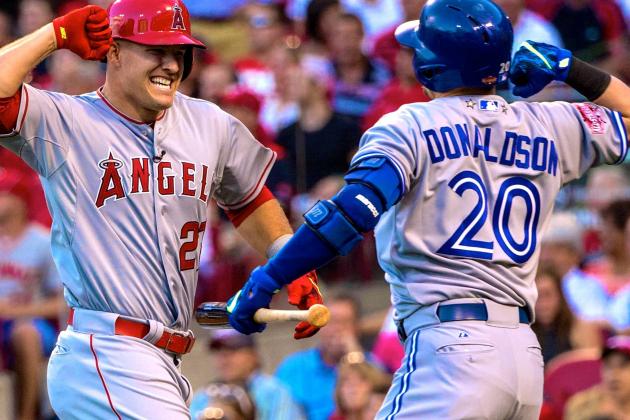
Last year Trout won in a landslide (unanimously, actually), but if he wins again this year it will be by the skin of his teeth--even though this season was superior to last's by almost every conceivable metric. Although he led all American Leaguers in WAR (both B-R and FanGraphs versions) and posted the league's highest OPS (and OPS+, and slugging percentage), he's once again at a disadvantage because his team failed to make the playoffs. Trout nearly dragged them there, though, keeping the Angels in contention until the season's final day. After a dreadful August slump by him and teammates, he recovered in September to post a 1.078 OPS over the season's final five weeks. It's not Trout's fault LA's bullpen imploded during Game 162, or that nobody besides him and Albert Pujols made a peep against Cole Hamels. One guy can only do so much in baseball (see Joey Votto), and in the end it just wasn't enough.

I won't hold that against Trout, but others might. One of the reasons Trout finished behind Miguel Cabrera in the hotly contested MVP races of 2012 and 2013 was that Cabrera's team made the playoffs while Trout's didn't. When he finally won last year, the Angels winning 98 games and the AL West was definitely a factor. This year they really had no business being in contention after their awful August, but like I said Trout nearly willed them to October.

For those seeking to reward the best player on a playoff team, they'll find few legitimate MVP candidates on the Yankees, Astros, Rangers, and Royals. That leaves the Blue Jays, who are loaded with them. Votes will undoubtedly be cast for big boppers Jose Bautista and Edwin Encarnacion as well as staff ace David Price, but the team's top player this year was clearly Josh Donaldson, a slick-fielding third baseman who also paced the Junior Circuit in runs, RBI, total bases, and extra base hits.

Already an MVP-caliber player his last few years in Oakland, Donaldson exploded his first year in Toronto. Many credit him for helping an underachieving Blue Jays squad snap its 22 year playoff drought--the longest in professional American sports. Not only was he the best hitter in a stacked lineup, but he also played a demanding defensive position and played it well.

So did Trout, which makes this such a close call. Their offensive numbers are eerily similar and they both play tough positions. Up until about three weeks ago I would have said Donaldson, but his late-season slump and Trout's strong finish was enough to sway me back to Team Trout. I think Toronto still makes the playoffs without Donaldson (though probably doesn't win the division), while Los Angeles is a losing team without its star center fielder.

Furthermore, Trout was simply the better player this year. He was a better hitter, especially after accounting for their ballparks (Trout's OPS and OPS+ led the AL). Donaldson played half his games in the Rogers Centre, a launching pad that significantly inflated his statistics. He hit three-fifths of his doubles and home runs there, batted 67 points higher there, and slugged 160 points higher there. It was a given that the move from the Coliseum's suffocating offensive environment to a more generous one in Toronto would boost his numbers, but no one could have foreseen him taking such extreme advantage of his home park.

Trout, however, did not enjoy the same home field boost. Anaheim is a better park for pitchers than hitters, which is evident in Trout's splits. He batted 35 points higher and increased his slugging percentage by almost 70 points on the road. He also had more home runs, more RBI, and nearly twice as many doubles on the road as he did in Anaheim. Had he played in even a neutral park, his numbers would look considerably better. That he still equaled Donaldson's dinger total and led the league in slugging percentage, then, is very impressive.

Bottom line: Donaldson had a great season, but Trout was just a little bit better.
Price positioned himself to win another Cy with his huge second half (Fox Sports)
AL Cy Young award
This one's another tough call. Sonny Gray was the frontrunner for much of the season with a 2.13 ERA and sub-1 WHIP through the end of August, only to falter in September by allowing 20 earned runs over his final five starts. His ERA ballooned more than half a run, costing him the ERA title that may have netted him his first Cy.

Meanwhile, David Price continued mowing down batters in Toronto, putting the finishing touches on what could be his second Cy in four years. His numbers were stellar across the board; first in ERA and fWAR, second in FIP, bWAR, and ERA+; third in innings pitched, fourth in strikeouts,, and fifth in WHIP--all while spending time in two of the tougher parks for pitchers.

He wasn't the American League's best pitcher this year, though; that would be Houston's Dallas Keuchel. The AL's lone 20-game winner finished a close second to Price in raw ERA but led the loop in ERA+. He was also tops in pitcher bWAR, WHIP, and innings pitched. Considering their run-prevention skills were dead-even, the tiebreaker goes to Keuchel for tossing an additional dozen innings--or roughly two extra starts' worth. That was huge for the Astros, who won the second wild card by one game over the Angels.
 
Both were part of compelling narratives after helping pitch their respective teams into the postseason, though obviously Houston misses the playoffs without Keuchel while Toronto probably still makes it in. Price is the bigger name but Keuchel's numbers are a touch better. He deserves to win by the slimmest of margins, so expect a repeat of last year's photo finish between Corey Kluber and Felix Hernandez (neither of whom are serious contenders again this year, by the way).

AL Rookie of the Year Award
What's interesting about the American League race is none of the best candidates played full seasons. Promoted throughout the summer, their campaigns were abbreviated, which makes these comparisons both easier and more difficult. They are easier in the sense that their playing time was roughly even, but more difficult due to their numbers being awfully close.

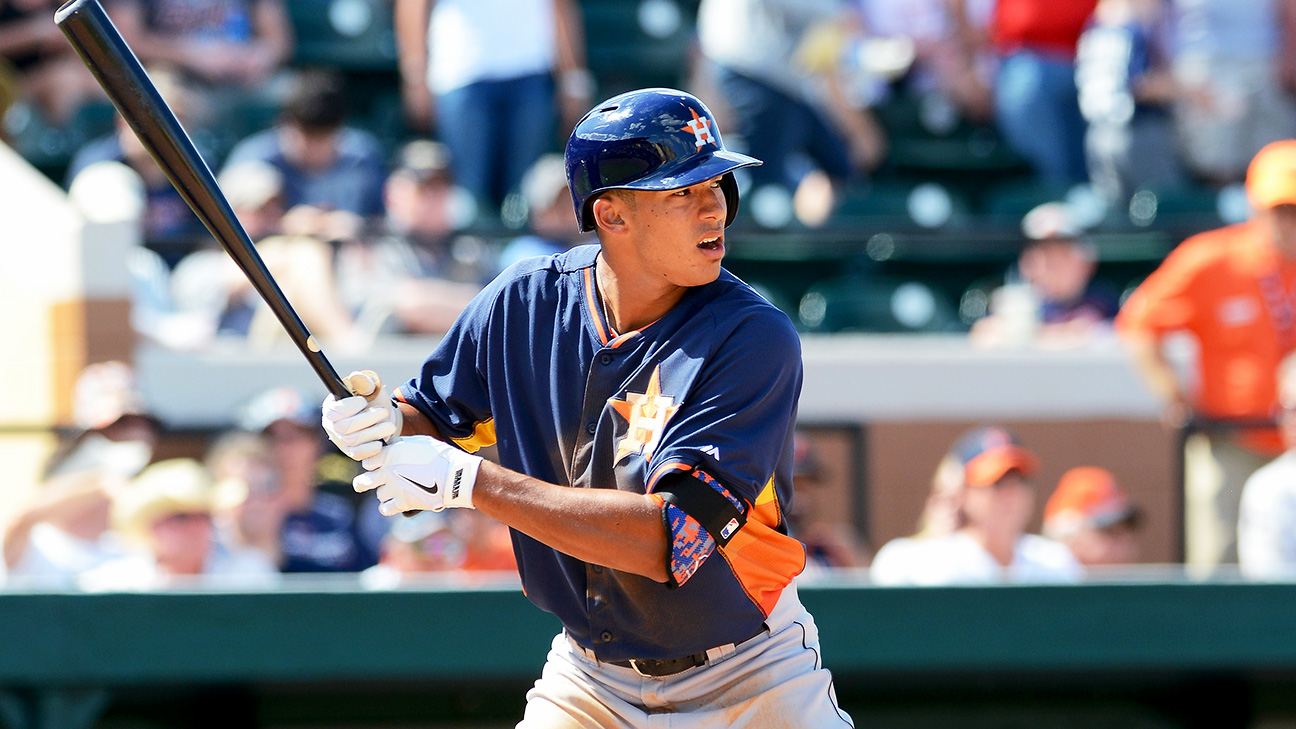
Carlos Correa's counting numbers--22 home runs, 68 RBI, 14 stolen bases, 4.1 bWAR--would have been phenomenal for a full season, but they're borderline insane considering he played barely three-fifths of one. We can only wonder what he could have accomplished had he debuted before June 8th. His full season numbers project to 36 home runs, 112 RBI, and 23 steals, which for a rookie shortstop is simply ridiculous. Even more ridiculous is that he just became old enough to legally buy a drink two weeks ago.
Correa's already earning comparisons to Alex Rodriguez (News Locker)
But wait, not so fast. What about the other wunderkind shortstop who played 99 games this year? Just 10 months older than Correa, Francisco Lindor was equally spectacular for the Indians, batting .313/.353/.482 (128 wRC+) with a dozen homers and steals. While his bat wasn't quite as potent, it was nearly so, and he was a considerably better defender. They were about even as baserunners, with the slight edge going to Correa. Baseball-Reference has them within half a win of each other in WAR, but FanGraphs gives Lindor a significant edge of more than one win.

I'd be remiss if I didn't mention Minnesota's Miguel Sano, who quietly enjoyed a monster season with the Twins. He was unquestionably the American League's best-hitting rookie, what with his .269/.385/.530 batting line, 151 wRC+, and .392 wOBA--not to mention his 18 home runs and 52 RBI in 80 games. Extrapolate his numbers over a full season and they're nearly identical to Correa's, But whereas Correa plays the most important non-catching position on the diamond, Sano hardly plays the field at all as a DH, making his production far less valuable. Had he played all year and amassed upwards of 30 homers and 100 RBI this would be a different conversation, but there's no reasonable explanation for choosing him over Correa or Lindor.

On the pitching side, Correa's teammate Lance McCullers made a good impression with a 3.22 ERA (80 ERA-), 3.26 FIP (79 FIP-), and over a strikeout per inning. Had he logged a full season, that performance might have merited the trophy, but it covered 22 starts and 125 innings. Two-thirds of a season is only slightly more than the three-fifths that Correa and Lindor played. Both were more dominant relative to their peers, as good-hitting shortstops are once again a rare commodity. In today's offensive environment, I bet most GMs would rather have the shortstop capable of hitting .300 with 20/20 potential rather than a midrotation starter.

So it comes down to Correa and Lindor. Lindor's the better all-around player at this point, but Correa is already showing Troy Tulowitzki-like prowess at the plate. With the margin between them so minute, I'm leaning towards the guy with the better offensive numbers. I think Correa made a little more of an impact in the games he played, and it also helps that he sparked his team to the postseason. Without him, the Astros are watching from home this year, so I think his outstanding performance in the heat of a pennant race deserves to be recognized.

When you get down to it, all of these awards are essentially two-horse races. Trout and Donaldson, Price and Keuchel, and Correa vs. Lindor. They're all so evenly matched you really can't go wrong with any of them. If it was me, I might just skip the analysis-induced headaches and flip three coins.

Wednesday, November 12, 2014

Kluber Robs King Felix

Hernandez deserved to win his second Cy Young, but didn't (RotoScout)
The races for the American League and National League Cy Young couldn't have been any different.

In the National League, Clayton Kershaw was the heavy favorite and won easily, securing his third Cy Young in four years (and, let's be honest, he deserved the 2012 award over R.A. Dickey too). It was Kershaw and everyone else, meaning a vote for Johnny Cueto or Adam Wainwright, while defensible, was clearly misguided.

The American League's top two candidates were virtually inseparable. They both had dominant seasons and compelling reasons, but in the end it came down to splitting hairs. In what was destined to be a photo finish, Corey Kluber beat out Felix Hernandez. Kluber nabbed 17 of the 30 first place votes and 169 points, edging out the 13 and 159 compiled by King Felix. Chris Sale finished a distant third with 78 points.

Looking at Hernandez's stats, it's hard to see how he didn't win. He had the league's lowest ERA, WHIP, and hit rate while placing second in pitcher bWAR (to Kluber), innings pitched (to David Price), ERA+ (to Sale), and FIP (to Kluber). He also led in most of the advanced stats like adjusted pitching runs and wins, base-out runs and wins saved, and situational wins saved. Opponents batted just .200/.243/.303 (.244 wOBA) against him, and his average GameScore was 65. For most of the summer, he was the clear favorite as he strung together an MLB-record 16 straight starts with at least seven innings pitched and two earned runs allowed or fewer.

But he slipped just a bit over the final six weeks (2.75 ERA), opening the door for Kluber, who came on like a freight train down the stretch. His first half was hardly Cy-worthy (3.01 ERA), but after the All-Star Break he had a 1.73 ERA over his final 104 innings to lower his final ERA to 2.44. He also struck out 39 batters over his final three starts to give him a whopping 269 K's on the season, second only to Price and 21 more than Hernandez. He also finished in a three-way tie for the league lead in wins with 18 (same as Max Scherzer and Jered Weaver) while pacing the circuit in pitching bWAR (7.4), and FIP (2.35).

While Kluber had an outstanding season, I believe the hardware belongs to King Felix. For one, Kluber wasn't even Cy Young-caliber for most of the first half, while Hernandez was Cy Young worthy from start to finish. Kluber had that great finishing kick, but I think Hernandez deserves credit for being more consistent. Additionally Kluber's average GameScore (63) was a hair lower than Hernandez's, revealing that he was slightly less dominant on a per-start basis. Batters also had more success against him, hitting .233/.279/.345 (.277 wOBA) when he was on the bump--a 78 point difference between him and Hernandez. That's pretty sizable, especially considering Kluber faced slightly weaker hitting talent.

It's true that Hernandez did pitch in a more favorable environment with a better defense behind him, but the park is accounted for in Adjusted ERA+, which has him considerably ahead of Kluber 170 to 152. Furthermore, Safeco doesn't help Hernandez as much as other pitchers because of his ability to induce ground balls. As for the defense, well, it's not like Hernandez was pitching to contact. He still struck out 248 batter's, for heaven's sake! Tony Blengino over at FanGraphs took all these factors into account and calculated Hernandez's true ERA to be 2.29, a touch better than Kluber's 2.45.

All in all, I like Hernandez's case a little better than Kluber's. I'm not sure what swayed the voters over to the latter's side: I hope it was the FIP and gaudy strikeout rates but I suspect the monster second half and shinier win total played a role as well. The voters had to make a really tough choice, so I'm not surprised they got it wrong (look no further than their inability to elect Mike Trout MVP before this year). Kluber was great, but Hernandez was a tad better and deserved to win by the slimmest of margins.

Thursday, November 6, 2014

2014 MLB Award Finalists

With no Miguel Cabrera to beat him, Trout will win AL MVP (ESPN)
The three finalists for each of the BBWAA's awards were announced the other day, with the winners to be announced next week. Here are my thoughts on and rankings of the finalists for each award.

AL MVP
1. Mike Trout
Duh. There's no way he doesn't win this year. Not only was he the major league leader in runs (115), total bases (338), extra base hits (84), and runs created (137) but he also paced the American League in bWAR (7.9), and RBI (111), smashed 36 home runs and stole 16 bases in 18 attempts, all while playing center field for the team with the best record in baseball. He's a lock despite having a "down" year.

2. Michael Brantley
Brantley was positively Trout-ish this year, posting tremendous numbers across the board en route to a seven win season. While he failed to lead the league in any one category, his name was all over the leaderboards. The first-time All-Star batted .327/.385/.506 (154 OPS+) with almost as many walks (52) as strikeouts (56), not to mention 45 doubles, 20 home runs, 97 RBI, and 309 total bases. He also piled up 200 hits, scored 94 runs, and swiped 23 bases against just one caught stealing. Not a great outfielder, but that can be overlooked when you produce that much offense.

3. Victor Martinez
Not sure V-Mart was one of the three most valuable players in the American League given that he was primarily a DH and is a liability on the basepaths, but he did have a fantastic year at the plate. The best pure hitter in baseball last year, Martinez led the majors in OPS at .974, had the American League's highest OBP at .409, and was the most difficult to strike out with a 13.4 AB/K ratio. The 35 year-old former catcher hit like a man ten years younger, batting a robust .335/.409/.565 (168 OPS+) with 32 home runs, 103 RBI, 317 total bases, and 67 percent more walks (70) than strikeouts (42). The batting title runner-up to Jose Altuve also finished second in slugging (to Jose Abreu), runs created (to Trout), and adjusted OPS+ (to Abreu).

NL MVP
1. Clayton Kershaw
Missed a month, but Pedro Martinez-esque production when he pitched makes up for lost time. Led the major leagues in almost every major pitching category and helped pitch his team to a division title with 7.5 bWAR--most in the NL.

2. Andrew McCutchen
McCutchen was a monster this year, and if he'd played the whole season I'd probably give him the nod over Kershaw. But the defending MVP missed time too (16 games), and so his counting numbers are a bit weak for an MVP with 25 homers and fewer than 90 RBI/runs. His rate stats were certainly MVP-caliber though: .314/.410/.542, giving him the best OBP in baseball as well as the league's highest OPS and OPS+. If he was an elite defensive centerfielder or made more of an impact on the bases I'd be tempted to choose him over Kershaw, but as a complete package (6.4 bWAR) he just wasn't as good.

3. Giancarlo Stanton
Pretty much everything I said about McCutchen applies to Stanton. Through no fault of his own, Stanton was drilled in the face and missed the final 17 games of the season. That didn't stop him from pacing the Senior Circuit in home runs (37), slugging percentage (.555) and total bases (299), but it was enough to effectively finish his MVP chances. At least he got the Hank Aaron award.

AL Cy Young
1. Felix Hernandez
By the slimmest of margins, King Felix deserves his second career Cy. The AL leader in ERA (2.14) and WHIP (0.92) was phenomenal in pretty much every way you can measure a pitcher, with 248 strikeouts in 236 innings and a 5.39 K/BB ratio and the lowest hit rate in the league. I've heard arguments made for Kluber because he pitches in a more neutral ballpark with a less talented defense behind him, but I'm swayed by Hernandez because his ERA, ERA+, and WHIP were all considerably better. To me, WHIP and ERA are the two-most important stats for a pitcher, and in those Felix comes out on top.

2. Corey Kluber
When you get down to it, Kluber's case is just as strong as Hernandez's. Kluber led the league in wins (18), FIP (2.35), and pitching bWAR (7.4). Usually that's good enough to win it, but Felix just barely edges him out.

3. Chris Sale
On a per-inning basis, Sale was probably the best pitcher in the American League this year. His 178 ERA+ and 10.8 K/9 rate were tops in the AL, while his 2.17 ERA and 0.97 WHIP were second. He placed third in the league in pitching bWAR with 6.6 despite completing only 174 innings because of a strained flexor muscle in his elbow forcing him to the Disabled List. That he missed more than a month and still ranked so highly among AL hurlers just goes to show how special his season was, but because of his reduced workload he must take a back seat to Hernandez and Kluber.

Kershaw has the NL Cy Young and MVP sewn up (NextImpulseSports)
NL Cy Young
1. Clayton Kershaw
If he's good enough to be MVP, he's definitely good enough to cop the Cy Young.

2. Johnny Cueto
Cueto had the most innings (243 and 2/3) and strikeouts (242) in the National League, not to mention 20 wins, a 2.25 ERA, a 0.96 WHIP, and 6.4 bWAR. Any other year he wins, but not in the year of the Kershaw.

3. Adam Wainwright
Nobody's better at coming close to, but not winning, the Cy Young than Wainwright, who is set to finish second or third for the fourth time in six years. Always amazing, he was a 20 game winner with a 2.38 ERA in 227 innings, good for 6.1 bWAR. Better luck next year, Adam.

AL Rookie
1. Jose Abreu
Should win unanimously.

2. Matt Shoemaker
Most years, Shoemaker walks home with this award no problem. The 27 year-old emerged as the Angels' second-best starter to Garrett Richards and picked up the slack when he went down with a knee injury in late August. Had Shoemaker not been shut down for the last two weeks of the season, his case would likely look even better as he was on an incredible roll at the time with seven straight wins and just seven earned runs allowed in his previous 48 and 2/3 innings. As it were, he still finished with a 16-4 record (good for the best winning percentage in the American League), 3.04 ERA in 136 innings, and a sterling 5.17 K/BB ratio.

3. Dellin Betances
Betances was about as dominant as a reliever can be, striking out 135 men in 90 innings and maintaining a 1.40 ERA across his 70 appearances. Worth 3.7 bWAR, the All-Star setup man also had a 0.78 WHIP, 5.63 K/BB ratio, 277 ERA+ and a 1.64 FIP. Not surprisingly, his record was a perfect 5-0.

NL Rookie
1. Jacob deGrom
In baseball, as in life, timing is everything. If deGrom debuted last year with the likes of Yasiel Puig, Jose Fernandez, and Julio Teheran, nobody would have noticed him. But because the rookie class was so weak this year, and because they have to give the award to someone, deGrom's the guy. He pitched well in his 22 starts, averaging more than a strikeout per inning and keeping his walk and homer rates down. So while his 2.69 ERA (130 ERA+) looks great, it looks even better backed up by a 2.67 FIP.

2. Billy Hamilton
Were it not for the late-season emergence of deGrom, Hamilton would have won the trophy by default. Cincinnati's speedy leadoff man and center fielder played exceptional defense but struggled at the plate, batting just .255/.292/.355 with 117 strikeouts against just 34 walks (more than three K's per free pass). A terror on the basepaths, he did steal 56 bases, second only to Dee Gordon, but was thrown out 23 times--more than anyone else in baseball. All in all he was a servicable regular worth in the neighborhood of three WAR due to his baserunning and plus defense at a premium position. The 24 year-old is not a leadoff hitter, though, and is likely too flawed at the plate to avoid becoming anything other than a rich man's Jackie Bradley, Jr or a homeless man's Jose Reyes.

3. Kolten Wong
That Wong was one of the three best rookies in the National League this year says a lot about how weak that rookie class was. He hit marginally better than Hamilton (.249/.292/.388), but that's not saying much, and was only okay at second base. He ran the bases well, going 20 for 24 in stolen base attempts, and showed a dash of power with 12 home runs in 402 official at-bats. Still just 24, Wong (like Hamilton) has room to improve and will look to build upon a promising but underwhelming rookie year.

AL Manager
1. Buck Showalter
Nobody, and I mean nobody, gave the Orioles a chance to win the AL East. Showalter squeezed the most out of a team that lost Matt Wieters and Manny Machado for much of the season, got next to nothing out of Chris Davis, and received minimal offensive production from its double play combo. That team won 96 games; at full strength they easily win over 100.

2. Mike Scoscia
The Angels had the best record in baseball, but then they also had Trout, Josh Hamilton, Albert Pujols, Jered Weaver, and C.J. Wilson. LA overachieved everyone's expectations this year, but they wildly underachieved last year (and the year before that, too). Not quite sure where Scoscia fits into all of this.

3. Ned Yost
(Trying not to laugh...)

NL Manager
1. Bruce Bochy
Led an 86-loss team in 2013 back to the playoffs despite continued ineffectiveness from Tim Lincecum and injuries to Matt Cain and a host of regulars, including Angel Pagan, Brandon Belt, and Mike Morse. That he guided them all the way to the World Series title, while unknown at the time ballots were cast, makes this feat even more impressive.

2. Clint Hurdle
Hurdle led a Pirates team ripe for regression back to the playoffs, which I have to admit I did not see coming. But seeing as how he won last year and his team dropped six games in the standings, there's zero chance he repeats this year.

3. Matt Williams
Inherited a ridiculously talented team that under-performed in 2013. To run away with a weak division all they had to do was play up to their true talent level, and that's exactly what happened. Don't see why a push-button manager like Williams should get much credit for that.