Showing posts with label Carlos Beltran. Show all posts

Wednesday, June 28, 2017

Is Carlos Beltran a Hall of Famer?

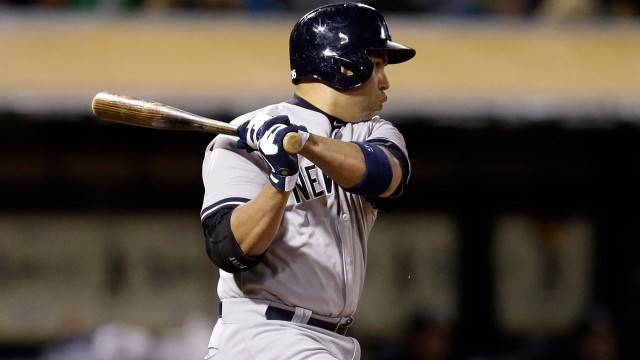
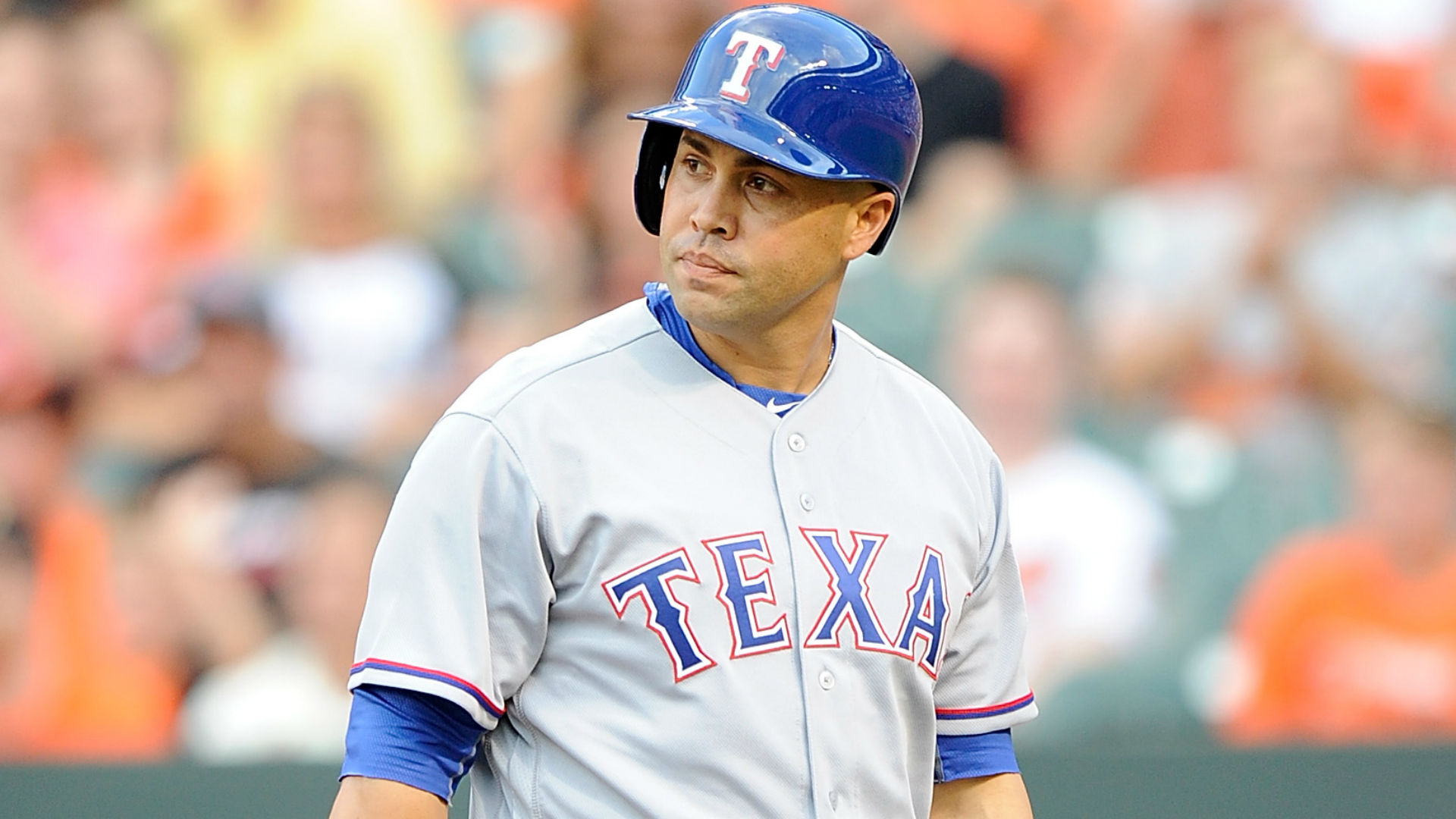
Beltran, pictured with the Rangers last season, is a worthy Hall of Famer (Sporting News)
A couple weeks ago when the Red Sox were playing the Astros, a friend asked me if Carlos Beltran is a Hall of Famer.

I answered in the affirmative, with the caveat that he won't get in on the first ballot and may need a few rounds of voting before receiving his plaque in Cooperstown. While Beltran is a clear Hall of Famer from a statistical standpoint, I can see why the support for his candidacy won't be overwhelming. His case has been built quietly over time, as he was never a player who could claim to be the best in baseball during any of his 20 seasons. He never dominated discussions or statistical leaderboards, and was never even a serious candidate for MVP. The fact that my friend posed this question in the first place reflects the doubt that exists among knowledgeable baseball fans who witnessed his entire career.

There shouldn't be much of a debate, however, as Beltran is one of the 10 greatest center fielders in baseball history by several measurements (Hall of Stats has him seventh, JAWs puts him eighth, and he's ninth in FanGraphs career WAR).  He's a near-perfect match for the average Hall of Famer at his position in terms of peak and career bWAR, with his career value almost evenly divided between peak (52%) and longevity (48%) per Hall of Stats. He's well above the Bill James Hall of Fame Monitor threshold as well, grading out a score of 126 when 100 gives a player a strong chance at induction.

All of that aligns with what Beltran produced on the field. For over a decade he was one of the best all-around players in baseball, routinely clearing 25 homers/steals and 100 runs/RBIs with a bat that was about 20 percent better than average after adjusting for league and park. His speed and smarts on the bases made him one of the 20 best baserunners of all time, helping him steal over 300 bases at a mind-bending 86.4 percent success rate (the highest ever for a player who spent at least a decade in the Major Leagues). He was also one of baseball's best defensive outfielders before knee surgery forced him to shift to right field in 2011, earning three consecutive Gold Gloves for his efforts. He might have won more had he not been so graceful, making difficult plays look easy.

Even after his defense and speed deteriorated in his mid-30s, he retained value until his 40th birthday as a slugging corner outfielder. That's what separates him from many borderline Hall of Famers who fell off in their early 30s, as lots of players have worthy peaks but lack the longevity needed to stand out. Beltran has both. There was a brief period at the start of the decade when his career appeared to be in decline, but he remained mostly healthy throughout the remainder of his 30s and had the kind of 20-homer, 2-3 WAR seasons that round out a Cooperstown resume. After appearing in just 145 games combined in his age-32 and 33 seasons, he averaged 138 games per year from ages 34-39 without suffering a drop-off in production:

Beltran 1999-2010: 134 G 23 HR 88 RBI .282/.359/.494 (119 OPS+)
Beltran 2011-2016: 138 G 24 HR 79 RBI .280/.343/.487 (126 OPS+)

Staying productive for so long enabled him to compiled some impressive career totals. By season's end, he'll have close to 1,600 runs and RBIs and more than 2,700 hits, which will include upwards of 550 doubles and 430 homers. Depending on which website you use, he'll either be just over or just under 70 career WAR -- squarely in the middle of the 60-80 range of most Hall of Famers. He's also one of only five players with at least 400 homers and 300 steals - a testament to his rare combination of elite speed and power.

While Beltran was never named MVP or led the league in any significant offensive category, he was consistently one of the baseball's top players for nearly two full decades, as evidenced by his nine All-Star selections. Since his Rookie of the Year campaign in 1999, Beltran has been the fifth-most valuable position player in terms of fWAR, trailing only Alex Rodriguez, Albert Pujols, Adrian Beltre, and Miguel Cabrera -- all of whom are surefire Hall of Famers. He was worth roughly eight more wins than Ichiro Suzuki -- another first-ballot Hall of Famer -- during that same span despite playing fewer games. While that works out to be only half a win per season, over time it adds up to be an additional MVP-caliber season that Beltran provided for his teams. And again, we're talking about a slam-dunk Hall of Famer in Ichiro.

So why won't Beltran get in right away? There's a couple reasons, I think. He bounced around a lot, suiting up for seven different teams and spending roughly half of his career in each league (when he gets in, he'll have a difficult choice to make about which hat to put on his plaque). As a result, he had several seasons that were split between two teams, including his near 40/40 season in 2004, when he switched leagues for the first time. '04 was the second-best season of his career after '06, but he only has a 12th place NL MVP vote to show for it because he spent the first half of the year in the Junior Circuit.

He was also doomed to be underrated for being great at everything rather than shining at one or two things, which is why his Baseball-Reference page is conspicuously devoid of black ink. He never had a signature season that stood out above the rest, as his career was defined more by sustained excellence than a brilliant peak (only one top-five MVP finish). Some of his brightest seasons occurred in relative obscurity with Kansas City in the early 2000s, when they were the laughingstock of baseball. Even though he won Rookie of the Year in '99, it took people a while to catch on, as he didn't draw MVP votes until 2003, wasn't named to an All-Star team until 2004, and didn't win his first Gold Glove until 2006. His Mets career is viewed as a mild disappointment, as his best years there were marred by late season collapses and playoff failure (the signature highlight of his career is not a game-winning homer or a spectacular catch, but the called strike three he took to end the 2006 NLCS). He also dealt with injuries and was traded away during the final year of his contract, after which he became a journeyman bat for hire.

He was a beast in October (David Ortiz-esque), but his team never won it all. That could change this year, as Beltran's Astros are looking like the Cubs from last year, albeit without much help from Beltran, who's suddenly showing his age at 40. That would be a nice way for Beltran to end his career, as his contract's up at the end of the season and he's unlikely to find work unless his hitting picks up in the second half. There would be nothing left for him to accomplish, anyways. He's already done enough -- more than enough -- to earn a plaque in baseball's Hall of Fame.

Saturday, September 5, 2015

Beltran Bouncing Back

Beltran's back after a poor 2014 and slow start to 2015 (Sports Net)
When the New York Yankees signed Carlos Beltran to a three-year, $45 million deal two winters ago, he was already a player in decline. The formerly fleet center fielder and stolen base threat had lost his explosive speed to age and knee surgery. His bat, while still potent, had also slowed, as his OBP and slugging fell in consecutive seasons. That drop-off had become even more pronounced throughout the previous season (2013), as he experienced a 121 point erosion between his first half OPS and his second half OPS, almost all of which occurred in his slugging percentage.

The Yankees, however, were not scared off by his waning power, worsening platoon splits, or career-low walk rate for a full season. They saw a younger, more dangerous replacement for Ichiro Suzuki in right field. They saw a switch-hitter with life in his bat and a killer postseason resume. They saw a former Met who'd proven he could handle the pressure of playing in New York.

Nearly a decade after losing out on Beltran to the crosstown Mets, Yanks GM Brian Cashman, still liked him enough to buy out the rest of his 30s. It was a classic Yankees move, overpaying a former star for the twilight years of his career.

Beltran was part of the costliest, most aggressive offseason any team has ever had. Having just missed the playoffs for the second time in 20 years, the Yankees went on one of their patented spending sprees, dropping nearly half a billion dollars on free agents. They inked Masahiro Tanaka, Jacoby Ellsbury, Brian McCann, and Beltran, among others, while also a serious run at Robinson Cano.

Dollars doesn't always equal wins, though. After bringing in all that talent, the Yankees won one fewer game than they did the previous year, missing the playoffs again.

One reason why was that Beltran cratered, but it was hardly the only reason. He and McCann were massive disappointments. Tanaka missed most of the summer with elbow inflammation, and Alex Rodriguez sat out the entire year serving his season-long PED suspension. After playing 32 games between them in 2013, Derek Jeter and Mark Teixeira failed to return to their previous performance levels. CC Sabathia got hurt and pitched just 46 innings--by far the fewest of his career.

With all that going on, it was easy to miss Beltran enduring the worst season of his career. Hampered by injuries and a 62 point drop in BABiP (down to .252, easily the worst of his career), Beltran batted a paltry .233/.301/.402 despite playing half his games in the hitter-friendly Yankee Stadium. The short porch in right didn't aid his power stroke, either, as his ISO plunged another 26 points after falling 32 the previous year. A liability in at the plate, in the field, and on the bases, he rated below replacement level for the first time in his career.
Image courtesy of CBS New York
This year brought even harsher struggles for Beltran, who began the year in a horrible slump from which he showed no signs of escaping. Through the first week of May he was batting below .200 and slugging below .300 with his OBP somewhere in between. Some suggested that he abandon hitting from the right side, as he'd shown a 142 point OPS platoon split in 2013 and batted below .200 against lefties in 2014. Given that such a move benefited Shane Victorino, it seemed like a good idea.

Beltran didn't give up on switch-hitting, and since then he's back to being the hitter he was before the Yankees signed him. He's batted .309/.374/.539 dating back to May 8th, and before going 0-for-4 yesterday he'd reached base in all but one of his last 33 games. His batting line has steadily improved throughout the summer, up to a more than respectable .279/.339/.477--right in line with his 2012-2013 figures. In other words, the Yankees are getting the Beltran they paid for.

The explanation for his return to form is simple: he's fixed his swing from the right side. His platoon splits are nearly identical (.803 OPS versus lefties, .826 OPS against righties) this year.

Of course, that's not the only reason Beltran's doing better. A return to health has done wonders for the 38 year-old, who's been on fire since coming off the DL after the All-Star Break. He's also had much better luck on balls in play, with his BABiP returning to normal as he's generated more line drives and fewer grounders/pop ups. After becoming a little too pull-happy last year, Beltran has done a better job of waiting back and using all fields, too.

Beltran isn't the only Yankee making a comeback. Teixeira and Rodriguez have been huge in the middle of the order, and McCann's back to being one of the best-hitting catchers in baseball. Michael Pineda's pitched better than anyone could have possibly expected, and by some miracle Tanaka's stayed healthy. That's why New York, despite being the oldest team in baseball by a mile, leads the AL wild card and is only 2 and 1/2 out of first in the AL East.

Which means in a few short weeks, Yankee fans will see firsthand what Beltran can do in the playoffs, and why his team paid so much to acquire him in the first place. Based on how he's hit this year, he won't let them down.

Thursday, January 30, 2014

Ranking the Best Switch-Hitters

Mantle is the gold standard for switch-hitters (SI)
Reviewing Lance Berkman's career got me thinking about the best switch-hitters in baseball history. Here's what I came up with:

1. Mickey Mantle 172 OPS+ 170 wRC+ .354 TAv .428 wOBA 802 Rbat
An obvious choice. Though the Mick was devastating from the left side, injuries hampered his southpaw swing later in his career and he would have been better off never having learned to switch-hit at all. He batted .330/.416/.575 from the right side compared to .281/.419/.546 from the left.

2. Chipper Jones 141 OPS+ 141 wRC+ .319 TAv .397 wOBA 557 Rbat
His favorite player was Mickey Mantle, which is interesting given that he was born four years after Mantle's final season. Jones is the only switch-hitter with a career .300 average and at least 400 home runs, something Mantle would have accomplished as well had he retired before 1968.

3. Eddie Murray 129 OPS+ 127 wRC+ .299 TAv .365 wOBA 389 Rbat
Steady Eddie leads all switch-hitters in RBI and ranks second in home runs to Mantle. He is one of only four players to eclipse 500 home runs and 3,000 hits, the others being Hank Aaron, Willie Mays and Rafael Palmeiro.

4. Pete Rose 118 OPS+ 121 wRC+ .289 TAv .354 wOBA 368 Rbat
The Hit King.

5. Lance Berkman 144 OPS+ 144 wRC+ .318 TAv .400 wOBA 420 Rbat
His OPS was better than .900 in 10 of his 15 seasons and his .943 OPS ranks 26th all-time. He holds the National League record for most home runs (45--tied with Jones) and RBI (136) by a switch-hitter in a single season (2006).

6. Tim Raines 123 OPS+ 125 wRC+ .294 TAv .365 wOBA 290 Rbat
Even after removing all of Raines' steals from the equation (for they have nothing to do with hitting), his offensive resume is still an impressive one. The Rock batted .294 for his career and was the 1986 NL batting champion. He also led the league in OBP that year, one of 11 times he reached base more than 39 percent of the time.

7. Reggie Smith 137 OPS+ 137 wRC+ .306 TAv .379 wOBA 309 Rbat
One of the most underrated ballplayers in baseball history, Smith was a phenomenal talent who's numbers were depressed by the era in which he played as well as Dodger Stadium. His neutralized career batting line of .296/.377/.505 is quite good.

8. Mark Teixeira 130 OPS+ 131 wRC+ .298 TAv .381 wOBA 245 Rbat
Teixeira has been ridiculed so much during his time in New York that it's easy to forget just how great he was before joining the Yankees. He had eight straight seasons with at least 30 home runs and 100 RBI from 2004 through 2011 and set the major league record for most single-season RBI by a switch-hitter with 144 in 2005. His future is in doubt after wrist problems limited him to just 15 games last year, and it's possible that his power may never return. That would be a shame considering nobody has homered from both sides of the plate in the same game as often as Teixeira, who's done so 13 times to date.

9. Bernie Williams 125 OPS+ 126 wRC+ .292 TAv .373 wOBA 295 Rbat
Williams was a Yankees legend who played in 25 postseason series across 12 Octobers, during which time he compiled the most RBI in playoff history. He also ranks second in hits, doubles, home runs, total bases, and runs scored. Williams was no slouch during the regular season either, batting above .300 every year from 1995 through 2002 and winning the batting title in 1998 on his way to a .297 career average.

10. Carlos Beltran 122 OPS+ 122 wRC+ .296 TAv .365 wOBA 249 Rbat
The only switch-hitter with more than 300 home runs and stolen bases. He's also the best postseason hitter for all-time, for what it's worth.

11. Roberto Alomar 116 OPS+ 118 wRC+ .284 TAv .359 wOBA 240 Rbat
A career .300 hitter, Alomar had good power for a second baseman with over 500 doubles and 200 home runs.

12. Frankie Frisch 110 OPS+ 112 wRC+ .370 wOBA 158 Rbat
His .316 career batting average is still the highest ever for a switch-hitter, so it should come as no surprise that he and Chipper Jones are the only switch-hitters to bat above .300 from both sides of the plate (min. 5,000 plate appearances).

Honorable Mention: Ted Simmons, Jorge Posada, Chili Davis

Saturday, December 7, 2013

Hot Stove Update: The Bronx is Burning

Granderson stayed in New York but defected to the Mets
It was a busy week in baseball for the two New York teams, both of whom did their part to stoke the Hot Stove's proverbial flame. Most notably, Jacoby Ellsbury came to town just before Robinson Cano skipped out, but there were a few other moves that went down as well.

Mets sign Curtis Granderson for four years, $60 million
I'm pretty surprised Grandy Man didn't have to settle for a one-year contract somewhere to re-establish his value after an injury-marred 2013 in which he played just 61 games and posted his worst OPS since his 2004 debut. Then again, he's just one season removed from a 43 homer campaign. Still, if I'm a Mets fan I don't love this deal. Age--he'll be 33 at the start of the contract--is a concern, but what's more troubling is how Yankee Stadium turned Granderson into an all-or-nothing hitter. In 2012 he batted .232 and fanned 195 times, whiffing in 28.5 percent of his plate appearances. The trend continued last year with his .229 batting average (a new career low) and 28.1 K%. I see more low batting averages and high strikeout rates in his future, but far fewer home runs without a short porch in right to aid him. Furthermore, he's a poor defensive center fielder who should be shifted to a corner spot.

Yankees sign Carlos Beltran for three years, $45 million
Beltran makes his return to the Big Apple after spending six and a half seasons with the Mets from 2005 through 2011. The Yankees were hot on Beltran's tail in the winter of 2005, only to see him sign with the Mets for $119 million. At the time, he was widely regarded as one of baseball's most talented players, a Gold Glove center fielder with 40/40 potential. Now he's a 36 year-old corner corner outfielder/DH with creaky knees and zero speed. He can still hit a bit, as he proved with St. Louis, and his power should translate well to Yankee Stadium. At this stage in his career he's more of a 2-3 win type of player than the 5-6 win beast he was in his prime, but that's still a significant upgrade over what Ichiro Suzuki is these days.

Yankees bring back Hiroki Kuroda for one year, $16 million
This ends the speculation that Kuroda would retire or return to Japan to pitch in the NPB. He emerged as the Yankees ace last season in what was a down year for CC Sabathia. Kuroda was tremendous for most of the season before fading down the stretch, going 0-6 with a 6.56 ERA over his final eight starts as opponents walloped him to the tune of .316/.364/.551. Was it just a bad stretch by an otherwise excellent pitcher? Or was that the beginning of the end for the soon-to-be 39 year-old? The Yankees are gambling $16 million to find out if he has anything left in the tank.

Kelly Johnson signs with Yankees for one year, $3 million
New York nabbed Johnson as an insurance policy in case Cano signed elsewhere, and good thing they did. Johnson's not an everyday second baseman anymore, not after batting .226/.307/.395 in the last three years combined, but he's still a solid platoon option against righties with decent pop (16 homers in each of the past two seasons). He can't hold a candle to Cano, but then again few players can.