Showing posts with label Jon Lester. Show all posts

Sunday, December 14, 2014

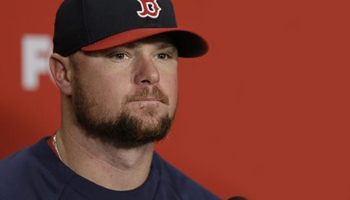
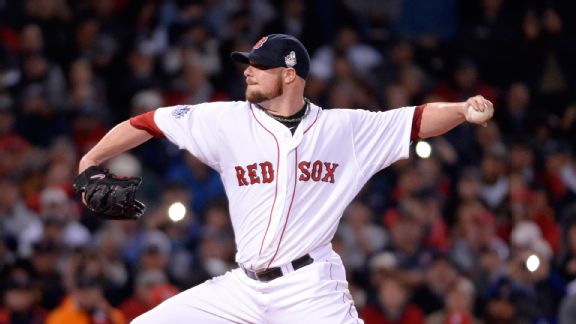
Here Comes Chicago

With Lester aboard, the Cubs have the pitching to complement their hitting (NESN)
Despite finishing last year with identical 73-89 records, the remade Chicago Cubs and White Sox are teams to be feared in 2015.

The long-suffering Cubs are coming off their fifth consecutive fifth-place finish and 106th straight season without a World Series championship (but who's counting). Even so, 2014 was an encouraging year for the beleaguered Cubbies. Franchise centerpieces Anthony Rizzo and Starlin Castro enjoyed bounce back years, Jorge Soler and Kyle Hendricks made promising debuts, and Jake Arrieta was one of the National League's best pitchers on a per-inning basis. Chicago ranked second in the Senior Circuit in long balls, and Kris Bryant hasn't even arrived yet. Imagine how many bombs they'll hit when he does and with Soler and Javier Baez playing every day.

Entering the fourth year of Theo Epstein and Jed Hoyer's rebuilding project, Chicago appears on the brink of contention. The major league roster finally has the talent ready to compete. Aided by Soler and Hendriks, the Cubs were actually a much better team in the second half last year despite trading away their two best pitchers (Jeff Samardzija and Jason Hammel) in early July. Chicago went 31-28 after July 27th, winning one more game than the eventual World Series champion San Francisco Giants during that span.

It's no secret that Chicago has an abundance of young hitting talent, so the next logical step was to add quality arms this winter. The Cubs did so by re-signing Jason Hammel, who had a 2.98 ERA in 17 starts with them last year before being traded to Oakland, and swaying Jon Lester away from the Red Sox with a jaw-dropping six-year, $155 million offer that sent shockwaves throughout baseball. Chicago's new ace immediately improves a rotation that had the seventh-highest ERA in baseball last year. A vaunted big game pitcher and two-time World Series champion with Boston, Lester brings a furnished postseason track record to the Windy City as well.

Chicago also acquired arguably the game's best manager in Joe Maddon. Maddon, a two-time AL Manager of the year (2008 and 2011), helmed the Rays to five 90-win seasons between 2008 and 2013 (and 84 wins in 2009, the lone non-90 win season in that timeframe). More importantly, he has postseason experience, having managed four playoff teams in Tampa Bay including the 2008 American League champions. Unlike most of the Cubs, he's been to the World Series.

And while the Cubs didn't get the market's top catcher (Russell Martin, who went to the Blue Jays instead), they still got a good one by trading for Miguel Montero. A two-time All-Star, Montero was a four-win player in 2011 and 2012 and should remain productive at age 31. In addition to swinging a pretty solid stick, he also provides veteran leadership and experience behind the plate.

A busy offseason has prepared the Cubs for a competitive 2015 that could very well result in a playoff berth. Chicago will have its hands full with the St. Louis Cardinals, favorites to win the division for the third year in a row,  but the rest of the division looks less than formidable. The Reds are rebuilding, the Pirates keep losing talent (i.e. Martin), and the Brewers haven't improved. The Cubs could easily finish second and ride a wild card berth all the way to World Series glory.
Jose Abreu (pictured) and Chris Sale have help (GalleryHip)
The White Sox, who last made the playoffs in 2008, were essentially a .500 team last year into August (54-56 on the morning of August 2nd) before fading down the stretch. They were second in their division through the first week in June, but ultimately their thin rotation and aging lineup caught up to them.

Don't expect the same issues to derail Chicago this year. The White Sox won't have the MLB's sixth-worst rotation ERA again after trading for Jeff Samardzija, one of the game's premier power pitchers. Paired with Chris Sale, Samardizja gives the Sox an outstanding left-right punch atop their rotation. Chicago also signed David Robertson, a shutdown closer and one of baseball's best relievers over the past four years. He solidifies the back end of a leaky bullpen that finished 2014 with the third-worst ERA in the majors.

The White Sox upgraded their offense as well, inking Melky Cabrera and Adam LaRoche to bolster a lineup that was heavily dependent on Jose Abreu in 2014. LaRoche, a lock for 20 to 25 home runs when healthy, offsets the loss of Adam Dunn as the team's primary lefthanded power source. A former Gold Glove winner, LaRoche will also allow Abreu to DH a few times per week.

Cabrera figures to slide in behind leadoff man Adam Eaton, giving the team two quality table-setters for Abreu and LaRoche. With an OPS above .800 in three of the past four seasons, he's the kind of impact bat Chicago needs, and like LaRoche his power should play well at U.S. Cellular Field. Cabrera's also a switch-hitter, which helps keep Chicago's lineup balanced.

Like the Cubs, the White Sox seem to have an insurmountable foe in their division vis a vis the Detroit Tigers, winners of four straight AL Central crowns. They also must contend with the reigning AL pennant winners (though Kansas City will surely suffer from losing James Shields), and a solid Indians team. Even the Twins have improved. Accordingly, Chicago will be hard-pressed to make the playoffs coming out of such a competitive division, but I'd expect them to at least go .500. They're still a bit top-heavy (they're doomed if Abreu and/or Sale are lost for extended periods of time), but if their stars are healthy and perform then they'll have enough talent to make some noise.

Regardless of which side they stand on, Chicago baseball fans have plenty to be excited about. Both teams are much-improved and will be right in the thick of things, which hasn't been the case very often. Neither club has made the playoffs since 2008, but it wouldn't surprise me to see both playing next October.

An all-Chicago World Series might be a longshot, but at least there's a chance.

Thursday, December 11, 2014

Sox Lose Lester Sweepstakes

Lester made a disappointing decision by rejecting Boston's offer (FoxSports)
For the second year in a row, the Boston Red Sox failed to retain their marquee free agent. Just as Jacoby Ellsbury jumped ship to the Yankees for a $153 million contract, Jon Lester chose the Chicago Cubs and their $155 million offer.

But Ellsbury's departure was a foregone conclusion, allowing Red Sox Nation to brace themselves for his inevitable exit. There were no illusions about him coming back to Boston. So when he left to go play for the Yankees, of all teams, there were no hard-feelings, no sense of shocked betrayal.

Lester leaving, on the other hand, was like a blow to New England's collective gut. The moment he was traded to the Oakland A's last July 31st, fans began dreaming of his return. Sure, the Red Sox had royally screwed up their contract extension talks with him, but Lester loved Boston. He didn't want to play anywhere else, he said, and when he reached free agency he promised not to sign with the highest bidder. Like Arnold Schwarzenegger, he'd be back.

Even after emptying their pockets for big-ticket free agents Pablo Sandoval and Hanley Ramirez, the Red Sox remained committed to Lester. They promised him more years (6) and dollars ($135 million) than either Ramirez or Sandoval, trying to make amends by buying back his love. Their aggressive pursuit of him culminated in a competitive offer that seemed sizable enough to reel him in, especially given his stated preference for Boston.

Perhaps sensing that Lester was lukewarm about returning, the Sox put the full-court press on Lester, even sending principal owner John Henry to try to sway him back. Henry, who'd awkwardly embraced Lester as the star pitcher exited Fenway Park, did everything he could to coax Lester into coming back. But at the end of the day, Boston's offer just wasn't high enough.

Had they offered him that six months ago, Lester would still be a Red Sox. Instead, his new home address is Wrigley Field.

As much as it hurts to not end up with what felt like a sure thing, Boston made the right call. Lester's a helluva pitcher, but he's not worth a $155 million contract at this stage in his career. The contract covers his age 31-36 seasons, paying him almost $26 million per year (only Clayton Kershaw makes more among pitchers) for the decline phase of somebody who's not quite really an ace (last year notwithstanding). Justin Verlander, Cliff Lee, and CC Sabathia were way better than Lester when they signed their megadeals, and look how they've done since. Roy Halladay retired after his age-36 season, meaning there's a good chance that Lester's a broken down shell of a pitcher by the time his new deal expires.

Chicago got a bit carried away, but if Lester leads them to their first World Series championship since 1908 he'll have been worth every cent. The Cubs were clearly on a mission to redeem themselves after falling short in the Russell Martin sweepstakes. Martin seemed like a lock to land with the Cubs--who are in the market for a high-caliber backstop--only to sign with Toronto when the Blue Jays swooped in with their five-year, $82 million offer. Desperately in need of quality starting pitching, they turned to Lester, and this time didn't let their target slip away. They overpaid for him, yes, but now have a front of the rotation workhorse to replace Jeff Samardzija, whom Oakland recently traded to Chicago's other baseball team. Lester brings the Cubs that much closer to contending in 2015 and beyond.

As for Boston, it's back to the drawing board. Their next move is to go after James Shields and/or Max Scherzer. Scherzer will cost even more than Lester, which is why I'm partial to Shields, who also has plenty of experience pitching in the AL East. The Sox will also have to put together a package for Cole Hamels, which would likely include Yoenis Cespedes and perhaps Xander Bogaerts. With an abundance of outfielders and shortstops, Boston shouldn't have too much trouble unloading some of that excess talent.

So while the Red Sox didn't get their man, there's no reason to panic. There are still several aces available and plenty of time left to get them.

Wednesday, December 10, 2014

Lester Decision Looming


Sorry, San Francisco Giants fans, but it looks like Jon Lester won't be joining Madison Bumgarner in your team's rotation next year.

Apparently Lester, already a two-time World Series champion with Boston, wasn't swayed by the Giants' recent title--their third in five years. He also couldn't be bothered to move out to San Francisco, where he'd benefit from one of the MLB's friendlier parks for pitchers.

So with two days of winter meetings in the books, the three-time All-Star appears to be deciding between two teams; his former Boston Red Sox and the Chicago Cubs.

Both sides offer compelling reasons for him to accept their offer. The Red Sox have history with Lester. They were his first big league team and, until last summer, his only big league team. He's said all along that Boston was his first choice and that he'd willingly take a hometown discount to stay there. Unfortunately, the Red Sox took that to mean that he'd accept roughly half of what he was worth, a misstep that may come back to bite them if he rejects their final offer.

The Cubs' front office features many former members of Boston's organization that were there during Lester's development, including former Sox GM and current Cubs president Theo Epstein. There's also the allure of ending the franchise's century-long title drought, which extends back to 1908. Remember that a big reason why Curt Schilling chose Boston was the opportunity to help the Sox reverse the curse. Chicago also has the larger (confirmed) offer, albeit slightly.

Lester looks like he'll make a decision soon, and I'm all but certain he's going back to Boston. The Red Sox may have stumbled at first, but they've made it abundantly clear how much they want him in their rotation for the foreseeable future (John Henry's been campaigning like a politician over the past few days). Their offer is competitive, and they offer the security and familiarity Lester values. Even if the Cubs outbid the Sox, I can't imagine Lester leaving over a few million dollars. If the dollar values are similar, which they appear to be, then he's not getting shortchanged by Boston in the slightest. Chicago can't woo him away with an offer that barely tops Boston's.

If Lester really loves the Red Sox as much as he claims to, then he'll put his money where his mouth is and come home.


Saturday, December 6, 2014

Red Sox Really Need Lester

The Red Sox need to pony up for Lester (CSNNE)
I know I'm not be saying anything particularly insightful or noteworthy here, but the Boston Red Sox really need to sign Jon Lester (and not just to appease David Ortiz).

Let me re-phrase that. What the Red Sox really need is at least one (probably two) great starting pitchers, and it just so happens that Lester fits the bill.

Lester's young (for a free agent), durable, and lefthanded. What more could you want?

Oh, and he also happens to be one of the best postseason pitchers ever.

Let's start with his age, because that's usually the most important aspect of any free agent's resume aside from his past performance. Lester's going to be 31 next year, still very close to his prime years. Seeing as how he just had the best season of his career, he's shown no signs of slowing down. In fact, many of his peripherals have shown steady improvement since 2011. His walk rate has decreased every year since then, while his inning  totals and K/BB ratio have climbed. His home run and hit rates have fallen over the past two years as well. One shouldn't expect those trends to continue given what we know about how baseball players age, but it's nonetheless encouraging that Lester has been getting better, not worse.

Perhaps that's because Lester has never suffered a serious throwing-related injury at the professional level. Since recovering from his bout with non-Hodgkin lymphoma, he's been one of the sturdiest pitchers in baseball. Since the start of the 2008 season he ranks seventh in starts and sixth in innings, not to mention sixth in pitching fWAR. He's made at least 31 starts and pitched at least 191 innings in each of the past seven seasons, topping 200 innings and 15 wins six times apiece.

That's important going forward because in 2013, Russell Carleton of Baseball Prospectus determined that pitchers who have been injured are eight times more likely than other pitchers to get injured again. Pitchers are inherently risky investments, but Lester's less so.

Of course, Lester's done more than just eat innings during his nine-year career. He's made three All-Star teams and twice finished fourth in the AL Cy Young voting. His 3.47 ERA since 2008 is the same as Justin Verlander's and better than those of James Shields, Dan Haren, and Tim Lincecum, among others, despite calling Fenway Park home for much of his career. According to FanGraphs, his ERA and FIP have both been 17 percent better than average after adjustments for league and park. He's been worth at least three wins above replacement in each of the past seven years, exceeding five fWAR in a year four times. And as much as I hate traditional wins, his .634 career winning percentage is very impressive.

Then there's his postseason resume, which is simply marvelous. Lester's been lights-out in October with a sparkling 2.57 ERA in 14 postseason appearances, including a microscopic 0.43 ERA in his three World Series starts (all wins). A two-time World Series champion with Boston, Lester's a proven big-game pitcher in the same mold as Curt Schilling and Josh Beckett, seemingly always at his best when the lights shine the brightest.

As if that doesn't make Lester attractive enough, he's also a southpaw, which makes him an even more desirable commodity. Terrific lefties, especially ones that can thrive at Fenway Park, don't grow on trees (nearly three-quarters of big league pitchers are right-handed).

Like other talented lefties such as CC Sabathia, Cole Hamels, Johan Santana, and Clayton Kershaw, Lester's going to cost a small fortune. He's reportedly fielding offers in the neighborhood of $130 million over six years, on par with Boston's bid. If Boston truly is Lester's first choice, one has to imagine he'll sacrifice a few million dollars to come back (sorry, Cubs). But if the Dodgers blow those offers out of the water, then that's where he'll end up; in a superb pitcher's park, mowing down weaker National League competition for the likely NL West champions.

If that happens, the Red Sox will have only themselves to blame. Because Lester let them have the first crack at re-signing him, and they blew it.

Monday, September 22, 2014

Lester Lights Out

Lester's been at the top of his game since arriving in Oakland (CBS)
The Oakland A's have been the subject of much derision lately because of their second half slide, falling from the top of their division to 10.5 games back of the Angels in six weeks. The A's have all but stopped hitting, and a lot of the blame for that has been laid at the feet of Billy Beane, who traded cleanup hitter and offensive force Yoenis Cespedes to Boston for Jon Lester and Jonny Gomes. Cespedes has mashed with the Sox, while Gomes's struggles have followed him out west (no homers and .540 OPS with Oakland).

But saying the trade made Oakland worse would be a fallacy. Lester and Gomes combined have given the A's 1.6 wins above replacement in their brief time with the club, while Cespedes has provided Boston with 1.2. Acknowledging that narrow difference is too negligible to say this trade came out in Oakland's favor with any certainty, at the very least it's been even.

Because while Gomes has given the A's nothing of value, Lester's stepped up to become the undisputed ace of his new team. As good as Lester was with Boston during the first half, he's been even more dominant with Oakland. In his 10 starts with the A's, all quality, he's delivered 69 and 2/3 innings (almost seven innings per turn) of 2.20 ERA-ball. Opponents have batted just /226/.272/.354 against him during that time, which explains how he's compiled a 1.06 WHIP since he came over to Oakland. He's also maintained a nifty strikeout to walk ratio of 64/16 (4/1) and posted an average GameScore of 63.

Lester's pitched as well as advertised, and the A's have gone 7-3 in his starts. It's hardly his fault that Oakland's lineup went into hibernation, or that Scott Kazmir and Sonny Gray have fallen off, or that the bullpen's been an absolute mess lately. Lester can only impact the team every five days, and he's done an excellent job of putting them in position to win. He's been money down the stretch, doing everything in his power to stop Oakland's slide even as the majority of his teammates have struggled.

He's been at the center of an epic collapse before, but if it happens again he's made damn sure well that he won't be the one to blame.


Sunday, August 3, 2014

Ranking Red Sox Southpaws

Lester is one of the top lefties in Red Sox history, but where does he stand?
Jon Lester is gone, leaving a legacy in Boston as one of the club's greatest southpaws ever. So that got me thinking: if his time in Boston is truly finished (and it probably is), where does that leave him on the organization's short list of best left-handed pitchers?

Since there aren't that many (turns out Fenway Park is a really tough place for lefty throwers to thrive), here are the six best I could come up with.

Honorable Mention: Bill Lee (3.92 FIP  110 ERA+  18.9 bWAR  5.2 WAA)
Had Spaceman not gotten involved in a career-altering Yankees-Red Sox fray early in the 1976 season, he likely would rank higher on this list. As it is, he must settle for just missing the top-five. 29 at the time of the brawl, Lee was coming off three straight 17-win seasons in which he compiled a 3.38 ERA across 827 innings. Though he pitched until 1982 the one-time All-Star was never the same, for only once more after that would he make more than 25 starts or complete more than 180 innings in a season. His legacy would also be much different had he held on to win the seventh game of the 1975 World Series, rather than allow Tony Perez to launch his "Leephus" pitch to the moon. Or had he not antagonized Don Zimmer so much, Lee might have actually pitched some meaningful games for the Red Sox as their 14 and 1/2 game lead over the Yankees slipped away in the second half of 1978. Two months after Boston completed its epic collapse, his ten-year Red Sox career came to an end when he was unceremoniously swapped with utilityman Stan Papi of the Montreal Expos.

5. Babe Ruth (2.76 FIP  125 ERA+  20.8 bWAR  9.9 WAA)
Before the Babe became the best slugger in baseball history, he was one of the game's premier pitchers. A two-time 20-game winner, Ruth compiled a 2.19 ERA in his six seasons with the Sox, winning the 1916 ERA crown with his 1.75 mark (maintained over 323.67 innings, I might add). His nine shutouts that year are still a record for an American League lefthander, since tied by Ron Guidry in 1978. The following season he was almost as good, with a 2.01 ERA in 326 and 1/3 innings and 35 complete games. After that the Red Sox realized how valuable the Bambino's bat was and limited his workload. But even after he became more renowned for his exploits as a hard-hitting outfielder Ruth remained effective when he toed the rubber, posting a 2.22 ERA in 1918 and 2.97 mark in 1919, his final year with the Red Sox. The Sultan of Swat also strung together 29 and 2/3 consecutive scoreless innings in World Series play, a record that stood until Whitey Ford bested it in the 1961 Fall Classic.

4. Dutch Leonard (2.39 FIP 129 ERA+ 27.2 bWAR 14.6 WAA)
Leonard spent his first six seasons with Boston, compiling a 2.13 ERA in his time there. After notching a 2.39 ERA across 259 and 1/3 innings as a 21 year-old rookie in 1913, for an encore he set the single season ERA record (post-1900) with his 0.96 mark the following year. He did not allow a single home run that year in 224 and 2/3 innings (it was the Deadball Era, after all) and also paced the majors in adjusted ERA, FIP, WHIP, H/9 and K/9. All told, Leonard's historic campaign was valued at 9.2 bWAR. His ERA rose to 2.36 in 1915-'16, years he helped Boston win the World Series with complete game victories in each Fall Classic. He also achieved two no-hitters with the Sox, his first in 1916 and his second two years later shortly before he had to leave the team because of World War I. The Olde Towne Team won the World Series without him that fall and traded him to Detroit, the team he'd no-hit just a few months earlier. Already on his way down, Leonard was unable to sustain the success that made him one of the best pitchers in baseball history through age 25.

3. Jon Lester (3.61 FIP 120 ERA+ 31 bWAR 16.6 WAA)
A three-time All-Star with Boston, Lester topped 15 wins and 200 innings in a season five times. Consistently great in the regular season save for his poor 2012, Lester was at his absolute best in October, helping the Sox capture two World Series titles with his 2.11 ERA in 13 postseason appearances (11 starts). He deserved to share last year's World Series MVP with David Ortiz after allowing just one earned run in 15 and 1/3 stellar innings. In 2008 he became the first Sox lefty in 52 years to pitch a no-hitter when he blanked the Royals at Fenway on May 19th, three weeks after holding the Blue Jays to one hit in eight innings. Lester is one of only three Red Sox pitchers (Roger Clemens and Pedro Martinez are the others) to strike out 15 batters in a single game.

2. Mel Parnell (3.79 FIP 125 ERA+ 27.4 bWAR 13.5 WAA)
Parnell pitched his entire ten-year career with the Red Sox, making two All-Star teams and drawing MVP votes four times. His 1949 campaign was Cy Young caliber, with his 25 wins, 27 complete games and 7.9 bWAR tops in baseball to go along with his league-leading 2.77 ERA, 295 and 1/3 innings, and 0.2 HR/9. He started that year's Midsummer Classic and nearly pitched Boston to the pennant before Joe McCarthy exhausted him down the stretch. Overused during his early years Parnell burned out fast but still had flashes of former brilliance, as he did when he twirled a no-hitter in his final season, 1956, on July 14th against the White Sox at Fenway. It was the first by a Boston pitcher since Howard Ehmke's 1923 no-no, and it would take 52 years before a Sox southpaw hurled another. Nearly 60 years after his last game, Parnell still holds the franchise records for most starts, innings, and wins by a lefthander.

1. Lefty Grove (3.60 FIP 143 ERA+ 44.7 bWAR)
The Pedro of his era, Grove wasn't known for his durability but still put up outstanding numbers in the face of high-scoring times. Like Josh Beckett, Grove's first season in Boston was a nightmare but he pitched well after that, winning four ERA titles (each time with the best league and park-adjusted ERA in baseball) and leading the league in pitcher bWAR in 1935, '36, and '37. One of Tom Yawkey's most prized possessions, the former Philadelphia Athletics star made five straight All-Star teams from 1935-39 and won the final 105 games of his Hall of Fame career in eight seasons wearing the Boston uniform, including his 300th (and last) victory in 1941. While Grove was past his physical prime when he joined the Red Sox at age 34, he perfected his curveball and, using it as an out pitch, remained an elite pitcher throughout his 30s, making it (just barely) to 300 wins. It makes sense that the best lefthanded pitcher of all-time (sorry, Sandy Koufax worshipers) is also the best lefthanded pitcher in Red Sox history.

Grove overcame arm troubles and put together a strong second act with Boston

Saturday, August 2, 2014

The A's Amazing Rotation

A proven big-game pitcher, Lester will be central to Oakland's success
Going into this season, the two-time defending AL West champs appeared to have one of baseball's best rotations on paper. Then A.J. Griffin and Jarrod Parker, who together threw 397 innings of 3.90 ERA ball for Oakland in 2013, were lost for the season to Tommy John surgery before either one threw a pitch. Having 40 percent of the starting rotation evaporate before Opening Day would cripple most teams, but not the A's.

Through the Fourth of July, more than halfway through the season, Oakland was sporting the best record in baseball largely because of their pitching staff--the stingiest in the league. Then they shipped out a couple of top prospects to the Cubs for Jason Hammel and Jeff Samardzija, the former a quality arm and the latter a smoke-throwing borderline ace. The midseason additions fortified Oakland's already strong staff, making a great rotation even better.

Now, after dealing Yoenis Cespedes for Jon Lester and Jonny Gomes, Oakland's rotation looks unbeatable. It has to be considered one of if not the best in baseball alongside the collection of aces in Los Angeles, where Clayton Kershaw, Zack Grienke, Josh Beckett, Dan Haren and Hyun-jin Ryu deal for the Dodgers, and now Detroit, which on the same day added David Price to a staff already headed by Max Scherzer, Justin Verlander, Anibal Sanchez and Rick Porcello. What Oakland's rotation lacks in flashy names and hardware--the Tigers own the past three AL Cy Young winners and the Dodgers boast a pair in Kershaw and Greinke--they make up for in superior results. Check it out:

Tigers 3.82 ERA 1.26 WHIP 2.84 K/BB ratio 6.24 IP/GS .707 OPS 95 tOPS+ 97 sOPS+
Dodgers 3.19 ERA 1.16 WHIP 4.10 K/BB ratio 6.1 IP/GS .682 OPS 100 tOPS+ 90 sOPS+
Athletics 3.30 ERA 1.19 WHIP 2.74 K/BB ratio 6.04 IP/GS .665 OPS 107 tOPS+ 86 sOPS+

That Oakland has the lowest opponent OPS (raw and adjusted) of the three is actually very impressive considering the A's play in the American League and must contend with designated hitters rather than feeble-hitting pitchers. The Dodgers have a slight edge in ERA and WHIP, but since they're a National League team with a pitcher's haven for a home park that advantage must be discounted.

What's scary is that most of those numbers were compiled without Lester, Samardzija, and Hammel. Going forward, Oakland should be even better with a rotation that is quite literally overflowing with talent. In Lester and Sonny Gray the A's have a potent 1-2 punch with a pair of legit aces. Scott Kazmir and Samardzija--number ones on half the teams in baseball and strong number twos on the others--are mid-rotation guys in Oakland. The fifth starter is Hammel, who had a 2.98 ERA with the Cubs but has struggled since rejoining the American League.

Oakland's rotation is so loaded that there's no room for Tommy Milone or Jesse Chavez, both of whom excelled in the first half. Milone boasted  3.55 ERA and was 10-for-16 in quality starts before his demotion and subsequent trade following the Samardzija/Hammel acquisitions. With Lester on board, Chavez has been forced back to the bullpen despite strong numbers--3.44 ERA, 3.66 FIP and 2.90 K/BB ratio--in his first season as a regular starting pitcher. With Chavez having proved himself in the rotation and available to return should injury strike, Oakland has more than enough depth to last the next three months.

And with such a stacked rotation, the A's are well-positioned to hold off the Angels down the stretch and cinch their third straight division title. All those arms will make for a formidable opponent come October, when Bob Melvin can shorten the rotation and rely on his four excellent starters to get him through the postseason. Healthy and effective starting pitching is key to surviving a long regular season, but in short playoff series having elite starters is essential. Thanks to Billy Beane's wheeling and dealing, the A's now have four of them.

It's always impossible to predict who will emerge from the postseason crapshoot victorious, but the A's are as good a bet as any. 25 years removed from their most recent World Series title, they have the arms to win it all. Considering the talent Beane gave up to acquire them, they better.


Friday, August 1, 2014

Checking Out Cespedes

In Cespedes, Boston has one of baseball's most intriguing talents (SportsOutWest)
The Red Sox unloaded what felt like half their roster yesterday, trading away their two best starting pitchers, an ace reliever, their starting shortstop and half of their left field platoon, all after they'd already dealt two starting pitchers earlier in the week. But rather than netting a haul of prospects as many anticipated, Boston surprisingly got back established major league talent, which Ben Cherington explained as the first steps in retooling the roster to be competitive again in 2015.

Boston's shiniest new addition is Yoenis Cespedes*--an All-Star this year and winner of the last two home run derbies--acquired for Jon Lester and Jonny Gomes. Blessed with monster power, solid baserunning skills and a cannon for a right arm, Cespedes is one of the best all-around outfielders in baseball. A poor man's Giancarlo Stanton, if you will. And at 28, he's squarely in his prime, something the Red Sox can't say about too many of their players.

*(How much does it suck to be Cespedes right now? To be traded off the best team in baseball, an outfit that stands a great chance to win the World Series three months from now, to a last-place team with the third-worst record in the American League and no hope of making the playoffs. I'd be pissed).

In just his third major league season, Cespedes is still growing and maturing as a ballplayer, still making adjustments as he tries to translate his enormous raw abilities into the huge numbers they're capable of producing. While his offense has taken a step back since his rookie season, he's cut down on his strikeouts this year and has fashioned himself into a better defender (the Red Sox plan to try him in right with Shane Victorino on the DL again) Cespedes has the tools to be a star, an MVP even, but most think of him the way they think of Justin Upton or Desmond Jennings--a gifted outfielder who hasn't put it all together yet.

Cespedes came close in 2012, when he burst onto the scene as a 26 year-old rookie on a four-year, $36 million deal with the Oakland A's. He made an immediate impact, helping the A's go from 74 wins the year before his arrival to 94 wins and a division title in his very first season. Cespedes was a key offensive contributor who smashed 23 home runs, drove home 82, stole 16 bases in 20 attempts and batted .292/.356/.505, good for a .368 wOBA and 139 OPS+.

A four-win player, Cespedes would have been an easy choice for Rookie of the Year under normal circumstances, but 2012 was destined to be remembered for the historic rookie seasons of Mike Trout and Bryce Harper. With the vast majority of attention and praise showered on the younger phenoms, Cespedes was runner-up to Trout in the AL Rookie of the Year race--no shame in that--and earned a 10th place finish in the MVP voting as well. His future seemed bright, and he was so highly regarded at the time that some thought he'd win an MVP as soon as 2013.

Since then, however, his progression has stalled. He walked less and struck out more in 2013, exactly the opposite of what one hopes to see from a second-year big leaguer. While Cespedes still produced potent power numbers with 26 home runs, 80 RBI and a .202 ISO, his batting average tumbled more than 50 points while his OBP and SLG both dropped by over 60, resulting in a 124-point decline in OPS that effectively reduced him into a league average bat. Blame it on the dreaded sophomore slump, pitchers figuring him out or an early season thumb injury that sent him to the DL and may have affected his swing; whatever the reason, his follow-up campaign was a disappointment.

This year has been better, though still nowhere near as good as his impressive rookie campaign.  To be fair, his numbers are still suppressed somewhat by his 3-for-45 skid leading up to the All-Star Break, a funk from which he's recovered by batting .326 with three home runs and 11 RBI since the Midsummer Classic. But that's just the kind of hitter he is--streaky.

He's also somewhat injury prone, having spent time on the Disabled List in each of his first two seasons. He's remained healthy this year, playing all but six of Oakland's games before the trade and avoiding the Disabled List thus far (knock on wood). On pace to play a full season for the first time after missing 60 games with assorted injuries between 2012 and 2013, he'll likely finish the season with career highs in most offensive counting stats.

Of course, he's a good bet to improve upon those numbers next year provided he's still with the Sox. Moving away from the cavernous Coliseum to Fenway's friendly confines should boost his numbers considerably, especially his average and by extension his on-base percentage. No way he hits .250 again with a .300 OBP next year--he's probably closer to .275/.330. Those numbers could be conservative estimates, seeing as how he nearly batted .300 as a rookie and might become more patient with age as he gains better strike zone recognition. It's interesting that his career OPS has been almost 100 points higher in Oakland than on the road, but since most players hit better at home that doesn't mean much. Switching from one of baseball's worst parks for hitters to one of its best should, in theory, boost his stats considerably.

Letting Cespedes take aim at the Monster 81 times a year has to be a salivating prospect for the Red Sox. Cespedes was already worth three wins above replacement for the A's in three-fifths of a season. putting him on pace to be close to a five-win player this year. Assuming he at least stays the same, he should be good for another four to five wins next year, possibly more if he really takes off and hits his stride at Fenway, which should be easy for a fly ball hitter currently lifting over half his batted balls into the air, many of which will scrape off or clear the wall. It's easy to envision him hitting 30 homers for the first time, driving in close to 100 runs, and posting an OPS well over .800. He's not going to hit like Manny Ramirez, but he could have a season comparable to one of Jason Bay's better ones (remember him?).

Even if Cespedes stays what he is--a .250 hitter with 25 home run pop and a .300 OBP--that's still an upgrade over the Gomes/Daniel Nava tandem in left. He's also a better defender than either one and a better baserunner, too. Furthermore, he adds a hefty dose of power to a lineup, and in particular an outfield, that craves it. Boston currently ranks 12th in the American League in home runs and 13th in slugging, largely because its outfielders have combined to hit 14 home runs (Cespedes currently has 17). With Cespedes on board, you can bet that won't be the case next year.

But what about after next year? Cespedes is going to be an unrestricted free agent at the end of the 2015 season, and the Red Sox will not be able to offer him a qualifying offer. Suffice it to say, Cespedes is going to command a lot more than the $10.5 million he's making this year and next. As one of the few impact power bats availabe and a relatively young free agent at 30, Cespedes could easily land a nine-figure deal if her performs well in Boston. Given Red Sox ownership's recent aversion to spending lavishly for players on the wrong side of 30, it's hard to imagine them paying what it would take to keep him around.

But Boston's baseball ops can cross that bridge when they get to it. For now, they should be patting themselves on the back for getting almost a year and a half of Cespedes for Gomes and two months of Lester. Cespedes addresses their biggest hole--outfield power--and possesses the kind of game-changing talent that simultaneously improves their lineup and outfield defense. And he still has room to grow.

Cespedes is a fairly expensive project, but as far as projects go he's a pretty good one to have.

Sunday, July 20, 2014

Streaking Sox Sweep Royals

With their 8-3 loss to the Chicago White Sox on July 8th, the Boston Red Sox hit rock bottom. They'd dropped seven of their last eight games, all at home, to fall 12 games below .500 and 10.5 games out of first. They were last-place in the AL East. They were dead.

Except that they weren't. They salvaged their miserable homestand in thrilling fashion with a [air of walkoff wins against Chicago. Then they traveled to Houston and closed out the first half by taking two of three from the Astros, the last of which was their most convincing victory of the season--an 11-0 romp.. Following the All-Star Break, they returned home for a three-game set with Kansas City and took all three for their first sweep at Fenway in over a month. And just like that, well, maybe the Red Sox weren't dead after all.

With their sweep of the Royals, the Sox have now won seven of their last eight games. It hasn't been enough to climb out of the AL East basement, where Boston's still mired in last place, but at least it's closed the gap for first place to 7.5 games. That's still a sizable deficit, but significantly smaller and easier to overcome than a double digit one.

More importantly, with five straight wins at Fenway the Sox now have a .500 record at home, something they haven't been able to say for much of the year. There were those two walk-offs against the White Sox, of course, followed by the three-game sweep of Kansas City. Boston beat KC 5-4 in Friday's series opener, overcoming a 4-1 deficit with a four-run rally in the sixth inning, a comeback keyed by two-run homers from Xander Bogaerts and Jonny Gomes. With Clay Buchholz gone, four Red Sox relievers made the lead stand up.

Saturday's game was a classic pitcher's duel between Danny Duffy and Rubby De La Rosa, both of whom have pitched surprisingly well this year and with almost identical levels of success (Duffy's ERA after the game was 2.66, just a smidge worse than De La Rosa's 2.64). Once again it was the Royals who took the early lead, only to watch the Red Sox fight back and win with a six-inning deathblow. This time it was Mike Napoli snapping a 1-1 tie with a majestic home run--his 11th of the season--over the Green Monster. Andrew Miller and Koji Uehara kept Kansas City at bay to preserve the lead and De La Rosa's third win of the season.

Sunday's series finale was all-Boston. The Sox scored early and often, hanging six runs on young Yordano Ventura through four. He was gone after one out in the bottom of the fifth, leaving a bases loaded mess for Francisley Bueno to clean up (which he did). That was more than enough for Jon Lester, who dominated the Royals with eight shutout innings. The All-Star lefty was in top form, permitting just four hits (three singles) and two walks while striking out eight. Junichi Tazawa and Edward Mujica retired the Royals 1-2-3 in the ninth to finish off the shutout and the sweep.

The Red Sox will be back on the road this week, first in Toronto against the scuffling Blue Jays and then in Tampa to take on the red-hot Rays. By playing well against both Boston could improve its position in the standings and potentially gain some ground on the first place Orioles. John Lackey will look to put his recent woes behind him in first start of the second half tomorrow night.

Thursday, July 17, 2014

Red Sox Pitching First Half Review 2014

It's really too bad the Red Sox haven't been able to hit a lick this year, because even if they were an average offensive team they'd probably be leading the AL East right now thanks to their stellar pitching.

This is the rarest of Red Sox teams in that their pitching's been pretty good, but their lineup has stunk to high heaven (reflected in the fact that both their All-Stars were hurlers). The staff as a whole has the fourth-best ERA in the American League--not too shabby for a team playing half its games at Fenway--and the circuit's fifth-most strikeouts. Jon Lester and John Lackey have formed a strong 1-2 punch at the top of the rotation, Jake Peavy hsn't been nearly as bad as his 1-8 record suggests, and Clay Buchholz seems to be rounding into form. For the most part the bullpen has been fantastic, none better than a certain Japanese closer pictured above.

Here's my take on some of the key Red Sox pitchers this year along with their first half grades in parentheses:

SP Jon Lester (A+)
Lester's postseason success seems to have carried over into the regular season, which is shaping up to be the best of his career (in a contract year, no less). His 2.65 ERA is a full run lower than his career 3.66 mark and his 2.61 FIP means it's no fluke. The 30 year-old has reversed four straight years of declining strikeout rates by fanning more than a batter per inning for the first time since 2010. With 134 K's he's already more than three quarters of the way to last year's total of 177. He's showed better command of the strike zone as well, slashing his walk rate to a career-low 2.0 BB/9, which in concert with his improved K rate has resulted in a 4.62 K/BB ratio (it was 2.56 from 2010 through 2013). Lester's also limited his mistakes and thus the long ball, posting the lowest home run rate of his career. Mix it all together and Lester's been one of the ten best pitchers in the American League this year, a worthy All-Star and Cy Young candidate with an ERA 35 percent better than the average pitcher after adjustments for league and park. Lester's going to get paid this offseason, but will the Red Sox be the ones footing the bill?

SP John Lackey (B+)
Lackey's strong first half proved that last year's unexpected return to form was no fluke. The 35 year-old has been terrific in his fifth season with the Sox, compiling a 3.79 ERA, 3.53 FIP and 3.89 K/BB ratio in his 123 and a-third innings. He didn't miss a start, which could explain why he faded at the end of the first half. His ERA ballooned from 2.96 on June 22nd to 3.79 by the break as he got beaten around by the Mariners, Yankees in Orioles in three successive starts. Though he earned the win, Lackey labored through his final start of the half against a weak Astros lineup, walking five and needing 117 pitches to get through six innings. Hopefully the break will help him recharge and get back on track.

SP Clay Buchholz (D-)
The ace of Boston's staff last year has been their least effective starter this year. True to form, Buchholz landed on the Disabled List in late May with a hyperextended left knee and missed a full month. At the time he had a 7.02 ERA, much like how he had an equally disgusting 7.19 ERA at the end of May in 2012. Buchholz pitched much better over the final four months of that season, trimming his ERA to 4.22 by the end of September before the Yankees shelled him in his final start of the year. A similar turnaround appears to be underway this year, with his four starts since coming off the DL producing much better results. His pre-and post-DL splits couldn't be more night and day:

Through May 26th: 7.02 ERA 1.98 WHIP .339/.403/.502 .384 BABiP 63% strikes 7% swinging strikes
Since May 26th: 2.73 ERA 0.71 WHIP .197/.215/.356  .197 BABiP 67% strikes 12% swinging strikes

Buchholz has returned to form since returning from the DL, striking out 23 against one lone walk in 29 and two-thirds innings of 2.73 ERA-ball. His most recent turn was easily his best of the season, a complete game three-hit shutout in Houston where he whiffed 12 Astros and walked none. Expect Buchholz to continue his run of success in the second half.

SP Jake Peavy (D+)
Poor Peavy. I really don't have anything else to add.

SP Felix Doubront (F)
Doubront was really struggling before going on the DL with a strained left (throwing) shoulder. Rather than continue to improve as he did last year, he appeared to be taking a major step back. In two of his ten starts he couldn't even make it out of the third inning, and in two others he failed to finish the fifth. After spending a month on the Disabled List he has been removed from the starting rotation, though his bullpen adventures have been just as difficult. His 5.06 ERA in three appearances out of the 'pen is only marginally better than his 5.19 ERA as a starter this season. What's even more frustrating is that Doubront showed for a long time last year that he could pitch well at the major league level. It's clear that he's broken, but can he be fixed? Hopefully once he adapts to his relief role he'll be able to regain his confidence.

SP Brandon Workman (D)
Workman was used primarily as a reliever last year, his first in the majors, but has since transitioned to a starter in his sophomore campaign. He made the Opening Day roster and pitched well in his three relief appearances early in the season, but was demoted to Pawtucket to gain more experience as a starting pitcher. Though he fared terribly with a 5.36 ERA in eight starts, the seasoning proved worthwhile when he was recalled in late May to replace Doubront in the rotation. The 25 year-old has been merely serviceable in that role with a 4.50 ERA, 1.24 WHIP and 1.89 K/BB ratio in his eight starts this year. That's fine for a fifth starter stand-in.

SP Rubby De La Rosa (A-)
De La Rosa, who you might recall came over from the Dodgers in Boston's infamous roster purge two summers ago, pitched sparingly for the Sox last year, making 11 relief appearances and zero starts in the final two months of the season. He failed to distinguish himself in Triple-A (4.26 ERA, 1.41 WHIP) and during his cup of coffee, yielding 15 hits and seven earned runs in his 11 and a third innings of work.

This year has been a different story entirely for the 25 year-old. Though he began the season with Pawtucket, he was called up in late May when Buchholz made his annual trip to the Disabled List. His first start in a Red Sox uniform--versus the Rays at Fenway Park on May 31st--was a gem. De La Rosa twirled seven shutout innings, allowing just four hits (three of them singles) and no walks while striking out eight as Boston cruised to a 7-1 victory and sixth win in a row.

De La Rosa remained in the rotation until Buchholz returned in late June, delivering a pair of mediocre starts and a pair of great ones. He was demoted upon Buchholz's return, only to be summoned again a few weeks later with John Farrell needing a spot starter against the White Sox. De La Rosa didn't dazzle but pitched well enough (three earned runs in five innings) to keep Boston in the game, a game they eventually won. He takes a 2.89 ERA, 1.05 WHIP and 4.13 K/BB ratio into the second half, albeit in the small sample size of 37 and a third innings. He's not this good, as his 3.75 FIP will tell you, but it's encouraging to see him performing so well as a starter, better than anyone could have possibly expected. Whether in the rotation or as a trade chip, De La Rosa should be provide some value going forward.

CL Koji Uehara (A+)
The Red Sox don't take leads late into games very often, but when they do they can be sure that those leads are safe in the hands of Uehara. As expected, Uehara has come back to earth a bit following his fantastic and historic 2013, but he's still been one of the best closers in the game hands-down. In addition to converting 18 of his 20 save chances, the first-time All-Star owns a 57/6 K/BB ratio, 1.65 ERA and 0.76 WHIP. He's ran into some hiccups over the past three weeks or so, with both his blown saves coming in that time as his ERA has jumped from a microscopic 0.57 on June 17th to 1.65 at the break. As much as it pains me to say it, the Red Sox must trade their 39 year-old star closer, a free agent at season's end. More on that to come.

Rest of the 'pen: Burke Badenhop, Andrew Miller and Junichi Tazawa have all been outstanding. Free agent addition Edward Mujica has been the opposite of that, as has Craig Breslow. Chris Capuano, another free agent signing, also struggled mightily and was DFA'd because of it along with Grady Sizemore and A.J. Pierzynski.

Wednesday, July 16, 2014

Let Lester Leave?

Lester wants to stay, but does Boston want to pay him? (MSN FoxSports)

With the All-Star Game behind us and the July 31st trade deadline rapidly approaching, the last-place Boston Red Sox are one of the few major league teams in position to sell. They have two weeks to determine who's going to be a part of their club moving forward and who isn't. If a player falls into the latter category then Ben Cherington must explore trading him for prospects, and with most teams still in the playoff hunt there should be plenty of suitors with offers on the table (unless it's Stephen Drew you're trying to shop, in which case no thanks).

With that in mind, the Sox need to figure out what they're going to do about free agent-to-be Jon Lester. Because if the Red Sox aren't going to reach deep into their pockets to pony up what it will take to re-sign Lester, they need to deal him so they aren't left empty-handed when he signs somewhere else next winter.

Lester has repeatedly stated that he wants to stay in Boston with the team that drafted him in 2002 and won a pair of World Series with him in 2007 and 2013. He doesn't like change, doesn't want to leave, and would be willing to take a small discount to keep his socks red.

But Jon Lester's not an idiot. He knows what he's worth, and it's considerably more than Boston's initial $70 million offer. The three-time All-Star could probably get twice that on the open market given his age, durability, and lengthy track record of consistent success. The Red Sox don't have to (and shouldn't) blow him away with Felix Hernandez/Justin Verlander money, but they need to up the ante closer to Matt Cain territory.

Lester's made his intentions known, leaving the ball's in Boston's court. If Cherington doesn't feel his ace is worth a lengthy nine-figure investment, that's well within his right. Lester's going to be 31 next year, his velocity's down and his strikeout rate had declined in the four seasons prior to this one. While still a good pitcher, he's not irreplaceable, especially given the abundance of young pitching talent coming up through the Red Sox pipeline. Letting Lester go would open up an opportunity for a Henry Owings or Anthony Ranaudo. And if the Sox truly are a few years away from contending, then it doesn't make much sense to sign Lester so they can be an 80-win team rather than a 75-win team.

Like with any decision, there are pros and cons and risk that come with signing, or not signing, Jon Lester to a fat contract. The Red Sox have a little more time to weigh their options, but they must make up their minds soon. Because if they don't trade Lester and he leaves in a few months, they're going to be very, very sorry.

Sunday, June 29, 2014

Napoli Bombs Tanaka, Yankees

Napoli follows through on his go-ahead home run (NYDailyNews)
With one flick of his wrists last night, Mike Napoli lined a missile into Yankee Stadium's right field bleachers that gave the Boston Red Sox a 2-1 lead in the top of the ninth, a lead that stood up when Koji Uehara closed the door on the Yankees 15 minutes later.

Yankees starter Masahiro Tanaka was still in the game when Napoli stepped up to the plate with two outs in the top of the ninth, having just retired David Ortiz on a double play groundout into the shift. Tanaka had been terrific up to that point, his lone mistake coming in the third inning when David Ross took him deep to put Boston out in front 1-0. But the Yankees had quickly rallied with a run of their own in the bottom of the frame, setting off a classic game of tug-of-war between Tanaka and Boston's Jon Lester.

The score remained knotted at one into the ninth. New York's undisputed ace, who had already fanned Napoli twice in the game already, had the Red Sox slugger right where he wanted him. With a 1-2 count on a notoriously poor two-strike hitter, Tanaka was in the driver's seat, one strike away from calling it a night and getting out of the inning unscathed.

Looking to match power against power, the Japanese phenom reared back and fired his fastball in an attempt to blow Boston's bearded first baseman away. But at the last second Tanaka's 112th pitch of the night, a heater tagged at 96 miles per hour, darted back over the plate. Belt-high and on the outer half, it was the kind of mistake that Napoli crushes for a living, and he didn't miss it. He extended his arms and went with the pitch, driving it on a line towards Alfonso Soriano in right field. Soriano sprinted back, turned as if to expecting to play the carom off the wall, then watched the ball sail into the first row of seats behind the yellow W.B. Mason sign. Napoli's 10th home run of the season just did get over.

An exultant Napoli clapped his hands together as he rounded first. Tanaka's legs buckled on the mound. He looked on in abject horror, like he'd just witnessed one Bleacher Creature eating another. Napoli completed his trip around the bases, high-fived Stephen Drew at the plate and chugged back to the Boston bench, all smiles as he apparently shouted "What an idiot!" to his beaming teammates.

Somewhat surprisingly, Joe Girardi left the rattled hurler in to finish what he started. This time Tanaka finished the job, recovering to fan Drew on four pitches for his eighth K of the night. But it was one batter too late, and Tanaka trudged off the mound, knowing full well that he had likely cost the Yankees the game. For all their struggles this year, the Red Sox--armed with arguably the best closer in baseball--have not lost a game they've led after the eighth inning.

Sure enough, Uehara mowed down Carlos Beltran, fellow countryman Ichiro Suzuki (pinch-hitting for Soriano) and Brian McCann for his 17th save of the season. Lester earned the win for his remarkable performance: eight innings, five hits, a single unearned run and six strikeouts. Tanaka was the tough-luck loser, suffering his second straight loss and falling to 11-3 on the season despite the complete game effort.

The Red Sox will go for the series win as they wrap up their 10-game road trip tonight. With just one road series win in their last eight, their last coming in a two-game sweep of the Braves at Turner Field in late May, the Sox desperately need a turnaround performance from John Lackey, who was shelled by the Mariners his last time out and failed to make it through the fourth inning. Boston's bats will look to wake up against Chase Whitley, a rookie making his ninth career start. The odds appear to be in Boston's favor, which isn't something you've been able to say about them a lot this year.