Thursday, November 13, 2014

Sox Shouldn't Sign Sandoval

Sandoval's bat doesn't make up for his flaws (ESPN)
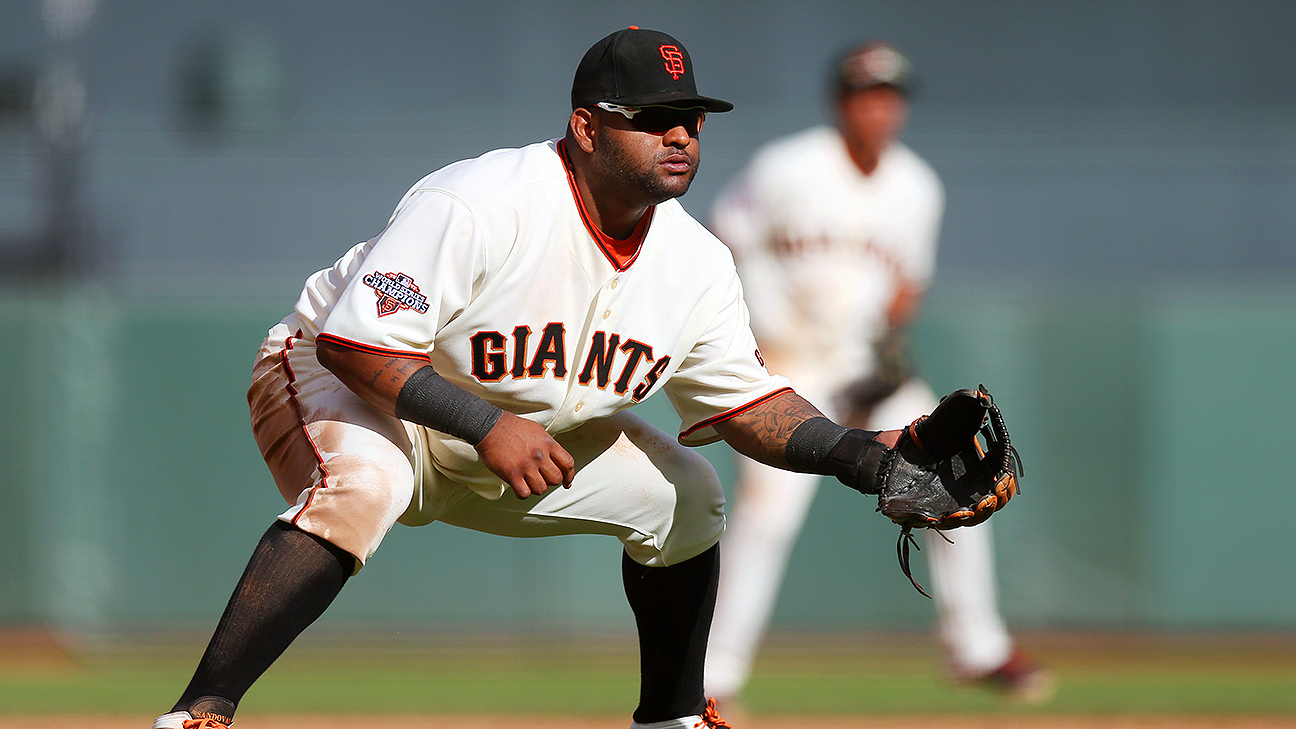
The Boston Red Sox are reportedly all-in on Pablo Sandoval. Gulp.

Many of the points I made in the spring still stand. Sandoval plays mediocre defense and can't run (he hasn't even attempted a stolen base since 2012). His power is merely decent, he hardly ever walks (just 39 times in 638 plate appearances last year, and six of those were intentional), and he doesn't produce a lot of runs. Furthermore, his career already appears to be on the downswing, as his OBP and slugging have fallen every year since 2011. 28 or not, that's not somebody I'm handing a six-year deal to.

One would expect Fenway to boost his numbers some, but that's not guaranteed. Sandoval hit much better at AT&T (.853 OPS there) compared to everywhere else (.771 OPS). It's typical for players to hit better at home regardless of where they play, however, and it stands to reason that his home numbers would rise in Fenway's friendly confines.

The Red Sox have a clear hole to fill at third base (Will Middlebrooks aint the answer), but there are better, more appealing options, like trying to trade for Adrian Beltre or signing Chase Headley. I like that they're willing to throw money at a player, but Sandoval's the wrong guy. Throw that money at a starting pitcher, for the love of God, like Jon Lester or Max Scherzer. Don't piss it away on Sandoval, a solid player but by no means a star. If you're going to spend superstar money, you better get a superstar in return, and a corner infielder who's averaged 14 homers, 72 RBI, and a .280/.335/.424 line over the past three years isn't close to one.

Please, Mr. Cherington, spend your money elsewhere. Let Sandoval be someone else's mistake.

Martinez Deal a Mistake

Martinez was a beast last year, but is he worth the money? (ESPN)
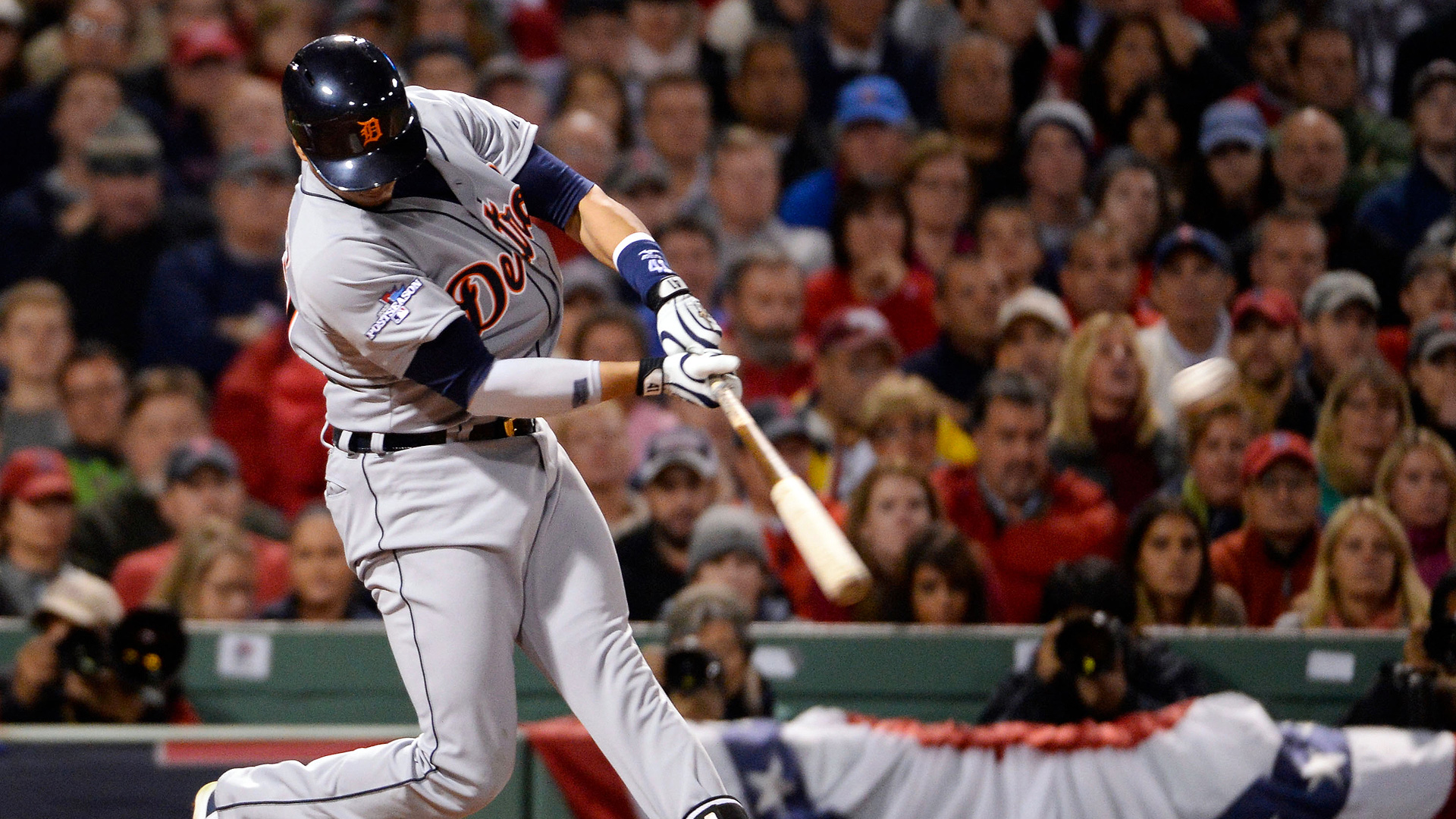
Victor Martinez will likely retire as a member of the Detroit Tigers. The soon-to-be 36 year-old signed a four-year extension with the Tigers that will pay him close to $68 million, or $17 million per year. The deal will end shortly before V-Mart's 40th birthday.

Now, this is exactly the kind of deal teams should not be making. Banking on the second half of a player's 30s is almost always a terrible idea, especially when said player spent the first half of his career behind the plate. Usually when teams do that, it's because they're locking up a player's early 30s as well, so they hope to get some prime years out of him before his inevitable descent. In this case, the Tigers are merely signing up for Martinez's decline phase, and paying him handsomely for it to boot.

Make no mistake, Martinez will decline. There's nowhere for him to go but down after a monster 2014 campaign that saw him lead the major leagues in OPS at .974. The career-high 32 home runs at age 35 were clearly a fluke, as he had never hit more than 25 before and managed just 26 over the previous two seasons combined. His gap power is legit, as he's now exceeded 30 doubles in a season nine times, but the long ball power is not. He'll be lucky to crack 15 homers next year, let alone 20. He's also painfully slow, which explains how he managed to score only 87 runs despite leading the league in OBP and batting in the middle of Detroit's loaded lineup.

It boils down to this: the player that Martinez is going to be, a two-to-three win player (at best) whose value is tied up entirely in his bat, is simply not worth $17 million a year. He won't be next year, and he definitely won't be four years from now, even though his skill set will probably age well (he hardly ever strikes out and improved his walk rate after three straight seasons of middling walk totals). But if he's just a 10-15 homer guy with zero speed and no defensive value, that's not going to justify his paycheck. He'll also prevent Miguel Cabrera from DH'ing on a regular basis, which will lead to more wear and tear on Detroit's near-$300 million investment.

Coming off four straight division titles but still searching for their first championship since 1984, the Tigers are still in win-now mode and will benefit from his bat in the lineup next year. They'll probably get at least another productive season or two out of Martinez, but it's doubtful he'll still be pulling his weight in 2017 or 2018. V-Mart's deal also likely spells the end of Torii Hunter in a Tigers uniform, as Detroit doesn't have room on its roster for a 39 year-old defensive liability with Martinez as the everyday DH.

The best hitters ward off age and remain productive through their late 30s, and Martinez is a great hitter. But history tells us these deals fail more often than they work out. Betting on a player several years past his prime is always a gamble, one that rarely pays off.


Wednesday, November 12, 2014

Kluber Robs King Felix

Hernandez deserved to win his second Cy Young, but didn't (RotoScout)
The races for the American League and National League Cy Young couldn't have been any different.

In the National League, Clayton Kershaw was the heavy favorite and won easily, securing his third Cy Young in four years (and, let's be honest, he deserved the 2012 award over R.A. Dickey too). It was Kershaw and everyone else, meaning a vote for Johnny Cueto or Adam Wainwright, while defensible, was clearly misguided.

The American League's top two candidates were virtually inseparable. They both had dominant seasons and compelling reasons, but in the end it came down to splitting hairs. In what was destined to be a photo finish, Corey Kluber beat out Felix Hernandez. Kluber nabbed 17 of the 30 first place votes and 169 points, edging out the 13 and 159 compiled by King Felix. Chris Sale finished a distant third with 78 points.

Looking at Hernandez's stats, it's hard to see how he didn't win. He had the league's lowest ERA, WHIP, and hit rate while placing second in pitcher bWAR (to Kluber), innings pitched (to David Price), ERA+ (to Sale), and FIP (to Kluber). He also led in most of the advanced stats like adjusted pitching runs and wins, base-out runs and wins saved, and situational wins saved. Opponents batted just .200/.243/.303 (.244 wOBA) against him, and his average GameScore was 65. For most of the summer, he was the clear favorite as he strung together an MLB-record 16 straight starts with at least seven innings pitched and two earned runs allowed or fewer.

But he slipped just a bit over the final six weeks (2.75 ERA), opening the door for Kluber, who came on like a freight train down the stretch. His first half was hardly Cy-worthy (3.01 ERA), but after the All-Star Break he had a 1.73 ERA over his final 104 innings to lower his final ERA to 2.44. He also struck out 39 batters over his final three starts to give him a whopping 269 K's on the season, second only to Price and 21 more than Hernandez. He also finished in a three-way tie for the league lead in wins with 18 (same as Max Scherzer and Jered Weaver) while pacing the circuit in pitching bWAR (7.4), and FIP (2.35).

While Kluber had an outstanding season, I believe the hardware belongs to King Felix. For one, Kluber wasn't even Cy Young-caliber for most of the first half, while Hernandez was Cy Young worthy from start to finish. Kluber had that great finishing kick, but I think Hernandez deserves credit for being more consistent. Additionally Kluber's average GameScore (63) was a hair lower than Hernandez's, revealing that he was slightly less dominant on a per-start basis. Batters also had more success against him, hitting .233/.279/.345 (.277 wOBA) when he was on the bump--a 78 point difference between him and Hernandez. That's pretty sizable, especially considering Kluber faced slightly weaker hitting talent.

It's true that Hernandez did pitch in a more favorable environment with a better defense behind him, but the park is accounted for in Adjusted ERA+, which has him considerably ahead of Kluber 170 to 152. Furthermore, Safeco doesn't help Hernandez as much as other pitchers because of his ability to induce ground balls. As for the defense, well, it's not like Hernandez was pitching to contact. He still struck out 248 batter's, for heaven's sake! Tony Blengino over at FanGraphs took all these factors into account and calculated Hernandez's true ERA to be 2.29, a touch better than Kluber's 2.45.

All in all, I like Hernandez's case a little better than Kluber's. I'm not sure what swayed the voters over to the latter's side: I hope it was the FIP and gaudy strikeout rates but I suspect the monster second half and shinier win total played a role as well. The voters had to make a really tough choice, so I'm not surprised they got it wrong (look no further than their inability to elect Mike Trout MVP before this year). Kluber was great, but Hernandez was a tad better and deserved to win by the slimmest of margins.
Mets Misfire on Cuddyer

Cuddyer's had a fine career, but it's about to go south (CBS New York)
The New York Mets made an early offseason move Monday, inking outfielder Michael Cuddyer to a two-year, $21 million contract. The deal, which pays Cuddyer $8.5 million next year and $12.5 million in 2016, is pretty reasonable. There's not many impact bats out there that can be acquired so cheaply, and Cuddyer's been a solidly above average hitter since his 2006 breakout. In addition to winning the National League batting title in 2013, he's made two All-Star teams, enjoyed four 20-homer seasons, and exceeded a .750 OPS in 11 of the past 12 seasons.

That said, I don't think this deal will work out for the Mets, who sacrificed a mid-first round 2015 draft pick (in addition to the $21 million) because Colorado offered Cuddyer a $15.3 million qualifying offer, which he was planning to accept before the Mets came calling. I'm fine with the length and dollar figure (three years or anything over $25 million would have been too much), but losing the draft pick on top of that means this acquisition probably won't be worth it in the long run.

Now, in order for New York to get a good return on the contract, Cuddyer will have to be worth at least three wins over the next two seasons, as the going rate for a win on the open market is about $7 million. Seeing as how he was worth exactly three wins the last two years, that seems reasonable. However, Cuddyer is going to be 36 next year, which means he's a good bet to decline. He's also experienced his share of injury woes lately, failing to reach 140 games played in any of the past four seasons and suiting up for just 49 last year because of three separate trips to the Disabled List. It's hard to help your team win when you can't take the field.

And while Cuddyer's track record is impressive, he's benefited from favorable home parks for all but two of his 14 seasons, which expains why his home OPS (.875) is 122 points higher than his road OPS (.753). In the Twins' first season at Target Field (2010), a notorious pitcher's park, his OPS dropped 109 points from the previous year and his home run total plunged from 32 to 14. It goes without saying that the shift from Coors Field--the best hitter's park in the majors--to Citi Field--one of the worst--is going to dampen his production. No way his OPS exceeds .900 again, as it has the last two years, and New York will be lucky if he can even break .800.

So given Cuddyer's age, injury history, and imminent regression, it seems unlikely he'll produce the three wins needed to earn his paycheck. That doesn't even account for the unknown cost of the forfeited draft pick, who might be a star someday or could have been used as trade bait. I commend the Mets for going after and obtaining an inexpensive quality hitter because a) those are becoming so rare these days and b) they need bats after ranking in the bottom five of the NL last year in hits, batting average, slugging, OPS, and total bases, but I just don't think Cuddyer's going to be the hitter they expect him to be.

If I'm Saldy Anderson, general manger of the New York Mets, I don't make this deal because it entails considerable downside without a speck of upside. Cuddyer can't replicate his production from the last two years outside Colorado, much less improve on it. He can only get worse, and he's not getting any younger. New York's betting that Cuddyer has two more solid (and healthy) seasons left in him. Even if he's healthy, I think the move to Citi Field hurts him enough that he won't put up the numbers to justify his contract.


Tuesday, November 11, 2014

Recounting Abreu's Rookie Season

Abreu had one of the best rookie years of all-time (FoxSports)
In an announcement that surprised no one, Jose Abreu was a unanimous selection for the American League Rookie of the Year. Abreu is just the ninth player ever to win the award unanimously, beating out Matt Shoemaker (second) and Dellin Betances (third). He was voted AL Rookie of the Year by Sporting News as well, winning the award in a landslide with 149 of 160 possible votes. Nobody else received more than four.

By batting .317 with 36 home runs and 107 RBI, the 27 year-old Cuban sensation became the first rookie in MLB history to rank top-five in his league for the Triple Crown stats (he was fifth in average, third in big flies and fourth in ribbies). His 36 home runs, a White Sox rookie record, were the sixth-most by a rookie all-time, exceeded only by Mark McGwire (49), Frank Robinson and Wally Berger (both with 38), and Al Rosen and Albert Pujols (both with 37). Interestingly, all those players are/were righthanded, as is Abreu. Had he not spent time on the Disabled List in May with ankle tendinitis, he likely would have joined Nelson Cruz in reaching the 40 home run benchmarks and/or passed all those aforementioned names save McGwire.

29 of those big flies came prior to the All-Star Break--only McGwire with 33 had more. Abreu was named AL Rookie of the Month in April, June, and July and took home AL Player of the Month honors in April and July. He set the record for most home runs and RBI by a rookie in the month of April, with 10 and 32, respectively (31 if you discount the one he recorded on March 31st). He also became the fourth player ever with 30 doubles, 30 homers, and 100 RBI in his rookie season, joining Hal Trosky, Ted Williams, and Albert Pujols.

What's more, Abreu was played a pretty solid first base. He had the highest Range Factor/9 innings and most double plays turned among American League first basemen. He ranked second in Range Factor/game and fourth in fielding percentage and putouts. All in all, not a bad first impression for somebody in the first year of a six-year, $68 million contract given to him before he'd ever stepped up to the plate in the big leagues.

Almost as unsurprising was the National League award going to Jacob deGrom, who secured 26 of the 30 possible first place votes to win handily. Billy Hamilton came in second and Kolten Wong finished third. DeGrom went 9-6 with a 2.69 ERA and 144 strikeouts in 140 and 1/3 innings pitched, making him just the fifth rookie in NL history to post an ERA below 2.75 and a K/9 ratio above 9 (the others being Jose Fernandez, Roy Oswalt, Hideo Nomo, and Dwight Gooden).

Originally called up in mid-May to work out of the Mets bullpen, he flourished as a starter with Dillon Gee out and made 22 starts in all. He had a few hiccups at first but pitched better as the season wore in, establishing himself as the team's top pitcher. New York hopes deGrom can be a mainstay in a rotation that gets Matt Harvey back next year and has an ace on the rise in Zack Wheeler. Together they'd form a formidable big three and are essential to the Mets having their first winning season since 2008.