Thursday, November 6, 2014

2014 Silver Sluggers Review

The major league batting champ was rewarded with his first Silver Slugger
Silver Sluggers were announced today, and while I was fine with most of them there were a few I disagreed with.

American League
C Yan Gomes
Gomes was a clear choice here given that he had the highest wOBA, wRC+, and second-most home runs among AL catchers (to Brian McCann). Nobody else had a good year behind the plate in the Junior Circuit, opening the door for Gomes in his first full season. He batted .278/.313/.472 with 21 big flies and 74 RBI despite striking out five times as often as he walked.

1B Jose Abreu
Hate to snub Miguel Cabrera and Edwin Encarnacion, but Abreu was better than both. All he did was hit .317/.383/.581 with 36 home runs, 107 RBI, and the highest slugging and OPS+ in baseball.

2B Jose Altuve
Choosing between him and Robinson Cano came down to splitting hairs, but I'm fine with Altuve because he led the majors in hits and batting average with 225 and at .341, respectively. While he managed just seven home runs he did club 47 doubles and rack up 299 total bases.

3B Adrian Beltre
Another well-deserved honor for Beltre, who continued to pad his Hall of Fame totals with a seven-win season. Yup, that's what happens when you play elite defense at third and bat .324/.388/.492 in a parched scoring environment.

SS Alexei Ramirez
In a weak year for American League shortstops, Ramirez wins by default. His 15 homers and 74 RBI were most among AL shortstops, and he also smashed 35 doubles. en if his .273/.305/.408 line was roughly league average after adjustments for league and park. Jose Reyes was the only other one worth considering, and nobody in this day and age is going to give a Silver Slugger to a guy with nine home runs, 51 RBI and a .398 slugging percentage.

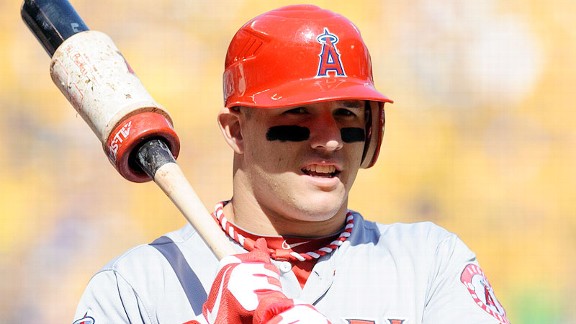
OF Mike Trout
Obviously

OF Michael Brantley
Duh

OF Jose Bautista
Of course

DH Victor Martinez
No-brainer

Stanton was born to win Silver Sluggers (RantSports)
National League
C Buster Posey
Posey just barely beats out Jonathan Lucroy for the award on the strength of his slightly superior rate stats and power figures, which look even better with park adjustments. Posey rode a torrid second half to the finish line to end up at .311/.364/.490 with 22 homers and 89 RBI. Also feel obliged to mention Devin Mesoraco.

1B Adrian Gonzalez
Gonzalez had a good year by traditional standards with his 41 doubles, 27 homers and ML-leading 116 RBI, but Anthony Rizzo was clearly the better hitter. Not only did Rizzo exceed Gonzalez in all three rate stats, but he also outhomered Gonzo 32 to 27 and dwarfed him in wOBA (46 point edge for Rizzo) and wRC+ (25 point advantage). Rizzo missed 22 games to Gonzalez's three, but still provided twice as much offensive value according to FanGraphs.

2B Neil Walker
Pretty easy, as few NL second basemen had years worth remembering in 2014 besides Chase Utley and (I guess) Daniel Murphy. Walker was terrific though, smashing a career high 23 home runs to go along with his robust .271/.342/.467 batting line.

3B Anthony Rendon
Todd Frazier had a great year, but Rendon's was better. On top of leading the league in runs with 111, he also popped 21 homers and 39 doubles, batted .287/.351/.473, and knocked in 83 runs despite primarily batting second. And with the 17 steals in 20 tries, it was truly a fantastic all-around campaign.

SS Ian Desmond
Desmond won his third straight Silver Slugger with another solid all-around season, his third straight with at least 20 home runs and 20 steals. His 24 bombs and 91 RBI led the position, but his .255/.313/.430 slash line is not exactly eye-popping. Jhonny Peralta bettered Desmond in all three rate stats, hitting .263/.336/.443, and also posted a higher wOBA and wRC+. With 21 home runs and 75 RBI, his power numbers were nearly as good as Desmond's too. It's a close call either way, but I would have given it to Peralta who was worth 15 runs better than average as a hitter compared to Desmond's three.

OF Andrew McCutchen
Obviously.

OF Giancarlo Stanton
Duh.

OF Justin Upton
Hold on there. While Upton had strong power numbers (29 taters, 102 RBI) to go along with his .270/.342/.491 batting line, those rate stats were nowhere near as good as Yasiel Puig's .296/.382/.480. Puig didn't hit for much power with 16 home runs and 61 RBI, but nevertheless crossed home 92 times, posted a .379 wOBA, and notched a gaudy 147 wRC+. FanGraphs estimates he provided roughly 33 percent more offensive value than B.J. Upton's little brother.

P Madison Bumgarner
We''ll always remember Bumgarner's 2014 for what he did on the mound in October, but let us not forget that he held his own at the plate that year as well. MadBum mashed four home runs and drove in 15 runs to support himself, batting .258/.286/.470 in 78 plate appearances. It was a surprising outburst given that he had managed a meager .138/.185/.192 line with two home runs and 16 RBI in his career prior to 2014.

2014 MLB Award Finalists

With no Miguel Cabrera to beat him, Trout will win AL MVP (ESPN)
The three finalists for each of the BBWAA's awards were announced the other day, with the winners to be announced next week. Here are my thoughts on and rankings of the finalists for each award.

AL MVP
1. Mike Trout
Duh. There's no way he doesn't win this year. Not only was he the major league leader in runs (115), total bases (338), extra base hits (84), and runs created (137) but he also paced the American League in bWAR (7.9), and RBI (111), smashed 36 home runs and stole 16 bases in 18 attempts, all while playing center field for the team with the best record in baseball. He's a lock despite having a "down" year.

2. Michael Brantley
Brantley was positively Trout-ish this year, posting tremendous numbers across the board en route to a seven win season. While he failed to lead the league in any one category, his name was all over the leaderboards. The first-time All-Star batted .327/.385/.506 (154 OPS+) with almost as many walks (52) as strikeouts (56), not to mention 45 doubles, 20 home runs, 97 RBI, and 309 total bases. He also piled up 200 hits, scored 94 runs, and swiped 23 bases against just one caught stealing. Not a great outfielder, but that can be overlooked when you produce that much offense.

3. Victor Martinez
Not sure V-Mart was one of the three most valuable players in the American League given that he was primarily a DH and is a liability on the basepaths, but he did have a fantastic year at the plate. The best pure hitter in baseball last year, Martinez led the majors in OPS at .974, had the American League's highest OBP at .409, and was the most difficult to strike out with a 13.4 AB/K ratio. The 35 year-old former catcher hit like a man ten years younger, batting a robust .335/.409/.565 (168 OPS+) with 32 home runs, 103 RBI, 317 total bases, and 67 percent more walks (70) than strikeouts (42). The batting title runner-up to Jose Altuve also finished second in slugging (to Jose Abreu), runs created (to Trout), and adjusted OPS+ (to Abreu).

NL MVP
1. Clayton Kershaw
Missed a month, but Pedro Martinez-esque production when he pitched makes up for lost time. Led the major leagues in almost every major pitching category and helped pitch his team to a division title with 7.5 bWAR--most in the NL.

2. Andrew McCutchen
McCutchen was a monster this year, and if he'd played the whole season I'd probably give him the nod over Kershaw. But the defending MVP missed time too (16 games), and so his counting numbers are a bit weak for an MVP with 25 homers and fewer than 90 RBI/runs. His rate stats were certainly MVP-caliber though: .314/.410/.542, giving him the best OBP in baseball as well as the league's highest OPS and OPS+. If he was an elite defensive centerfielder or made more of an impact on the bases I'd be tempted to choose him over Kershaw, but as a complete package (6.4 bWAR) he just wasn't as good.

3. Giancarlo Stanton
Pretty much everything I said about McCutchen applies to Stanton. Through no fault of his own, Stanton was drilled in the face and missed the final 17 games of the season. That didn't stop him from pacing the Senior Circuit in home runs (37), slugging percentage (.555) and total bases (299), but it was enough to effectively finish his MVP chances. At least he got the Hank Aaron award.

AL Cy Young
1. Felix Hernandez
By the slimmest of margins, King Felix deserves his second career Cy. The AL leader in ERA (2.14) and WHIP (0.92) was phenomenal in pretty much every way you can measure a pitcher, with 248 strikeouts in 236 innings and a 5.39 K/BB ratio and the lowest hit rate in the league. I've heard arguments made for Kluber because he pitches in a more neutral ballpark with a less talented defense behind him, but I'm swayed by Hernandez because his ERA, ERA+, and WHIP were all considerably better. To me, WHIP and ERA are the two-most important stats for a pitcher, and in those Felix comes out on top.

2. Corey Kluber
When you get down to it, Kluber's case is just as strong as Hernandez's. Kluber led the league in wins (18), FIP (2.35), and pitching bWAR (7.4). Usually that's good enough to win it, but Felix just barely edges him out.

3. Chris Sale
On a per-inning basis, Sale was probably the best pitcher in the American League this year. His 178 ERA+ and 10.8 K/9 rate were tops in the AL, while his 2.17 ERA and 0.97 WHIP were second. He placed third in the league in pitching bWAR with 6.6 despite completing only 174 innings because of a strained flexor muscle in his elbow forcing him to the Disabled List. That he missed more than a month and still ranked so highly among AL hurlers just goes to show how special his season was, but because of his reduced workload he must take a back seat to Hernandez and Kluber.

Kershaw has the NL Cy Young and MVP sewn up (NextImpulseSports)
NL Cy Young
1. Clayton Kershaw
If he's good enough to be MVP, he's definitely good enough to cop the Cy Young.

2. Johnny Cueto
Cueto had the most innings (243 and 2/3) and strikeouts (242) in the National League, not to mention 20 wins, a 2.25 ERA, a 0.96 WHIP, and 6.4 bWAR. Any other year he wins, but not in the year of the Kershaw.

3. Adam Wainwright
Nobody's better at coming close to, but not winning, the Cy Young than Wainwright, who is set to finish second or third for the fourth time in six years. Always amazing, he was a 20 game winner with a 2.38 ERA in 227 innings, good for 6.1 bWAR. Better luck next year, Adam.

AL Rookie
1. Jose Abreu
Should win unanimously.

2. Matt Shoemaker
Most years, Shoemaker walks home with this award no problem. The 27 year-old emerged as the Angels' second-best starter to Garrett Richards and picked up the slack when he went down with a knee injury in late August. Had Shoemaker not been shut down for the last two weeks of the season, his case would likely look even better as he was on an incredible roll at the time with seven straight wins and just seven earned runs allowed in his previous 48 and 2/3 innings. As it were, he still finished with a 16-4 record (good for the best winning percentage in the American League), 3.04 ERA in 136 innings, and a sterling 5.17 K/BB ratio.

3. Dellin Betances
Betances was about as dominant as a reliever can be, striking out 135 men in 90 innings and maintaining a 1.40 ERA across his 70 appearances. Worth 3.7 bWAR, the All-Star setup man also had a 0.78 WHIP, 5.63 K/BB ratio, 277 ERA+ and a 1.64 FIP. Not surprisingly, his record was a perfect 5-0.

NL Rookie
1. Jacob deGrom
In baseball, as in life, timing is everything. If deGrom debuted last year with the likes of Yasiel Puig, Jose Fernandez, and Julio Teheran, nobody would have noticed him. But because the rookie class was so weak this year, and because they have to give the award to someone, deGrom's the guy. He pitched well in his 22 starts, averaging more than a strikeout per inning and keeping his walk and homer rates down. So while his 2.69 ERA (130 ERA+) looks great, it looks even better backed up by a 2.67 FIP.

2. Billy Hamilton
Were it not for the late-season emergence of deGrom, Hamilton would have won the trophy by default. Cincinnati's speedy leadoff man and center fielder played exceptional defense but struggled at the plate, batting just .255/.292/.355 with 117 strikeouts against just 34 walks (more than three K's per free pass). A terror on the basepaths, he did steal 56 bases, second only to Dee Gordon, but was thrown out 23 times--more than anyone else in baseball. All in all he was a servicable regular worth in the neighborhood of three WAR due to his baserunning and plus defense at a premium position. The 24 year-old is not a leadoff hitter, though, and is likely too flawed at the plate to avoid becoming anything other than a rich man's Jackie Bradley, Jr or a homeless man's Jose Reyes.

3. Kolten Wong
That Wong was one of the three best rookies in the National League this year says a lot about how weak that rookie class was. He hit marginally better than Hamilton (.249/.292/.388), but that's not saying much, and was only okay at second base. He ran the bases well, going 20 for 24 in stolen base attempts, and showed a dash of power with 12 home runs in 402 official at-bats. Still just 24, Wong (like Hamilton) has room to improve and will look to build upon a promising but underwhelming rookie year.

AL Manager
1. Buck Showalter
Nobody, and I mean nobody, gave the Orioles a chance to win the AL East. Showalter squeezed the most out of a team that lost Matt Wieters and Manny Machado for much of the season, got next to nothing out of Chris Davis, and received minimal offensive production from its double play combo. That team won 96 games; at full strength they easily win over 100.

2. Mike Scoscia
The Angels had the best record in baseball, but then they also had Trout, Josh Hamilton, Albert Pujols, Jered Weaver, and C.J. Wilson. LA overachieved everyone's expectations this year, but they wildly underachieved last year (and the year before that, too). Not quite sure where Scoscia fits into all of this.

3. Ned Yost
(Trying not to laugh...)

NL Manager
1. Bruce Bochy
Led an 86-loss team in 2013 back to the playoffs despite continued ineffectiveness from Tim Lincecum and injuries to Matt Cain and a host of regulars, including Angel Pagan, Brandon Belt, and Mike Morse. That he guided them all the way to the World Series title, while unknown at the time ballots were cast, makes this feat even more impressive.

2. Clint Hurdle
Hurdle led a Pirates team ripe for regression back to the playoffs, which I have to admit I did not see coming. But seeing as how he won last year and his team dropped six games in the standings, there's zero chance he repeats this year.

3. Matt Williams
Inherited a ridiculously talented team that under-performed in 2013. To run away with a weak division all they had to do was play up to their true talent level, and that's exactly what happened. Don't see why a push-button manager like Williams should get much credit for that.

Wednesday, November 5, 2014

2014 Gold Glove Review

Injuries have not affected Pedroia's stellar play in the field (BostonCBS)
Baseball's Gold Glove award winners were named yesterday, and while there are always some questionable selections I have to say most of these are pretty spot on. The selections have become markedly more accurate in recent years, which is absolutely a good thing. They're doing a much better job of what they were intended for, which is to honor the best defender at each position in both leagues. As always, though, there were a few miscalls that I felt obliged to point out.

Here's my position-by-position breakdown.

American League

C Salvador Perez
Second consecutive Gold Glove for Perez, who seems to be developing into the AL equivalent of Yadier Molina. FanGraphs had him as the best defensive catcher in baseball last year.

1B Eric Hosmer
Second straight for Hos.

2B Dustin Pedroia
Pedroia's bat's been slowed by injuries in recent years but his defense has remained elite, as he was the best defensive second baseman this year according to FanGraphs. Baseball-Reference rated his fielding contributions as worth 2.5 dWAR, the highest total of his career even though he missed 27 games.

3B Kyle Seager
While his offensive figures have held steady over the last three years, Seager made significant strides in the field this year. A mediocre third baseman in the past, he elevated his fielding and was an asset at the hot corner this year. But he was not as good as Josh Donaldson, who was tremendous last year and even better this year--worth 2.7 dWAR according to Baseball-Reference. B-R and FanGraphs both rate Seager inferior.

SS JJ Hardy
Hardy's signature power disappeared, but he was still as slick-fielding as ever and nabbed his third straight Gold Glove as a result.

LF Alex Gordon
Easy call here, as Gordon is universally regarded as one of the finest defensive outfielders in the game today.

CF Adam Jones
The metrics disagree with this one, but many who watch Jones play everyday say he's absolutely deserving. I'm inclined to think his true value falls somewhere in the middle. That said, he was actually pretty good this year, but I'm just not sure he was better than Jackie Bradley Jr. (what can't that kid catch?) and Leonys Martin. What I am sure about is that he should not have four Gold Gloves lined up in his trophy case.

RF Nick Markakis
No way. Markakis has been a bad defender since 2008, and yet somehow has managed to snag a pair of Gold Gloves during that time.

P Dallas Keuchel
Sure.

Lagares patrols the Mets' outfield with authority (Hardball Times)
National League

C Yadier Molina
Yadi took home the hardware for the seventh straight year, which is understandable given that his elite defense behind the plate held steady. That said, he didn't deserve this one because he wasn't as valuable as Jonathan Lucroy, a more worthy candidate because of his elite pitch-framing capabilities. Lucroy wasn't much better, but both B-R and FanGraphs agree he was superior. Molina wasn't a bad choice, it's just that Lucroy was the right choice.

1B Adrian Gonzalez
Gonzo had a good year at the plate and in the field, earning his fourth career Gold Glove and first since 2011.

2B DJ LaMahieu
Like teammate Nolan Arenado last year, didn't do much with the bat but had a heck of a year defensively. Well-deserved.

3B Nolan Arenado
Won his second straight, as he was worthy nearly two dWAR despite missing a third of the season. This wasn't a mistake--he's really that good.

SS Andrelton Simmons
Jhonny Peralta had an excellent year with the glove, but Simmons was even more fantastic. Not quite as great as he was last year, when he won his first Gold Glove with 5.4 dWAR, but his 3.9 dWAR this year were exceptional, making him the best defensive shortstop in either league.

LF Christian Yelich
Yep. Good call.

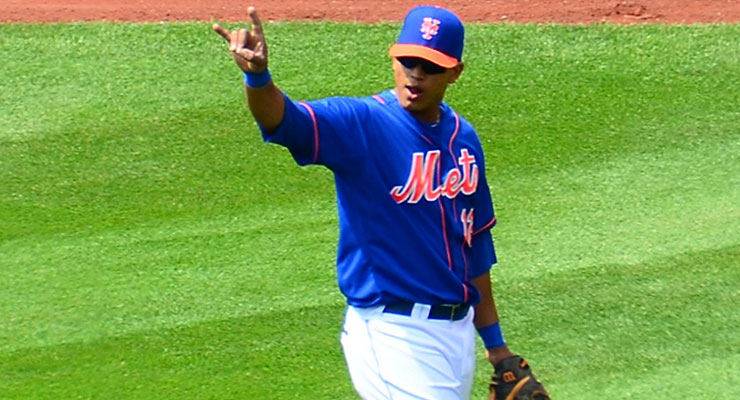
CF Juan Lagares
If you watched Lagares play at all this year, then you know how much he deserves this award.

RF Jason Heyward
Another easy call, as Heyward was far and away the best defensive right fielder in baseball this year. His bat hasn't progressed the way we'd hoped, but the 25 year-old probably has a few more Gold Gloves in his future.

P Zack Greinke
Okay.

Soriano Says Good-bye

Soriano had a stellar 16-year career (Rumors and Rants)
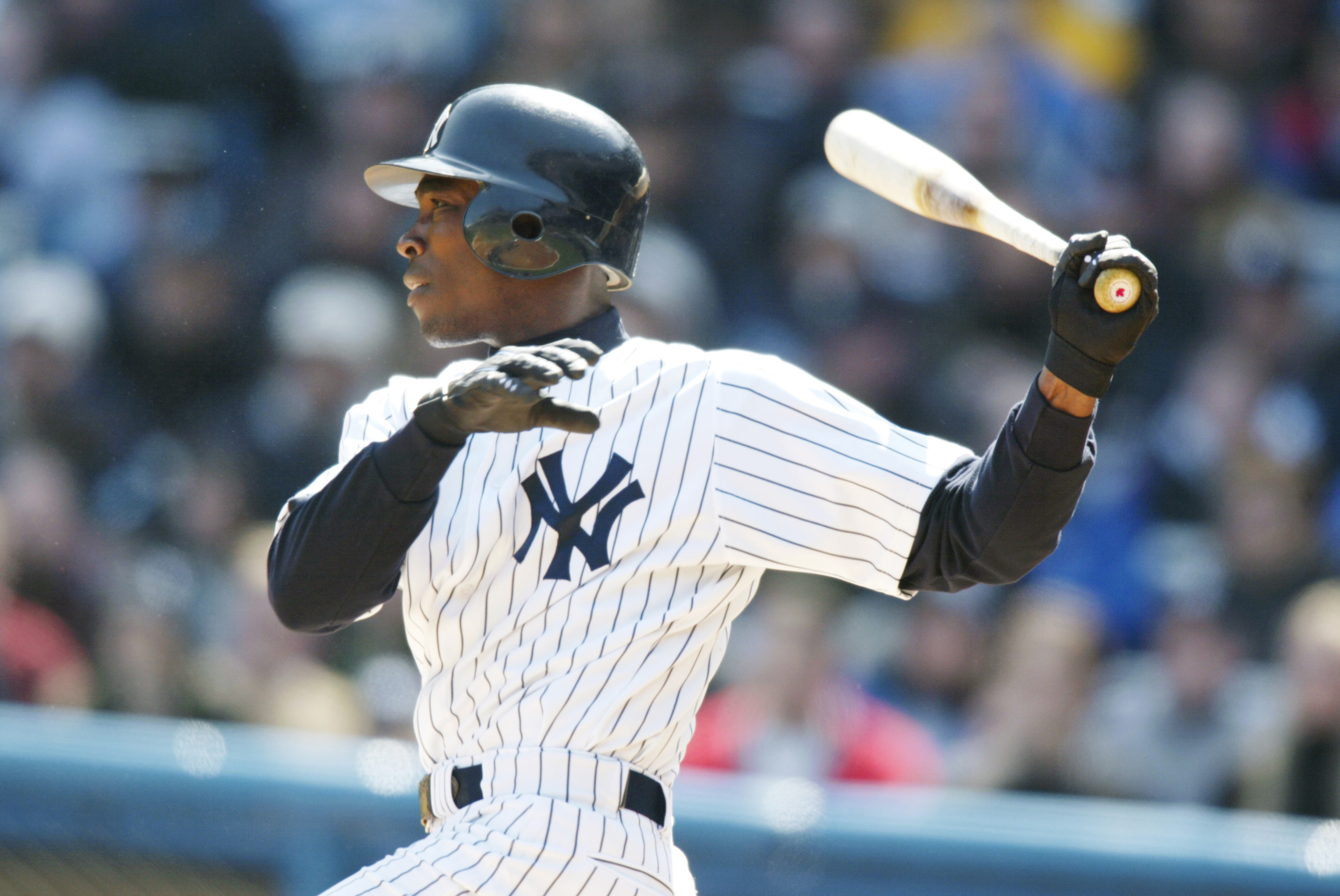
As of yesterday, Alfonso Soriano is officially all done with baseball.

The end came quickly for Soriano, as it often does for whiffing machines in their late 30s. After exceeding 30 home runs and 100 RBI in both 2012 and 2013, Soriano fell apart at age 38 in 2014. Soriano batted a meager .221/.244/.367 with six home runs and 23 RBI in 67 games, snapping his streak of 13 consecutive seasons with at least 18 home run and earning a DFA from the Yankees in early July, followed by an outright release. New York cut him loose little more than a year after trading for him to ail their sinking offense, which he did with 17 homers and 50 RBI in just 58 games.

It was a grand return for Soriano, who began his professional career with the Yankees when they purchased him from Japan in 1998. One year later he made his debut, though his role was limited to a cameo on the championship teams of 1999 and 2000. In 2001 he inherited the everyday second baseman's job from the error-prone Chuck Knoblauch, only to become an error-prone second baseman himself. But like Knoblauch, Soriano could hit, and that more than compensated for his adventures in the field.

Following a third place-finish in the AL Rookie of the Year race in 2001, Soriano emerged as a star in 2002, earning his first All-Star nod, Silver Slugger award, and finishing third in the MVP race behind a pair of slugging shortstops: Miguel Tejada and Alex Rodriguez. Batting leadoff in Joe Torre's lineup ahead of Derek Jeter, Bernie Williams, Jorge Posada, and Hideki Matsui, Soriano led the major leagues with 128 runs, 209 hits, and stole a league-high 41 bases. With 39 home runs he narrowly missed a 40/40 campaign, especially since he hit his 39th with two weeks left in the season. He also batted an even .300 with 51 doubles and 381 total bases, making his 2002 one of the finest offensive seasons ever by a second baseman.

His 2003 was nearly as good (more valuable according to bWAR, actually), as he was again an All-Star, scored well over 100 runs (114), and went 30/30 with 38 bombs and 35 thefts (caught just eight times). He also piled up 358 total bases and knocked in 91 runs while cutting down on his strikeouts and improving his walk rate. Soriano seemed destined to wind up as one of the all-time great Yankee second basemen, in the same league as Joe Gordon and Willie Randolph.

Only fate intervened. Aaron Boone shredded his knee playing pickup basketball, leaving New York in need of a third baseman. Brian Cashman asked if Alex Rodriguez, who was nearly traded earlier in the 2003-2004 offseason to Boston, was still for sale. He was, and became a Yankee after New York sent Soriano and a player to be named later (Joaquin Arias) to Texas for A-Rod and cash.

Soriano played for four teams but started and ended his career in pinstripes (SBNation)
Soriano continued to produce big numbers for two years in the Texas heat before he was traded to the Washington Nationals, where he enjoyed the finest season of his career in 2006. Moved to left field, he responded with just the fourth 40/40 season in baseball history, joining Jose Canseco, Barry Bonds, and Alex Rodriguez. He also posted a career high .911 OPS en route to 6.1 bWAR and a sixth place finish in the NL MVP race.

That monster season, which included 362 total bases, couldn't have come at a better time for Soriano, who was in his walk year. He capitalized by signing an outlandish eight-year, $136 million contract with the Chicago Cubs which was doomed from the start, as he was about to begin his age 31 season when the ink dried.

Sure enough, Soriano's numbers slid as he aged and struggled with injuries, as he missed significant time in 2007, 2008, and 2009. The speed that helped him steal 30 or more bags five times from 2001 through 2006 dried up overnight, limiting him to single digit stolen base totals (outside of his aberrant 18 steal campaign in 2013) after 2008. His outfield defense, solid at first, grew to be truly abhorrent as his range diminished.

The Cubs' fortunes followed Soriano's, as they fell from playoff contender to one of the worst teams in baseball. It was fitting that they were stuck with a .250 hitter who rarely walked, struck out a ton, and couldn't run or field--a daily reminder of their massive misfire. Soriano would accrue 7.9 bWAR across his eight-year contract, worth not even one win per year despite being one of his league's 10 most expensive players from 2009 through 2013. His contract and underwhelming performance was a significant reason, but hardly the only one (see Edwin Jackson signing), for Chicago's rapid descent into irrelevance.

Soriano's age, declining skills and hefty salaries made his contract appear unmovable. Enter the Yankees, who are always willing to play past-their-prime players big bucks to fill out their roster. In desperate need of a power bat to complement Robinson Cano, the great heir to Soriano's second base job, New York sought out Soriano. That's he ended up back in pinstripes for the final act of his career, which included its last hot streak (second half of 2013) and last gasp (2014).

With 27.2 career bWAR, Soriano's not a Hall of Famer, but he's certainly a Hall of Gooder. His 412 home runs are 50th-most all-time, fueled by seven 30-homer seasons. The seven-time All-Star stole nearly 300 bases (289), notched over 2,000 hits (2,095), and eclipsed both 1,000 runs (1,152) and 1,000 RBI (1,159). His combination of power, speed, and low on-base percentages make him something of a modern Andre Dawson.

During the meat of his career from 2001 and 2013, he ranked second in doubles (to Albert Pujols), fifth in long balls, eighth in hits, 10th in runs and stolen bases, and 12th in RBI. It's easy to forget now just how exceptional he was during his prime 10 years ago, and how even in his later years he remained surprisingly durable and a steady source of power. He only had a handful of truly great seasons, but had more than a few good to okay ones. He didn't live up to his contract, but few players would have. It's not like it was a total disaster, either, as he did hit 204 home runs with 599 RBI, 1,004 hits, and an .802 OPS over the life of it.

Don't remember Soriano only for his failures with the Cubs and the massive paychecks he collected from them. Remember him as a good (but flawed), sometimes great ballplayer who combined power and speed like few others, hit wherever he went, then quickly faded away.

Monday, November 3, 2014

Breaking Down Golden Era Ballot

Dick Allen's paid his dues--it's time to let him in (CSNChicago)
Dick Allen: YES
I've written several times before on this blog that I feel very strongly about Allen's status as a worthy Hall of Famer. He was the best hitter in baseball for more than a decade, for crying out loud.

Ken Boyer: YES
Said yes to him when I looked at his candidacy over the summer. He was basically Ron Santo before Ron Santo, and the Hall could really use more third basemen.

Gil Hodges: YES
Falls a bit short as a player, but his status as a Brooklyn Dodger legend and famed manager of the Miracle Mets should be enough to put him over the edge. This is a sentimental pick; he was a great ballplayer and a better man.

Jim Kaat: YES
Kaat's a tricky one, as he compiled some impressive counting numbers in his 25 big league seasons but rarely dominated. A lot like Tommy John in this regard. A three-time All-Star, only once did he receive Cy Young votes or finish higher than 20th in the MVP balloting. Kaat was a true compiler, pitching until he was 44, winning 283 games, and completing over 4,500 innings. His 16 Gold Gloves are the second-most at any position to Greg Maddux's 18. According to FanGraphs he's a deserving candidate with 69.4 fWAR, but Baseball-Reference values his career at a clearly un-Hall-worthy 45.3 bWAR. Split the dfference and you wind up with 57.4 WAR; good but not very impressive for somebody with a quarter-century long career.This disparity is explained by the two sites' different methods in calculating pitching WAR, with FanGraphs relying on FIP and B-R preferring runs allowed. While Kaat was better than average when it came to keeping opponents from scoring, his 108 ERA+ and 93 ERA- are nothing special. His 3.41 FIP is solid, right in line with his 3.45 ERA, and reflects how he was a good control pitcher who was difficult to take deep.

So why am I saying yes to Kaat? A few reasons. One is that eight of his 10 most comparable pitchers are in the Hall, and the other two (John and Frank Tanana) have compelling cases. Another is that he did have a Hall of Fame peak, even if it wasn't very long and sort of spread out (2.95 ERA from 1964''68, plus Cy Young caliber years in 1974 and 1975). But the third and most important one is that if he had won just one more decision for every year that he pitched, he'd have 308 career wins and of course he would be in the Hall of Fame. I'm not going to keep him out of Cooperstown because he didn't pitch for very good teams early and later on in his career.

Minnie Minoso: YES
A classic borderline case, Minoso's career has been re-examined lately by statheads who appreciate his career .298/.389/.459 batting line. During his heyday in the 1950s he was one of the best all-around players in baseball, ranking as the sixth-most valuable position player in baseball from 1951 through 1961. During that time Minoso was worth over 50 fWAR, earned seven All-Star nods, won three Gold Gloves, and stole almost 200 bases. He was also a great run producer, averaging nearly 100 runs and 90 RBI per year despite never hitting 25 home runs in any season. Had Minoso not been held back by the racial attitudes of the times (he didn't play his first full season until he was 25) or not completely fallen apart after turning 36 (-1.4 fWAR in his final five seasons) he would have a much stronger case, but as it is he merits induction for his decade-long dominance of the American League.

Tony Oliva: NO
Oliva's a lot like Don Mattingly in that he was absolutely a Hall of Fame hitter at his peak, but knee injuries ruined the second half of his career and ultimately prevented him from compiling Hall-worthy numbers. His career was just too short, as he only had 11 seasons with more than 70 games played and thus fell short of 2,000 hits and 1,000 runs/RBI. It's too bad because he was a beast in his prime from 1964--the year he won AL Rookie of the Year award--to 1971, when he won his third and final batting title. In between he piled up 42.2 bWAR, made eight straight All-Star teams, led the league in hits five times, and drew MVP votes every year. His batting record is awfully similar to Kirby Puckett's, another popular Minnesota Twin whose career was tragically cut short by physical circumstances.

Billy Pierce: NO
Pierce has been largely forgotten by baseball fans, which shouldn't have happened considering he was the third-most valuable pitcher in baseball from 1950 through 1962. During those 13 years only Robin Roberts and Warren Spahn, two clear-cut Hall of Famers, were better. He made seven All-Star squads, won 211 games, and was worth around 55 wins above replacement depending on which site you prefer. It's tough to say no to someone who was the third-best pitcher in baseball for 13 years, but that's what I'm doing with Pierce. He's right on the cusp for me, but I say nay because his peak wasn't quite dominant enough for someone who pitched 14 full seasons, six of which produced five or more fWAR but with only two others topping three. He falls short in all the Hall of Fame statistics except for Gray Ink, which he barely passes. It's too bad his career wrapped up just as the second Deadball era was getting underway, as he likely would have had several more effective seasons and retired Hall-worthy.

Luis Tiant:YES
Wrote at length about Loo-eee's worthy candidacy here. As somebody who exceeds the BBWAA standard and Hall of Fame standard, he's somebody who should have gone in a long time ago.

Maury Wills: NO
If Wills is worthy, then so is Roger Maris, though neither of them are because they did not sustain their greatness long enough. Wills was very overrated because of his blinding speed, which wasn't particularly valuable because he actually led the league in caught stealing more times (7) than he did in stolen bases (6). With no power to speak of (20 career big flies) and an unimpressive .330 OBP, he would only be Hall-worthy if he played Ozzie Smith-quality defense. While Wills did win two Gold Gloves, he was nothing special in the field. Add it all up and you have a solid, but hardly Hall-worthy shortstop who didn't even crack 40 career WAR.

Bob Howsam: SURE
GM and club president of the Big Red Machine, one of the great baseball dynasties of all time. He also tried to bring big league baseball to Colorado three decades before the Rockies became a thing. So why not?