Showing posts with label Pitching. Show all posts

Tuesday, June 20, 2017

The Elusive 20 Wins

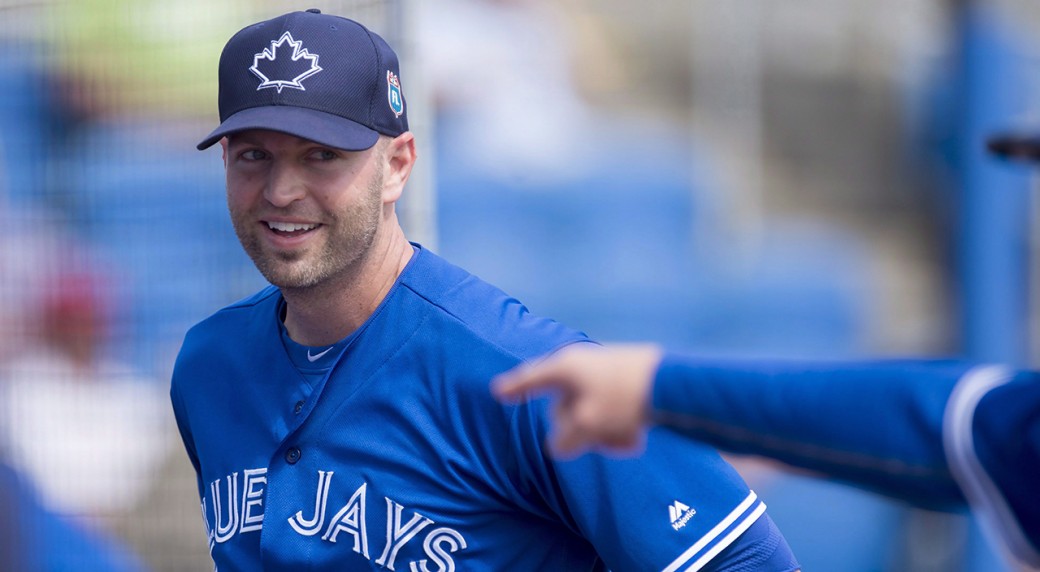
J.A. Happ was, improbably, a 20-game winner last year (Canada Sports Net)
With all the bullpen specialization and attention to pitch counts that has gone on recently, one would think that only the game's elite pitchers would be capable of winning 20 games in a season anymore. In reality, though, the list of hurlers who've done it recently is kind of a mixed bag. None of them are bad, obviously, but there's a good number of mid-rotation arms mixed in there with the cream of the crop.

Over the last several years, there's been about one pitcher per year who comes out of nowhere to win 20 games. In 2011 it was Ian Kennedy, and the following year it was R.A. Dickey and Gio Gonzalez. In 2015 Dallas Keuchel and Jake Arrieta did it, while last year both J.A. Happ and Rick Porcello reached the milestone. They've rivaled, and in some cases surpassed, the victory totals studs such as Clayton Kershaw and Justin Verlander and David Price, not to mention this list of pitchers (Cy Young winners starred)who have yet to win 20 games:
This year, Jason Vargas is atop the wins leaderboard, tied with Kershaw at 10 apiece. Rockies rookie Antonio Senzatela is just one behind them. I'm betting only Kershaw makes it, but then I would have said the same thing about Happ and Porcello last year.

Sunday, March 12, 2017

Sale Already a Savior

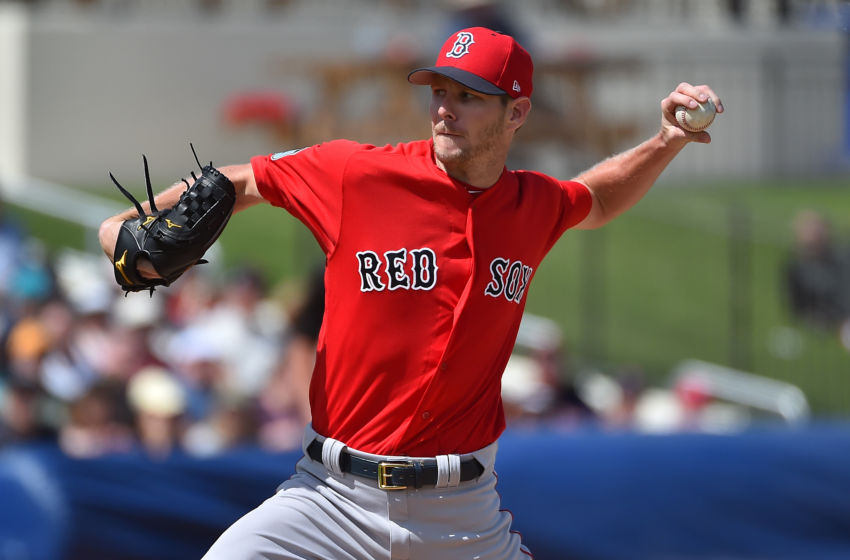
Sale was solid in Monday's Spring Training debut (Chowder and Champions)
It's been a little more than three months since the Red Sox rocked the sports world by trading for Chris Sale, and I'm still having trouble eating solid food. That's because my jaw is still unhinged from when I first heard the news of baseball's biggest offseason maneuver, a stunning blockbuster that altered the courses of both franchises for years to come. Four months after courting Sale at the trade deadline, Boston finally got its man -- at an exorbitant price.

Only now is it starting to sink in. Sale made his first appearance with his new team in Spring Training this week, and it went reasonably well. He didn't dominate, but he "felt strong," which is all anyone cares about this time of year. The rust will dissipate, the command will come.

Of course, any other news would have been worrisome. It was Sale's first start -- he should feel strong. But with the aftershocks from last week's David Price scare still reverberating throughout New England, a positive update on his co-ace was highly encouraging for Red Sox Nation. At least one of Boston's elite arms is healthy.

Most teams don't even have a pitcher like Price to begin with, and the ones that do could hardly afford to lose him. The Red Sox can, however, because they are in a unique position. They have a younger, better version of Price in Sale -- a poor man's Clayton Kershaw. If the whitecoats pronounced Price out for the season tomorrow, Boston could still be reasonably expected to win 90 games and the AL East. That speaks to how good the rest of their roster is, as well as Sale's ability to carry a staff.

That's what the Red Sox envisioned when they mortgaged their future for him. Boston failed to land Sale at the deadline, settling for Drew Pomeranz instead, but upped the ante when Chicago made him available again during baseball's winter meetings. Once Dave Dombrowski fixates on a player, he'll do whatever it takes to acquire him, whether that's shell out over $200 million for Prince Fielder (and Price) or strip his franchise of its most coveted prospects.

Given that Boston already runs one of the highest payrolls in professional sports, Dombrowski's resorted to cannibalizing its once-bright farm system in a series of trades for Pomeranz, Craig Kimbrel, Tyler Thornburg, and now Sale. No team had ever traded the number one prospect before, until Dealin' Dave flipped Yoan Moncada to the White Sox along with Michael Kopech -- a flamethrower who's been clocked at 105 -- and a pair of decent throw-ins (Victor Diaz and Luis Alexander Basabe, both of whom have big league potential). Boston boasted the sport's best farm system when Dombrowski took over in August, 2015. Eighteen months later, they have one of the worst.

The transformation at the Major League level has been equally swift, however, as Dombrowski's wheeling and dealing paid immediate dividends. A last place team when Dombrowski arrived on the scene, the Red Sox won the division in their first full year under his watch and enter 2017 as favorites to make the World Series. Not since 2011 have the Sox been so star-studded.

Their loaded roster is a byproduct of Dombrowski's eternal commitment to winning now, future be damned. Whereas his predecessor, Ben Cherington, was a conservative prospect-hugger who preferred to open his checkbook for players he wanted, Dombrowski never met a prospect he wouldn't trade (not even Andrew Benintendi, baseball's new number one prospect and already a fan favorite, was safe). Their wildly different approaches manifested in the players they pursued; Cherington sought mid-tier, impact veterans such as Shane Victorino, Hanley Ramirez, and Pablo Sandoval, whereas Dombrowski reaches for the stars. Cherington didn't acquire a true superstar during his four years at the helm, while Dombrowski has already acquired two future Hall of Fame starters and the decade's best closer in half the time. Cherington's 2015 club didn't have an ace; Dombrowski obtained two in the span of 12 months.

There's a new sheriff in town, and a trigger-happy gunslinger at that.
Price has struggled with his health and performance in Boston (CBS Boston)
It was this sweeping shift in philosophy that made the Sale swap possible, because Cherington never would have had the stomach for it. To get a lot you need to give a lot in return, and Dombrowski was willing to pony up. Boston got another ace to pair with Price, giving them their best 1-2 pitching punch since Curt Schilling joined Pedro Martinez in 2004. Chicago netted a budding superstar and a potential ace in return, accelerating its rebuild with what Dave Cameron hailed as the winter's best transaction.

Indeed, the future is bright for both sides. The Red Sox are the prohibitive favorites in the AL East and a top-five team despite losing David Ortiz -- the best hitter in baseball last year -- to retirement. The White Sox now have the foundation for a winning team and should emerge as contenders by decade's end. On paper, the trade was a classic win-win.

And yet, I was admittedly lukewarm about the Sale acquisition when it was announced back in December. I felt then, and still feel now, that Boston overpaid for Sale's services. They gave up six years of Moncada for three years of Sale, plus whatever Kopech and co. provide (which could be substantial, given how hard Kopech and Diaz throw and the tools Basabe displayed as a teenager). If Moncada and Kopech realize their potential, this trade is a clear win for Chicago. If all four do, it will be disgustingly lopsided.

What bothered me most about the trade, however, was that the Red Sox didn't need Sale. They already had an ace and one of the best rotations in baseball, finishing top-10 in ERA and fWAR last year. Their stable featured two Cy Young winners (Price and Rick Porcello) at the top, two 2016 All-Stars (Steven Wright and Drew Pomeranz), and a likely future All-Star in Eduardo Rodriguez. They still had Clay Buchholz at the time too, another former All-Star and occasional Cy Young contender when healthy, but quickly dumped him on Philadelphia after Sale made him expendable.

For all of Buchholz's struggles last year, he was a meaningful contributor in a variety of roles and was a dominant starter as recently as 2015. He still provided value last year despite posting the
second-worst ERA (4.78) and highest FIP (5.06) of his career, and almost certainly would have pitched better this year, especially if used exclusively in relief. He could have given this year's outfit something if not depth, but obviously Dombrowski felt differently. Gaining Sale meant losing Buchholz along with the aforementioned prospects -- too much, in my estimation.

And so I did not feel the ecstasy that baseball fans are supposed to feel when their team scores an ace, the way I felt when the Sox got Schilling and Josh Beckett and Daisuke Matsuzaka. Too much had been sacrificed to fill a void that did not exist, to make an already great team marginally better. It did nothing to address the gaping hole in the middle of Boston's lineup, which most agreed was the team's most pressing issue entering the offseason and one that could have been readily filled by any number of inexpensive right-handed sluggers (Mike Napoli, Chris Carter, Mark Trumbo, et. all) who would have fit perfectly in Fenway. If Dombrowski wanted to make a splash, he could have wooed Edwin Encarnacion or Jose Bautista a moderate sum. Instead, he paid a king's ransom for Sale and signed Mitch Moreland to man first.

Circumstances have changed since December, however, and now Sale appears even more valuable. With Price's 31-year-old elbow in question and his future uncertain, it's comforting to know that Boston still has someone to lead the rotation. Were it not for Sale that would have been Porcello, who's had one great year in his eight-year career and is more of a number two at best. The pressure on him would have been enormous, and we all remember how well (or rather, how poorly) he performed the last time he faced sustained pressure after signing his huge contract extension early in 2015. His postseason numbers (0-3, 5.66 ERA) tell a similar story.

Sale has never pitched in October, but he has fronted a staff for the past half-decade. All he's done during that time is make five straight All-Star teams and finish in the top six of Cy Young voting every year. Last year he focused on pitching deeper into games and recorded a career-high 226 2/3 innings -- just 10 outs shy of Price's ML-leading 230 -- and won 17 games for a losing team. He could easily win 20 on the Sox and possibly the Cy which has eluded him. Sale can be counted on for over 200 quality innings, a similar number of strikeouts and an ERA around three -- the same steady production for which Boston made Price the highest-paid pitcher in history. If both stay healthy, the Red Sox should have one of the best rotations in baseball and will be difficult to beat come playoff time.

Dombrowski drew a fair amount of criticism for going all-in on Sale. After investing nearly a quarter-billion dollars in Price the previous winter, it was hard for him to justify doubling down on another ace. Sale was a luxury Boston didn't need. But when you splurge on a sports car the warranty becomes an afterthought, and whether they knew it or not the Red Sox were essentially getting an insurance policy on Price in Sale. And like all insurance policies, you never truly appreciate it until you need it.
Wednesday, February 10, 2016

White Sox Get Absurd Deal on Latos

Latos will try to re-establish his value in the Windy City (Bucs Dugout)
Baseball, like life, is all about timing. This is especially true in free agency, where hitting the market after a career year, as Zack Greinke and David Price did, can result in a windfall. Becoming a free agent immediately after an off-year, however, can mean playing for pennies on the dollar, if at all.

Mat Latos falls into the latter camp. From 2010-2014 he was a great pitcher, first with the Padres and then with the Reds. He had a 3.27 ERA (116 ERA+), 1.16 WHIP, and 3.15 K/BB ratio during those five years, averaging 180 innings per year. That brought him to the cusp of free agency; all he needed was one more productive season before hitting the market at 28, presumably as one of baseball's most attractive free agents.

Obviously that didn't happen, hence why Latos just settled for a one-year, incentive-free $3 million deal from the Chicago White Sox. After being traded to Miami last winter, he promptly ripped his previous team (Cincinnati), which left a bad taste's in everyone's mouths. He then proceeded to have the worst season of his career, going 4-10 with a 4.95 ERA for three different teams. Latos also spent time on the Disabled List and suffered several fluke injuries. As far as walk years go, his was the worst-case scenario.

So, rather than leading one of the deepest free agent classes in years, Latos quickly became an afterthought. Teams were quick to scoop up inferior pitchers such as Ian Kennedy and Mike Leake, paying them gobs of money while Latos sat on the shelf, collecting dust. Finally, the White Sox came calling yesterday, just in time for Spring Training.

What a steal for Chicago, who get a great pitcher still in his prime at a bargain rate. As bad as Latos seemed last year, his peripherals suggest otherwise. He still struck out more than three batters for every walk, and his FIP was 3.72--over a full run better than his ERA and just a tick worse than the previous year's 3.65. He was undone, it seems, by some bad luck on balls in play, an elevated HR/FB rate, and the second-worst strand rate of any pitcher with at least 100 innings. Natural regression to the mean says Latos will be better in 2016.

How much better is a different story. Chicago is a tough place to pitch, especially during the summer when the ball really flies. Just ask Jeff Samardzija, who endured an equally miserable contract year with the White Sox last season. Like Latos, Samardzija was also transitioning to the American League after spending most of his career in the Senior Circuit. It wasn't pretty.

Samardzija is just one of many cautionary tales for what can happen when an NL hurler plies his trade in the American League. It helps that Latos is three years younger and has a more established track record of success. It also helps that he's truly pitching for his next contract. Samardzija knew he was going to make bank no matter what, and sure enough San Francisco gave him $90 million even though he bombed last year. But if Latos tanks, he might not get a second chance.

So even though his contract doesn't have any incentives, it doesn't need any. The incentive is already built in. Latos has "only" made $22 million in his playing career (not including his current contract), which he could make in one season on his next deal should he return to form.

The White Sox are certainly hoping he does, as a healthy and effective Latos gives them a formidable trio at the top of their rotation alongside Chris Sale and Jose Quintana. Coming off a disappointing season and with the Cubs looking like the best team in baseball these days, they could definitely use a bounce back.

Almost as much as Latos.

Monday, February 1, 2016

January Hot Stove Roundup: Pitchers

Miami continued to improve this offseason by adding Chen (Yahoo Sports)
When 2016 began, most of this winter's top-shelf free agent pitchers had already been gobbled up, leaving GMs to focus on position players and second-tier hurlers. With the likes of David Price, Zack Greinke, and Johnny Cueto long gone, teams looking for arms were forced to settle for guys who can still upgrade a rotation, but not lead one. As such, we didn't see any more $200 million contracts last month, but several pitchers still made a pretty penny. Since I didn't have a ton to say about any of these signings at the time they were consummated, I figured I'd wait and do a wrap-up on all of them at the end of the month, plus throw in a few reliever signings to boot. Stay tuned for what figures to be a much lengthier post on recently signed position players tomorrow!

Royals sign Ian Kennedy: 5 yrs/$70 M

Since enjoying a Cy Young-caliber campaign five years ago, Kennedy has settled into a mediocre pitcher, going 44-50 with a 89 ERA+ and just two bWAR over the past four years. He's also 31 and transitioning back to the American League after spending the last six years with Arizona and San Diego where, as mentioned, his numbers were unimpressive. Taking a middling hurler on the wrong side of 30 out of the best pitcher's park in baseball and throwing him into the American League just sounds like a recipe for disaster, especially when you're paying him $70 million over the next five years. It's hard to see what the Royals were thinking here, especially since they could have kept James Shields--a much better pitcher--for virtually the same price last year. They're clearly banking on their big ballpark and excellent outfield to contain Kennedy's fly balls, but what happens when they go on the road?


Few players have seen their stock fall more in the past year than Fister, who followed up a career year in 2014 with the worst season of his career last year. Everything that could go wrong did go wrong as he started slow, got hurt, pitched poorly after returning from the DL, and lost his spot in Washington's rotation after his ERA ballooned to 4.60. He initially struggled out of the 'pen but pitched much better in September, offering hope that he may have regained his confidence or at least found second life as a reliever (though maybe not, given his declining velocity). The Astros are hoping he can provide a veteran presence on their young pitching staff, or at least offer them some bullpen depth/rotation insurance. In a similar move, Houston also signed Wandy Rodriguez, another 30-something pitcher who made only 15 starts last year and struggled mightily. Fister's more likely to pan out, given that he's five years younger and has logged two-thirds as many innings, but it's possible Rodriguez recaptures his glory days with his former team.


Chen is the ideal midrotation starter: durable, effective, not terribly old, and left-handed. After a great four-year run with the Orioles in which he helped them reach the postseason twice, Chen appears poised for success in the NL East. One of baseball's best control artists, he's kept his BB/9 rate under two the last two years, which helped him post solid ERAs in the mid-threes. Chen should feel even more confident attacking the zone now that he pitches half his games in Marlins Park, where the fences are near-impossible to clear unless you're Giancarlo Stanton (who Chen will never have to face). This deal should work out well for Miami, who need Chen to provide about 10 WAR over the next half-decade to break even, which is definitely doable considering Chen totaled 10 WAR over his first four seasons.


I'm cheating a bit, since this deal happened at the end of December, but I never wrote about it so I figured I'd include it here. Like John Lackey, Kazmir has enjoyed a nice second act to his career after looking totally done about five years ago. Now 32, Kazmir is coming off his best season since his hard-throwing days with the Devil Rays, albeit a poor second half in which he seemed to wear down. That said, he'll get a nice boost from moving to the National League and Dodger Stadium in particular, which should help him outperform his FIP again (it was nearly a run higher than his ERA last year). Los Angeles is hoping he can help fill the void left by Greinke in their rotation, not to mention give them another southpaw to pair with Clayton Kershaw. The lefty's unconventional career path makes him a bit riskier than most, though he's certainly capable of giving the Dodgers six wins (the value of his contract) over the next three years.


Yes, Feliz was awful last year (6.38 ERA, 1.56 WHIP), but it's important to remember the former Rookie of the Year and All-Star was really good not too long ago. In 2014, for instance, he had an ERA under two and a WHIP below one. He doesn't have the elite strikeout stuff you want in a reliever, but moving to the National League and PNC Park should help him overcome that. Plus he's not even 28 yet, so he should still have something left in the tank.

Mariners sign Ryan Cook: 1 yr/$1.1 M
Why am I writing about a reliever who pitched just 8 and 2/3 innings last year and signed a contract that pays him less than a million dollars after taxes? Because he used to be an All-Star, he's only 28, and he joins an intriguing bullpen situation in Seattle. The M's now have three proved closers in Cook, Joaquin Benoit, and Steve Cishek, though obviously Cook has the most to prove and figures to be a setup man in some capacity. Benoit's old, however, and Cishek's never pitched in the American League, so if Cook can stay healthy he may end up grabbing a share of the closer's role after all.

Wednesday, December 23, 2015

How Greinke Got (Over-) Paid

Greinke's LA numbers were better even though he stayed the same (Yahoo Sports)
When Zack Greinke signed his six-year, $147 million contract with the Los Angeles Dodgers after the 2012 season, he became the highest-paid pitcher in baseball history in terms of annual salary. Now, after opting out of that deal and inking an even bigger one with the Arizona Diamondbacks, he’s the highest-paid player in baseball history in terms of annual salary.
How did Greinke get the same contract length and $60 million more at 32 than he he did at 29? By stringing together three straight dominant seasons in Los Angeles, the last of which was easily the best of his career and, in a normal year, would have earned him his second Cy Young. Greinke’s timing was impeccable, as he hit the open market after posting the lowest ERA (1.66) in 20 years and leading the majors in WHIP (0.84), winning percentage (.864), pitcher WAR (as calculated by Baseball-Reference), and ERA+ (225). His two years before that weren’t too shabby, either, as he posted sub-three ERAs and drew Cy Young votes both years.
But were his last three campaigns really that much better than the three that preceded his Dodgers contract? It depends which stats you use:
2010-2012: 41-25 W-L 3.83 ERA (106 ERA+) 1.22 WHIP .248 BA 8.4 bWAR
2013-2015: 51-15 W-L 2.30 ERA (156 ERA+) 1.03 WHIP .219 BA 17.5 bWAR
By traditional metrics, Greinke was a much better pitcher from ages 29-31 than he was from 26-28, which are supposed to be a player’s prime years. His ERA was a run and a half lower in the same number of innings, which explains why his bWAR more than doubled (B-R bases pitcher WAR off ERA and innings pitched). He won more games, lost fewer, and improved his WHIP and opponent batting average considerably.
Advanced metrics tell another story. Let’s start by looking at the two things pitchers can control, strikeouts and walks. I don’t include home runs because those are heavily influenced by park factors, temperature, air density, wind currents, and a bunch of other things beyond a pitcher’s sphere of influence:
2010-2012: 23.3 K% 6.2 BB%
2013-2015: 23.3 K% 5.4 BB%
Greinke’s strikeout rate remained identical, which one would expect given that nobody gains velocity as they get older. His walk rate improved a bit, which works out to be one fewer walk every two or three starts — hardly a big difference in the grand scheme of things.
People also believe pitchers have control over the type of hits they allow. Has Greinke’s distribution of batted balls become more favorable?
2010-2012: 20.3% LD 47.4% GB 32.3% FB 7.9 % IFFB
2013-2015: 21.8% LD 47.5% GB 30.8% FB 11.1% IFFB
Not really. Greinke’s groundball rate stayed the same, and he offset an increase in line drives with an increase in pop-ups. It’s weird that his line-drive rate went up, seeing as how he induced more soft contact and less hard contact over the past three years:
2010-2012: Soft 17.0% Med 54.7 % Hard 28.3%
2013-2015: Soft 19.3% Med 53.3% Hard 27.6%
Again, not much change, though there is some indication that he’s gotten better at generating weaker contact. Not enough to radically improve his results, mind you, or significantly alter his BABiP (keep that in mind for a minute).
While his ERA doesn’t reflect his stable peripherals, his FIP, xFIP, and SIERA do.
2010-2012: 3.16 FIP 3.17 xFIP 3.26 SIERA
2013-2015: 2.97 FIP 3.12 xFIP 3.23 SIERA
As you can see, fielding-independent metrics support the information above, suggesting Greinke was essentially the same pitcher over the past six years.
So why, then, are his Dodgers numbers so much shinier? Moving to Dodger Stadium (where he has a 2.00 career ERA) and a weaker division gave him a boost. Leaving behind a god-awful defense in Milwaukee helped. Having a better bullpen behind him didn’t hurt.
But also, a lot of it was just pure luck. Greinke was fairly unlucky in the three years before coming to Los Angeles, only to become one of the most fortunate pitchers in baseball during his time with the Dodgers. Greinke had the highest strand rate in baseball over the last three years, but from 2010-2012 he had one of the worst. Dodger Stadium and superior defense also helped him on balls in play. From 2010-2012, only Justin Masterson had a higher BABiP among pitchers who threw at least 600 innings. Over the last three years, however, Greinke had the third-lowest BABiP at .271 — roughly 30 points below the league average.
Greinke also had better luck on balls not in play, as in home runs. His HR/FB% dropped almost a full percentage point, which is substantial considering the league average is around 10% (Greinke’s mark from 2010-2012). Accordingly, his HR/9 rate improved by 16 percent. That works out to be only a handful of homers per season, but those long balls can make a serious dent in a pitcher’s ERA if they come with multiple guys on base.
Taking all this into consideration, Greinke is not a better pitcher now than he was three years ago. His park, fielders, and bullpen have made him look like a better pitcher, as has better luck, but at his core he’s the same guy. Here’s one more figure to prove it:
2010-2012: 13.6 fWAR (8th in pitcher fWAR)
2013-2015: 13.6 fWAR (8th in pitcher fWAR)
Greinke is getting paid to be the best pitcher in baseball, even though he’s not. After a few starts in the Arizona heat, that should become abundantly clear.

Saturday, January 10, 2015

Best Power Pitchers

With the recent, near-unanimous election of Randy Johnson to the Hall of Fame, I started thinking about power pitchers. After all, Johnson blew into Cooperstown the same way he blew away batters. But was he the best power pitcher of all-time? It's close, but I don't think so.

The candidates (based purely on strikeouts and K/9):

Nolan Ryan
The Ryan Express fanned an unfathomable 5,714 hitters over the course of his 27-career. He also holds the single-season record with 383 whiffs in 1973, a record that seems unlikely to ever be broken in the age of five-man rotations (Ryan completed 326 innings that year). Ryan won 11 strikeout titles and led the league in K/9 a dozen times. His 6.6 H/9 rate is also the best of all-time.

Randy Johnson
Johnson's 4,875 strikeouts are second-highest all-time and most ever for a lefty. He won nine strikeout titles (10 including 1998, when he switched leagues midway through the season), topping 300 in a season seven times and 290 three other times. Eight times he had the highest strikeout rate in baseball, and his 10.6 K/9 rate is the best of all-time. Had the Big Unit pitched as many innings as Ryan, he would have totaled 6,349 strikeouts.

Roger Clemens
Clemens is third on the all-time list with 4,672 punchouts. Rocket led the league in that statistic five times and three times had the highest strikeout rate. Though he never reached 300 strikeouts in a single season, he surpassed 200 12 times.

Bob Feller
Even before missing four prime seasons to World War II, Feller's legacy as one of the all-time great power pitchers was secure. The Heater from Van Meter (Iowa) paced the majors in strikeouts in the four seasons before the war and in the three seasons immediately after, including a record 348 in 1946 (since broken). Rapid Robert also led the loop in K/9 five times, and when he retired in 1956 only Cy Young and Walter Johnson had accumulated more strikeouts. Unlike the others, who all remained great pitchers deep into their 30s and 40s, he peaked very early and never won a strikeout title after turning 30. His lack of longevity will hurt him in these rankings.

Walter Johnson
Johnson was like the Babe Ruth of pitchers, with strikeouts instead of home runs. The Big Train won eight consecutive strikeout crowns from 1912-1919 and a dozen in all. He had the Junior Circuit's highest K/9 rate seven times. True, those were the days when 150 strikeouts were enough to lead the league, but Johnson regularly exceeded 200 during his prime (seven straight years from 1910 to 1916) and even topped 300 twice. 300 strikeouts back then would be equivalent to around 500 today. He retired second in strikeouts behind the one and only Cy Young. Of course, much of Johnson's best years came during the deadball era, so I have to discount his statistics significantly. Once the live ball was introduced in 1920, he wasn't nearly as dominant, though I'm sure age and insane workloads had something to do with that as well.

The list:
1. Ryan
2. R. Johnson
3. W. Johnson
4. Clemens
5. Feller

Tuesday, December 30, 2014

Sox Need Ace

Scherzer is out of Boston's price range (Freep)
Yesterday I wrote that the Red Sox need an ace, but how should they go about acquiring one? Here are the three most likely routes I think they'll take:

1. Sign James Shields
Signing "Big Game" James Shields will probably require a five-year, $100 million commitment, which is hardly ideal for a 33 year-old who's thrown more innings than anyone since 2007. Shields has benefited from pitching-friendly venues in Tampa Bay and Kansas City throughout his career, which obviously won't be the case if he has to pitch in front of the Green Monster. It's also concerning that his strikeout rate has declined drastically over the past two seasons, from nearly a batter per inning in 2012 to the league average in 2014, a sign that his decline could already be underway. On the plus side, he has loads of postseason experience, is incredibly durable, and has succeeded in the AL East. His contract would compare favorably to those already signed by Hanley Ramirez and Pablo Sandoval, which is to say it will be expensive on an annual basis but won't linger into the next decade.

2. Trade for Cole Hamels
Hamels has said he wouldn't okay a trade to Boston even though the Red Sox project to be a much stronger team than the Phillies next year (and several after that). Philadelphia would be stupid not to at least entertain some Sox trade proposals, as Boston is rife with prospects while the Phillies' farm system is barren. The Phils have no use for Hamels, as they will be a terrible team with or without him, and by the time they're good again he'll be well past his prime. Hamels would be a great get for Boston, as he has been nothing short of outstanding throughout his nine-year career, with a 3.27 ERA (125 ERA+), 1.14 WHIP, and 3.77 K/BB ratio while averaging 200 innings per season. Like Lester, he's a lefty, a three-time All-Star, and a proven postseason pitcher. He's 31 and has never pitched in the American League, but he represents the closest equivalent to Lester besides Lester himself.

3. Sign Max Scherzer
Scherzer, a Scott Boras client, is going to blow Lester's contract out of the water. The 2013 AL Cy Young winner is almost seven months younger than the new Cubs ace and has been much better over the past three seasons, worth 16.9 bWAR to Lester's 8.3. I've heard reports that his price tag could approach $200 million over seven years, but I'd be surprised if he exceeds the $180 million Justin Verlander got two winters ago. The Tigers seem serious about re-signing him based on their $144 million extension offer last spring, and will push hard for him if they don't think David Price will stay beyond this year. I don't see the Sox committing so much money to one player when they refused to go over $150 million for Lester. Pitchers are just too risky.

Friday, December 19, 2014

Peavy Stays with San Francisco

Peavy will return to the Giants (NESN)
Shortly after re-signing reliever Sergio Romo to a two-year deal, the San Francisco Giants did the same thing with starting pitcher Jake Peavy.

Peavy, who went 7-13 with a 3.73 ERA between the Red Sox and Giants last year, will make $24 million from the deal, which breaks down into a $4 million signing bonus, $7 million salary for 2015, and $13 million salary for 2016. The contract includes a full no-trade clause for the 33 year-old righthander, who was traded in each of the past two summers.

Peavy pitched well in his return to the National League, bouncing back from a miserable start with Boston to post a 2.17 ERA, 1.04 WHIP, and 3.41 K/BB ratio in his dozen regular season starts with San Francisco. After helping pitch the Giants into the postseason, though, he bombed in the playoffs. He was particularly awful in the World Series, surrendering nine earned runs to a mediocre Royals offense in six and a third innings over two starts. The Giants won their third title in five years in spite of him, not because of him. Ditto last year's Red Sox.

And while there's no way Peavy could sustain his second half of 2014 for a full season, the Giants aren't betting on a dozen great starts from someone who's going to be 34 next year. They're betting on a three-time All-Star with a proven track record of success, a guy who's topped 200 innings in two of the past three years and five times overall. For Peavy to be worth the money, he'll need to provide three or four wins above replacement over the next two years combined. That shouldn't be too difficult for someone who's been worth no less than 1.7 fWAR in each of the past 11 seasons, several of which were shortened by injury.

Then again, maybe the Giants should be worried. Peavy's FIP, xFIP, and SIERA have gone up every year since 2011, and so has his walk rate. Meanwhile, his average velocity has steadily declined, with his average fastball falling below 90 miles per hour for the first time last year. Not surprisingly, he posted the worst strikeout rate of his career in 2014, barely cracking the 7 whiffs per 9 innings mark. Steamer says he'll be worth just one fWAR next year, and that's working under the assumption he makes 29 starts, something he's done only twice in the past seven seasons. At his absolute best he'll be a league average starter going forward, which means San Francisco, in all likelihood, just forked over $24 million to a below average one in his mid-30s.

But the Giants have the most recent data on Peavy, so one has to think they know him best. He did pitch really well for them last year, even if it was in a small sample size. In that ballpark and against weaker National League competition, who's to say he won't remain effective for at least another year or two? He rounds out the rotation beyond Madison Bumgarner, Matt Cain, Tim Lincecum, and Tim Hudson. He also provides plenty of veteran leadership, experience, grit, and a great clubhouse presence, whatever that's worth.

So is Peavy money well-spent? Probably not, but few free agents are these days.

Thursday, December 11, 2014

Masterson Returns to Red Sox

Masterson, who began his big league career with the Red Sox, will be back next year
The Boston Red Sox persuaded one of their former pitchers to come back, but unfortunately it wasn't Jon Lester. Justin Masterson, who came up with the Sox, was traded to Cleveland in 2009 with two others for Victor Martinez. He briefly blossomed into a star with the Indians, representing them at the 2013 All-Star Game, only to come crashing back to earth last year (7-9 with a 5.88 ERA). The Red Sox are hoping for a bounce back from the 6'6 righthander, who just signed a one-year, $9.5 million pact with his old team.

Masterson's 2014 was plagued by bad luck, meaning there's a big chance he enjoys positive regression in 2015. His BABiP last year, for instance, was .339, easily the worst of his career. Cleveland's poor defense almost certainly had something to do with that. His strand rate was also abnormally low at 64.8 percent (league average is around 72), the lowest of his career. It was also unfortunate that his home run /fly ball rate spiked to 14.6 percent, the second-highest of his career and well above his career rate of 10.5. With an xFIP of 4.03, he didn't pitch nearly as bad as his final numbers suggest, making him a good buy-low.

Still, I'm not sure how wise that is, given that Masterson's largely been a thoroughly mediocre hurler throughout his career (4.24 ERA, 1.39 WHIP) and is going to be 30 next year. Boston's probably banking on him returning to form under old pitching coach John Farrell, who helped get Lester, Clay Buchholz, and John Lackey back on track. If healthy, he could supply around 200 league average innings, which would be quite valuable. Worst case, Masterson winds up in the bullpen (Boston has a full rotation now and is still in the market for an ace) and reverts to his old role as a swingman.

Masterson joins Wade Miley and Rick Porcello as the newest members of Boston's revamped rotation. Masterson's role probably isn't guaranteed given last year's performance, but he'll have every opportunity to crack the starting five. I expect him to bounce back some, but not all the way, leaving Boston with another league average pitcher at best.

The Red Sox added three intriguing, quality arms today. But dammit, they still need an ace.

Monday, November 17, 2014

St. Louis Steals Heyward, Walden

Heyward helps the Cardinals considerably (USAToday)
Needing a short-term, last-minute fix in right field following the tragic and untimely death of Oscar Taveras, the St. Louis Cardinals sacrificed a pair of former first-round draft picks to acquire Jason Heyward, probably the best right fielder in the game not named Giancarlo Stanton. The Cardinals also received a plus reliever in Jordan Walden, who was an All-Star closer for the Los Angeles Angels in 2011. Walden should bolster the Redbirds' bullpen based on his career 3.10 ERA and 10.8 K/9 rate over five big league seasons.

But Walden's just icing on the cake, really, because St. Louis clearly got the best player in this deal. Heyward hasn't developed into the Ken Griffey Jr. clone people thought he'd be during his first season, when he was an NL All-Star and Rookie of the Year runner-up to Buster Posey, but he's still a phenomenal player. A true all-around talent, the two-time Gold Glove recipient has twice stolen 20 bases or more in a season and once hit as many as 27 home runs (in 2012). He also owns a rock-solid .351 OBP for his career, during which time he's been worth 24.5 bWAR and rated as the third-best rightfielder in baseball behind Jose Bautista and Ben Zobrist. Plus, he's only 25, though he will be free agent-eligible after next year.

In return the Braves landed Shelby Miller, who's only one year younger than Heyward but won't be eligible for free agency until after the 2018 season. Miller, a starting pitcher, finished third in the 2013 NL Rookie of the Year award to Jose Fernandez and Yasiel Puig after going 15-9 with a 3.06 ERA and 169 strikeouts in 173 and 2/3 innings. His 3.67 FIP and 1.21 WHIP suggested regression was coming, however, and sure enough Miller was merely a league average starting pitcher last year. His record fell to 10-9, his ERA swelled to 3.74, and his strikeout rate plummeted from 8.8 K/9 in 2013 to a paltry 6.2 K/9 last year. His walk rate increased as well, resulting in a 4.54 FIP that says he was very lucky in 2014. Miller may not completely unravel next year, but he seems doomed for more regression and won't have a very long career if he doesn't improve his command. There's just too much uncertainty about his effectiveness going forward, and right now the signs point to bad.

Atlanta's also getting Tyrell Jenkins, a 22 year-old pitching prospect who has yet to pitch above High-A. It's much too early to tell what kind of impact he'll have if and when he reaches the majors, as he'll likely need a few more years of seasoning before he's ready.

So yeah, clear win for the Cardinals here. They get at least one year of Heyward and two years of Walden for four years of Miller and a complete unknown in Jenkins. A six-win player last year, Heyward could very well end up creating as much or more value in 2015 than Miller does over the next four years, especially if the former finally puts it all together to produce that superstar caliber season we've been waiting for. Walden's already an established big league reliever, while there's a good possibility that Jenkins never throws a pitch in the Show.

This trade makes the Braves considerably worse for 2015, which is not the direction they want to go in after losing 83 games last year. St. Louis, on the other hand, remains a safe bet to win 90-plus games again en route to a third consecutive division title. If you're Atlanta, you have to do better than a league-average starting pitcher/likely project and a raw prospect for an elite outfielder such as Heyward. If you're St. Louis, you deserve a giant pat on the back.


Sunday, August 3, 2014

Ranking Red Sox Southpaws

Lester is one of the top lefties in Red Sox history, but where does he stand?
Jon Lester is gone, leaving a legacy in Boston as one of the club's greatest southpaws ever. So that got me thinking: if his time in Boston is truly finished (and it probably is), where does that leave him on the organization's short list of best left-handed pitchers?

Since there aren't that many (turns out Fenway Park is a really tough place for lefty throwers to thrive), here are the six best I could come up with.

Honorable Mention: Bill Lee (3.92 FIP  110 ERA+  18.9 bWAR  5.2 WAA)
Had Spaceman not gotten involved in a career-altering Yankees-Red Sox fray early in the 1976 season, he likely would rank higher on this list. As it is, he must settle for just missing the top-five. 29 at the time of the brawl, Lee was coming off three straight 17-win seasons in which he compiled a 3.38 ERA across 827 innings. Though he pitched until 1982 the one-time All-Star was never the same, for only once more after that would he make more than 25 starts or complete more than 180 innings in a season. His legacy would also be much different had he held on to win the seventh game of the 1975 World Series, rather than allow Tony Perez to launch his "Leephus" pitch to the moon. Or had he not antagonized Don Zimmer so much, Lee might have actually pitched some meaningful games for the Red Sox as their 14 and 1/2 game lead over the Yankees slipped away in the second half of 1978. Two months after Boston completed its epic collapse, his ten-year Red Sox career came to an end when he was unceremoniously swapped with utilityman Stan Papi of the Montreal Expos.

5. Babe Ruth (2.76 FIP  125 ERA+  20.8 bWAR  9.9 WAA)
Before the Babe became the best slugger in baseball history, he was one of the game's premier pitchers. A two-time 20-game winner, Ruth compiled a 2.19 ERA in his six seasons with the Sox, winning the 1916 ERA crown with his 1.75 mark (maintained over 323.67 innings, I might add). His nine shutouts that year are still a record for an American League lefthander, since tied by Ron Guidry in 1978. The following season he was almost as good, with a 2.01 ERA in 326 and 1/3 innings and 35 complete games. After that the Red Sox realized how valuable the Bambino's bat was and limited his workload. But even after he became more renowned for his exploits as a hard-hitting outfielder Ruth remained effective when he toed the rubber, posting a 2.22 ERA in 1918 and 2.97 mark in 1919, his final year with the Red Sox. The Sultan of Swat also strung together 29 and 2/3 consecutive scoreless innings in World Series play, a record that stood until Whitey Ford bested it in the 1961 Fall Classic.

4. Dutch Leonard (2.39 FIP 129 ERA+ 27.2 bWAR 14.6 WAA)
Leonard spent his first six seasons with Boston, compiling a 2.13 ERA in his time there. After notching a 2.39 ERA across 259 and 1/3 innings as a 21 year-old rookie in 1913, for an encore he set the single season ERA record (post-1900) with his 0.96 mark the following year. He did not allow a single home run that year in 224 and 2/3 innings (it was the Deadball Era, after all) and also paced the majors in adjusted ERA, FIP, WHIP, H/9 and K/9. All told, Leonard's historic campaign was valued at 9.2 bWAR. His ERA rose to 2.36 in 1915-'16, years he helped Boston win the World Series with complete game victories in each Fall Classic. He also achieved two no-hitters with the Sox, his first in 1916 and his second two years later shortly before he had to leave the team because of World War I. The Olde Towne Team won the World Series without him that fall and traded him to Detroit, the team he'd no-hit just a few months earlier. Already on his way down, Leonard was unable to sustain the success that made him one of the best pitchers in baseball history through age 25.

3. Jon Lester (3.61 FIP 120 ERA+ 31 bWAR 16.6 WAA)
A three-time All-Star with Boston, Lester topped 15 wins and 200 innings in a season five times. Consistently great in the regular season save for his poor 2012, Lester was at his absolute best in October, helping the Sox capture two World Series titles with his 2.11 ERA in 13 postseason appearances (11 starts). He deserved to share last year's World Series MVP with David Ortiz after allowing just one earned run in 15 and 1/3 stellar innings. In 2008 he became the first Sox lefty in 52 years to pitch a no-hitter when he blanked the Royals at Fenway on May 19th, three weeks after holding the Blue Jays to one hit in eight innings. Lester is one of only three Red Sox pitchers (Roger Clemens and Pedro Martinez are the others) to strike out 15 batters in a single game.

2. Mel Parnell (3.79 FIP 125 ERA+ 27.4 bWAR 13.5 WAA)
Parnell pitched his entire ten-year career with the Red Sox, making two All-Star teams and drawing MVP votes four times. His 1949 campaign was Cy Young caliber, with his 25 wins, 27 complete games and 7.9 bWAR tops in baseball to go along with his league-leading 2.77 ERA, 295 and 1/3 innings, and 0.2 HR/9. He started that year's Midsummer Classic and nearly pitched Boston to the pennant before Joe McCarthy exhausted him down the stretch. Overused during his early years Parnell burned out fast but still had flashes of former brilliance, as he did when he twirled a no-hitter in his final season, 1956, on July 14th against the White Sox at Fenway. It was the first by a Boston pitcher since Howard Ehmke's 1923 no-no, and it would take 52 years before a Sox southpaw hurled another. Nearly 60 years after his last game, Parnell still holds the franchise records for most starts, innings, and wins by a lefthander.

1. Lefty Grove (3.60 FIP 143 ERA+ 44.7 bWAR)
The Pedro of his era, Grove wasn't known for his durability but still put up outstanding numbers in the face of high-scoring times. Like Josh Beckett, Grove's first season in Boston was a nightmare but he pitched well after that, winning four ERA titles (each time with the best league and park-adjusted ERA in baseball) and leading the league in pitcher bWAR in 1935, '36, and '37. One of Tom Yawkey's most prized possessions, the former Philadelphia Athletics star made five straight All-Star teams from 1935-39 and won the final 105 games of his Hall of Fame career in eight seasons wearing the Boston uniform, including his 300th (and last) victory in 1941. While Grove was past his physical prime when he joined the Red Sox at age 34, he perfected his curveball and, using it as an out pitch, remained an elite pitcher throughout his 30s, making it (just barely) to 300 wins. It makes sense that the best lefthanded pitcher of all-time (sorry, Sandy Koufax worshipers) is also the best lefthanded pitcher in Red Sox history.

Grove overcame arm troubles and put together a strong second act with Boston