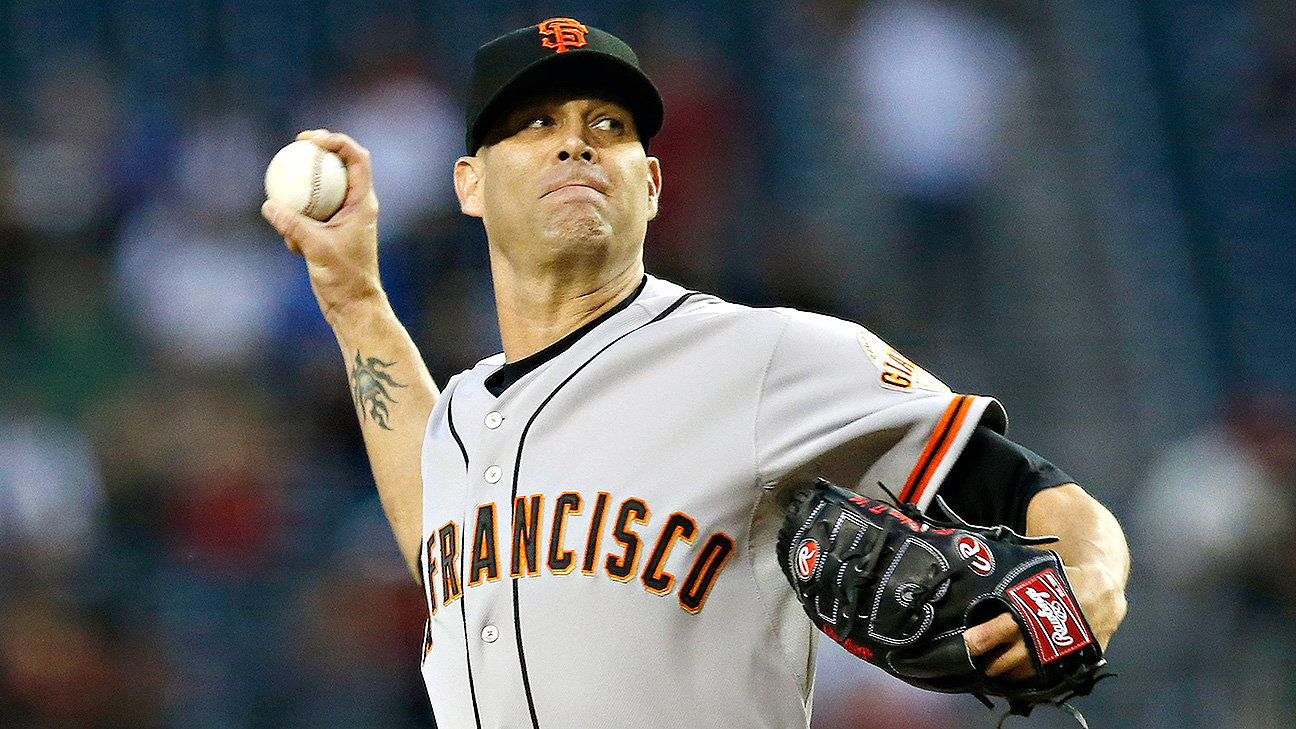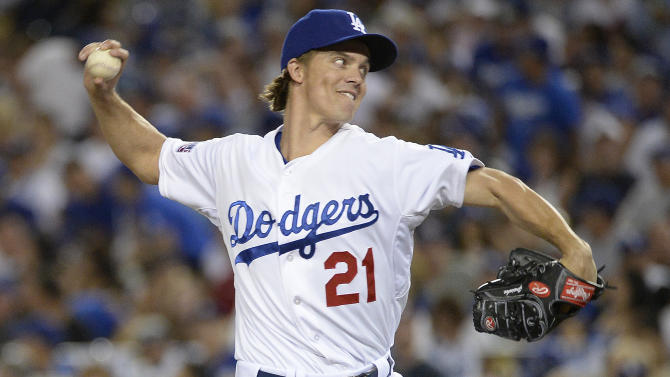
Showing posts with label NL West. Show all posts

Wednesday, December 23, 2015

How Greinke Got (Over-) Paid

Greinke's LA numbers were better even though he stayed the same (Yahoo Sports)
When Zack Greinke signed his six-year, $147 million contract with the Los Angeles Dodgers after the 2012 season, he became the highest-paid pitcher in baseball history in terms of annual salary. Now, after opting out of that deal and inking an even bigger one with the Arizona Diamondbacks, he’s the highest-paid player in baseball history in terms of annual salary.
How did Greinke get the same contract length and $60 million more at 32 than he he did at 29? By stringing together three straight dominant seasons in Los Angeles, the last of which was easily the best of his career and, in a normal year, would have earned him his second Cy Young. Greinke’s timing was impeccable, as he hit the open market after posting the lowest ERA (1.66) in 20 years and leading the majors in WHIP (0.84), winning percentage (.864), pitcher WAR (as calculated by Baseball-Reference), and ERA+ (225). His two years before that weren’t too shabby, either, as he posted sub-three ERAs and drew Cy Young votes both years.
But were his last three campaigns really that much better than the three that preceded his Dodgers contract? It depends which stats you use:
2010-2012: 41-25 W-L 3.83 ERA (106 ERA+) 1.22 WHIP .248 BA 8.4 bWAR
2013-2015: 51-15 W-L 2.30 ERA (156 ERA+) 1.03 WHIP .219 BA 17.5 bWAR
By traditional metrics, Greinke was a much better pitcher from ages 29-31 than he was from 26-28, which are supposed to be a player’s prime years. His ERA was a run and a half lower in the same number of innings, which explains why his bWAR more than doubled (B-R bases pitcher WAR off ERA and innings pitched). He won more games, lost fewer, and improved his WHIP and opponent batting average considerably.
Advanced metrics tell another story. Let’s start by looking at the two things pitchers can control, strikeouts and walks. I don’t include home runs because those are heavily influenced by park factors, temperature, air density, wind currents, and a bunch of other things beyond a pitcher’s sphere of influence:
2010-2012: 23.3 K% 6.2 BB%
2013-2015: 23.3 K% 5.4 BB%
Greinke’s strikeout rate remained identical, which one would expect given that nobody gains velocity as they get older. His walk rate improved a bit, which works out to be one fewer walk every two or three starts — hardly a big difference in the grand scheme of things.
People also believe pitchers have control over the type of hits they allow. Has Greinke’s distribution of batted balls become more favorable?
2010-2012: 20.3% LD 47.4% GB 32.3% FB 7.9 % IFFB
2013-2015: 21.8% LD 47.5% GB 30.8% FB 11.1% IFFB
Not really. Greinke’s groundball rate stayed the same, and he offset an increase in line drives with an increase in pop-ups. It’s weird that his line-drive rate went up, seeing as how he induced more soft contact and less hard contact over the past three years:
2010-2012: Soft 17.0% Med 54.7 % Hard 28.3%
2013-2015: Soft 19.3% Med 53.3% Hard 27.6%
Again, not much change, though there is some indication that he’s gotten better at generating weaker contact. Not enough to radically improve his results, mind you, or significantly alter his BABiP (keep that in mind for a minute).
While his ERA doesn’t reflect his stable peripherals, his FIP, xFIP, and SIERA do.
2010-2012: 3.16 FIP 3.17 xFIP 3.26 SIERA
2013-2015: 2.97 FIP 3.12 xFIP 3.23 SIERA
As you can see, fielding-independent metrics support the information above, suggesting Greinke was essentially the same pitcher over the past six years.
So why, then, are his Dodgers numbers so much shinier? Moving to Dodger Stadium (where he has a 2.00 career ERA) and a weaker division gave him a boost. Leaving behind a god-awful defense in Milwaukee helped. Having a better bullpen behind him didn’t hurt.
But also, a lot of it was just pure luck. Greinke was fairly unlucky in the three years before coming to Los Angeles, only to become one of the most fortunate pitchers in baseball during his time with the Dodgers. Greinke had the highest strand rate in baseball over the last three years, but from 2010-2012 he had one of the worst. Dodger Stadium and superior defense also helped him on balls in play. From 2010-2012, only Justin Masterson had a higher BABiP among pitchers who threw at least 600 innings. Over the last three years, however, Greinke had the third-lowest BABiP at .271 — roughly 30 points below the league average.
Greinke also had better luck on balls not in play, as in home runs. His HR/FB% dropped almost a full percentage point, which is substantial considering the league average is around 10% (Greinke’s mark from 2010-2012). Accordingly, his HR/9 rate improved by 16 percent. That works out to be only a handful of homers per season, but those long balls can make a serious dent in a pitcher’s ERA if they come with multiple guys on base.
Taking all this into consideration, Greinke is not a better pitcher now than he was three years ago. His park, fielders, and bullpen have made him look like a better pitcher, as has better luck, but at his core he’s the same guy. Here’s one more figure to prove it:
2010-2012: 13.6 fWAR (8th in pitcher fWAR)
2013-2015: 13.6 fWAR (8th in pitcher fWAR)
Greinke is getting paid to be the best pitcher in baseball, even though he’s not. After a few starts in the Arizona heat, that should become abundantly clear.

Friday, December 19, 2014

Yes, the Padres Will be Good

Upton rounds out a formidable San Diego outfield (SI)
In the three years I've been writing this blog, I could probably count the number of posts dedicated to the San Diego Padres on one hand. Welcome back to baseball relevance, San Diego.

Piggybacking off yesterday's post and my suggestion that San Diego still needed another big bat before I could call them contenders, the Padres got one in Justin Upton. San Diego swapped out four players for B.J. Upton's little brother and another player from the rapidly dismantling Braves, who appear to be punting on 2015 after trading Jason Heyward (replacing him with the perfectly average Nick Markakis) and Jordan Walden for Shelby Miller and Tyrell Jenkins.

The Padres, who recently traded for All-Star catcher Derek Norris as well, now have one of the best-hitting outfields in baseball in Upton, Matt Kemp, and Wil Myers (though they all bat from the right side and project to be terrible defensively). That leaves them with an entire outfield's worth of reserves--Seth Smith, Will Venable, and Carlos Quentin--from which to trade, though it might be worth keeping one or two around given Kemp's age and injury history as well as Myers's inexperience.

More importantly, the Padres revamped their lineup without sacrificing much of their dynamite rotation of Andrew Cashner, Ian Kennedy, and Odrisamer Despaigne. That they were able to acquire four big bats via trade while giving up just one of their major league-ready arms (Jesse Hahn) is remarkable, but perhaps also speaks to the stupidity of the teams they were dealing with. Given what the Dodgers, Rays, and Braves just gave up, they were well within their right to demand at least one of the aforementioned hurlers, and yet not a single one was moved. Billy Beane, who offered the worst player of San Diego's new quartet, got Hahn in return. Incredible.

I think that says something about how teams treat prospects, that simply stockpiling them is the way to go because the law of averages, right? Well the minor league washout rate is something like 83 percent, which means five out of every six prospects don't pan out. Hording prospects doesn't improve those odds. Rather than collecting players who are still in the midst of their development (guys with "upside," which is really just the "downside" of likely washing out), teams should be targeting players who have already reached the majors or are about to. They should be aiming for nearly-finished products instead of projects, quality over quantity.

Anyways, kudos to the Padres for not just keeping their rotation mostly intact, but coming out of nowhere to gear up for a playoff run in 2015. Just four wins below .500 last year in spite of a historically anemic offense, they were wise to go for it when it makes sense for most teams with a fighting chance at October to do so (thanks to improved parity and the second wild card). I think they're probably even with the Giants now, maybe even a little bit better, which means I'm putting them down for their first winning season since 2010. The division still belongs to the star-studded Dodgers, but the Padres are well-positioned to win upwards of 85 games and contend for one of the two wild card spots.

Because for the first time in a long time, the Padres are going to hit.


Saturday, September 27, 2014

Kemp's Comeback

Finally healthy, Kemp has returned to his previous offensive levels (BlackSportsOnline)
With Yasiel Puig on the up-and-up, Clayton Kershaw headed for a Cy Young/MVP combo meal, and Adrian Gonzalez driving in runs like it's his job, Matt Kemp might not be the star of the Dodgers any more. But you know what? He's still a pretty darn good baseball player.

It was easy to lose sight of that the last two years, when Kemp was constantly hurt and his performance suffered. That was especially true last year, when he missed more than half the season and batted an empty .270/.328/.395. There was legitimate concern that he would never again resemble the two-time All-Star, Silver Slugger, Gold Glove recipient and one-time MVP runner-up. Though he was only 29 coming into the season, his best days appeared to be behind him.

This year Kemp has bounced back in a big way, staying healthy enough to play in all but a dozen games to date and re-asserting himself as one of the best-hitting outfielders in the National League. In that group he ranks sixth in wOBA and wRC+, fifth in home runs and fourth in RBI. Even after factoring in his iffy baserunning, he still rates as one of the Senior Circuit's 10 best offensive outfielders, better than Justin Upton and Ryan Braun, among others.

The bulk of that production has come in the second half. Kemp was horrible in the early going, hitting a paltry .238/.291/.398 through June 5th. He really looked done and was even benched. But then his bat got hot as the weather warmed, and since then he's looked like the Kemp of old. Starting on June 6th he's batted .307/.369/.549 with 23 doubles, 19 homers and 71 RBI in 97 games. Projected over the course of 162 games, those numbers work out to be roughly 30 homers, 40 doubles and 120 RBI. That early season rough patch is now a thing of the past, as most of Kemp's numbers are back up to his 2012 levels--a rebound deserving of the NL Comeback Player of the Year award.

Of course, any analysis of Kemp's performance must also include his defense, which has been abysmal in every sense of the word. A lot of the value he accrued at the plate has been lost to his brutal fielding, so much so that Baseball-Reference estimates him as being worth a mere one win above replacement level this year. FanGraphs is a bit more generous at 1.7, but it's pretty clear that Kemp has regressed as an outfielder. Remember how bad he was in 2010? He's been at least as bad this year, maybe worse. It goes without saying that he will not be winning his third career Gold Glove in 2014.

Kemp is also not the factor he once was on the bases. Since stealing 40 bases in 2011, he's failed to top nine since. Granted, Don Mattingly doesn't need to give him the green light as much now that he has Dee Gordon and Carl Crawford at his disposal, but it's clear that Kemp's hamstring woes have cost him a good chunk of his speed. Kemp's an old-30 and three years into an eight-year, $160 million contract that doesn't look like it's going to work out too well.

At least Kemp can still hit, and that resurgence at the plate was a big key to the Dodgers' winning the NL West again this year. He's second on the team in doubles, home runs, RBI, total bases, and tops in slugging for anyone who's played at least 100 games. He makes their lineup significantly more dangerous and has teamed with Gonzalez, Puig, and Hanley Ramirez to form a pretty intimidating heart of the order most nights. I think it's fair to say that without Kemp, the NL West would probably still be up for grabs.

The Dodgers can only hope that his monster second half doesn't end when October begins.

Friday, September 26, 2014

Kershaw Clinches Division, MVP

Kershaw helped get the Dodgers over the hump this year (www.la.com)
The race for the National League West is over, and with it the race for NL MVP.

The second coming of Sandy Koufax was in top form in his final start of the season last night, hurling eight innings of one-run ball as the Dodgers beat up on the Giants. LA's bats picked him up after falling into an early 1-0 hole against Tim Hudson, scoring four runs in the sixth and four more in the eighth to fuel the Dodgers' 91st victory of the season.

With LA's second straight division title secure, champagne flowed in home locker room of Dodger Stadium after the win. Of all the celebratory Dodgers, none did more to help the team get there than Kershaw.

All the reigning Cy Young award winner did was turn in one of the most dominant seasons any pitcher has ever had. While he likely won't win the Triple Crown (his 239 strikeouts will probably be surpassed by Johnny Cueto and Stephen Strasburg, both at 235 with one start remaining), he's statistically head and shoulders above the crowd. Look no further than his 197 ERA+, which is based off his 1.77 raw ERA--the lowest by a pitcher since Pedro Martinez's 1.74 mark in 2000 and good enough for his record fourth straight major league ERA crown.

Just wait--there's more. His 1.80 FIP is the fourth-lowest mark of the live ball era, and his 0.86 WHIP rates seventh. His 10.8 K/9 was the best in baseball this year, and his 7.71 K/BB ratio paced the National League. Though injuries prevented him from reaching 200 innings (he'll fall five outs short), nobody has more complete games (six)--a testament to the fact that he averaged more than 7 and 1/3 innings per turn.

And as much as I hate wins, his 21 are tops in the bigs (and tie his career high). They're also the most-ever for anyone with as few starts as him (27) since 1880. In other words: a very long time. He only suffered three losses, which over the course of 27 starts is just ridiculous, and so his .875 W-L percentage is extraordinary as well.

Kershaw currently leads both leagues in bWAR, barely ahead of Mike Trout, and is first in the NL per fWAR. There's no doubt in my mind now. Clayton Kershaw is the National League MVP. 

Until recently, I wasn't ready to hand him the trophy just yet because of all the time he missed at the beginning of the season (41 days between his first start and second thought), my thought being that he absolutely had to finish strong in order to make up for that.

And boy, did Kershaw finish strong.  Including last night he won his last seven decisions, going eight innings in all but one of those starts--a 14-5 rout of the Cubs last Friday. He struck out eight or more in each start--65 in 53 innings of work against just 12 walks--and was untouchable, holding opponents to a .195/.245/.258 line over that span. During crunch time, with the Dodgers vying for a division title and guaranteed playoff spot, Kershaw was at his finest. 

That sealed it for me. Kershaw will be the first National League pitcher to win the MVP award since Bob Gibson in 1968. That was a special season, one of the all-time greats. Something tells me someday we'll look back on Kershaw's 2014 in a similar light. 

Sunday, September 7, 2014

Posey's Push for MVP

Posey's big second half should earn him some serious MVP consideration (FP911)
With the National League MVP race wide open, Buster Posey has forced his way into the discussion with his recent hot streak.

The 2012 MVP has been on fire since the day before the All-Star break with an extraordinary .363/.406/.621 batting line, 11 home runs and 37 RBI in that time. He's now up to .310/.361/.494-20-79 on the season, outstanding numbers for a catcher playing half his games in one of baseball's most pitching-friendly venues. One of the Senior Circuit's best hitters on a league and park adjust basis, Posey ranks third in offensive bWAR, fifth in adjusted OPS+ and eighth in adjusted batting runs.

Furthermore, Posey's hot play has helped his Giants keep pace with the Dodgers all summer long. As of this morning San Francisco sat just two games out of first in the NL West. With 20 games remaining on their schedule, the Giants still have plenty of time to pass the Dodgers and steal the division title out from under them. And considering how well San Francisco's played lately, winning 15 of their last 22, it's not hard to imagine them finishing with a fury and blowing by LA during the season's final days.

If that happens and Posey continues to rake, he's going to have a very interesting MVP case. Not only does he lead the team in most key offensive categories (home runs, RBI, all three slash stats), but on most days he also mans the most important non-pitching position on the demand (only Jonathan Lucroy and Miguel Montero have caught more games among NL receivers). It's no wonder, then, that Baseball-Reference rates him as the team's most valuable player by WAR.

So Posey may not have the flashy slugging numbers of a Mike Trout or Giancarlo Stanton, he definitely belongs in the MVP conversation.

Monday, August 4, 2014

Giants Great Again

With a 2.71 ERA, 1.12 WHIP, and 4.05 K/BB ratio, Hudson has thrived (ESPN) 
Has any baseball team been more up and down than San Francisco recently?

Consider that they lost 90 games in 2008, on the heels of a 91-loss season and two losing seasons before that. They promptly rebounded to win 88 games in 2009, coming within four wins of a playoff berth. Their rise continued in 2010 to 92 regular season wins, a division title and their first World Series championship since 1954.

In 2011, with a lineup crippled by injuries and underperformance, they were essentially a .500 team, allowing seven more runs than they scored. The Giants' depleted offense was the worst in the National League, but on the strength of their great pitching managed to scratch out 86 wins.

In 2012 they found enough hitting to score 148 more runs, enough to win 94 games and the division again. A second World Series title in three years followed shortly thereafter.

Despite returning mostly the same team in 2013, San Francisco was terrible, slipping 10 games below .500 and finishing 16 games behind the division-winning Dodgers The offense regressed and the rotation collapsed, as Matt Cain, Tim Lincecum, Ryan Vogelsong, and Barry Zito all turned in subpar seasons (basically every starting pitcher not named Madison Bumgarner).

So here's a team that lost 90 games in 2008, then won a pair of World Series sandwiched around a mediocre season, then flat-out stunk. When they're good, they're great and when they're bad, they're awful.

This year, the Giants have been great again. After last night's 9-0 rout of the Mets they improved to 60-51 on the year, 2.5 games out of first and good enough for the top wild card spot.

What's changed from last year? Better hitting, for starters. The Giants rank in the middle of the pack offensively, a step up from last year, especially in the power department. The lineup is deep, with every regular posting an above average OPS+ except for second baseman Brandon Hicks, who's been a terrible fill-in for the injured Marco Scutaro, and center fielder Gregor Blanco, who's been a terrible replacement for the injured Angel Pagan. This in spite of a disappointing first half from Buster Posey and aforementioned injuries to Scutaro, Pagan, and Brandon Belt. The addition of Mike Morse has proven to be huge, as he's tied for the team-lead in home runs and leads outright in doubles.

The timeless Tim Hudson has had an equally large impact, emerging as the team's top pitcher. An enormous upgrade over Zito, he's helped slash the rotation's ERA by two-thirds of a run. Bumgarner's been predictably excellent, Vogelsong's been much better than he was last year, and Lincecum's had moments of greatness, such as his second career no-hitter. With Cain done for the season, GM Brian Sabean fortified the rotation by adding Jake Peavy before the no-waiver trading deadline. Peavy's had a rough year, but for a fifth starter you could do worse.

A weakness last year, the bullpen has been a strength this year. Five of San Francisco's six-most used relievers have ERAs under 2.75. Santiago Casilla (1.13 ERA, 0.85 WHIP) has been lights out after replacing Sergio Romo as the team's closer. The 'pen's 2.59 ERA to date is just ridiculous and a near three-quarters of a run improvement upon last year's 3.30 ERA.

So while the offense has improved incrementally, from 3.84 runs per game last year to 3.9 in 2014, the real difference has been made on the mound, where an improved rotation and dominant bullpen have combined to produce the league's third-lowest ERA. Last year, San Francisco had the fourth-worst ERA in the Senior Circuit. You can get away with a mediocre lineup when you have great pitching, and vice versa (see: last year's Red Sox), but if you don't, you can't. Because if you can't hit, you better damn well be able to keep runs off the board.

The Giants have done that, proving, as they always do, it's possible to field a great team with a pedestrian lineup. As long as you have great pitching.

Tuesday, April 29, 2014

Colorado crushing its way to top of standings

Tulowitzki's hot bat has helped carry Colorado  
Following last night's 8-5 victory over the scuffling Arizona Diamondbacks, the red-hot Rockies are 15-12, only half a game out of first place in the NL West. Fueled by early season hot streaks from Charlie Blackmon, Troy Tulowitzki, and Justin Morneau, Colorado leads the National League in virtually every meaningful batting statistic and is batting .295/.347/.478 collectively. Impressively, the Rockies have managed these outstanding figures despite playing more road games than home games.*

*Their home/road splits are still ridiculous, though. At Coors they're batting .346/.398/.586, which means everyone on the team is essentially hitting like Joe DiMaggio. Away from Coors, they're batting .253/.304/.388. That's an OPS difference of nearly 300 points.

It's nice to see Colorado, who hasn't enjoyed a winning season since 2010, jump out to a fast start, but right now that's all it is: a good start.

Remember last year, they went 13-4 to open the season, winning eight in a row at one point. They led the division as late as Memorial Day weekend and were in second place through the first week in July (despite having a sub-.500 record). They faded down the stretch and wound up at 74-88, last place in the NL West (despite pacing the Senior Circuit in hits, batting average, slugging percentage, total bases, and OPS).

They say it's not how you start, but how you finish. The Rockies certainly proved that last year.

Fundamentally, not much has changed. The offense is still dynamite, and the pitching is still horrendous. That formula might work for short stretches when their hitters get into a groove, but over the course of a full season it's not a winning recipe. Colorado can hit all it wants, but until the organization develops some quality pitching the playoffs are never going to be a real possibility.

Which is too bad, really, because they sure can hit.

Friday, April 4, 2014

2014 NL West Preview

The Dodgers have more than enough talent to get by while Kershaw's on the mend (CBS)
1st Place Los Angeles Dodgers
2013 Record: 92-70
2013 Pythagorean: 89-73
2014 Projected: 97-65
The Dodgers, proud owners of the highest payroll in baseball, are absolutely stacked. They have All-Stars at almost every position, a beastly rotation and a killer bullpen. I mean, just look at their outfield, for crying out loud: Yasiel Puig, Matt Kemp, Andre Ethier, and Carl Crawford. That looks like someone's fantasy team. They have not only the best pitcher on planet earth--Clayton Kershaw--but a deep rotation (Zack Greinke, Hyun-jin Ryu, Dan Haren) that wouldn't miss him too much if he got hurt. Don Mattingly has so much talent at his disposal that a failure to win the division has to be considered a massive disappointment.

2nd Place San Francisco Giants
2013 Record: 76-86
2013 Pythagorean: 74-88
2014 Projected: 91-71
Everything went wrong last year for the 2012 World Series champions, so I expect they reclaim their status as one of the National League's top teams. The offense is surprisingly good with Hunter Pence, Buster Posey, Pablo Sandoval, and Buster Posey forming a nice offensive core. The starting pitching should be deep as well, even if Tim Lincecum never regains the form the helped him win back-to-back Cy Youngs in 2008 and 2009. Matt Cain should bounce back and Madison Bumgarner is one of the best young pitchers in the game. Tim Hudson should take advantage of the NL West's big parks and have another good year in his Giants debut. The Giants are much better than their record last year would indicate, and I wouldn't be surprised if they took the Dodgers down to the wire.

3rd Place Arizona Diamondbacks
2013 Record: 81-81
2013 Pythagorean: 80-82
2014 Projected: 82-80
Arizona made some interesting moves over the winter, trading for power bat Mark Trumbo and adding Bronson Arroyo to the rotation. The lineup, led by MVP runner-up Paul Goldschmidt, can hit, but will need Aaron Hill to stay healthy as well as a bounce back from Miguel Montero. The rotation lacks an ace (Wade Miley isn't a number one) and projects to be about average at best. Arroyo's getting up there in age (37 now), Brandon McCarthy has had trouble staying healthy and Trevor Cahill is just okay. I like the bullpen, though. Overall this looks like a .500 team with 85-win upside, which just isn't going to get it done versus the Dodgers and Giants.

4th Place San Diego Padres
2013 Record: 76-86
2013 Pythagorean: 72-90
2014 Projected: 78-84
The Padres are a poor man's Rays--good starting pitching, some speed and defense, but not a whole lot of offense. There's definitely hitting talent there--Chase Headley, Will Venable, Everth Cabrera, Yonder Alonso, Yasmani Grandal, Carlos Quenting (when he comes back) and Jedd Gyorko--who I really like--but none of whom figure to be much better than league average bats. Same goes for the pitching--Andrew Cashner is good, but probably not an ace. Josh Johnson and Ian Kennedy are intriguing pickups though, and might be able to revive their careers at Petco. I could totally see San Diego surprising everyone and going on a nice little run, but I don't think the playoffs are a realistic possibility.

5th Place Colorado Rockies
2013 Record: 74-88
2013 Pythagorean: 76-88
2014 Projected: 75-87
Scoring runs isn't a problem for the Rockies, but preventing them is. When healthy, Troy Tulowitzki and Carlos Gonzalez are one of the best offensive tandems in the game. Not sure why Colorado traded Dexter Fowler, and there's no way Michael Cuddyer wins the batting title again. I'm expecting Nolan Arenado to improve upon his rookie numbers, and how come no one ever talks about Wilin Rosario? I'm also feeling a solid season for Justin Morneau. As always, the Rockies are woefully short on arms, especially with Jhoulys Chacin opening the season on the DL. Brett Anderson just can't stay healthy and Jordan Lyles isn't any good. Franklin Morales, a starter-turned-reliever-turned-starter isn't going to work out. Bottom line, Colorado's pitching is brutal and will sink their season once again.

Monday, August 12, 2013

Giants Gone Wrong

The Giants find themselves in last place after their summer meltdown (AP)
As the baseball season drags through the dog days of August it becomes easier to separate the contenders from the pretenders. A lot can change from now until the end of the season, but right now we have a pretty solid idea of where things stand. The Braves are certainly going to the playoffs, and one can feel similarly confident about the chances of the Tigers, Dodgers, Red Sox, Cardinals, and (gulp) Pirates, all of whom have at least a 92 percent chance of going to the dance. On the opposite end of the spectrum, there is no hope for the Marlins, Astros, and White Sox. They haven't played meaningful baseball in months and were essentially eliminated on Opening Day.

But nobody expected those teams to be good. The San Francisco Giants, winners of two of the past three World Series, were supposed to make another title run. Almost all of the players who hoisted the championship trophy last October returned, and almost all of them have remained healthy. With a stellar starting rotation, deep bullpen, and reigning MVP Buster Posey anchoring their lineup, the Giants were supposed to be one of the National League's most formidable teams.

Instead, they're toiling in last place, 13 games below .500, playing out the string when they should be battling the Dodgers for the division crown. How did that happen?

For starters, the rotation that was the backbone of last season's championship squad has underachieved. Young Madison Bumgarner is quietly putting together a Cy Young-caliber campaign, but the rest of his rotationmates have been massive disappointments. Matt Cain's enduring the worst season of his career. Tim Lincecum has been wildly inconsistent, unhittable at times but brutal at others.  Barry Zito's been terrible (surprise). Ryan Vogelsong pitched terribly before getting hurt. Put it all together, and the rotation sports a 4.34 ERA, well above last year's 3.73 mark.

It doesn't matter that the bullpen has been even better than it was last year, because by the time Bruce Bochy deploys his relievers it's usually too late. San Fran's pitchers have a 4.72 ERA in the first three innings and 4.13 ERA in the middle innings. All too often, the Giants find themselves down early in the game. And once they fall behind, they typically stay behind. The punchless Giants lack the offensive firepower needed to slug their way back into ballgames, for they rank second-to-last in the NL in runs scored, runs per game, home runs, total bases, and slugging percentage. One would think San Francisco should compensate by swiping bases to manufacture runs, but they rank fifth from the bottom of the league in steals. This may have something to do with the fact that the Giants field the league's third-oldest starting lineup.

It seems impossible to remember now, but the Giants got off to a good start. In fact, they were leading the NL West as late as Memorial Day weekend and were still in second place four weeks after that. The wheels fell off in late June/early July, when the Giants dropped 14 out of 16 games from 6/23 through 7/10. With the offense sputtering lately, they've continued to lose ground over the past month and let Los Angeles run away with the division.  Since May 26th, their last day in first place, they're 24-43 (.358)--the worst team in the Senior Circuit.

It's time for the Giants to start thinking about next year, which means re-signing Hunter Pence, figuring out who's going to play left field and deciding whether Tim Lincecum is worth keeping. As nightmarish as this summer has become for San Francisco, they still have a lot to be optimistic about for 2014. They have one of the game's most indispensable players in Posey and a bona fide ace in Bumgarner. Breakouts Brandon Belt and Brandon Crawford could get even better as they enter their prime years. Marco Scutaro is aging well, and I'm confident Pablo Sandoval and Cain will bounce back. There's plenty of talent here, so it shouldn't take much retooling from GM Brian Sabean for the Giants to get back to their winning ways next year.

Saturday, June 15, 2013

Diamondbacks Defying the Odds

Somehow, someway, the plucky Arizona Diamondbacks are exceeding expectations
I'm not sure how they're doing it, but the Arizona Diamondbacks are sitting at the top of the National League West above the defending World Series champions. Chalk it up to grit, heart, and tenacity all you want, but this is not a new development: Arizona took over first place four weeks ago and hasn't relinquished it despite playing .500 ball over that stretch, which explains why they haven't been able to pad their cushion larger than 2.5 games.

Once again, the Diamondbacks have one of the better offenses in the National League, ranking second in doubles, third in walks, and fourth in runs. They've managed to scrape together runs by hitting well with runners on base (.765 OPS with men on versus .690 OPS with the sacks empty), overcoming injuries to and slumps by most of their key position players. Miguel Montero hasn't hit a lick. Aaron Hill hasn't played since April 14th because of a strained left wrist. Cliff Pennington is all glove and no stick. Martin Prado's been victimized by bad luck (.263 BABiP) and hasn't provided anything close to what Justin Upton has given the Atlanta Braves. Jason Kubel hit well in April but missed time and hasn't done much since. Cody Ross has disappointed after signing a three-year, $26 million deal last winter. A.J. Pollock makes too many outs and produces all of his value with defense.

So where is the scoring coming from? Let's start with NL RBI leader Paul Goldschmidt, who's evolved into one of the best hitters in baseball. Goldy's mashed all year long and finds himself at the center of MVP discussions. The teammate he's driven in most often is leadoff hitter Gerardo Parra. Perhaps the best defensive outfielder around, Parra leads the Senior Circuit in doubles and has been the league's second most valuable postition player (according to bWAR) behind only Carlos Gomez. Then there's rookie shortstop Didi Gregorius, who's batting over .300 and might end up stealing NL Rookie of the Year honors from Shelby Miller. Eric Chavez and Wil Nieves have been big coming off the bench, too.

Unlike most great teams, the Diamondbacks lack strong starting pitching. In fact, their rotation has been subpar (4.30 ERA) despite remaining healthy and receiving strong defense behind them. Sophomore Patrick Corbin, a Cy Young candidate, is the lone exception with his 9-0 record and 2.28 ERA, Trevor Cahill, the next best starter, has been merely average. Ian Kennedy keeps getting worse, making his stellar 2011 look more like a fluke with every passing start. Wade Miley has taken a massive step back after finishing second to Bryce Harper in last year's NL Rookie of the Year voting. Brandon McCarthy hasn't looked anything like the pitcher he was with Oakland the last two seasons. Perhaps time on the DL will do him some good, but he just hasn't been the same since taking a line drive to the head last year.

The bullpen, on the other hand, is one of baseball's best (3.04 ERA). Brad Ziegler, Matt Reynolds, Josh Collmenter,  and Will Harris have all been tremendous. Heath Bell's bounced back from a disastrous season with Miami, filling in for injured closer J.J. Putz. No wonder the D-Backs are 15-9 in one-run games.

A few months ago nobody thought the Diamondbacks would be where they are now. It's tough to see them holding up without adequate starting pitching, especially since Corbin and the bullpen are bound to regress at some point. It will help when the hitters get healthy and start producing like they can, but I still don't see Arizona winning the division. San Francisco's pitching is going to come around, and when it does the Giants will take their rightful place (as in first). Seeing as how San Francisco gets 10 straight games against the Padres, Marlins, and Dodgers starting on Monday, I expect them to overthrow the Diamondbacks by the end of June.

Thursday, April 11, 2013

NL West Preview

1st Place--Los Angeles Dodgers
2012 Record: 86-76
2012 Pythagorean: 86-76
2013 Projected: 93-69
Matt Kemp has an MVP-type season to lead an explosive Dodgers' lineup that gets nice bounceback years from Adrian Gonzalez and Hanley Ramirez. Clayton Kershaw continues drawing comparisons to Sandy Koufax, and Zack Greinke has his best season since winning the Cy Young in 2009. Josh Beckett can't be any worse than he was last year. The roster lacks depth, which means LA is particularly vulnerable to injuries, but I like their chances of winning the division.

2nd Place--San Francisco Giants
2012 Record: 94-68
2012 Pythagorean: 88-74
2013 Projected: 91-71
Buster Posey and Angel Pagan regress, but Pablo Sandoval stays healthy. Full seasons from Hunter Pence and Marco Scutaro help. Brandon Belt breaks out. Ryan Vogelsong's numbers take a hit, but Tim Lincecum's improve. The reigning World Series champs will be tough to beat, and it wouldn't surprise me if they beat out Los Angeles for the division crown again.

3rd Place--Arizona Diamondbacks
2012 Record: 81-81
2012 Pythagorean: 86-76
2013 Projected 85-77
It's already evident they made a massive mistake trading Justin Upton, but at least Martin Prado is a valuable player. Ian Kennedy improves on his disappointing 2012 to provide James Shields-esque production, and Paul Goldschmidt takes a big step forward. Aaron Hill proves last season's resurgence was for real. There's 90 win potential here if everything clicks.

4th Place--San Diego Padres
2012 Record: 76-86
2012 Pythagorean: 75-87
2013 Projected: 74-88
Chase Headley isn't going to be anything close to the MVP-caliber player he was in 2012. Cameron Maybin improves.

5th Place--Colorado Rockies
2012 Record: 64-98
2012 Pythagorean: 69-93
2013 Projected: 71-91
There's no pitching here, but the lineup sure can mash. Expect a big rebound year from Troy Tulowitzki and more good things from Dexter Fowler (the NL's Austin Jackson) and Carlos Gonzalez. Too bad Todd Helton's past his prime...