Showing posts with label Philadelphia Phillies. Show all posts

Friday, May 26, 2017

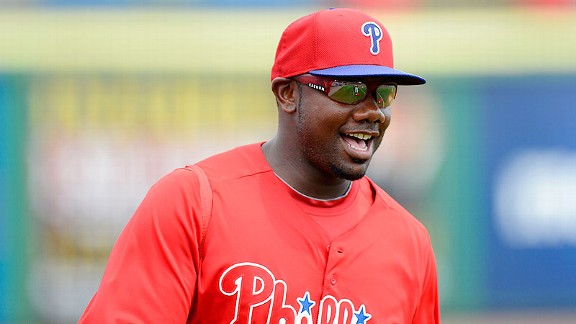
Remembering Ryan Howard

With Howard's career likely over, it's time to do some reflecting (MLB.com)
It's been a couple weeks since the Braves released Ryan Howard from his Minor League contract, effectively bringing an end to the 37-year-old's career. The news didn't come as a shock to anyone who's watched him flail away over the past five seasons, but it's always sad whenever one of baseball's greats is told he can no longer play the game.

It's sadder still when one of those players starred during your childhood. When they retire, it feels like they're taking a small part of it with them. The player becomes great only in your memory, YouTube tributes, and grainy highlight reels. It also makes you realize how much time has passed since you first started cheering for them.

I wasn't a Phillies fan and never owned him in one of my fantasy leagues, so I can't say I truly rooted for Ryan Howard. But I remember the summer he exploded onto the national consciousness, establishing himself as a household name and one of the most feared hitters in baseball.

Bill Simmons once wrote somewhere that sports never matter more than when you're 14 years old. Now 10 (soon to be 11) years removed from that semi-magical age, I have to agree with him. The more I think back on it, the more sports memories I'm able to unearth from that time. It's like I'm drilling for oil, and the summer of 2006 is my Alaskan pipeline.

I think that's because I watched more Baseball Tonight (RIP) in that two-month stretch than I have before or since (this was in the dark ages before MLB Network, mind you). Every night, I'd go down into the basement and flip on BT or Sportscenter (whichever was on, though BT was infinitely better) while working out in preparation for eighth grade football.

So, yeah, I saw a lot of baseball highlights that summer, many of which involved Ryan Howard sending another meatball deep into the night.

By then, it was clear that Howard was having a special season. Expectations were high for him that spring, as they always are for players who've just won Rookie of the Year. Howard's were astronomical, though, given that his rookie numbers projected to 40 homers, 115 RBIs, and 325 total bases over a 162-game season.

Most people thought those numbers were Howard's ceiling. Few could have imagined that he'd blow them away.

Many rookies take a step back in their second season, especially strikeout-prone sluggers like Howard. The league adjusts to them, their weaknesses become exploited, and before long they look lost at the plate. There are strikeouts and pop-ups and growing pains, but it's all part of the process. The MLB learning curve is steep, sometimes taking years to master (just ask Jose Bautista).

Very rarely does a guy come up and rake from the start. A few of the all-time greats did -- Ted Williams, Joe DiMaggio, Albert Pujols -- but many didn't, including Mickey Mantle, Willie Mays, and Mike Trout. Some don't hit their stride until their 30s, like Raul Ibanez or Daniel Murphy.

Not Howard. He took off like a rocket ship, homering off reigning NL Cy Young winner Chris Carpenter on Opening Day and batting over .300 through the end of April. In May he barrelled through the stratosphere, slugging 13 homers and driving in 35 runs, but somehow did not win NL Player of the Month honors. Let me repeat that: A guy hit 13 homers and had 35 RBIs in one month and did not win Player of the Month. Some guy named Jason Bay (remember him?) did, with 12 homers, 35 RBIs, and a 1.090 OPS (72 points higher than Howard). 2006 was a different time.

When Howard didn't slow down in June (nine homers, 21 RBIs, .987 OPS), that's when I really began to take notice. Towards the end of the month, he ripped two homers and drove in all seven of his team's runs in a 9-7 loss to the Yankees while becoming the first player to hit a ball into the third deck in right field at Citizens Bank Park. When I saw his stat line in the box score the following day, I remember wishing the season would end already so I'd know what Howard's final numbers would like. My summer vacation had just started, and I was already pining for October.
Howard became an MVP frontrunner with his stretch run surge (Philly Phever)
A little more than a month later, after he'd been named to his first All-Star team and competed in the Home Run Derby, Howard produced the ultra-rare 0-for-0 stat line while playing a complete game. The Marlins walked him five times -- only once intentionally -- although I'm sure several were of the unintentionally-intentional kind. That was in the first game of a doubleheader. Florida pitched to him in the second game, but Howard made them pay with three hits, including a homer.

The five-walk game (which tied a Major League record) reflected a shift in how Howard was being approached. Prior to the All-Star break, he walked 31 times (five intentionally) in 352 plate appearances. In 352 PA's after the break, he walked 77 times, a whopping 32 of which were intentional. Only three men in baseball history received more intentional walks in a season; Barry Bonds, Willie McCovey, and Albert Pujols.

Seeing fewer strikes did nothing to slow Howard's roll in August, as he slammed 14 homers and drove in 41 runs (the highest monthly total since 1962) to win NL Player of the Month. He did not go more than three games without a tater, and he ended the month with six homers and 17 RBIs -- a great month for most players -- in his final nine games. When the dog days of August drew to a close, he had 49 homers (a new Phillies record) and 128 RBIs.

The Phillies, who had a losing record for much of the summer, had been out of the playoff picture for months by the time September rolled around, but their slugging first baseman continued to mash. After playing both ends of a doubleheader on the 2nd, he smashed three big flies in the first game of a second twin ball the following day and added two hits in the night cap for good measure. Following another multi-homer game on September 8th, he'd amassed 13 homers and 26 RBIs in his previous 16 games. With the season entering its final phase, Howard had found another gear.

And even though he had 56 homers with over three weeks to go, there was little talk of him reaching 60. The once-magic number had been cheapened by Bonds, Mark McGwire, Sammy Sosa surpassing it six times in the previous eight seasons, and fans had become de-sensitized to gaudy home run totals. Thanks to the tireless efforts of Congress and Jose Canseco, they'd recently become aware that America's pastime was teeming with bulked up roiders, causing the home run's once-mythic power to wane considerably in the public's eye. Howard's numbers were undoubtedly impressive, but were met with a collective shrug from the baseball world. Pretty cool, Ryan, but you're still a long way from 73.

Making matters worse for Howard was that, at precisely that moment, opposing pitchers and managers decided to stop pitching to him altogether. With teams battling for postseason berths and September call-ups trying to make names for themselves, no one could afford to get cute with Howard. So they hardly bothered, walking him 28 times (14 intentional) over his final 100 plate appearances. It was the closest thing we'd seen to the Barry Bonds treatment since, well, how pitchers were treating Barry Bonds that year, who was intentionally walked 38 times (one more than Howard) at age 41. The strategy worked, limiting Howard to just two long balls and 11 RBIs over his final 21 games. Despite reaching base 53 times via hit, walk, hit-by-pitch, or error during that span (excluding his two homers), he was driven in a mere eight times, indicating just how little protection there was for Philadelphia's cleanup man.

Howard was named Player of the Month again for September after slashing .385/.562/.750, and when the dust settled on October 1st his final numbers were extraordinary; .313/.425/.659 with 58 homers (the most ever by a player in his second season), 149 RBIs, 104 runs and 108 walks (37 intentional). His home runs and RBIs paced the Major Leagues, as did his 383 total bases. Still, one can only wonder what his stats might have looked like had opponents not waved the white flag in September, or if Charlie Manuel hadn't batted him fifth throughout the first half, thereby costing him several plate appearances. 60 homers, 160 RBIs, and 400 total bases were all within reach. As great as it was, Howard's season could have been legendary.

Even so, it was still pretty monstrous. So blinding were Howard's Triple Crown numbers that he momentarily convinced baseball writers he was better than the reigning NL MVP -- the best hitter in baseball, who also happened to be an elite defensive first baseman. After all it was Albert Pujols, not Howard, who led the Majors in slugging (.671) and OPS (1.102) that year while mashing a career-high 49 homers, winning a Gold Glove and leading St. Louis to a World Series title. Had he not landed on the DL for the first time in his career, he would have surpassed 50 homers as well and possibly 150 RBIs, in which case there would have been no debate as to which first sacker had the superior season.

While Howard followed up his MVP with several more remarkable seasons, he never again reached the heights of 2006. He never came close to batting .313 again, finishing at .258 for his career, and had only one other season with an OBP above .360. He never had another 50-homer season or slugged .600 again, as pitchers soon learned that he could be neutralized with breaking stuff low and away. He quickly became unplayable against left-handed pitchers and his body began to break down. After averaging 44 homers and 133 RBIs from 2006-2011, he was below replacement level in every season except one from that point forward. It was unfortunate that he fell off a cliff as soon as his five-year, $125 million contract extension kicked in, turning him into a punchline during his final seasons.

But even at the end, when his batting average fell below .200 and he could no longer hit lefties to save his life, the power remained. He went deep 25 times in his final season in just 331 at-bats, besting his rookie rate of 22 homers in 312 at-bats. The only difference was that his OPS was 214 points lower, and that he was a 36-year-old at the end of the line than a 25-year-old kid with his whole career ahead of him.

It's a shame Howard never got to DH (his natural position) full-time, as he had the size and strength to keep hitting home runs forever. The Yankees just should have put him in that Stadium and milked a few more seasons out of him for minimal cost. They still can, I guess, especially since he'd make a nice platoon partner for Matt Holliday, but the last thing Brian Cashman wants right now is another aging bat on his roster.

Man, 2006 really was a long time ago...

Friday, April 10, 2015

Red Sox Take Series Finale


Masterson had a strong debut on the mound and at the dish (Press Herald)
Last night's Red Sox-Phillies game was unusual. What made it unusual was that in the third inning, both teams combined to score eight runs. In the other eight innings, neither side scored once.  Even more unusual was that all eight runs scored with two outs.

Thankfully for Boston, their third inning was much more productive, as they batted around and scored six runs. Philadelphia managed just two runs in the bottom half, and that was it for scoring for the rest of the evening.

What made Boston's big inning even more impressive was that the Sox scored all their runs with two outs, after Mookie Betts and Dustin Pedroia were retired. David Ortiz started the rally with a single to Chase Utley, Hanley Ramirez followed with an infield single of his own, and Pablo Sandoval walked.

With the bases full, Shane Victorino delivered, rifling a shot down the third base line that Cody Asche gloved, but threw over too late to nab the speedy Victorino. A coaching visit to the mound did nothing to settle David Buchanan, who walked in a run to make it 2-0 Boston.

The big blow was a triple by Xander Bogaerts, who lofted a fly ball down the right field line that took a funny hop and bounced past Jeff Francoeur, who came in so hard and fast that his hat flew off Willie Mays-style. As if that wasn't enough, Justin Masterson got in on the action by roping a single back through the box to knock in Bogaerts, helping his own cause by extending Boston's lead to six.

Masterson gave back two of those runs in the bottom of the frame, allowing Freddy Galvis to score on a wild pitch and serving up an RBI single to Utley--all with two outs.

Masterson wasn't masterful, but he was pretty good, making it through six to earn the quality start and the win Buchanan exited after his nightmare inning, and while Philadelphia's bullpen held the Red Sox in check, the Phillies were unable to get anything going offensively.

Boston's road trip continues tonight at Yankee Stadium, with Wade Miley making his Red Sox debut against Nathan Eovaldi, who'll be making his Yankee debut.

Thursday, April 9, 2015

Sox Suffer First Lost

Porcello pitched well but lost due to lack of run support (Boston Globe)
 The Boston Red Sox, my pick to win the American League this year, remained undefeated for exactly one game. Maybe I should start re-thinking that prediction.

The afterglow of Boston's 8-0 Opening Day beatdown faded quickly, as the Red Sox lost 4-2 last night. With the game time temperature dipping below 40 degrees, Boston's bats went cold after blasting five home runs in Monday afternoon's slugfest, managing just two singles and no runs through the first seven innings.

Rick Porcello and Aaron Harang, both debuting with their respective teams, traded scoreless frames until the sixth, when Philadelphia broke through for three runs. After fanning Ryan Howard to open the bottom of the frame, Porcello hiccuped. A walk, a single, and a just-enough homer to Jeff Francoeur of all people (of course he plays for the Phillies) made it 3-0 Philly in an eyeblink. Porcello got out of the inning without further damage, but his mistake to Frenchy ultimately cost his new team the game.

With Philadelphia leading 4-0 in the top of the eighth, having added an insurance run on a Chase Utley sacrifice fly, Boston rallied against Ken Giles. A Darin Ruf fielding error, Xander Bogaerts' single, and three walks--the last a bases loaded free pass to Pablo Sandoval--let in two Red Sox runs. With the bases still loaded and two down, Ryne Sandberg called for his closer, Jonathan Papelbon, to get out of the jam against his former team.

For a heart-stopping moment, the substitution appeared to backfire when Hanley Ramirez--his bat still smoldering from his pair of Opening Day homers--unloaded on an 0-1 pitch, driving it high and deep towards the left-center field wall. A couple months from now it probably lands in the seats, but the cold caused it to die on the warning track just shy of the 374 sign.

The next two Boston at-bats ended similarly, with fly balls harmlessly dropping into the mitt of Phillies left fielder Ben Revere. With the Sox down to their last out, Ryan Hanigan reached on catcher's interference, bringing the potential tying-run to the plate in the form of Bogaerts.  It was a classic baseball matchup of a battle-tested closer staring down the eager kid at the plate. This time, experience won out, as Pap whiffed Bogaerts to end the game and earn his 326th career save.

Other notes: the recently-extended Porcello pitched very well until his sixth-inning speed bump, but let's wait and see how he fares against a real lineup...Mookie Betts, Dustin Pedroia, and Hanley Ramirez went a combined 0-for-10 after hitting five home runs between them on Monday...Mike Napoli went 0-for-4 in place of David Ortiz...Sandoval notched his first Red Sox hit, going 2-for-3 with an RBI walk...Boston's struggles with runners in scoring position continued, as they are now 2-for-13 in such situations...Francoeur's long ball was the only extra base hit of the game...There was some sloppy defense, with both teams making two errors resulting in three unearned runs...Philadelphia had twice as many runs and twice as many hits as Boston...Both teams left six men on base.

Boston will look to take the rubber game today behind Justin Masterson, making his first start for the Red Sox since 2009. Philadelphia will counter with ground-baller David Buchanan, fresh off a solid rookie season in which he posted a 3.75 ERA and 1.29 WHIP in 117 and 2/3 innings. With tonight's forecast looking cold and rainy, don't expect much offense.


Tuesday, April 7, 2015

Boston Bludgeons Philadelphia

Pedrioa got the Red Sox off and running with his first inning blast (CBS Boston)
The Boston Red Sox started their season on the right foot yesterday, crushing the Philadelphia Phillies 8-0 on Opening Day.

The Red Sox scored all eight of their runs via the long ball, going yard five times in all. Dustin Pedroia ignited the scoring with a first inning solo shot into the left field bleachers that put Boston up 1-0. Mookie Betts, batting leadoff in his first Opening Day start, banged another solo shot in the third to double Boston's lead.

The Red Sox doubled their lead again in the fifth thanks to solo shots by Pedroia and Hanley Ramirez. Cole Hamels left after finishing the inning, having allowed four home runs in a game for the first time since April 23rd, 2010. Though Hamels allowed only five hits, four of them left the yard.

Meanwhile, Clay Buchholz was masterful in his first-ever Opening Day start, limiting the Phillies to just three hits through seven shutout innings. He carved up Philadelphia's feeble lineup, striking out nine against only one walk. The Red Sox are counting on a big comeback from their erstwhile ace, who was strafed for a 5.34 ERA last year, so yesterday's turn was certainly encouraging. It will be interesting to see how he performs against an American League team with a more formidable lineup.

The mighty Bosox weren't done scoring yet, either. With the game already well in hand, they doubled their lead one final time in the top of the ninth. After Phillies reliever Jake Diekman loaded the bases, Ramirez stepped up and lined a grand slam off the left field foul pole for his second bomb of the game. Welcome back, Hanley.

Yesterday's rout was a preview of what Boston's new-look lineup is capable of. The Red Sox are going to light up the scoreboard this year even on days like yesterday, when they didn't actually hit that well. The Sox were just 1-for-7 with runners in scoring position and got next to nothing out of everyone not named Betts, Pedroia, or Ramirez.

But that trio, which accounted for seven of Boston's nine hits including all five of their home runs and all eight of their RBI, did more than enough to propel the Sox to victory. In light of Pedroia's recent power woes, it was especially encouraging to see Pedey enjoy his first multi-homer game since September 13th, 2011. It was also good to see him get his first dinger out of the way after going homerless in each of the past two Aprils. Hopefully yesterday was a sign that he is fully healthy and can drive the ball with authority again.

The Red Sox are back at it tomorrow night with the newly-extended Rick Porcello making his Boston debut. The Phillies will counter with Aaron Harang. Expect another turkey-shoot.

Saturday, January 10, 2015

Howard Has to Go

The Phillies have made it clear that Howard has to go, but where? (ESPN)
After reading up on the latest Ryan Howard rumors, I've concluded that he's the least desirable player in baseball. His team doesn't want him, and apparently neither does anyone else. Probably because he's the new (and more expensive) Adam Dunn, by which I mean the washed-up version of Dunn who struggled to hit .200 with 20 home runs and still struck out a ton last year.

Howard has always been a three true-outcome hitter, but that was perfectly fine when he was cranking 45 home runs and driving in 140 runs. Those days are long gone, however, and they're never coming back. Howard's two beneficial outcomes--walks and homers--are happening less frequently while his worst outcome (the dreaded strikeout) is occurring more often:

Year
HR%
BB%
K%
2011
5.1
11.7
26.7
2012
4.8
8.6
33.9
2013
3.5
7.3
30.3
2014
3.6
10.3
29.3

These troubling trends have diminished Howard from a great hitter in 2011 (126 OPS+) to a below average one by 2014 (93 OPS+). Already a liability in the field and on the bases, Howard is now deficient in all areas of the game. Sure enough, he was below replacement level last year (and in 2012, for that matter).

Like the recently-retired Dunn, Howard is unplayable on defense, so incompetent in the field that even first base is out of the question. The 35 year-old is a DH-only at this point. Problem is, he plays for a National League team (the Phillies). Philadelphia would love to trade him, but good luck finding someone to take him off their hands.

Because in addition to being a big-bodied 35 year-old in steep decline, Howard still has two years remaining on his ill-advised five-year, $125 million contract extension he signed with Philadelphia prior to the 2012 season, plus a team option for 2017 that, barring a Barry Bonds or David Ortiz-esque renaissance, seems guaranteed to be bought out (at a cost of $10 million). In order to move Howard, the Phillies are going to have to eat a considerable chunk of that, but it's better than cutting him outright for nothing in return.

Even Ruben Amaro, Jr., Philly's clueless GM, has realized it's time to move on. He's finally kickstarting the rebuild process in Philadelphia, albeit two or three years too late. He already traded Jimmy Rollins, who was actually still useful. Jonathan Papelbon is likely headed out the door, and Cliff Lee will probably be gone next summer, too. Pretty soon it's going to be Chase Utley and a bunch of guys.

So it's clear Howard has to play elsewhere next year, but where will he land? Surely someone could find a spot for him, as he's not completely useless at this point. He still has above average power and gets on base at a league average rate. He's not an everyday player anymore, especially against lefties, but he'd be a great fit for an AL team seeking power, especially if said team plays in a hitter-friendly park.

He'd probably do really well with the Yankees, but they've got plenty of DH options between Alex Rodriguez and Carlos Beltran. The Orioles could use him after losing Nelson Cruz, and like New York have a ballpark that's well-suited to Howard's strengths. The Indians, perhaps? The Tigers? (if they want to see firsthand how Prince Fielder would have aged?).

Wherever he goes, the Phillies have made one thing abundantly clear. It's closing time, Ryan Howard, and you can't stay here.

Thursday, August 14, 2014

Dick Allen: A Better Jim Rice


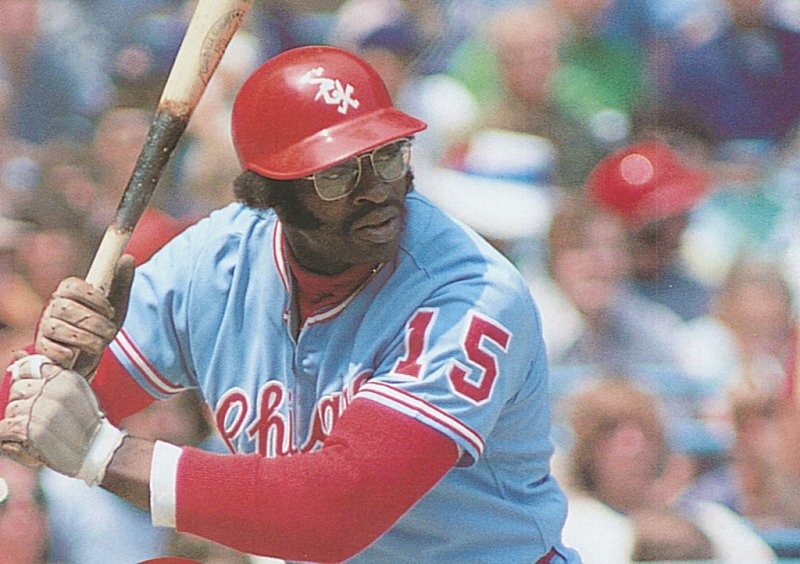
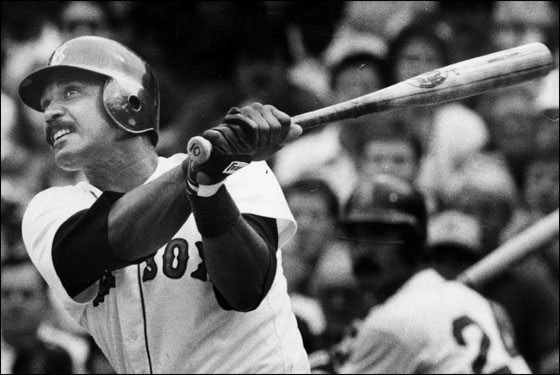
So yesterday's Ken Boyer vs. Ron Santo post got me thinking about another debate between a borderline Hall of Fame guy and a recent inductee. With Jim Rice's place in the Hall of Fame secure, Dick Allen deserves a plaque as well. And if there's only room for one of them, well, then it should be Allen no question.

But Rice is in, and Allen is not. The voters deemed Jim Ed worthy of a berth in Cooperstown. How they did not come to the same conclusion with Allen is beyond my comprehension. I mean, if Jim Rice is a Hall of Famer (which he is, even if many feel that he shouldn't be), then Dick Allen is absolutely, positively a no-brainer Hall of Famer. Rice made it into Cooperstown on his hitting and his hitting alone, and the numbers clearly show that Allen was a better baseball player. At the very least, Allen was a better hitter and more deserving candidate, essentially Jim Rice 2.0.

Let me explain. The similarities between the two as men and ballplayers are numerous. Both were tempestuous African American stars aggravated by the racist cities and times in which they played; mercurial sluggers with few friends in the media and stands; intense players worn down by the even more intense fans and press corps that all but suffocated them. Rice paid dearly for his surly demeanor, languishing on the writer's ballot for the full 15 years before he finally squeezed through Cooperstown's doors in his final year of eligibility. Allen, an even more polarizing figure, never came close to induction and is still waiting for the call.

Both were powerfully built righthanded sluggers with vicious swings that put the fear of God into opposing pitchers. Rice cracked 382 home runs, topping 40 once and winning three home run crowns. Allen socked 351, also exceeding 40 once and leading the league twice. Each was named AL MVP during the 1970s--Allen in 1972 and Rice six years later. Neither won a championship and both will be forever linked with teams that endured historic late season collapses (the '64 Phillies and '78 Red Sox) even though both enjoyed exceptional individual campaigns as their teams crumbled around them.

Rice played 16 years, one more than Allen, but because the former DH'ed and had better luck with injuries he was able to squeeze an additional 340 games out of his career. Thus, his counting numbers surpass Allen's in virtually every category except for walks and steals. Allen was much better at his peak though, with three seasons of at least 7.5 bWAR compared to Rice's one. Their numbers are remarkable similar on a 162-game basis:

Allen: 102 R 171 H 30 3B 7 3B 33 HR 104 RBI .292/.378/.534 313 TB
Rice: 97 R 190 H 29 2B 6 3B 30 HR 113 RBI .298/.352/.502 315 TB

Both burst on the scene with monster rookie seasons at the age of 22 (Allen copped Rookie of the Year honors and Rice would have too had he not debuted the same year as Fred Lynn), beginning a run of excellence that lasted over a decade until they dropped off dramatically before their 35th birthdays. Rice lost his lifetime .300 average, finishing at .298 like Mickey Mantle, and fell short of other notable milestones such as 400 homers, 1,500 RBI and 2,500 hits. Allen also fell short of 400 dingers, barely making it to 350, and failing to reach even 2,000 hits.

Allen last 3 years: .246/.334/.410  32 HR  142 RBI  0.5 bWAR
Rice last 3 years:  .263/.330/.395  31 HR  162 RBI  0.0 bWAR

For a long time it looked as though that sudden, steep decline was going to keep Rice out of the Hall. With Allen it's even more pronounced, leaving his counting numbers well short of what many consider Hall of Fame quality from an outfielder.

But Allen's career totals are close to Rice's, and his slash stats are much better. Allen walked a lot--much more than Rice, who rarely took a free pass unless it was intentional. So while Rice outhit Allen .298 to .292 for their careers, Allen has the much higher on-base percentage at .378 to Rice's .352. That advantage, combined with the former's 32 point edge in slugging percentage, means Allen was a far better hitter over the course of their careers. The numbers bear this out, as Allen's .912 OPS, .400 wOBA and 156 OPS+ dwarf Rice's .854, .375 and 128.  Allen also far outpaces Rice in batting runs above average, with 435 to Rice's 297, and outranks him by almost 25 offensive WAR, which combines hitting and baserunning. Allen was an above average baserunner while Rice was below average, but that's not enough to explain the huge gap in their offensive production.

Rice has no excuse, as he benefitted from batting in the middle of Boston's fearsome lineups and playing half his games in baseball's best hitter's park at the time. Allen did not enjoy these same advantages. He played in the National League, which everyone knows was the superior league during the 1960s and '70s (read: more competitive), and did not enjoy the same level of supporting talent or the perks of playing in Fenway.

This is apparent in their neutralized numbers. Rice's barely change, as his friendly home park negated the difficulties of playing the offense-suppressed 1970s and '80s. Allen's figures improve considerably, however. His batting line jumps to .307/.396/.561, raising his OPS to more than 100 points higher than Rice's. He's also credited with 378 homers, 1,261 RBI, nearly 2,000 hits and almost 1,000 walks. Still borderline numbers, but more comparable to Rice's at least.


 There's not much point comparing their defense because frankly, both were terrible. If Rice had been good he wouldn't have DH'ed so much, but in his defense the Red Sox already had a tremendous left fielder in Carl Yastrzemski when he arrived. Rice eventually turned himself into a halfway decent defender as he learned to handle the Green Monster, but never came close to matching the defensive prowess of his predecessor. Allen butchered every position he played; third base, first base and left field, but his offense was especially valuable during his time at the hot corner. The difference between a bad defender and a worse defender is not enough to compensate for the huge disparity in their hitting.

Even though Rice played the equivalent of two more full seasons and played better defense, Allen comes out significantly ahead in WAR. Baseball Reference, Baseball Prospectus, and FanGraphs all credit him with roughly 60 for his career, about 10 more than Rice. Based on his Hall of Stats rating of 115, Allen is a worthy Hall of Famer. With a score of just 82, Rice is decidedly not.

And yet, nearly 40 years after his last game, Allen is still on the outside looking in. Blame the writers for stiffing him, the fans for not supporting his candidacy, and Allen for being a giant jerk, but Richie's waited long enough. His omission from the Hall is one of Cooperstown's most glaring oversights. How could they pass over a hitter who was so great, Hall of Fame caliber for 15 years, for so long?

Allen made many enemies and they've kept him from coming anywhere close to induction. He never even received 20 percent of the vote in any of his 14 years on the ballot. Based on his on-field accomplishments, Allen should have been inducted long ago, and had he been a swell, stand-up guy like Dale Murphy he probably would have.  Rice didn't have a lot of friends either, but eventually stances softened on him as people came around to seeing what a great hitter he had been. When is that going to happen with Allen? Will it ever?

Sabermetrics punched Bert Blyleven's ticket to the Hall of Fame, and with the same concerted effort Allen could get there one day as well. Unfortunately there just doesn't seem to be that same level of support for him. The grudges against him aren't going away. Who's clamoring for Dick Allen to take his rightful place in the Hall of Fame? Not very many, it seems, and if they're out there they're not being vocal enough. Allen might not seem like a Hall of Famer at first glance, but once you do a little digging it becomes as clear as day. He was one of the best hitters of not just his era, but baseball history. The Hall of Fame is a lesser place without him.

They say time heals most wounds, and in this writer's opinion enough time has passed to forgive Allen for his personal flaws and let bygones be bygones. The Wampum Walloper was baseball's best hitter for more than a decade, on par with contemporaries Frank Robinson, Hank Aaron, Mickey Mantle, and Willie McCovey, and deserves to be commemorated in Cooperstown for it. Allen's in his early 70s now, and he might not be around much longer. Better to induct him while he's still alive and able to enjoy it, lest the Hall waits too long to open its doors to him a la Ron Santo. The ceremony will be long overdue, of course, but better late than never.

Sunday, June 15, 2014

Rollins Rolling Towards Cooperstown

Rollins has steadily compiled numbers that rank among those of baseball's best shortstops
Now that Jimmy Rollins is the Phillies franchise hits leader (which is really quite impressive considering the team has been around in some capacity since 1883), people will inevitably begin to talk about his Hall of Fame chances. After all, the man he just passed, Mike Schmidt, was a first ballot Hall of Famer who sailed into Cooperstown with 96.5 percent of the vote in 1995, and their career averages are almost identical, with Rollins at .268 to Schmidt's .267.

But that's where the statistical similarities between the two end, and right now, at least, Rollins' Hall hopes don't look nearly so good. Based on bWAR, Rollins has never been the best player on his own team, let alone the league (his undeserved 2007 MVP award notwithstanding). His offense has been uneven over the course of his career, and his bat rates a hair below average when adjusted for league and park (97 OPS+, with more seasons below 100 than above it). He's yet to bat .300 in any season (and at this stage of his career, probably never will) or post an OBP above .350. He falls short by JAWs, Black Ink, Gray Ink, Hall of Fame Standards, and Hall of Stats, and just barely qualifies by Hall of Fame monitor. With only three All-Star game appearances, one Silver Slugger, one World Series ring, one top-nine MVP finish and 43.6 career bWAR to his name, Rollins neither looks nor smells like a Hall of Famer, something his .268/.328/.425 seems to confirm. His most similar batter, Ray Durham, just fell off the ballot on his first try.

And yet, part of me thinks Rollins has been underappreciated by baseball fans outside Philadelphia. Here's a guy who comes to play everyday, and when the season's over you look up and realize that he stroked 35-40 doubles, swiped 30 or 40-odd bases, blasted 10-20 homers, and collected a good number of hits and runs. Combined with great defense at a premium position (four Gold Gloves), that's pretty valuable. Since 2000 Rollins has compiled more WAR than any shortstop not named Derek Jeter (omitting Alex Rodriguez, who moved to third base after 2003). He ranks as baseball's 16th most valuable position player during that span, with more fWAR than Matt Holliday, Torii Hunter, Vladimir Guerrero, Joe Mauer David Ortiz, and one-time teammate Bobby Abreu. Rollins is also the only National League shortstop to be named MVP in the past 18 seasons, and he's the only shortstop ever with more than 200 home runs and 400 stolen bases.

Which is weird because I feel like when people think of the best shortstops of the past 15 years, Rollins' name rarely comes to mind. I'd wager a bet that most fans wouldn't have him in their top-three, or probably even their top five. I'd imagine Jeter tops everyone's list, and is followed in some order by Troy Tulowitzki, Jose Reyes, Hanley Ramirez, Michael Young, Miguel Tejada, and Rollins.

But because of Rollins's durability and longevity (ten seasons with at least 154 games played and a dozen with over 600 plate appearances), his counting numbers are better than all of them (except Jeter) and numerous other shortstops that came before him. J-Roll has scored more runs than Joe Cronin and Ozzie Smith, clubbed more doubles than Luke Appling, and compiled more base knocks than Pee Wee Reese. He's also hit more home runs than Barry Larkin and Alan Trammell (his second and fourth-best comps, respectively), and stolen more bases than Jeter and Omar Vizquel.  His rate stats aren't great, though his .753 OPS isn't far off from Robin Yount's .772 mark

When all is said and done, Rollins could rank within the top-ten all-time among shortstops in runs scored (he needs 130, or about two more decent seasons, to get there). He's already eighth in doubles with 466 and only needs three more to pass Tejada. Similarly he needs just four home runs to pass Rico Petrocelli at 210 and break into the top ten. 2,500 hits would put him in the top-12, and 2,600 would vault him into the top ten.

So while Rollins isn't Hall of Fame worthy quite yet, he's going to be an interesting candidate if he keeps climbing the leaderboards over the next few years. Assuming he winds up with around 2,500 hits, 500 doubles, 1,400 runs, 250 homers, 500 steals, and 1,000 RBI, the switch-hitting speedster will have a diverse statistical portfolio unlike that of any other shortstop that would seem to merit indeuction. At 35 he still has a few more years in front of them, years that will make or break his Cooperstown case. If he falls apart next year and is forced to retire, I don't think he makes it in. But if he has a couple more solid seasons and hangs around until his 40th birthday like Jeter, then his career numbers are going to be too impressive to overlook.

Saturday, May 31, 2014

Fear the Phillies?

Rollins, Utley and Howard are enjoying their best seasons in years (RantSports)
The Phillies are in last place entering play today--exactly where most people thought they'd be this year after an offseason full of puzzling moves. But they're only four games below .500, and the same number out of first place in the NL East. They're still very much in contention, positioned so that one good week could vault them to the top of the standings.

The Phillies in first place after Memorial Day? Not as far-fetched as you might think.

One reason why the Phils are still in it is that their once famous infield core of Chase Utley and former MVPs Jimmy Rollins and Ryan Howard, are all having their best seasons in years. They've turned back the clock, so to speak; not quite to their heyday of 2006-2009, but closer than anyone had a reason to expect.

Let's start with Utley, who's having a downright fantastic season, easily his best in five years. He's leading the major league in doubles (with 22), batting well over .300 and posting the best OPS+ of his career. Healthier than he's been in years, the five-time All-Star is playing like it. He's been the team's most valuable position player thus far and the tenth most valuable position player in the Senior Circuit per bWAR. Some decline should be expected from the 35 year-old keystone, injury-related or otherwise, but the fact remains that he's still a very good player having a great season, which Carlos Beltran, Torii Hunter, and Victor Martinez have shown isn't out of the ordinary (another MVP-caliber season sure would go a long way towards boosting his Hall of Fame credentials, too).

J-Roll, the oldest of the bunch at 35-and-a-half,  is having, on an adjusted OPS basis, his best year with the bat since 2007, when he edged out Matt Holliday for NL MVP honors. Rollins has already equaled last season's home run total (6) and has shown a career-best walk rate of 13.7 percent, which explains his career-high .358 OBP. After years of putting up middling on-base percentages, Rollins finally seems to understand the importance of reaching base when batting near the top of the lineup. As long as he maintains his newfound plate discipline, his .250-ish batting average (which is essentially league average, now) will be tolerable for a table-setter.

And then there's Howard, now a Mark Reynolds/Adam Dunn-type all-or-nothing slugger. The team leader in long balls and RBI is on pace for around 30 and 110, figures he hasn't reached since 2011. But those shiny power numbers come at a cost: Howard is leading the major leagues in strikeouts, batting a meager .227, and his on-base percentage is a borderline unacceptable .303. Obviously those numbers are not ideal, but consider that last year only three players--Chris Davis, Miguel Cabrera and Paul Goldschmidt--topped both 30 long balls and 110 ribbies. The 34 year-old first baseman is very limited at this stage of his career, but he can still hit the ball out of the park and drive in runs.

Obviously the Phillies need all three to keep doing what they're doing if they hope to stay afloat in the crowded NL East. Their offense is already below average compared to the rest of the National League, so any slippage on their part would likely doom Philadelphia's lineup. The Phils rely on them and Marlon Byrd for the bulk of their offensive production, and for the first third of the season all three have exceeded expectations.

They've turned around their careers, at least for the time being. Now let's see if they can turn around the Phillies.

Friday, February 14, 2014

Burnett Joins Phillies

Burnett's been great for the Pirates. Now Philadelphia's counting on him (NESN)

It took them almost the entire offseason, but the Philadelphia Phillies finally made a move that makes sense and improves their team. By signing A.J. Burnett to a one-year, $16 million deal on Wednesday, the Phillies found a short-term solution that fills the void left in the rotation by Roy Halladay's retirement.

And while Burnett has never come close to matching the dominance displayed by Halladay, a two-time Cy Young winner, Burnett's been the far-better pitcher over the past two seasons (the league's eighth-most valuable pitcher, in fact) and thus represents an upgrade. He's not the kind of ace who can add five or six wins to a team by himself, but then again the Phillies don't need him to be. They need rotation depth beyond Cliff Lee and Cole Hamels. Burnett, a strong number two starer, offers that.

Then again, Burnett is 37, so Philadelphia's banking he can hold off Father Time for one more year. He also didn't fare too well the last time he pitched for an East Coast baseball team with intense fans in the not-so-distant past. So it's definitely possible that Burnett falls apart in 2014. Halladay himself proved how quickly a pitcher can lose it, and Halladay was a much better pitcher than Burnett is, was, or can ever hope to be.

Tuesday, January 28, 2014

The Brilliant Bobby Abreu

Abreu is returning to the Phillies, where he starred from 1998 to 2006
Last week the Philadelphia Phillies, who I'm convinced are trying to field baseball's oldest team this year, signed Bobby Abreu to a minor league deal that would pay him $800,000 if he makes the team. I wouldn't bet on the 39 year-old's comeback, but part of me hopes he can get on the field this year just so the baseball world can have one last chance to appreciate the greatness which was so often overlooked throughout his wonderful career.

(Had he spent more than two and a half seasons in Pinstripes, that definitely wouldn't be the case, especially since he signed with the Angels less than nine months before the Bombers won the World Series. The same can be said for his Phillies tenure, which ended half a season before they became a National League powerhouse with Ryan Howard, Chase Utley, Shane Victorino, Jayson Werth, Jimmy Rollins, Cole Hamels, etc. and will resume a few seasons too late, after Roy Halladay's retirement).

The thing about Abreu is that he was so steady, so consistent. He was insanely durable, playing no fewer than 151 games every year from 1998 through 2010--his age 36 season. The year after that, he played 142 games at 37. His career is devoid of the peaks and valleys that define so many athletic careers. He never had that one awesome, standout season, but he never had a year in his prime where he got hurt or his performance dropped inexplicably. He aged gracefully, but was clearly not as good in his 30s as he was in his 20s. Consistency and durability are always underrated skills, so I suppose Abreu was doomed to be under-appreciated from the start.

One of the easiest ways to determine if a player is underrated is to simply look at his walks, and Abreu walked a lot: more than 100 times every season from 1999 through 2006, 100 times per 162 games and nearly 1,500 times in his career. Add all those free passes to his 2,437 career hits and 33 times hit by pitch and he's reached base almost 4,000 times in his career. Only 50 men have reached base more than Abreu did, and some of the players who didn't were Mike Schmidt, Eddie Mathews, Harmon Killebrew, Willie McCovey, Tony Perez, Jeff Bagwell, and Fred McGriff.

Abreu's career on-base percentage is a marvelous .396, and he's drawn more free passes than all but 21 players in baseball history. He has more walks than Jimmie Foxx, Hank Aaron, Frank Robinson--three of the most intimidating sluggers the game has ever known--despite coming to bat considerably fewer times than they did. Abreu was so good at walking that he was among his league's ten best at doing so every year from 1998 through 2011 except for one--2008, when he walked "only" 73 times.

Those walks didn't happen by accident, either. Abreu was notorious for his excellent plate discipline, and took a lot of pitches. Since FanGraphs started tracking such data in 2002, Abreu has offered at little more than a third of all pitches thrown to him (35 percent). He's so selective that he rarely swings at a bad pitch, chasing just 15.3 percent of pitches outside the strike zone. In 2004, when Abreu walked a career high 127 times, that number was less than 10 percent.

Abreu did much more than walk, though. He hit tons of doubles--565 of them so far, which ranks 23rd all-time. He also hit a good number of home runs. His career total of 287 isn't a lot*, certainly not by the Steroid Era standards, but he did reach 30 twice and topped 20 on seven other occasions. That power helped him exceed 100 RBI eight times (same as Jim Rice, twice as many as Mickey Mantle) even if he never drove in more than 110.

*(Seeing as how he cleared the fences only 11 times in his most recent 254 major league games dating back to September 2010, it's highly unlikely that he'll stroke the 13 dingers he needs to join the 300 club. If he gets there and steals one more base, he'll be one of two players with at least 300 long balls, 400 steals and 2,000 hits. The other is Barry Bonds).

He was also an excellent baserunner, which no doubt helped him score at least 96 runs every year from 1999 through 2009. Abreu swiped at least 19 bases every year from 1998 through 2011, piling up 399 career thefts at a 75.7 percent success rate. He only needs one more to reach 400. If he plays and gets on base, I'd have to imagine he'll have the green light until he reaches the milestone.

Few players have blended power and speed as well as Abreu. He has a 30/40 season, a 30/30 season, two 20/30 seasons and five 20/20 seasons. His power speed number is the 13th best of all-time, better than Carlos Beltran's. Reggie Jackson's and Dave Winfield's. Combined with his excellent on-base ability, Abreu's well-rounded skill-set made him a very valuable player. He was worth 41.4 bWAR from 1998 through 2004, averaging nearly six wins per season with a .942 OPS over that span. FanGraphs estimates he was the fifth most valuable player in baseball during that time, behind only Barry Bonds, Alex Rodriguez, Andruw Jones and Scott Rolen.

But because that's when offensive numbers were off the charts, Abreu's all-around skills were overshadowed by his peer's prodigious power numbers. That explains why he was an All-Star only twice--in 2004 and 2005.  2004 was the year in which he won his only Silver Slugger, and in 2005 he netted his only Gold Glove. He has as many top-ten MVP finishes as me and you put together, but did receive votes in seven separate seasons. Always very good but never dominant, Abreu is woefully short on black ink: he led the major leagues in triples in 1999, the National League in doubles in 2002, and the major leagues in walks in 2006.

That's what makes his Hall of Fame case so interesting, and yes, he does have a legitimate Hall of Fame case. He enjoyed a strong seven year peak from 1998 through 2004 and had another five or six seasons that were pretty good. By traditional metrics he falls a bit short, but advanced metrics show him more support. His career bWAR total is above 60, albeit barely, which puts him in the Cooperstown conversation. He ranks in the top-100 for offensive WAR and inside the top-50 for runs created. His 129 OPS+ is the same as Eddie Murray's and is better than Rickey Henderson's, Johnny Bench's, and Ron Santo's.

He exceeds Bill James's Hall of Fame standards despite low gray and black ink scores. JAWS has him as the 19th best right fielder, pretty much dead even with Sammy Sosa, Ichiro Suzuki, Dave Winfield, and Vladimir Guerrero. He's below the established peak and career standard at the position but still rates higher than Gary Sheffield, not to mention multiple Hall of Famers like Enos Slaughter, Sam Rice and Chuck Klein.

Without looking at his list of most similar players, I immediately thought of Bernie Williams who, after falling off the ballot on his second try, was decidedly not a Hall of Famer. Sure enough, Williams ranks first on Abreu's list of most similar batters, ahead of some other good-not-great players such as Luis Gonzalez (second), Dwight Evans (fourth), Dave Parker (fifth), Paul O'Neill (ninth) and John Olerud (tenth). In my opinion, Evans and Carlos Beltran are the only deserving Hall of Famers on that list, so Abreu's bid for the Hall of Fame, whenever that may be, probably won't go well even though he has no ties to PEDs as of yet.

My point is that while Abreu was not quite a Hall of Fame caliber-player, he was very very good and probably only one or two good seasons away from being one. You can certainly make the case that he was one without sounding like a lunatic. You just have to dig a little deeper.