Showing posts with label 2015. Show all posts

Wednesday, December 30, 2015

MLB's Top 15 for 2015

We'll remember 2015 as the year Harper rose to the top of his profession (Washington Post)
Another year has come and gone, which means it's time to reflect on another great baseball season gone by. Here are the 15 best players who made the 2015 campaign one to remember.

We all knew this day was coming; we just weren't sure it would come so soon. Harper became the best player (and youngest unanimous MVP) in baseball at 22, having the best season for a player his age since Ted Williams' 1941. All Harper did was hit .330/.460/.659 (195 OPS+) with 42 home runs and 9.9 bWAR--the most by a National Leaguer since Barry Bonds circa 2004.

For the first time since 2011, Trout was not the best player in baseball. Still, there's no shame in second place, as the three-time MVP runner-up knows all too well. 2015 was another marvelous year for his generation's Mickey Mantle; all he did was lead the AL in WAR, slugging, OPS, OPS+, runs created, and times on base while playing an above average center field.

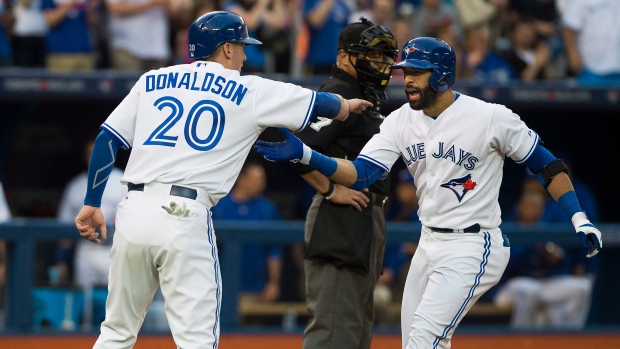
After back-to-back MVP-caliber years in Oakland, Donaldson finally took home the award in his first season with Toronto. The slick-fielding third baseman posted monster numbers, leading the majors in runs and AL in RBI as he helped the Blue Jays snap their 22-year playoff drought.

Kershaw was once again the best pitcher in baseball, topping both leagues with his 8.6 fWAR, 1.99 FIP, 232 and 2/3 innings, and 301 strikeouts--the most by a pitcher since Randy Johnson in 2002. He was denied another Cy Young, however, by the man behind him on this list.

It's been a swift rise to dominance for Arrieta, who had a 5.46 career ERA when the Orioles traded him midway through the 2013 season and had never completed 160 innings in a season before this one. 2015 saw him build on a stellar 2014 (2.53 ERA) with the best second half in major league history, resulting his first Cy Young award.

Greinke picked a great time to have a career year, compiling baseball's lowest ERA (1.66) in 20 years just before he was eligible to opt out of the six-year, $147 million deal he signed with the Dodgers after the 2012 season. He exercised that option to become the richest baseball player ever in terms of annual salary.

After a fractured hand cost him the final two months of 2014, Goldschmidt roared back to form in his age-27 season by raking at a .321/.435/.570 (170 OPS+) clip. More than just a masher, Goldy won his second Gold Glove and notched 21 steals in 26 tries.

At 31, Votto bounced back from an injury-marred 2014 to post his typically gaudy numbers, including 7.6 bWAR and a .314/.459/.541 (174 OPS+) slash line. In a normal year he would have been an easy choice for MVP, especially after his epic second half, but against Harper he never stood a chance.

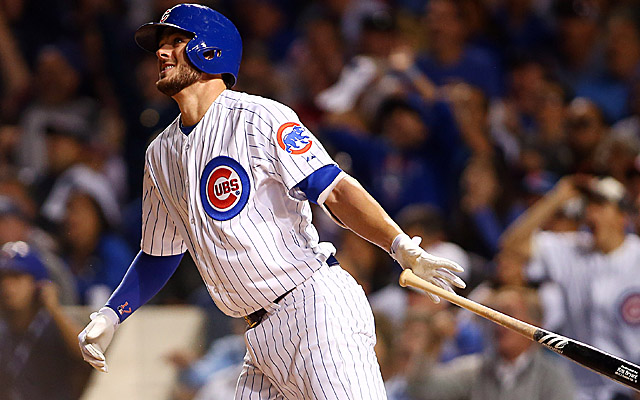
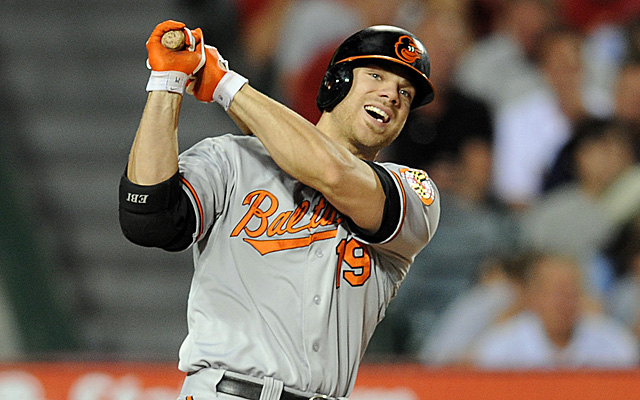
Machado showed no ill-effects from the ugly knee injury that cost him half of 2014, coming back strong to play every game, steal 20 bases, and earn his second Gold Glove. The 22 year-old third-sacker also erupted at the plate, crushing 35 home runs and batting .286/.359/.502 (131 OPS+). With Chris Davis likely playing elsewhere next year and Adam Jones now in his 30s, Machado is poised to become Baltimore's franchise cornerstone for the foreseeable future.

'Cutch rallied from his injury-hampered slow start to finish with his usually excellent numbers, leading the Pirates to 98 wins on the strength of his 23 homers, 96 RBI, and .292/.401/.488 (145 OPS+) slash line.

The deserving AL Cy Young winner helped Houston make the playoffs by leading the loop in innings, WHIP, ERA+, and pitcher bWAR.

Like Greinke, Price leveraged his career year to score a massive payday. The AL ERA leader (2.45) came up big down the stretch for Toronto, going 9-1 in 11 starts after arriving via trade on July 30th.

The author of two no-nos and a one-hitter last year, Scherzer was a bloop single, a throwing error, and an oversized elbow pad away from spinning three perfect games. Now that would have been something. Scherzer was largely forgotten about after the Nats pooped the bed in the second half (he played a part in that as well), but his 2.79 ERA, 0.92 WHIP, 276 strikeouts and major league-leading 8.12 K/BB ratio would have made him a popular Cy Young pick most years.

A popular MVP choice in the sabermetric community, Rizzo led all of baseball in Win Probability Added. He compiled impressive traditional stats too, slamming 31 home runs, amassing 300 total bases, and slashing .278/.387/.512 (144 OPS+). In addition to anchoring the Cubs lineup (no National Leaguer played more games or had more plate appearances), Rizzo provided unusual baserunning value for a first baseman with 17 steals.

Colorado's 24 year-old third baseman continued improving his power in his third season, busting out to lead the majors in RBI, total bases, and extra base hits. He also won his third straight Gold Glove for his defensive excellence at the hot corner, making him one of the best two-way players in the game.

Friday, November 20, 2015

My 2015 MLB Award Ballot

Just realizing I never released my unofficial ballot, as MLB awards week really snuck up on me this year. So now that the votes are in, here is how I would have filled out my ballot, if I had one.

AL MVP

1. Dallas Keuchel
2. David Price

AL Rookie of the Year

AL Manager of the Year
2. Jeff Bannister

NL MVP

NL Cy Young
1. Clayton Kershaw
2. Jake Arrieta
3. Zack Greinke

NL Rookie of the Year

NL Manager of the Year

Thursday, November 19, 2015

Cubs Cleaning Up

Arrieta rode a historic second half to his first Cy Young award (MLB.com)
2015 was a pretty good year for the Cubs. Kris Bryant and Kyle Schwarber had outstanding debuts, Jake Arrieta evolved into one of the best pitchers in baseball, and Joe Maddon worked his usual magic from the dugout, guiding Chicago to 97 wins and the World Series championship that Back to the Future II predicted 26 years ago a postseason berth.

One would think the Cubbies won it all this year, based on how they've fared in the BBWAA awards thus far. On Monday it was announced that Bryant won NL Rookie of the Year unanimously. Tuesday brought the news that Joe Maddon had been named NL Manager of the Year, and Wednesday made it a three-peat when Jake Arrieta was voted NL Cy Young over Clayton Kershaw and Zack Greinke. That streak will end today, however, as Anthony Rizzo doesn't stand a chance against Bryce Harper for NL MVP honors.

As I wrote yesterday, Bryant was an easy choice based on the way he dominated this year's rookie leaderboards. Maddon was also an obvious pick after helming the Cubs--a last place team the last two years--to its first playoff appearance of the Obama administration. 

But Arrieta, as many have written, was not an obvious choice by any stretch. In fact, I'm pretty sure he was the wrong one.

Let me backtrack a bit. There really was no wrong choice for this year's NL Cy Young, as Arrieta, Greinke, and Kershaw were all equally worthy. They all had different things going for them. Arrieta led the majors in wins, complete games, shutouts, hit rate, and home run rate, plus enjoyed the best second half any pitcher has ever had. Greinke was tops in winning percentage, ERA, ERA+, WHIP, and pitcher bWAR. Kershaw tied Arrieta for most complete games and shutouts while registering the most innings, strikeouts, and pitcher fWAR. He also had the major's lowest FIP and National League's best strikeout rate. In the end, who you voted for was a matter of personal taste. 

Since I'm on board with the whole sabermetrics thing, I prefer FIP to ERA. I like lots of strikeouts and few walks. I want to see a low WHIP. And I want to see all of those things sustained over a large workload.

I think you see where I'm going with this. Nobody combined quantity with quality this year like Kershaw. He was the best pitcher in baseball based on things pitchers can control (though I still don't buy the idea that pitchers can control home runs, as that's heavily influenced by weather and ballpark) and threw more innings than anyone else. No pitcher was more valuable, in my eyes, at least. 

I don't mean to take anything away from Arrieta, because he had a Cy-worthy season as well. I just can't help but wonder how the voting would have played out had the Cubs finished last again, or had Greinke not split the vote with his rotationmate (Kershaw wins if you give him half of Greinke's point total). Since it was pretty much impossible to tell which Dodger pitcher was better, that all but guaranteed the award would go to Arrieta--Chicago's clear ace.

I also think it's funny that for the second year in a row, a pitcher rode a big second half to Cy Young glory over a pitcher who I thought was more deserving. Last year saw Corey Kluber edge out Felix Hernandez, and this year Arrieta won despite having a 3.40 ERA through mid-June. It's also interesting that Kluber and Arrieta were both first-time winners who were rewarded for their first season of dominance, whereas Hernandez and Kershaw had both won before with superior seasons. I'm sure there are some voters out there who'd rather not vote for the same guy year after year, who instead try to pick the player with the better narrative. That's why Josh Donaldson will beat out Mike Trout for AL MVP, even though Trout's numbers are better than Donaldson's as well as the ones he posted during his MVP campaign last year.
Keuchel shut out the Yankees in the AL Wild Card game (MLB.com)
While big second halves helped Kluber and Arrieta capture their first Cy Young awards, a strong finishing kick did not help David Price secure his second.

I was both surprised and happy to see Dallas Keuchel eek by David Price in the American League. I thought Price would win after sparking Toronto's second-half turnaround, essentially pitching them to the postseason the way CC Sabathia did Milwaukee in 2008. I guess that's karma for Price stealing the 2012 Cy Young that Justin Verlander deserved. 

Of course, Keuchel was every bit as instrumental as Price in helping his team reach the playoffs. He was the American League's most valuable pitcher per bWAR (FanGraphs had Chris Sale, which I don't buy considering he threw 23 fewer innings with an ERA nearly a full run higher) and led the league in a host of categories, including innings, shutouts, ERA+, WHIP, and wins. 

Keuchel "won" 20 regular season games--the only AL starter to do so--but that total doesn't include Houston's most important game of the season--a do-or-die, single elimination game at Yankee Stadium for the right to advance to the ALDS. Keuchel was masterful, spinning six shutout innings and limiting the Bombers to just three hits in his first-ever postseason start. He was equally dominant in his lone ALDS turn, stifling the Royals to one run over seven frames as he helped Houston come within one win of the ALCS. That proved to be Keuchel's last start of 2015, as the Astros never got that last win.

I don't mean to say that Price would have been a poor pick. His numbers were nearly identical to Keuchel's, so as in the NL it was a toss-up. For me it was innings--Keuchel threw 11 and 2/3 more, or about a start and a half--that made Keuchel the superior candidate. That doesn't sound like much over the course of a season, but when you consider that Houston won the second wild card by one game over the Angels, those dozen innings might have been the difference. No American League starter had more of an impact than Keuchel, who led the loop in batters faced, and nobody was definitively better. Price was just as good, but he simply wasn't as dominant; the only stat he led in was ERA--by 0.03 over Keuchel, which of course means nothing over 162 games.

In both leagues the voters had to split hairs. I think they split the right ones in the AL but the wrong ones in the NL. 

Wednesday, November 18, 2015

Plenty of Power in 2015 Rookie Class

As expected, Bryant ran away with the National League award (CBS Sports)
In a year where power made a bit of a comeback in the MLB, 26 rookies reached double digit home run totals, including four who topped 20. With young guys like Mike Trout, Bryce Harper, Manny Machado, and Nolan Arenado all showing plenty of power early on, it's safe to say the next generation of sluggers has arrived.

It was fitting, then, when the top rookie home run hitter in each league was named Rookie of the Year on Monday. In the AL that was Carlos Correa, the 20 year-old wunderkind who led all shortstops with 22 long balls. In the NL it was Kris Bryant, a unanimous selection after delivering on the immense hype that preceded his debut.

An awesome spring training made Bryant the frontrunner for the award, and he didn't disappoint after the Cubs promoted him in mid-April. Other than taking three weeks to launch his first big league bomb, everything about his rookie campaign went off without a hitch. He played a smooth third base in addition to displaying light-tower power, the Cubs made the playoffs, and he walked away with NL Rookie of the Year.

Bryant was an easy choice after leading his rookie class in, well, just about everything. He was tops among first-years in WAR (both versions), home runs, RBI, runs, and doubles. He also led National League rookies in OBP, slugging, and OPS. In fact, only one other player in baseball history had as many runs, homers, RBI, doubles, and walks in their rookie season as Bryant. You may have heard of him; his name was Ted Williams.

Comparing Bryant to Teddy Ballgame is both premature and unfair, as Bryant is more of a slugger whereas Williams was the best pure hitter ever, but you get the point. Bryant is already in special company, and this is just the start of what figures to be a marvelous career. If he can cut down on his strikeouts, he has the tools to challenge Trout and Harper as the best players in the game.

The only issue I had with the National League vote was Joc Pederson finishing outside the top five. That would have seemed inconceivable four months ago, when he was battling Bryant for top rookie status. Despite Pederson's second half slide (just nine home runs and a .622 OPS after June 3rd), he still finished the year with more home runs than every rookie besides Bryant and the sixth-best walk rate in baseball, all while patrolling center field for the NL West-winning Los Angeles Dodgers.

Plus, Pederson was severely hampered by his home park while Bryant got a major boost from his. Pederson's OPS was 142 points better away from Dodger Stadium, but that still doesn't come close to matching Bryant's ridiculous home/road split. Bryant was a beast at Wrigley, batting .311/.408/.629 and sending 21 balls over the ivy. Everywhere else, not so much. His road stats; .243/.333/.360 and five home runs. Put Pederson in Chicago and Bryant in LA, and there's a very good chance this award goes to Pederson instead. They're very similar hitters--lots of walks, plenty of homers, and tons of strikeouts--so it will be interesting to see how their careers play out in different settings.

Of course, Bryant and Pederson weren't the only NL rookies to shine this year. Matt Duffy had a tremendous season for the Giants, batting .295 with 4.9 WAR, 12 homers, and 12 steals (didn't take long for San Francisco to replace Pablo Sandoval). Jung Ho Kang had a similarly impressive debut with the Pirates, making a smooth transition from South Korea to the major leagues at 28 and establishing himself as one of the best-hitting shortstops in the game. Justin Bour quietly enjoyed a big breakout with the Marlins, thumping 23 homers and 20 doubles in just 402 official at-bats.

And then there was Noah Syndergaard, who many think has the raw talent to be better than rotation-mates Matt Harvey and Jacob deGrom. If you watched the playoffs, you know just how good he can be. With those three, plus Steven Matz and a healthy Zack Wheeler, the Mets have more young starting pitching than they know what to do with. But you know what they say about starting pitching and having too much of it...
Correa crushes another big fly (Red Orange Report)
The American League also featured an impressive collection of young talent, albeit not as strong as the National League's. The Junior Circuit's rookie field was headed by a pair of sensational shortstops, both of whom have yet to play their 100th game in the majors yet.

We'll remember 2015 as the year Carlos Correa took the baseball world by storm, just as Trout, Harper, and Yasiel Puig did in summers before him. Though he didn't debut until June 8th--a full two months into the season--he wasted no time getting his licks in against big league pitching. After just four weeks he was triple-slashing .315/.339/.593 and had already crushed seven home runs, resulting in a last-minute All-Star campaign for the slugging shortstop (based on how thin the AL was at the position, he certainly had a case). Correa came back to earth after that, but still finished the season with amazing numbers, especially for someone who didn't turn 21 until the regular season's penultimate week.

Like Bryant, he helped spark his team to a playoff berth for the first time this decade. Also like Bryant, he gained a huge advantage from his hitter-friendly home park, putting up a .949 OPS at Minute Maid compared to .773 everywhere else.

As good as Correa was, I actually think Francisco Lindor was a tad better. They were about even offensively, with Correa holding slight edges in wOBA (.365 to .358) and wRC+ (133 to 128). Over a full slate of games that difference would be more meaningful, but considering both played 99 it's essentially negligible.

But while Correa held a slight edge at the plate, Lindor was far superior in the field. Correa rated below average defensively, whereas Correa was the best-fielding shortstop in the American League according to FanGraphs. Even if he wasn't, the wide gap between their glovework easily exceeds the narrow one between their bats. Accordingly, Baseball-Reference and FanGraphs both deemed Lindor to be the more valuable player in 2015, Correa's moon shots be damned.

That said, I don't have a problem with Correa winning the award over Lindor, if only because defensive metrics are hard to trust and fluctuate wildly from year to year. The same metrics might say Correa's the better defender next year (though I doubt it). And with power-hitting shortstops all but extinct, Correa's going to be a special player in this game for a long time. He has a higher ceiling than Lindor, and I can't wait to see what he can do in a full season. Or Lindor. Or Miguel Sano.

The rest of the AL ballot more or less checks out, with the exception of poor Lance McCullers. McCullers, Correa's teammate, got shafted even worse than Pederso, as he was left off the ballot entirely. He deserved better after compiling a 3.22 ERA (125 ERA+) and striking out more than a batter per inning across 22 starts. The 21 year-old posted strong peripherals as well, with a 3.26 FIP, 1.19 WHIP, and 3.00 K/BB ratio. But McCullers was destined to be overshadowed this year, both by Correa and by rotationmate Dallas Keuchel--the deserving AL Cy Young winner. Hopefully he gets more credit for his talents going forward, but if the Astros remain competitive I'm sure he will.

Friday, November 13, 2015

Players Who Powered Up in 2015

Pujols proved he still has plenty of pop left in his bat (LA Times)
Throughout baseball history, 40-homer seasons have been incredibly rare, usually reserved for superstars and all-or-nothing sluggers. Ted Williams only reached the benchmark once, and Stan Musial never did (though he nearly did in his otherworldly 1948 campaign). Jim Rice, Joe DiMaggio, and Frank Robinson only did it once. Eddie Murray and Fred McGriff have as many 40-homer seasons as you and me.
 
Then the steroid era happened, and all of the sudden 40-homers weren't so special. 50 became the new 40, and 70 became the new 60. A record 17 players socked 40 in 1996, four more than did so during the entire 1980s.
 
It wasn't a fluke; it was the start of a trend. At least a dozen players cleared 40 every year from 1996-2001--the height of the steroid era. Things got a little less crazy after that as the strike zone became better regulated and PED testing was put into place, but 40-homer seasons were still commonplace. No fewer than eight men crossed the threshold every year from 2002-2006, bearing in mind again that just nine did so in the '80s (excluding the juiced-ball year of 1987, when four players whacked 40).
 
The past decade has seen a marked reduction of offense across baseball. The strike zone is bigger, pitchers throw harder, and hitters aren't juicing (as much). Home run rates have fallen considerably, to the point where 40 homers has become a special feat again. In 2008 only two players hit 40--the fewest for a non-strike-shortened season since 1992. 
 
It wasn't a fluke. That number remained the same in 2010, 2011, and 2012. In 2014, just one player hit 40 homers and nobody else had more than 37. That special creature was Nelson Cruz who, funnily enough, remained unsigned that year until spring training was already underway. He slugged 40 on the nose, meaning baseball nearly had its first season without a 40 home run hitter since 1982. Once again, 40 homers was the hallmark of a great slugger.

In 2015, however, that downward trend reversed. Scoring increased over the previous two years, largely thanks to elevated run totals in August and September. The surge was primarily fueled by a big increase in homers, which spiked 17.3 percent year-over-year.

The added long balls were especially noticeable at the top of the home run leaderboards, as a whopping nine players topped 40 homers (with a tenth--Edwin Encarnacion--just missing). That's the most since 2006 and as many as the previous three seasons combined.

So I wanted to know--was this a fluke because several guys had career years, or can we expect to see a similar number of 40-homer hitters next year. Here's a look at this year's 40 home run club and whether I think they'll do it again.
 
Davis re-established himself as the game's premier power hitter (CBS Sports)
Davis is one of the best sluggers in the game, so it was not surprising that he paced the majors in dingers this year (or strikeouts, for that matter). He's going to be 30 next year--still in the heart of his prime--but his free agency makes him tough to project, as moving to a pitching-friendly venue could cost him some long balls. It's worth noting that 92 of his 159 homers over the past four years (58 percent) came at Camden Yards, so leaving Baltimore might put a bit of a dent in his tater totals. That said, if I had to bet on one player launching 40+ moon shots next year, he's the guy.

Nelson Cruz (44)
Given that Cruz was the sole player to surpass 40 bombs last year, it shouldn't have been a shock that he did so again. Except that it was, because it's really hard to hit 40 home runs when you're in your mid-30s, have a lengthy injury history, and move to one of the most pitching-friendly parks in baseball. None of that hindered Cruz, who made good in his first season with the Mariners. His numbers would have looked better had he signed almost anywhere else, for 27 of his 44 bombs came away from Safeco. Who would have guessed that an injury-prone slugger like Cruz would not only develop into one of the best hitters in baseball, but that he would do so after leaving Arlington? I doubt Cruz ever hits 40 again, but he's proved me wrong before.
 
We all knew Harper had a season like this in him--it was only a matter of time and health. Playing time was not a problem for him this year, as he suited up for a career-high 153 games. It was surprising, however, to see him realize his power potential so soon--in his age 22 season--and to such an extreme (he nearly doubled his previous personal best of 22). My main concern with Harper is that he gets pitched around so much now--he had 25 homers on the Fourth of July and barely made it to 40--but like Barry Bonds he makes the most of the few strikes he does see. He'll definitely hit 40 again, just maybe not in 2016.
 
Far and away the most unlikely member of this year's 40 home run club is Mr. Arenado. When he debuted in 2013, he looked like a slick-fielding Andrelton Simmons type. With just 10 home runs and a .138 ISO that year, Arenado showed no hint of becoming a 40-homer slugger within two seasons. Last year his power improved considerably, as he slugged .500 with 54 extra base hits (18 homers) in just 432 official at-bats, but that projected to be 25-homer power. It was a complete surprise, then, when he tied Harper for the NL home run league and paced the majors in RBI (130) and total bases (354)--obliterating his previous career highs in the process. Those numbers are off the charts, even for a guy playing half his games at Coors Field. He's a big guy (6'2, 205) and only 24, so I wouldn't be surprised if he cranks 40 again.
 
As with Harper, it was inevitable that Trout would one day exceed 40 homers, especially after bulking up and trading some of his speed for power. After establishing a new career high with 36 big flies last year, he hit for even more power this year with 41 taters and an AL-best .590 slugging. I see several more years like this in his future.
 
How appropriate is it that Donaldson, Trout's top competition for AL MVP honors, finished with the same number of long balls as him? Trout's accomplishment is considerably more impressive after accounting for park effects, but one can't fault Donaldson for taking advantage of his new digs after losing lord knows how many home runs in Oakland's Coliseum the last few years. Donaldson had never reached 30 before, however, so 41 was somewhat unexpected. He's about to turn 30, but like fellow late bloomers Encarnacion and Joey Bats I think he'll keep this up into his next decade.
 
Donaldson and Bautista both eclipsed 40 homers (CTV News)
Health has been the only thing stopping Bautista from doing this every year since 2010. Had he not gotten hurt in 2012 and 2013, this might have been his fifth 40-homer season in the past six years. As it were, he still has three, which is pretty good, although this is his first since 2011. Seeing as how he turned 35 a few weeks ago, it might very well be his last...
 
...Then again, maybe not. I definitely thought we'd seen the last 40-homer effort from Pujols, given that he hasn't been the same since signing with the Angels due to injuries, age, and their brutal ballpark for hitters. Since leaving St. Louis he had yet to exceed 30 homers in a season, making his 40-homer year especially unlikely. What he gained in power, though, he lost in batting average, as he slumped to a career-worst .244 BA--73 points below his career average coming into the season. Looks like he might be the new right-handed Adam Dunn or Mark Teixeira.
 
We have two Angels, two Blue Jays, and now two Rockies to round out the list. Plagued by injuries over the last several years, CarGo had come nowhere near matching his high in home runs (34) set in 2010. This year he finally stayed healthy, playing a career-high 153 games. And rather than wear down, as one might expect, he enjoyed a prodigious second half, totaling 30 home runs after Independence Day.
 
Here are a few guys who might do it next year:
 
In the right ballpark, Cespedes could absolutely do it. He was a monster last year despite splitting time between Comerica and Citi Field, so depending on where he signs this winter he could have a real shot at 40 next year.
 
Probably more of a Joey Votto clone, meaning that his selectivity might prevent him from realizing his power potential, but he's proven he can hit 30 in his sleep. All he needs is for the winds at Wrigley to nudge a few more doubles over the ivy and voila! 40 homers.
 
At his age, in that ballpark, after topping 30 twice in the past three years, I'd be shocked if he doesn't do it. Then again, he won't get much to hit unless the Diamondbacks add some talent around him.
 
Could have a Harper-esque explosion next year.
 

Sunday, November 1, 2015

New York Needs a Miracle

Kansas City came back to win Game 4 (CBS Sports)
After yet another comeback win, the Kansas City Royals are one victory away from winning the World Series. The New York Mets, on the other hand, need to win three more times--in a row, including twice on the road--to capture the flag. Simple math would seem to favor the Royals.

But while the Mets are down, you can't say they're out. Not when they have Matt Harvey pitching tonight, Jacob deGrom going on Tuesday, and Noah Syndergaard starting Game 7 if needed. Those three rank among the best, hardest-throwing pitchers in baseball. When you have them lined up like that, you have a fighting chance against anybody.

It's just weird that the Mets find themselves in this position. After never trailing in the NLCS, New York has been playing catch-up this whole series, or at least since they lost Game 1. I felt at the time that their inability to hold onto that ninth inning lead would come back to haunt them, and sure enough, it has completely altered the Fall Classic's dynamic. If Alex Gordon flies out to the track there, or even hits it off the wall, the Series would be tied at two rather than 3-1 Royals. But in a best-of-seven, you can't afford to make those mistakes. Teams wins 95 percent of games they lead going into the ninth inning. During the most important games of the year, you better not have one of those 5 percent games, but the Mets have basically had two in five days.

Tonight's game will be a rematch between Game 1 starters Edinson Volquez and Matt Harvey, who compiled nearly identical stat lines in the Series opener. Volquez has been tough since suddenly finding an extra foot on his fastball, but Harvey's still the superior pitcher. He's had one very good start sandwiched between two decent turns this postseason, but he'll have to be at his absolute best tonight. When your team is one loss away from being eliminated, there's no margin for error.

Sunday, October 25, 2015

Royals Return to Series

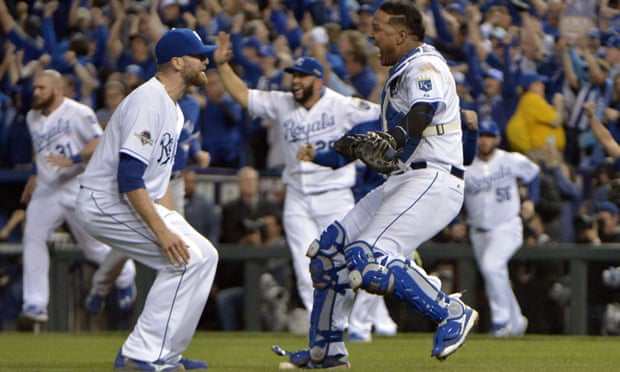
They're baaaaack (image courtesy of the Guardian)
The Kansas City Royals came within one game of winning it all last year. Now they're back to finish the job.

I still can't believe Kansas City is in the World Series--again. Last year seemed like such a fluke, from their crazy comeback against Oakland in the wild card game to stunning sweeps in the ALDS and ALCS. Were it not for Madison Bumgarner, they would've beaten the Giants, too. They'd overachieved by leaps and bounds, especially considering they'd only outscored opponents by 27 runs during the regular season.

That's why this year, I didn't see the Royals going .500 and certainly not getting back to the World Series. They hadn't been very good to start with and seemed due for serious regression, especially after losing James Shields and Billy Butler to free agency and spending what little money they had on guys who weren't very good (Alex Rios? Edinson Volquez? Kendrys Morales?). Compared to other teams, they were dangerously low on star power. Furthermore, Kansas City's strengths--speed, bullpen, and defense--are highly volatile, making its success more difficult to sustain.

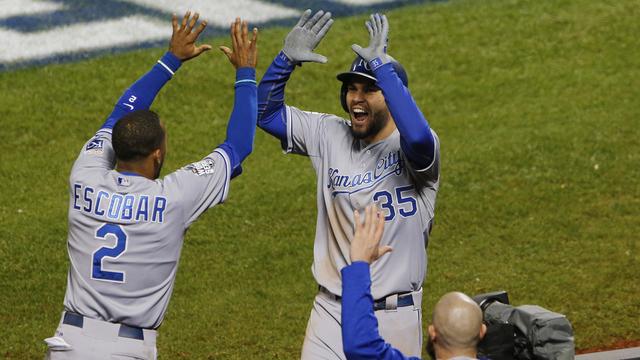
Once again, however, everything fell into place for the Royals. Their new pickups (minus Rios) played well, and their bullpen was even stingier than it was last year. Lorenzo Cain emerged as an MVP candidate, while Eric Hosmer and Mike Moustakas finally started living up to their potential. They were aided by trade deadline reinforcements in Johnny Cueto and Ben Zobrist. Their defense remained airtight.

It also helped that the rest of their division cleared a path for them. The Tigers finally broke down, the Indians failed to take the next step, and the Twins and White Sox both fizzled out. That enabled the Royals to not only win AL Central handily, by a dozen games, but also helped them secure the best record in the American League and homefield advantage throughout the playoffs. That's been huge for Kansas City, who have won five straight at home since dropping Game 1 of the ALDS to Houston.

Now, for the second time in as many years, Kansas City will host the World Series. Once again, the Royals will have to go through some tough pitching, though this time there will be no Bumgarner standing in their way. Instead, they'll need to overcome Matt Harvey, Jacob deGrom, and Noah Syndergaard, three fireballers who will put their contact skills to the test. They'll also have to find a way to neutralize Daniel Murphy, something nobody's been able to do thus far.

I think the Mets have more talent and are more dangerous, especially because their starting pitching is so superior. Their offense has also been ridiculously hot over the past three months, which if it continues will force Kansas City's starters early from the game and take their relievers out of play. That being said, I do think the Royals have a more balanced team and deeper lineup, so it won't be a cakewalk for New York. Mets in six.


Thursday, October 22, 2015

Cubs Come Apart

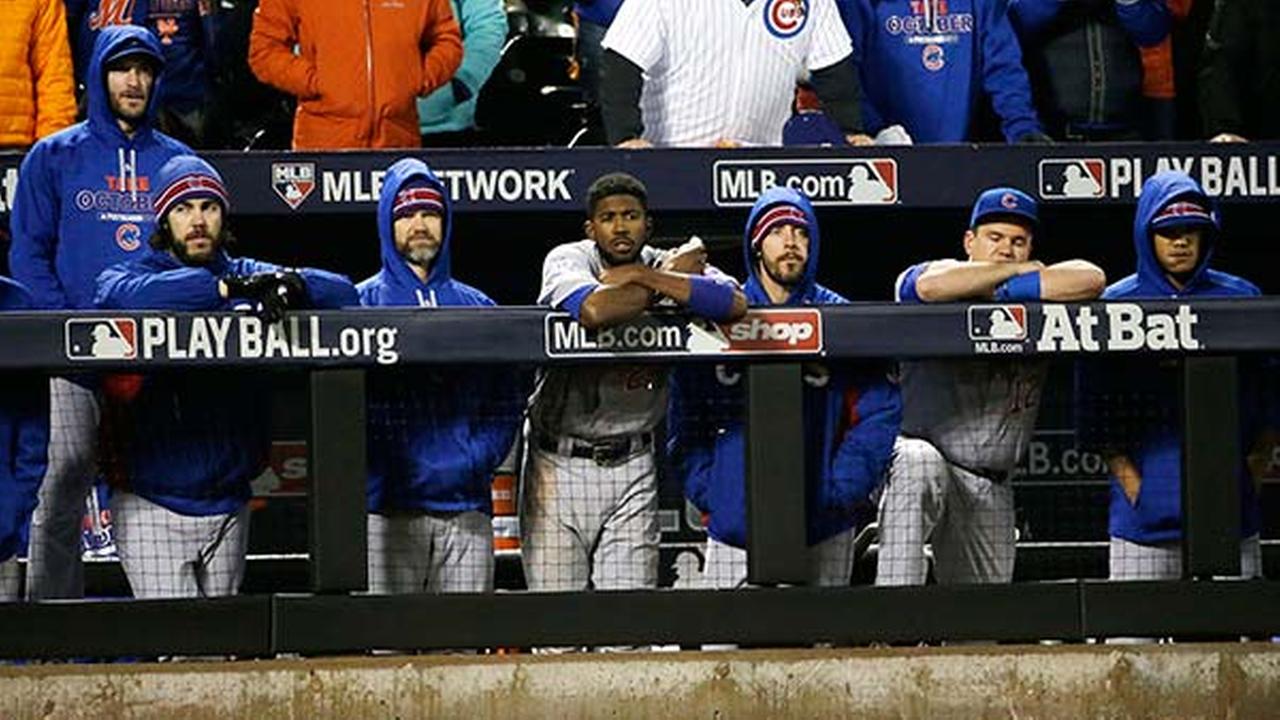
Chicago's season came to an end last night (ABC Chicago)
To answer my own question, yes.

Great pitching can stop great hitting. Dead in its tracks.

If anyone seemed immune to New York's talented trio of fireballers (messrs. Matt Harvey, Jacob deGrom, and Noah Syndergaard), it appeared to be the Cubs. Chicago's stacked lineup feasted on fastballs, and nobody throws harder than the Mets--the only team with more than one starter whose average fastball velocity exceeded 95 miles per hour during the regular season (they had three, actually. Care to take a guess?). They had an ace coming off the greatest second half ever, another with a sterling postseason record, and the best manager in baseball. What could go wrong?

Chicago getting swept out of the NLCS seemed unfathomable a week ago. The Cubs were on such a roll, it didn't seem like anyone could stop them. They had the best record in baseball from July 29th onward, then proceeded to eliminate the only two teams with better regular season records than them. Everyone was hitting, Jake Arrieta was untouchable, and the defense and bullpen were rock solid. Just four wins shy of the club's first World Series appearance in 70 years, Chicago appeared to be coming together at the perfect time.

Then, against the Mets, they completely unraveled. The hottest team in baseball never even had a lead. New York's vaunted pitching shut down Chicago's vaunted offense, limiting the Cubs to eight runs and 21 hits over the four games.

After taking a commanding 3-0 series lead, the Mets pressed down on the gas pedal in Game 4. They put the game away early, building up a 6-0 lead after two and sending Jason Hammel to an early shower. They cruised from there, extending their lead to 8-1 after adding a pair of insurance runs in the eighth before finally winning 8-3.

And so the 42,000+ crammed into Wrigley's cozy confines hoping to witness the beginning of a miracle comeback instead saw their team's season come crashing down, realizing the wild ride they'd been on for the better part of three months was over. There was no hope in Wrigleyville last night, no illusions about the Cubs coming alive at the 11th hour. Their bats had shown not an ounce of life during the previous three games, and last night was no different as Steven Matz and co. mowed them down once more.

Better to get your brains beaten in than lose by a whisker, as the Royals did last year's World Series, There's nothing heartbreaking about getting blown out--only demoralizing.

In the end, New York's incredible starting pitching and Daniel Murphy (seriously, where did that come from?) proved too much to overcome. I'm just shocked the Cubs, who took down baseball's lone 100-win team in the NLDS, lost four straight. I thought for sure they'd win at least one of the two started by Jon Lester or Jake Arrieta, but when they lost both those games they were effectively done. Once they lost Game 3, too, they were toast. Theo Epstein may be their president, but they are not the 2004 Red Sox.

Monday, October 5, 2015

Sox Season Recap

Boston faded fast after its strong start (Boston Globe)
With yesterday's 3-1 loss to the Cleveland Indians, the Red Sox rollercoaster ride is over. Though they finished last again, they only lost six more games than they won and were one of the best teams in baseball for roughly half the season.

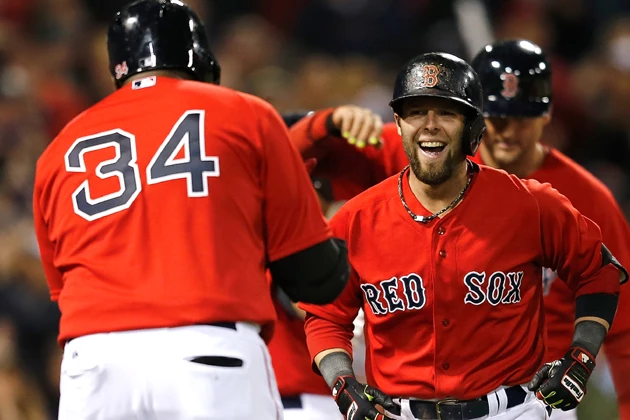
Of course, that's half a season less than what was expected from them this year. Following an active offseason in which they added a pair of high-impact bats and remade their starting rotation, the Red Sox were pronounced favorites to win the American League. For the first month or so they looked the part, with newcomer (who was really an oldcomer) Hanley Ramirez anchoring the offense, Mookie Betts becoming a human highlight reel, and a healthy Dustin Pedroia playing his best baseball in years.

But as the calendar flipped to May, it became evident that Boston's biggest weakness entering the season--starting pitching--was not up to snuff. Despite outscoring every team save the Blue Jays through April 29th, the Sox still finished April with a negative run differential. The blame fell on pitching coach Juan Nieves, who lost his job barely a month into the season. It was around the same time that Ryan Hanigan, the team's backup catcher-turned starter after Christian Vazquez underwent season-ending Tommy John surgery, went down with a fractured right hand. The Sox were forced to promote rookie backstop Blake Swihart much sooner than anticipated, and sure enough the 23 year-old struggled. With a raw receiver and new pitching coach, Boston's cobbled-together rotation fell into disarray.

Or at least that's what the Red Sox will have you believe, pointing to Hanigan's injury as the primary reason for the team's summer swoon. In reality, Boston's pitching improved drastically in May and June, trimming a full run off its April ERA. It wasn't until the weather warmed and injuries cropped up that the staff hit the skids in July and August.

The problem, then, was Boston's hitting, which completely disappeared in May. After averaging 5.14 runs per game in April, the Sox managed a meager 2.83 in May. As a result they lost a bunch of close games--nine of their 19 losses in May were by two runs or less--games that could have been won with timely hitting. Incredibly, it took what was supposed to be the best offense in baseball more than two months to score in double digits, and of course when they did they still lost anyways.

And so the Red Sox, a first-place team for much of April, found themselves in last place at the start of June. That's where they stayed for the rest of the year, briefly climbing into third place during the season's final week before returning to the AL East basement. That's also when frustration began to boil over, as Wade Miley and John Farrell got into a dugout shouting match (which, take note Nationals, did not escalate into choking), several players were ejected for arguing with umpires, and Pablo Sandoval rode the bench for perusing Instagram during a mid-game bathroom break.

A seven-game losing streak in mid-June proved to be a major setback, one from which Boston spent the next month recovering. The Sox caught fire leading into the All-Star Break, closing to within five games of first and positioning themselves for a second-half run, especially if Ben Cherington could fetch Cole Hamels or Johnny Cueto at the trade deadline.

The Red Sox were unable to maintain that momentum following the Midsummer Classic, however, as the death knell sounded for them in late July once again. This time it was an eight-game losing streak that did them in, dropping them a dozen games below .500 and the same number out of first. They thus found themselves in the awkward position of being sellers at the deadline with nothing to sell, and so July 31st came and went without much excitement.
Boston's strong finish offers hope for 2016 (929 The Ticket)
But Boston being Boston, the Red Sox didn't stay dormant for long. August was the most tumultuous month of the season, beginning with Larry Lucchino's announcement that he was stepping down as team president and CEO. That was followed in short order by John Farrell's stunning cancer diagnosis, which was soon overshadowed by the news that Dave Dombrowski had been hired as president of baseball operations and that Ben Cherington, general manager of four years, resigned after 16 years in the organization.

The most cruel blow to Red Sox fans, at least, was the departure of beloved NESN play-by-play man Don Orsillo, whose contract was not renewed for a 16th season with the team. Orsillo had not become a worse announcer, but the team he called games for was getting worse by the day. NESN wanted to re-engergize the broadcasts, and since they can't fix the Red Sox they figured it was time for some fresh blood up in the booth. Dave O'Brien--Orsillo's replacement--is great, but he'll never be Don (though Dave and Jerry does have a nice ring to it).

Lost amidst all the controversy off the field was that on the field, the Red Sox were turning their season around. All of the sudden everyone was hitting, even Jackie Bradley, Jr., and the pitching had finally settled down. Boston quietly enjoyed its best month of the season in August, only to play even better in September, which concluded with a season-high six-game win streak. From July 29th on Boston was the fourth-best team in the American League, winning nearly 60 percent of its games.

So for three months out of the year, the Red Sox were the team everyone expected them to be. During the three months in between, however, they were 13 games below .500. It was an incredibly frustrating and disappointing season to be sure, but there were lots of positive signs, especially over those final two months. Rather than play out the string, the Sox played their best baseball of the year.

If nothing else, Boston's strong finish proved Dombrowski has a strong foundation for his 2016 club in place. He has young, exceptional talent up the middle in Swihart, Pedroia, Betts/Btadley, and Xander Bogaerts. Young guns Henry Owens and Eduardo Rodriguez should be mainstays in the rotation for years to come, Joe Kelly pitched much better after being demoted to Pawtucket, and Rick Porcello's second half  (3.58 ERA after Independence Day) suggests he may live up to his fat contract after all. David Ortiz remained one of the best hitters in the game at 39, and whatever negative regression he endures next year will likely be offset by positive regression from Ramirez and Sandoval--two of the worst everyday players this year. Farrell and loyal bench coach Torey Lovullo will return, providing continuity in the dugout.

That's a good start, but expect another busy winter for Boston. The Sox need to overhaul their bullpen and desperately need more starting pitching, particularly the ace that has eluded them since they traded Jon Lester two summers ago (hello, David Price?). They also have to find a new left fielder with Ramirez moving to first base, although Travis Shaw deserves an extended look after his Will Middlebrooks-esque debut. They still have to figure out what on earth they want to do with Rusney Castillo as well as their surplus of catchers. If Bradley's batting woes return next year and Betts moves back to center, they'll need a right fielder, too.

After going worst-to-first in 2013, the Red Sox were unable to repeat the trick in 2015. With another aggressive offseason and the right pieces to complement their nucleus, perhaps they will in 2016.