Showing posts with label Chicago Cubs. Show all posts

Friday, February 26, 2016

Baseball's Best Team Just Got Better

Fowler set career-highs in several categories last year (Fox Sports)
Okay, Cubs, we get it. You're clearly the best team in baseball, and you have been for a while now. You don't need to get any better. So just, you know, chill out already.

The Cubs didn't have to do anything this winter, not after spending wads of cash and winning 97 games last year. They already had the NL's reigning Manager of the Year (Joe Maddon), Rookie of the Year (Kris Bryant), Cy Young winner (Jake Arrieta), and a legitimate MVP candidate (Anthony Rizzo). They'd acquired Jon Lester, built a young, power-laden lineup, and assembled a formidable bullpen. They had no weaknesses.

But that didn't stop them from going out and splurging on Jason Heyward, giving him the biggest deal handed to a position player this winter. That didn't stop them from signing Ben Zobrist, one of baseball's best and most versatile assets. That didn't stop them from bringing in Lester's old rotationmate (and fellow World Series champion) John Lackey to bolster their rotation.

After all that, the Cubs had assembled what most pundits agreed was baseball's best team; not by a little, but by a lot. Chicago hadn't replaced players who'd left, as some teams do during free agency; they'd added on to what was already a championship-caliber core.

The only key contributor from last year who wouldn't be returning, it seemed, was Dexter Fowler, the team's center fielder and leadoff man. Fowler had quietly been one of the Cubs' better players, leading the club with 102 runs, 20 stolen bases, and 84 walks while supplying a career-high 17 homers. Chicago had opted to replace him with a younger, better, and wildly more expensive player in Jason Heyward, even though Heyward had spent just 32 of his career 835 games (less than 4 percent) in center. And with youngsters Jorge Soler and Kyle Schwarber flanking him, his job wasn't going to be any easier.

So, rather than move forward with a potentially disastrous outfield alignment, the Cubs traded Chris Coghlan and brought Fowler back on a one-year, $8 million deal with a $9 million option for 2017.

It's a crummy deal for Fowler, who turned down Chicago's $15.8 million qualifying offer and had reportedly secured a three-year deal with the Baltimore Orioles, but a steal for the Cubs. No one was getting a better bargain than what Chicago's other team got on Mat Latos, but this contract still qualifies as highway robbery. Fowler, who turns 30 next month, was worth $25.6 million last year based on FanGraphs's WAR/$ conversion and hasn't been worth less than $10 million since 2010. The Cubs are going to get their money's worth, and then some.

More importantly, signing Fowler allows everyone to return to their natural positions. Heyward goes back to right (where he's a three-time Gold Glove winner) while the kids split time in left. Yes, it's crowded, but I guarantee that every GM would tell you he'd rather have four good outfielders than three. It opens up trade possibilities, plus you never know when injuries are going to crop up. It's also likely that Schwarber and/or Soler will suffer growing pains this year, as they've played fewer than 200 major league games between them.

With Fowler back on board, the Cubs have everything. They have an excellent outfield, a stellar infield (Bryant and Rizzo at the corners, Zobrist and Addison Russell up the middle, and Miguel Montero behind the plate), a deep rotation headed by Arrieta and Lester, a terrific bullpen, and the best manager in baseball, not to mention a huge payroll and a saavy front office. Chicago's cup runneth over, so my only question is; how does this team not win 100 games and the World Series this year?

Thursday, December 31, 2015

The Death of Baseball's Iron Man

Rizzo got hit by more pitches and played more games than any other National Leaguer (SOE)
Anthony Rizzo is good at a lot of things. He's good at hitting for power, as evidenced by his career .206 ISO. He has a knack for hitting in the clutch, for he led all of baseball in Win Probability Added last year. He boasts a great batting eye, which is reflected in his 10.9 percent career walk rate.

Unlike most first basemen, Rizzo's skills extend beyond the batter's box. He's smooth around the bag, ranking in the top three for Total Zone Runs and in the top five for Range Factor among NL first-sackers in each of the past three years. He's even a good baserunner, quick enough to steal 17 bases last year--second only to Paul Goldschmidt at the position.

Rizzo has one other skill, a skill that tends to get underrated when evaluating ballplayers; durability. Over the past three years, Rizzo has played 460 of a possible 486 games. Only 16 men have played more. His only significant injury was a mild back strain that cost him three weeks in 2014, from which he returned to bat .395/.521/.684 the rest of the way (had Chicago not been out of contention, he might have come back sooner).

I bring this up because last year, Rizzo played more games--160--than anyone in the Senior Circuit. He played Chicago's first 79 games before sitting out, then didn't take another day off until the season's final week. With the Cubs fighting for home field advantage in the wild card game, he couldn't exactly afford many rest days, but his attendance is still impressive nevertheless.

What I found interesting was that Rizzo was able to lead the league in games played despite getting plunked 30 times, most in the majors*. On the one hand, getting hit by so many pitches is rather unfortunate (though Rizzo is mostly to blame for standing so close to the plate), but on the other hand he was incredibly fortunate to avoid injury, as one misplaced fastball is enough to end a player's season, or even his life. Cubs fans should thank their lucky stars one of those beanballs didn't shatter Rizzo's wrist or smash his cover-boy face.

*Leading one's league in hit by pitches and games played is not as rare as I originally thought. Recent examples include Prince Fielder in 2012, Carlos Delgado in 2000, and Craig Biggio in 1997. 

What I found even more interesting than Rizzo's strange feat was that he paced his circuit in games played despite missing multiple contests. The last time that happened in the National League, as far as I can tell, was never (in the modern era, at least).

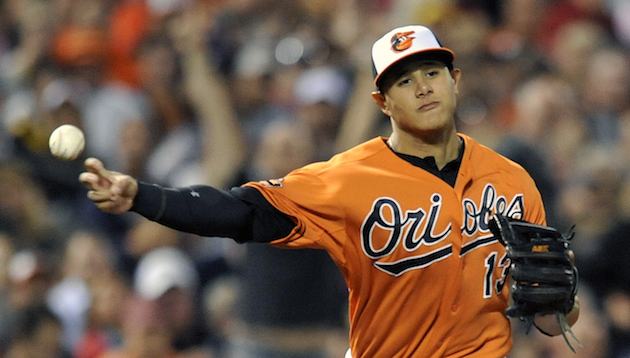
It's amazing how much the games played leaderboards have changed in just the last few years. In 2005, for instance, 10 players played every game. This year, there was only one--22 year-old Manny Machado*--even though there's more young talent proliferating the sport than ever before (young players, theoretically, should be more able to play full slates).

*I would have thought this impossible after the gruesome knee injury he suffered in 2013. Professional ballplayers are just different animals, I guess...
Machado was the only player to appear in every game last year (CBS Sports)
It appears the days of Iron Men like Cal Ripken, Jr., Miguel Tejada, and Steve Garvey are over. I'm sure some of that has to do with the decrease of performance enhancing drugs in the game; players simply can't maintain the stamina needed to survive a 162 game season. They can't train as hard in the offseason, so they wear down faster during the regular season. Training regimens have also shifted, stressing weightlifting more than endurance-boosting cardio, which makes players less flexible and more prone to muscle tears.

I think the real reason for this change, though, is that managers are smarter about how to manage their players. Gone are the days of slave-drive skippers who held little regard for their players' well-being, penciling the same names into their lineup cards everyday as long as they could stand. The new, more understanding breed--the proverbial "player's manager"--is keen on providing "maintenance" days throughout the year to keep his club fresh for the stretch drive. Roster expansion allows them, heck, encourages them to employ scrub-heavy lineups over the season's final month. And those rare times when doubleheaders occur, it's even rarer to see someone play both ends of it.

Some of that, I'm sure, has to do with how much players are paid these days. Teams invest too much in their stars--the guys you'd want playing everyday--to risk them getting hurt overexerting themselves (injuries are more likely to occur when you're over-fatigued, as that's when mechanics break down). They don't want their best players on the field everyday because they have the long-term interests of the players in mind, whereas before they weren't as concerned with protecting their assets. Players aren't disposable when they're signed to nine-figure contracts. You want to take care of that new Lamborghini in the garage, not run it into the ground.

Money has also changed how players view the game. They see it as a career more than just a temporary profession, and they'll do everything in their power to extend their playing careers, and thus their earning potential, as long as possible. They don't want to play 162 games if they don't have to, as every additional game carries the risk of a career-altering injury. And don't forget, they get paid the same for playing 162 as they do for playing 62. There's no incentive for playing every game, so why do it? Taking a few days off here and there versus playing through an injury could mean the difference of millions of dollars, so how can you blame someone for erring on the side of caution?

Lastly, I get the sense that players don't have the same amount of pride their predecessors got from playing every game. Playing all 162 used to be a badge of honor, a sign of strength. It takes a tough SOB to endure 162 ballgames. Perfect attendance was an achievement to be proud of, like batting .300 or driving in 100 runs. Remember, before free agency jacked salaries through the roof, players didn't play major league baseball solely for money; they played because they loved the game. Of course they wanted to play everyday (thinking of you, Ernie Banks).

It's not that players aren't capable of playing full seasons anymore, it's just that there aren't any good reasons to. That, and nobody's forcing them to..

Tuesday, December 15, 2015

Cubs Team to Beat

The revamped Cubs could win 100 games next year (CBS Chicago)
The Chicago Cubs didn't have to make any major splashes this offseason. They could have consolidated after winning 97 games last year, banking on improvement from youngsters like Kris Bryant and Kyle Schwarber to cover decline from aging veterans and departing talent. The Cubs would have been completely justified in making a few minor tweaks and leaving their roster as is, letting their young core blossom into perennial contenders..

Instead, Chicago has been the most active team in free agency thus far. They dipped their toe into this year's deep talent pool by poaching John Lackey away from the Cardinals. Then they stole Ben Zobrist from a market that underrates his skills.

But those deals were mere appetizers for the main course, which was served last Friday. Chicago capped a whirlwind week by picking St. Louis's pocket yet again, wooing Jason Heyward from their division rivals.

In just one week, the balance of power shifted not only in the NL Central, but all of baseball. The Cubs have established themselves as the team to beat next year, a team with 100-win potential. That's why Heyward turned down more money to play elsewhere. He wants to be on the World Series favorites.

I already wrote about how much I like the Lackey deal--a short-term bet on one of the game's better starting pitchers--so now please indulge me as I examine the Zobrist and Heyward deals.

At four years and $56 million, Zobrist is a veritable bargain in spite of his age (he'll be 35 in the spring). Consider that last year, Victor Martinez got more money over the same number of years despite being a) one year older when he signed his contract and b) a full-time designated hitter. Nelson Cruz, another DH-type, got virtually the same contract, and while his has worked out so far it will get ugly fast if his home run power disappears, which can happen overnight for a player his age.

Zobrist has been much better than either of those guys and is younger, He's quietly been the fifth-most valuable position player in baseball over the past seven seasons, out-WAR'ing all but the game's truest superstars (Mike Trout, Miguel Cabrera, Joey Votto, and Andrew McCutchen). While his defense went south last year and he didn't make the same impact on the bases that he usually does, at least part of that can be blamed on his midseason knee surgery. His balky knee didn't slow his bat, however, which remained as robust as ever despite injuries and a midseason trade to Kansas City.

Even if his defense and baserunning never recover, Zobrist will earn his paycheck as long as he keeps hitting like last year, when he was worth $16.4 million basically on his bat alone. If his hitting starts to slow too, however, then he'll be a bust. But seeing as how he's showed no signs of slowing down at the plate, the Cubs have no reason to worry just yet.

It was fitting that the deal for a long under-appreciated player was soon overshadowed by a monster contract attached to a much bigger name. Jason Heyward has been a breakoit candidate ever since scouts compared his likeness to Ken Griffey, Jr. during his rookie season. Heyward has failed to live up to those lofty expectations, instead settling into something just shy of a superstar. Skill-wise, he falls into the same category as Zobrist and Alex Gordon, but with the added benefit of being much, much younger.

Heyward is the rare free agent whose prime years are just about to begin rather than come to an end. So if Zobrist--the former type of player--is a bargain, Heyward's an absolute steal. Heyward has been one of the dozen-best position players in baseball since beginning his career in 2010 (notice the player right above him on that list). He's an excellent baserunner, a three-time Gold Glove winner, and a solid hitter. It's not worth discussing whether he'll be worth the eight years and $184 million (spoiler alert: he will be) because he'll opt out by the end of the decade, but when he does you can bet it will be for as much as or more than what he just accepted.

What's funny is that Zobrist and Heyward are essentially the same player. They both walk a lot, hit for medium power, have a bit of speed, and are plus defenders. While not great at any one thing, they are good at everything, and that's what makes them so valuable. Zobrist has played every position save pitcher and catcher, while Heyward can play anywhere in the outfield.

The Cubs seem likely to install the latter in center field, where he's only played sporadically. Still, Heyward can't be much worse than the man he's replacing out there--Dexter Fowler, who's provided positive defensive value just twice in his eight year-career according to Baseball-Reference. Thanks to his youth and athleticism, Heyward's one of the few corner outfielders capable of making the transition to center, as usually players go the other way.

So forget the Royals; the Cubs are baseball's model franchise. Their whip-smart front office has assembled a juggernaut around solid drafting, saavy free agent signings, and great trades. As for their latest spending spree, the rest of baseball should take note. If you're going to spend close to $300 million on free agents, this is the way to do it. Not, you know, how the Red Sox do it.

Saturday, December 5, 2015

Lackey, Lester Reunited

Lackey has showed no signs of slowing down as he enters his late-30s (Fox Sports)
On July 31st, 2014, Ben Cherington broke up the 2013 World Series champions by trading Jon Lester and John Lackey, among others, to the Oakland A's and St. Louis Cardinals, respectively. Sixteen months later, they have been reunited under former Sox GM Theo Epstein, the man who developed Lester and signed Lackey in Boston, with the Chicago Cubs.

Lester joined the Cubs last winter, signing for more money than any free agent besides Max Scherzer. Lackey stayed in St. Louis, earning the league minimum because of an injury clause in his contract. Both were terrific in their first full seasons as National Leaguers, pitching their respective clubs to the postseason and squaring off in Game 1 of the NLDS. Lackey got the best of Lester, allowing just two hits over 7 and 1/3 scoreless innings, but in the end it was Chicago who advanced to the NLCS (only to be mercilessly swept by the Mets).

Now, the onetime beer buddies and former division rivals are teammates once more. It was reported yesterday that Lackey and the Cubs had agreed to a two-year, $32 million deal. Lackey joins Lester and Jake Arrieta in the Windy City, giving Chicago a formidable trio at the top of its rotation. The Cubs have plenty of hitting, so they were wise to add a starter, snapping him at up at a reasonable price to boot.

While nowhere near the bargain the Cardinals got with Lackey last year, this still figures to be a pretty favorable contract for Chicago. They get a great starting pitcher at a fraction of the cost that David Price, Zack Greinke, and Jordan Zimmermann just inflicted on their new clubs. Even if Lackey's only half the pitcher he was last year, when he was worth roughly 4.7 WAR (after splitting the difference between B-R and FanGraphs) with a 2.77 ERA over 218 innings, he'll still be worth the money. And since it's only a two-year pact, the Cubs won't be stuck with him if he bombs.

Which, at his age, is a very real possibility. Lackey just turned 37 and has churned out over 2,600 innings (postseason included) on a Tommy John-repaired arm. Pitchers at his age are susceptible to losing it overnight, as we recently saw with Roy Halladay, Roy Oswalt, and others. It's hard to say how he'll fare in Wrigley Field seeing as how he's started all of two games there, but there's no question his new home is tougher on hitters than his old one (I'm not too concerned about this, however, as Lackey's not a flyball pitcher--the kind who are susceptible to Wrigley's wind--and he had success at Fenway)

Lackey's due for some regression after outpitching his FIP by 0.8 R/9 and enjoying baseball's second-highest strand rate, but even if he's only average pitcher he'll still have plenty of value if healthy. That's a pretty big risk at this stage in his career, but it's absolutely a risk worth taking.

Saturday, November 7, 2015

Ramirez Retires

Ramirez is retiring after 18 seasons (NBC Sports)
Another very good but not quite Hall of Fame level player retired recently as baseball waved goodbye to Aramis Ramirez. Ramirez joined Torii Hunter, who retired last week, in deciding to call it quits.

There are actually quite a few parallels between their careers, besides the fact that they hung up their spikes 10 days apart. Ramirez, like Hunter, finished his career where it started--Hunter with the Twins and Ramirez with the Pirates. Hunter was a lifelong American Leaguer who spent the bulk of his career in the AL Central, while Ramirez never left the NL Central.

Their career arcs are eerily similar as well, as both struggled for a few years before breaking out in 2001. After that they remained excellent players for more than a decade, aging remarkably well and putting up similar numbers year after year. Though both made multiple postseason appearances, neither ever played in a World Series, much less won one.

And just look how close their numbers are:

Hunter: 19 yrs 498 2B 351 HR 1,391 RBI 661 BB .277/.331/.461 (110 OPS+) 4,087 TB
Ramirez: 18 yrs 495 2B 386 HR 1,417 RBI 633 BB .283/.341/.492 (115 OPS+) 4,004 TB

Ramirez debuted with Pittsburgh at 19 in 1998. Predictably, his first few years were rough as he struggled to adjust to major league pitching, but in 2001 he blossomed into one of the best-hitting third-sackers in the game. In his first full season, Ramirez mashed 34 home runs, knocked in 112, and batted a robust .300/.350/.536 (122 OPS+).

Nowadays, such a season would merit serious MVP consideration, an All-Star berth, and a Silver Slugger. But back in 2001, when cartoonishly big sluggers were putting up videogame numbers, Ramirez got no recognition of any kind. That would become a troubling trend for Ramirez, long one of the game's most under-appreciated stars (except when the fans gave him a completely undeserved Hank Aaron award in 2008).

After failing to replicate those numbers in 2002 and the first half of 2003, Pittsburgh sent him and Kenny Lofton to the Cubbies for Jose Hernandez, a minor leaguer, and a player to be named later. It's trades like that which explain how the Pirates went 20 years between winning seasons.
Ramirez was just coming into his prime. He flourished in Chicago, taking advantage of Wrigley's friendly confines (where he was a career .307/.372/.551 hitter) to emerge as an annual 30-100-.300 threat. While he wasn't the most durable player, exceeding 150 games in a season just once after leaving Pittsburgh, he always hit when he did play.

After eight and a half productive years in Chicago, Ramirez signed on with the Milwaukee Brewers before the 2012 season. Following a stellar debut with the Brew Crew, he began to decline as he reached his mid-30s. With Milwaukee rebuilding and his skills eroding, the Brewers had no need for their expensive, over-the-hill third baseman.

So this year, which Ramirez had already acknowledged would be his last, Milwaukee dealt him to a resurgent Pirates franchise, giving him one last shot at World Series glory. Like most last-ditch efforts to procure a ring, this one didn't work out. Ironically, it was Ramirez's former team, the cursed Cubs, that got in the way. In what would be the last at-bat of his career, Ramirez grounded into an inning-ending double play. Somehow, that seems appropriate.
Circling back to Hunter, Ramirez also fell short of a few big milestones. He ends his career 14 homers shy of 400, five doubles short of 500, and 83 RBI away from 1,500. Even so, his numbers are outstanding for a third baseman; he ranks 10th in the position for home runs, doubles, and RBI.

The three-time All-Star never quite got the credit he deserved for being such a tremendous hitter year-in and year-out, probably because he was playing in the shadow of superior third basemen such as Alex Rodriguez, David Wright, Chipper Jones, and Adrian Beltre. In terms of career offensive production at the position, however, few were ever better. 

Thursday, October 22, 2015

Cubs Come Apart

Chicago's season came to an end last night (ABC Chicago)
To answer my own question, yes.

Great pitching can stop great hitting. Dead in its tracks.

If anyone seemed immune to New York's talented trio of fireballers (messrs. Matt Harvey, Jacob deGrom, and Noah Syndergaard), it appeared to be the Cubs. Chicago's stacked lineup feasted on fastballs, and nobody throws harder than the Mets--the only team with more than one starter whose average fastball velocity exceeded 95 miles per hour during the regular season (they had three, actually. Care to take a guess?). They had an ace coming off the greatest second half ever, another with a sterling postseason record, and the best manager in baseball. What could go wrong?

Chicago getting swept out of the NLCS seemed unfathomable a week ago. The Cubs were on such a roll, it didn't seem like anyone could stop them. They had the best record in baseball from July 29th onward, then proceeded to eliminate the only two teams with better regular season records than them. Everyone was hitting, Jake Arrieta was untouchable, and the defense and bullpen were rock solid. Just four wins shy of the club's first World Series appearance in 70 years, Chicago appeared to be coming together at the perfect time.

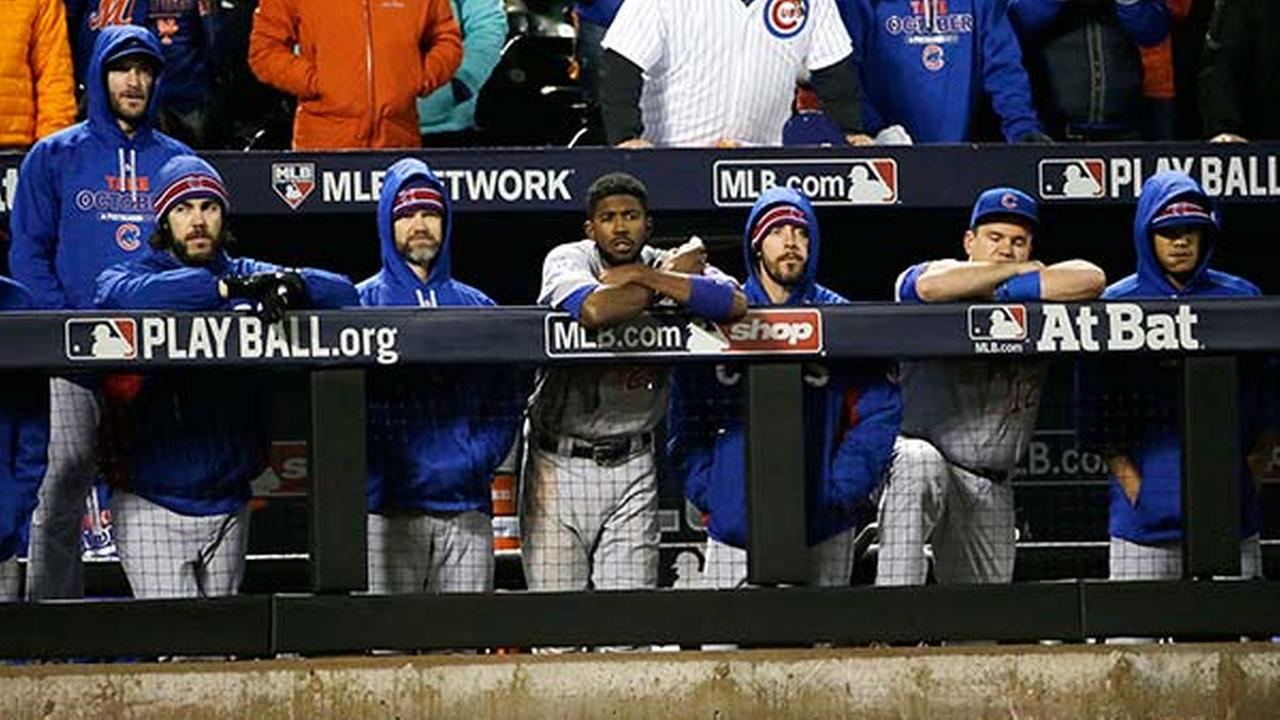
Then, against the Mets, they completely unraveled. The hottest team in baseball never even had a lead. New York's vaunted pitching shut down Chicago's vaunted offense, limiting the Cubs to eight runs and 21 hits over the four games.

After taking a commanding 3-0 series lead, the Mets pressed down on the gas pedal in Game 4. They put the game away early, building up a 6-0 lead after two and sending Jason Hammel to an early shower. They cruised from there, extending their lead to 8-1 after adding a pair of insurance runs in the eighth before finally winning 8-3.

And so the 42,000+ crammed into Wrigley's cozy confines hoping to witness the beginning of a miracle comeback instead saw their team's season come crashing down, realizing the wild ride they'd been on for the better part of three months was over. There was no hope in Wrigleyville last night, no illusions about the Cubs coming alive at the 11th hour. Their bats had shown not an ounce of life during the previous three games, and last night was no different as Steven Matz and co. mowed them down once more.

Better to get your brains beaten in than lose by a whisker, as the Royals did last year's World Series, There's nothing heartbreaking about getting blown out--only demoralizing.

In the end, New York's incredible starting pitching and Daniel Murphy (seriously, where did that come from?) proved too much to overcome. I'm just shocked the Cubs, who took down baseball's lone 100-win team in the NLDS, lost four straight. I thought for sure they'd win at least one of the two started by Jon Lester or Jake Arrieta, but when they lost both those games they were effectively done. Once they lost Game 3, too, they were toast. Theo Epstein may be their president, but they are not the 2004 Red Sox.

Sunday, October 18, 2015

NLCS Preview: Can Great Pitching Stop Great Hitting?

Rizzo and his teammates will give the Mets fits (Athlon Sports)
This year's NLCS is, at its core, a battle between the arguably the best starting rotation and best lineup in baseball. The Cubs have good pitchers, of course, and the Mets have some bats too, but that's basically what this series boils down to. Can New York tame Chicago's fearsome lineup?
 
If anyone's up to the challenge, it would be the Mets' nasty trio of Matt Harvey, Jacob deGrom, and Noah Syndergaard, any one of whom is capable of dominating any time they take the mound. They'll need to, as New York's bullpen is pretty iffy before you get to Jeurys Familia in the ninth. Give Cubs hitters enough at-bats against the Mets' soft middle relief, and pretty soon it's going to turn into batting practice.
 
But if anyone's capable of sending those guys to an early exit, it's Chicago.  Because for all New York's pitching, the Cubs simply have too much firepower. There are no holes in that lineup, which is stuffed with power and led the National League in walks. Chicago does strike out a lot--more than any other team in the majors this year--which could easily be exploited by a Mets staff that fanned 8.2 batters per nine during the regular season. But with Anthony Rizzo, Kyle Schwarber, and Kris Bryant all a threat to go yard at any time, the Cubs can make the Mets pay for the few mistakes they make.
 
Chicago's pitching staff is no joke, either, led by Cy Young candidate Jake Arrieta and Jon Lester--a proven postseason stud. If the Mets can beat either of those guys then they'll be in good shape, but the Cubs have a formidable bullpen capable of preventing further damage, thus allowing Chicago's bats to get back into the game.  It also helps that the Cubs have master tactician Joe Maddon at the helm, which ensures that they won't be undone by any Grady Little-esque errors of lunacy.
 
There's no question about who was the better team during the regular season. The Mets won 90 games in a division where three out of the five teams lost at least that many while the Cubs, winners of 97, finished third in their division. New York's lineup is average at best, not to mention heavily dependent on Lucas Duda, Yoenis Cespedes, and Curtis Granderson for production. Neutralize them, and the Mets will be hard-pressed to score. Stifle Chicago's top hitters, however, and the Cubs can still put runs on the board. They can hurt you in so many ways.
 
Like the ALCS, this has all the makings of a great series. Also like the ALCS, I think the team with the better bats will win. Cubs in six.

Thursday, October 8, 2015

Arrieta, Cubs Advance

Arrieta was on top of his game as the Cubs advanced (LA Times)
While I was surprised to see the Yankees flop in Tuesday's AL Wild Card game, I was not at all surprised when the Cubs cruise past the Pirates last night.
 
For one, Jake Arrieta is arguably the best pitcher in baseball this year. And if not the entire season as a whole, then definitely the second half, which was only the greatest any pitcher has ever had. He was better away from Wrigley Field, too, with a 1.60 ERA, 0.88 WHIP, and 5.16 K/BB ratio outside the Friendly Confines. Arrieta's been so ridiculously good lately, I just didn't see him losing this game.
 
That's not a knock on Gerrit Cole, who was tremendous in his own right this year and pitched well the last time he appeared in the postseason. But he was a better first half pitcher this year, with a 1.71 ERA through June 15th and a 3.19 ERA after. That can be attributed to natural aggression, but a small part of me thinks he may have gotten fatigued as he exceeded his previous innings high by 70. But not even first-half Cole was as good as second-half Arrieta.
 
I also figured he'd have some trouble with Chicago's lineup, which might be the scariest in baseball. There's no holes in that offense--not even Arrieta, the rare decent-hitting pitcher. It's a meatgrinder 1-9 with loads of power, which makes the Cubbies very difficult to neutralize. The Pirates, on the other hand, are more top-heavy. If you can get McCutchen out and keep Starling Marte off the bases and not make a mistake to Pedro Alvarez, you'll probably be alright.
 
And with his team shooting for its first World Series title in over a century, Arrieta was more than alright. He was his usual dominant self, carving up the Bucs in his first postseason start. Arrieta allowed just four hits--all singles--and struck out 11 en route to a shutout, the first by a Cubs pitcher in the playoffs since 1945.
 
While Arrieta showed lethal stuff early, racking up six K's through his first three innings, Cole struggled from the start. He put his team in a hole two batters into the game following a pair of singles sandwiched around a stolen base. A double play helped him escape the first without further damage, but Chicago's sluggers got the best of him via home runs in the third and fifth. With Pittsburgh down 4-0 and the Pirates doing nothing against Arrieta he had to come out, and while Pittsburgh's bullpen stopped the bleeding it was too little, too late. Arrieta didn't give an inch, sending the host team home early for the second year in a row.
 
I must say I was amazed at how similarly the two wild card games played out. In both cases the visiting team shut out the home team, smacking two home runs along the way. The better pitcher won in both cases too, with likely AL Cy Young winner Dallas Keuchel getting the best of Masahiro Tanaka and Arrieta--who will win if a Dodger doesn't--topping Cole. The losing pitcher in both games exited after five as well.
 
I feel like the better team won in both games as well, probably because I'm still having trouble figuring out how the Yankees and Pirates made it there. The Yankees were impossibly old, and the Pirates just didn't seem that good to me. It blows my mind that Pittsburgh won 98 games this year--more than any team save the Cardinals. Maybe that's because outside of Cole and Andrew McCutchen, they're sorely lacking in star power. They don't hit a ton of home runs and their number two starter is either Francisco Liriano or A.J. Burnett. They're just a deep, balanced, really well-constructed team, which might be boring but gets the job done--in the regular season, at least.

Saturday, January 24, 2015

Bye Bye Banks

Banks was a tremendous shortstop and Cubs icon (Huffington Post)
Cubs legend and Hall of Famer Ernie Banks passed away yesterday, eight days shy of his 84th birthday.

"Let's play two"was his mantra, and one he took to heart. Banks played at least 130 games in all but three of his 19 seasons, exceeding 150 a dozen times and leading the league in six of those years. The Cubs were often abysmal, but their constant losing never stifled his love for baseball. Perhaps no player ever seemed to get more unbridled joy from the game than Banks, who at one point played 717 consecutive games at shortstop.

It was therefore terribly unfair that he spent his entire career with one of baseball's losing-est franchises, never once getting a taste of the postseason. That Chicago collapsed down the stretch in 1969, at the end of Banks's last impactful season, was a particularly cruel twist of fate. He and the Cubs came so close, only to crash and burn in September.

By then Banks was at first base, the position he manned for most of the 1960s. But in the 1950s, Banks became baseball's first slugging shortstop, re-defining a position that had typically been reserved for speedy, slap-hitting guys like Luis Aparicio. Before a knee injury forced him to move across the diamond in 1962, Banks was on track to be the greatest offensive shortstop since Honus Wagner. In the half century since, only Alex Rodriguez has equaled the power numbers Banks put up during his heyday.

Groomed in the Negro Leagues, Banks seamlessly transitioned to the majors and became a star almost instantly. He excelled during his 1953 call-up and was runner-up in the following year's NL Rookie of the Year race before finishing third in the 1955 NL MVP vote.

1955--that was the year Banks became a star. He made his first All-Star team, batted .295/.345/.596 (144 OPS+), and was valued at 8.2 bWAR. More notably, he set the home run record for shortstops with 44 including five grand slams--a single season record that stood for 30 years. Two years later, Banks challenged his own record by slamming 43 out of the yard.

The late '50s were Banks's heyday, In 1958 and 1959, he became the first National Leaguer to win back-to-back MVP awards despite playing for second division teams (Chicago finished fifth out of eight both years with losing records). In '58 Banks played every game, batting .313/.366/.614 (155 OPS+) and leading the major leagues with 47 home runs, 129 RBI, 379 total bases, and 81 extra base hits. Those 47 big flies set a new major league record for shortstops, one that has since been surpassed by Rodriguez but still remains that NL record.

Banks's '59 season was just as good, if not better. He once again played every game, clubbed 45 home runs, knocked in an ML-best 143 runs, batted .304/.374/.566 (156 OPS+), and was worth an astounding 10.2 bWAR. In 1960 Banks had another MVP-caliber year worth 7.8 bWAR, pacing the majors with 41 home runs while winning his first and only Gold Glove.

That would be Banks's last elite season, capping a six-year run in which he was the most valuable position player in baseball not named Willie Mays or Mickey Mantle. He went on to become a steady, solid first baseman, but never came close to replicating his peak seasons due to age and declining levels of offense. The move helped Banks play past 40, allowing him to reach milestones such as 500 home runs, 1,600 RBI, and 2,500 hits.

An 11-time All-Star, Banks was elected to the Hall of Fame in 1977, his first year of eligibility. First-ballot induction is typically reserved for the game's true legends, the inner-circle Hall of Famers. I can think of few men more deserving of that honor than Mr. Cub.

Tuesday, January 20, 2015

Fowler Fits Cubs Plan

Trading for Fowler is a win-now move by the Cubs (USA Today)
The Chicago Cubs continued to improve this offseason, swapping a utility man (Luis Valbuena) and a busted starting pitcher (Dan Straily) to the Houston Astros for Dexter Fowler yesterday.

The Cubs sold high on Valbuena, their third baseman who enjoyed a career year last year at 28. With uberprospect Kris Bryant expected to take over at the hot corner shortly, Valbuena had become expendable, so Chicago turned him and Straily into a center fielder, something the Cubs never really had last year.

Former skipper Rick Renteria relied primarily on Emilio Bonifacio (fine utility guy, but not an everyday player) and, after Bonifacio was dealt to the Braves, a raw 22 year-old rookie by the name of Arismendy Alcantara, who did his best Jackie Bradley, Jr. impression by posting a paltry .621 OPS. Junior Lake, Ryan Sweeney, and Justin Ruggiano, none of whom are any good, also spent significant time in center. Not surprisingly, Chicago got next-to-nothing from its center fielders, who batted a measly .222/.264/.346 last year, making that the team's weakest position OPS-wise. No team got less offense from its center fielders than the Cubs, who had the third-worst crew of center fielders overall based on fWAR.

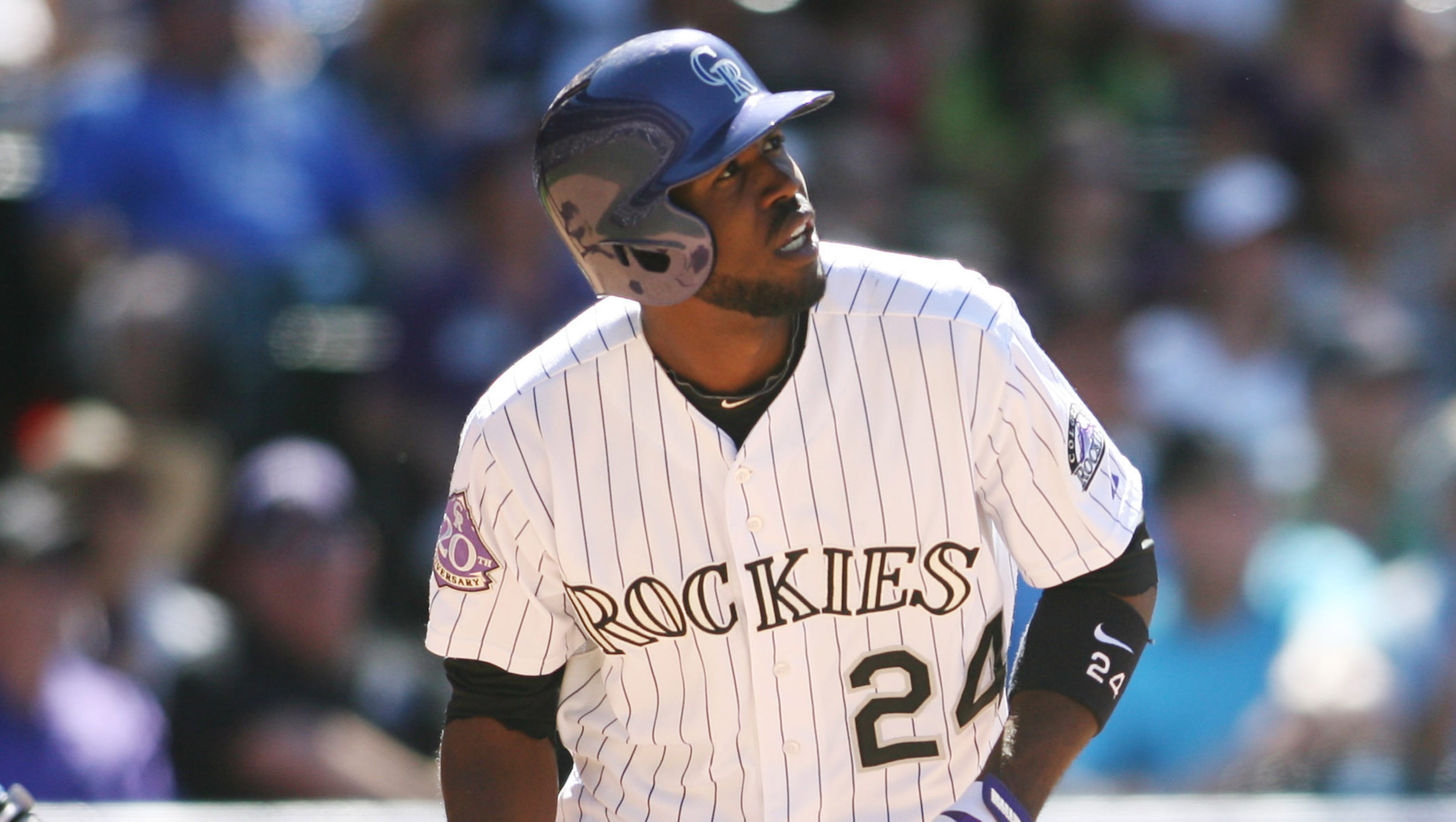
Fowler, a solidly above average hitter with an established track record, represents a clear upgrade offensively that figures to add several wins to Chicago's ledger this year. The Cubs are getting a 29 year-old center fielder who's typically good for 10-15 home runs, 10-15 steals, and a very high on-base percentage every year. Last year, the former Rockie proved he could hit away from Coors Field by enjoying his best offensive season on a league and park adjusted basis with a 124 wRC+, batting .276/.375/.399 despite missing seven weeks in the middle of the season with back tightness.

That high OBP wasn't a fluke, either. Fowler has always been great at getting on base and owns a .366 career OBP to prove it. The switch-hitting leadoff man also brings some speed to the table, having swiped 94 bases and legged out 57 triples over the past six seasons. Despite his mediocre theft success rate (67.6 percent), he ranks 25th in baserunning value since the start of the 2009 season. He's no Juan Pierre either, offering slightly above average power (career .149 ISO) that stands to benefit from Wrigley Field's friendly confines.

While Fowler is a good hitter, he is not without flaws. He strikes out a lot for someone who's never hit 15 homers or slugged .475 in a season, and the metrics have never loved his defense. Like many Rockies past and present, Fowler's also had trouble staying healthy, as he's never played 145 games or recorded 500 official at-bats in any season. As such, B-R and FanGraphs agree that he has never once been worth three WAR.

Fowler is also not a long-term fix. Now in his final year of arbitration, he expects to earn around $10 million this year before becoming a free agent next winter, meaning he's a not inexpensive short-term solution.

But he is a solution, and a good one at that. With Chicago leaning on so many youngsters to carry the offensive load this season, Fowler is a proven performer with a steady history of success. In addition to setting the table for the likes of Bryant, Anthony Rizzo, and Jorge Soler, he'll add some much-needed veteran presence and leadership to a team short on both. Best of all, he's a good center fielder, which is something the Cubs desperately needed (but could trade if they stumble through another terrible season).

Based on their splashy Jon Lester signing and serious pursuit of Russell Martin earlier this winter, the Cubbies are making a strong push to contend in 2015. Fowler fits into the plan.